Hillman — Coventry's Minx maker from 1907 to 1976
Hillman was a British car brand from Coventry, founded in 1907 by the bicycle maker William Hillman and best known for the Minx, the Imp and the Hunter. From 1928 it belonged to the Rootes brothers, who made it the volume brand of the Rootes Group next to Humber, Sunbeam and Singer. Chrysler took control of Rootes in 1967, and the Hillman name was dropped in 1976, when the Avenger and the Hunter became Chryslers. The Hunter lived on much longer in Iran as the Paykan.
Key takeaways
- Hillman-Coatalen was founded in 1907 at Stoke Aldermoor, near Coventry, with Louis Coatalen as designer; it became the Hillman Motor Car Company in 1910.
- The Rootes brothers took control in 1928, and the Minx of 1932 became Hillman's main model for almost 40 years.
- The rear-engined Imp of 1963 was built at a new factory in Linwood, Scotland; the infobox gives 440,032 built.
- A Hillman Hunter driven by Andrew Cowan won the 1968 London–Sydney Marathon.
Hillman at a glance
| Fact | Value |
|---|---|
| Founded | 1907, Stoke Aldermoor, Coventry |
| Founders | William Hillman, with Louis Coatalen |
| Owners | Rootes brothers (from 1928), Chrysler (control from 1967) |
| Group | Rootes Group, with Humber, Sunbeam, Singer and Commer |
| Plants | Stoke Aldermoor and Ryton-on-Dunsmore (Coventry); Linwood (Scotland) |
| Best-known models | Minx, Imp, Hunter, Avenger, Husky |
| End | Name dropped in 1976; cars sold as Chryslers |
| Successor in Iran | Paykan, built from the Hunter until 2005 (pick-up until 2015) |
William Hillman and Louis Coatalen
William Hillman came from the Coventry cycle trade. Hillman worked for the Coventry Sewing Machine Company of Josiah Turner and James Starley, which became the Coventry Machinists Company in 1869 and began making velocipedes. In 1870 Hillman and Starley patented the "Ariel" bicycle, and by 1885 Hillman was a partner in Hillman, Herbert and Cooper, the makers of the Kangaroo bicycle.
In 1907 Hillman founded Hillman-Coatalen, with the engineer Louis Coatalen as designer and chief engineer. The factory was built in the grounds of Abingdon House, Stoke Aldermoor, near Coventry. That year the 24HP Hillman-Coatalen ran in the Tourist Trophy, but a crash put it out of the race. Coatalen left for Sunbeam in 1909, and in 1910 the business was registered again as the Hillman Motor Car Company.
The first model sold in real numbers was the 9HP of 1913, with a 1,357 cc side-valve four-cylinder engine. After the First World War it came back as the 11HP with 1,600 cc. The 14HP of 1925 was the only Hillman model until 1928. That year a 2.6-litre Straight Eight brought Hillman's first overhead-valve engine, but the car became known for big-end trouble.
The Rootes brothers and the Minx
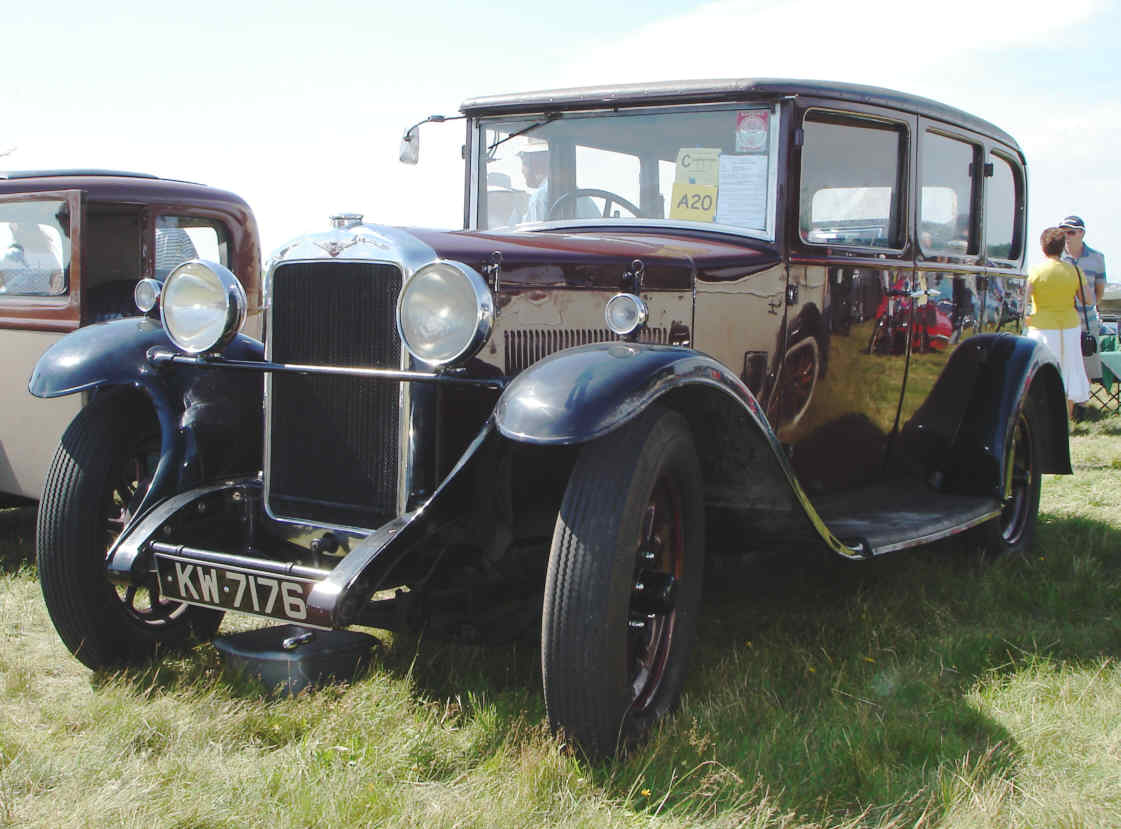
In 1928 the Rootes brothers, William and Reginald, took control of Hillman, which was then merged with Humber. The Rootes Group article describes the order as Hillman first, then Humber and Commer. With backing from the Prudential Assurance company, the brothers raised their holding in Humber to 60 per cent in 1931. Hillman became the small-car brand of the group, although it still sold large cars until 1937. The six-cylinder Wizard went into production in April 1931.
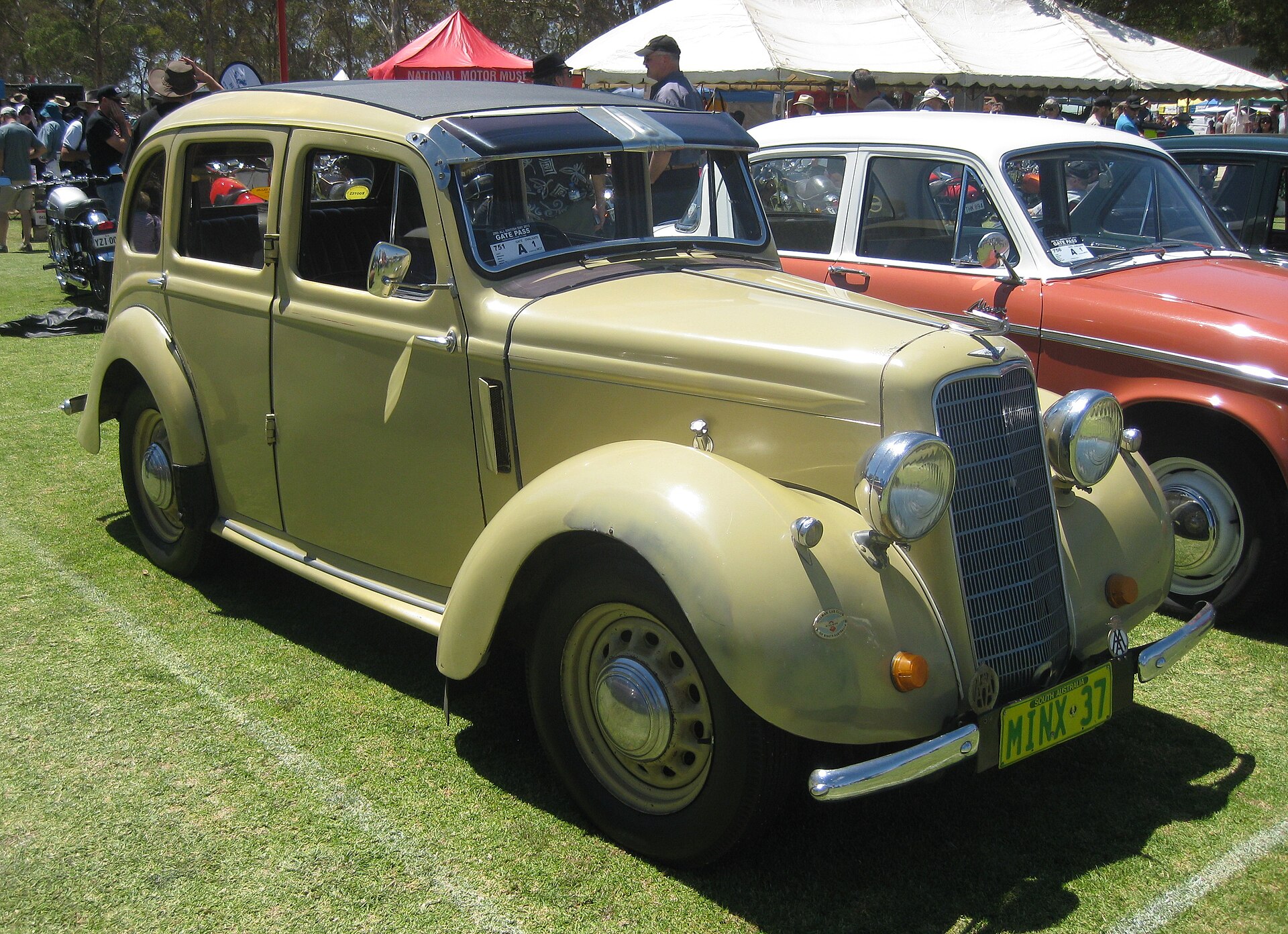
The car that defined Hillman was the Minx, announced on 1 October 1931 and built from 1932. It had a 1,185 cc engine of 22 kW (30 bhp). The 1935 Minx was the first mass-produced car with an all-synchromesh gearbox. During the Second World War, Minx parts went into the Hillman 10HP utility vehicle, and a basic Minx saloon was built for military and essential civilian use from 1940 to 1944.
After the war the Minx went through eight "Marks":
| Minx | Years | Engine | Built |
|---|---|---|---|
| Mark I–II | 1945–1948 | 1,185 cc | About 60,000 |
| Mark III | 1948–1949 | 1,185 cc, 26.1 kW (35 bhp) | 28,619 |
| Mark IV | 1949–1951 | 1,265 cc, 28.0 kW (37.5 bhp) | 90,832 |
| Mark V–VII | 1951–1954 | 1,265 cc | 165,131 |
| Mark VIII | 1954–1957 | 1,390 cc overhead valve | 94,123 |
The "Audax" Minx of 1956 had a new body designed with help from the Raymond Loewy studio. Series I sold 202,204 cars, and engines grew step by step to 1,725 cc in the Series VI of 1965–1967. Isuzu built the Minx under licence in Japan from 1953 to 1964, first the Mark VI to VIII and then the Audax. The Rootes Group also grew in these years. It added Karrier, Sunbeam and Clement Talbot in 1934 and Singer in 1956. In 1940, under the government shadow-factory scheme, Rootes began building its assembly plant at Ryton-on-Dunsmore near Coventry.
The Imp and Linwood
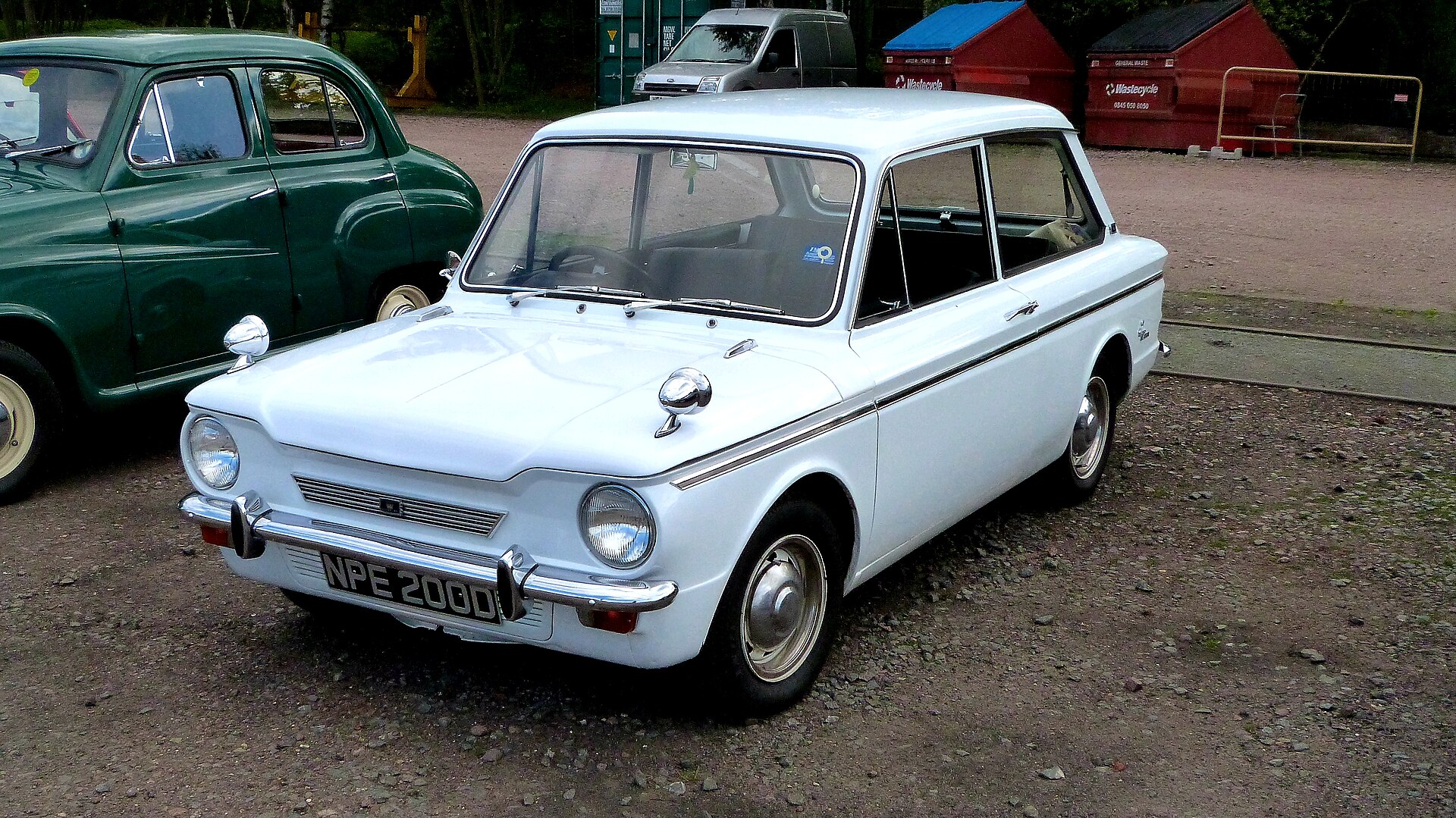
In the 1950s and 1960s Hillman added the Husky of 1954, a short van-like car, and the larger Super Minx of 1961–1967. The bold step was the Imp. Designed by Mike Parkes and Tim Fry, it had a rear-mounted 875 cc all-aluminium engine with an overhead camshaft. According to the Imp article, it was the first mass-produced British car with a rear engine.
Government rules on industrial development pushed Rootes to build the car in Scotland. The new Linwood factory was opened by the Duke of Edinburgh in May 1963, when the Imp was announced. Variants followed: the Singer Chamois in October 1964, the Husky estate and the Californian coupé in 1967, and the Sunbeam Stiletto, sold until 1972.
The Imp had a good start in motor sport. In 1965 Rosemary Smith won the Tulip Rally in one. Reliability problems, mainly poor cooling of the rear engine, hurt its reputation. Production ended in March 1976 after 13 years; the Imp article gives 440,032 built in its infobox and "fewer than 441,000" in the text.

Chrysler, the Hunter and the end of the name
In June 1964 Chrysler announced it would take 30 per cent of the ordinary shares of Rootes Motors, completed in October 1964. The holding rose to 45 per cent in 1966 and to about two-thirds in January 1967, which gave Chrysler control.
The last new range before full control was the "Arrow" family, conceived in 1962. Arrow was a factory code and was never used in advertising. The Hillman Hunter went on sale in October 1966 with a 1,725 cc engine. Output ranged from 49 to 66 kW (66 to 88 bhp) across the Rootes brands, and a Holbay-tuned twin-Weber version made 80 kW (107 bhp) in the Hunter GLS. In 1968 a Hunter driven by Andrew Cowan won the London–Sydney Marathon.
The company was renamed Chrysler UK on 30 June 1970. The same year brought the Hillman Avenger, the first Hillman financed by Chrysler. In 1976 the Avenger and the Hunter were rebadged as Chryslers, and the Hillman name disappeared. Chrysler's European business passed to PSA Peugeot-Citroën in 1978, the Avenger ended at the end of 1981 as a Talbot, and the Ryton factory closed on 12 December 2006.
The Arrow design had a second life in Iran. Iran National, now Iran Khodro, began assembling Hunters from kits in 1966, sold them as the Paykan, and started full local production in 1985. The Paykan saloon was built until May 2005, and the last pick-up left the Tehran line in May 2015.
The Hillman models on 1cars are listed in the Hillman catalogue, and the rear-engined car has its own page on the Hillman Imp and the Linwood plant. Its sister brand is in the Sunbeam catalogue, with the Ford-engined Sunbeam Tiger. The later Chrysler Europe era is covered by the Talbot Horizon. More British cars of the period are in the classic cars section.

Hillman timeline
| Year | Event |
|---|---|
| 1907 | Hillman-Coatalen founded at Stoke Aldermoor |
| 1910 | Renamed Hillman Motor Car Company |
| 1913 | 9HP, the first Hillman sold in large numbers |
| 1928 | Rootes brothers take control; merger with Humber |
| 1932 | First Minx in production |
| 1935 | Minx with all-synchromesh gearbox |
| 1956 | Audax Minx with Loewy-studio styling |
| 1963 | Imp launched; Linwood factory opens |
| 1964 | Chrysler buys 30 per cent of Rootes |
| 1966 | Hillman Hunter launched |
| 1967 | Chrysler takes control of Rootes |
| 1968 | Hunter wins the London–Sydney Marathon |
| 1970 | Rootes renamed Chrysler UK; Avenger launched |
| 1976 | Hillman name dropped; Imp production ends |
Landmark Hillman models
| Model | Years | Why it matters |
|---|---|---|
| Hillman 9HP | 1913 | First Hillman sold in significant numbers |
| Minx | 1932–1970 | Main Hillman for almost 40 years; first all-synchromesh mass-produced car (1935) |
| Imp | 1963–1976 | Rear-engined small car built at Linwood |
| Hunter | 1966–1979 | Won the 1968 London–Sydney Marathon; built in Iran as the Paykan |
| Avenger | 1970–1981 | First Hillman financed by Chrysler |
Photo gallery

FAQ
Who founded Hillman?
William Hillman, a Coventry bicycle maker, in 1907, with Louis Coatalen as chief engineer.
Who owned Hillman?
The Rootes brothers controlled it from 1928 as part of the Rootes Group. Chrysler took control of Rootes in 1967.
When did Hillman stop making cars?
The Hillman name was dropped in 1976, when the Avenger and the Hunter were rebadged as Chryslers.
Where was the Hillman Imp built?
At the Linwood factory in Scotland, opened in May 1963 for the Imp.
What is the connection between the Hillman Hunter and the Paykan?
Iran National, now Iran Khodro, built the Hunter in Iran as the Paykan from 1966 kits, with full local production from 1985 until 2005.
Sources
- Wikipedia — Hillman (accessed 24 Oct 2026)
- Wikipedia — Hillman Minx (accessed 24 Oct 2026)
- Wikipedia — Hillman Imp (accessed 24 Oct 2026)
- Wikipedia — Hillman Hunter (accessed 24 Oct 2026)
- Wikipedia — Rootes Group (accessed 24 Oct 2026)
Found a mistake? Report an error