Iran Khodro — From Iran National to the Biggest Car Maker in Iran
Iran Khodro, or IKCO, is the largest car maker in Iran and, according to its Wikipedia entry, the largest vehicle manufacturer in the Middle East, Central Asia and North Africa. It was founded in 1962 as Iran National and became known for the Paykan, a British Hillman Hunter built under licence for almost four decades. Later the company built Peugeot models under licence, developed its own cars on Peugeot foundations, such as the Samand and Dena, and launched newer models like the Tara and Reera.
Key takeaways
- Founded on 29 August 1962 as Iran National; the founders named in the company record are Ahmad and Mahmoud Khayami.
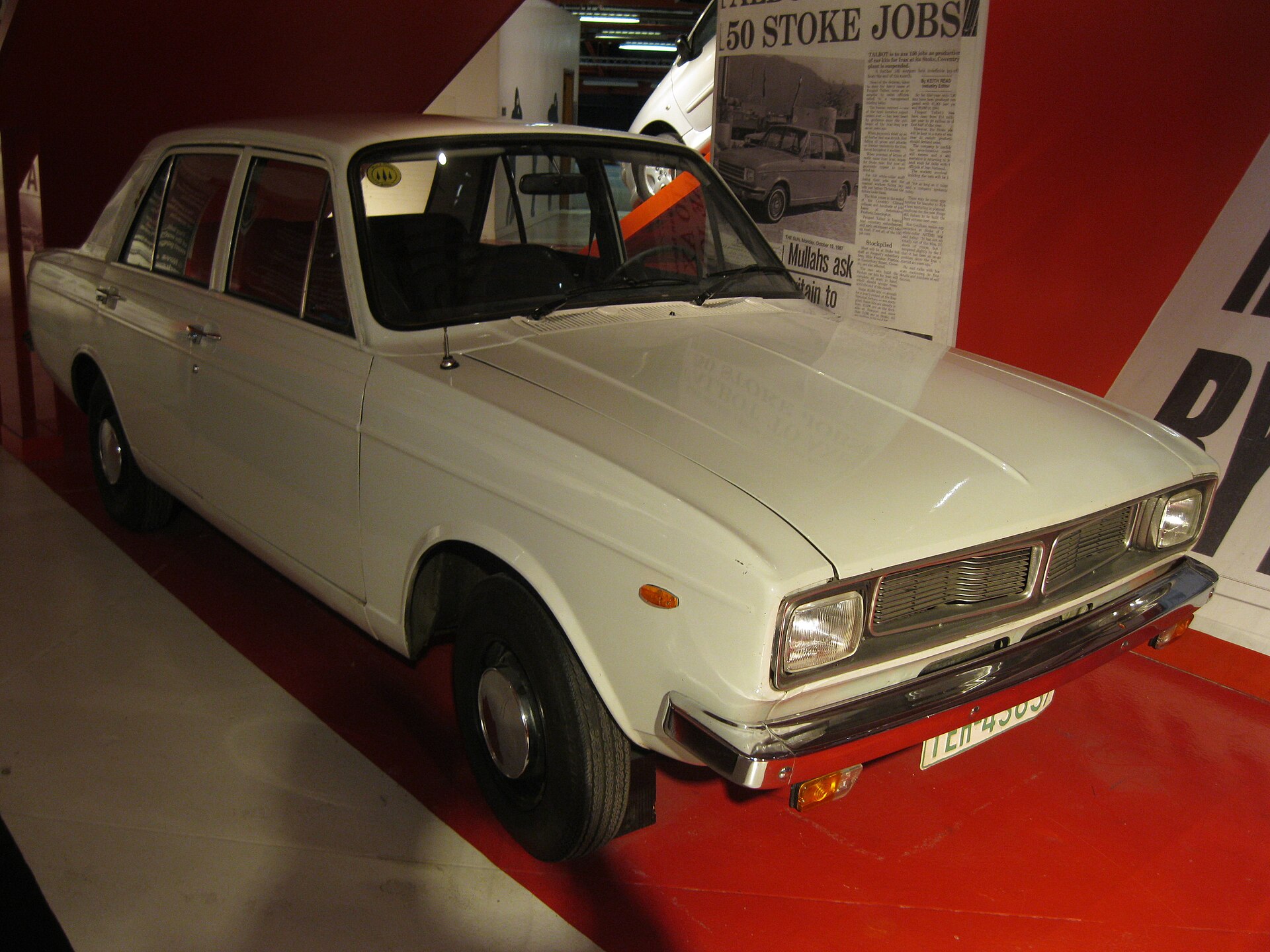
- The Paykan saloon, based on the Rootes Arrow (Hillman Hunter), was built from 1967 to 2005, the pickup until 2014–2015.
- The Samand of 2001 replaced the Paykan as Iran's "national car" and was built until 2022.
- IKCO produced 556,442 vehicles in 2023 and holds an average share of about 65% of the Iranian market.
Iran Khodro at a glance
| Fact | Value |
|---|---|
| Founded | 29 August 1962, as Iran National |
| Founders | Ahmad Khayami and Mahmoud Khayami |
| Headquarters and main plant | Tehran (capacity about 700,000 vehicles) |
| Other plants | Tabriz, Mashhad, Shiraz, Semnan, Babol |
| Best-known models | Paykan, Peugeot 405 and Pars, Samand, Dena, Tara |
| Own engine | EF7, developed with FEV of Germany from 2007 |
| Production 2023 | 556,442 vehicles |
| Employees | About 72,000 (2022) |
Iran National and the Paykan
Iran National was founded on 29 August 1962. Its first and longest-lived product was the Paykan, a licensed version of the 1966 Rootes Arrow, the family of cars sold in Britain as the Hillman Hunter. Rootes was by then the British arm of Chrysler Europe. According to the Paykan article, Mahmoud Khayami saw the need for a simple car that ordinary families in Iran could afford.
The two Wikipedia articles disagree on the details. The Hillman Hunter article dates the start of kit assembly to 1966 under a deal with Rootes and full local production to 1985, after the British lines closed. The Paykan article gives 1967 for the first kits and the mid-1970s for full manufacture. Either way, the Paykan became the country's best-known car and was the first Iranian-made car from the company. Engines over the years included the Hunter's 1,725 cc four-cylinder, a 1,598 cc unit from the Hillman Avenger with 48 kW (65 hp) and, later, a 1,796 cc PSA engine. A pickup version followed in 1969, alongside the Bardo coupé utility.
The saloon lasted until 2005. The government reportedly offered Iran Khodro an incentive to stop production because of the car's high fuel consumption, and the production line was later sold to a company in Sudan. The pickup continued until 2014–2015. The company itself appears in its record as Iran National Corp. until 1979 and as Iran Khodro after that.

Peugeot licences and a car of its own
Peugeot, which took over Chrysler Europe in 1978, arranged for Iran Khodro to build the Paykan with Peugeot 504 engines for six more years. Iran Khodro also built the Peugeot 405, the Pars, the 206 and, by 2011, about 15,000–20,000 units of the 207i. A deal of 2004 also created Renault Pars, owned 51% by Renault and 49% by IKCO, Saipa and an Iranian government organisation. Mercedes-Benz E-Class saloons of the W211 generation were assembled from kits at the subsidiary Top Khodro from the mid-2000s.
International sanctions interrupted these links. Peugeot ended its ties with Iran Khodro by the end of 2012. After the JCPOA nuclear agreement the two companies formed a 50/50 joint venture called IKAP in 2016.
To become less dependent on licences, IKCO developed its own engine, the EF7, together with the German engineering firm FEV. Work began in 2007, the engine was first shown in 2008 and a 1.5-litre turbo-diesel, the EFD, followed in 2009.

The Samand: Iran's national car
The Samand, launched in 2001, was designed in Iran on the platform of the Peugeot 405 and was promoted as the "national car" to replace the Paykan. It was even called the "New Paykan". Engines included the PSA XU7 1.8-litre with 75 kW (100 hp) or 82 kW (110 hp) and the IKCO EF7 of 1,648 cc with 84 kW (113 hp). The IKCO Samand was assembled not only in Iran but also in Senegal, Syria, Belarus, Venezuela and Azerbaijan, where it was sold as the Khazar LX. Production ended in 2022. Related models included the Soren of 2007–2019 and the Runna of 2012–2020.
Iran's total car production passed one million vehicles in 2005, and in 2009 Iran Khodro alone built about 688,000 passenger cars. Exports grew from about 35,000 cars in 2009 to 40,000 in 2010, with assembly plants abroad in Azerbaijan, Syria, Egypt, Senegal and Venezuela.

Dena, Tara, Reera and Iran Khodro today
The Dena, named after a peak in the Zagros Mountains, was unveiled in April 2011 and built in volume from 2015 to 2021. It used a modified version of the Samand platform and EF7 engines. The Dena Plus followed in 2017, and the 2023 Dena Javanan, a variant of the Dena Plus Turbo, has a turbocharged 1.7-litre engine with 120 kW (163 PS) and 240 Nm. The Dena also replaced the Samand in export markets. It has been criticised for build quality and recurring technical faults.
Newer models are the Tara saloon, launched in 2020–2021, and the Reera crossover of 2024. Iran Khodro produced 556,442 vehicles in 2023 and set a target of 600,000 for 2024. Its main plant in Tehran has a capacity of about 700,000 vehicles, and the group had about 72,000 employees in 2022. Its average share of the Iranian car market is about 65%. The full list of models is in the Iran Khodro catalogue.

Iran Khodro timeline
| Year | Event |
|---|---|
| 1962 | Iran National founded (29 August) |
| 1966–1967 | Paykan kit assembly begins |
| 1969 | Paykan pickup and Bardo |
| 2001 | Samand launched as the national car |
| 2004 | Renault Pars agreement |
| 2005 | Last Paykan saloon |
| 2007 | EF7 engine programme with FEV |
| 2011 | Dena unveiled |
| 2012 | Peugeot ends ties because of sanctions |
| 2016 | IKAP joint venture with Peugeot |
| 2020–2021 | Tara launched |
| 2022 | End of Samand production |
| 2024 | Reera crossover |
Landmark Iran Khodro models
| Model | Years | Why it matters |
|---|---|---|
| Paykan | 1967–2005 (saloon) | Licensed Hillman Hunter, Iran's best-known car for decades |
| Peugeot 405 / Pars | Licence-built | Base of IKCO's own platforms |
| Samand | 2001–2022 | Iranian-designed "national car" |
| Soren | 2007–2019 | Development of the Samand |
| Dena | 2015–2021 | Samand-based saloon that took over exports |
| Tara | 2020–present | Newer compact saloon |
| Reera | 2024–present | IKCO's crossover |
Photo gallery

FAQ
Who founded Iran Khodro?
The company was founded as Iran National on 29 August 1962. Its record names Ahmad and Mahmoud Khayami as founders.
What was the Paykan?
A licensed version of the British Rootes Arrow (Hillman Hunter), built by Iran National and Iran Khodro from 1967 to 2005 as a saloon and until 2014–2015 as a pickup.
Is the Samand a Peugeot?
It was designed in Iran but built on the platform of the Peugeot 405, and early versions used PSA's XU7 engine.
How many cars does Iran Khodro make?
556,442 vehicles in 2023, with a target of 600,000 for 2024.
Where are Iran Khodro cars made?
Mainly in Tehran, with other plants in Tabriz, Mashhad, Shiraz, Semnan and Babol, and assembly partners abroad.
Sources
- Wikipedia — Iran Khodro (accessed 24 Oct 2026)
- Wikipedia — Paykan (accessed 24 Oct 2026)
- Wikipedia — IKCO Samand (accessed 24 Oct 2026)
- Wikipedia — IKCO Dena (accessed 24 Oct 2026)
- Wikipedia — Hillman Hunter (Rootes Arrow) (accessed 24 Oct 2026)
Found a mistake? Report an error