Duesenberg — From Iowa Bicycles to the Model J, 1913 to 1937
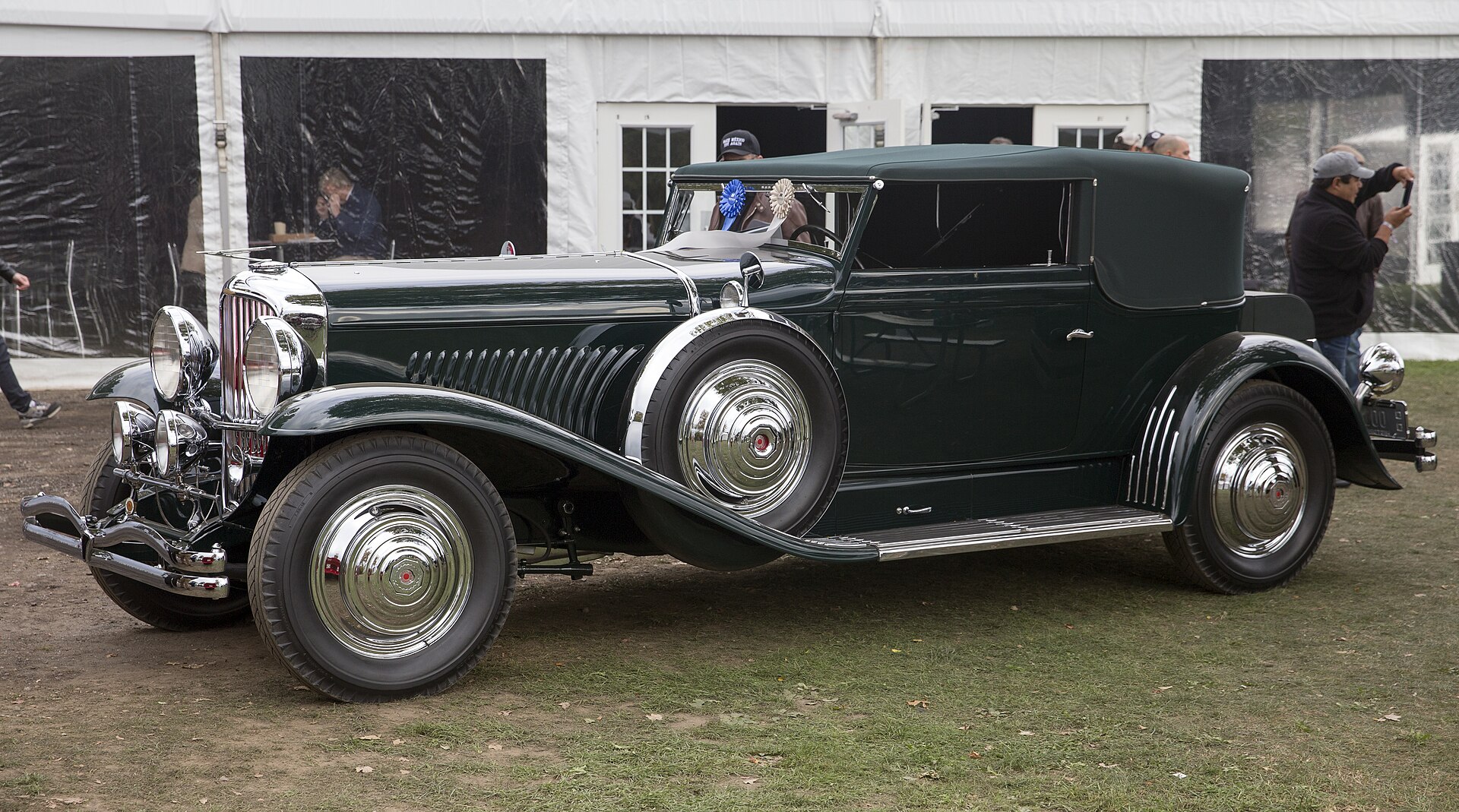
Duesenberg was the American car maker founded by the German-born brothers Fred and August Duesenberg, first known for racing cars and then for the Model J, one of the costliest American cars of its time. Its cars won the 1921 French Grand Prix and the Indianapolis 500 in the 1920s, and its Model A introduced four-wheel hydraulic brakes on a passenger car. E. L. Cord bought the company in 1926 and launched the Model J in 1928, but the Depression and the collapse of Cord's group ended production in 1937. Today a Duesenberg SSJ holds the auction record for an American car.
Key takeaways
- Fred and August Duesenberg founded the Duesenberg Motor Company in Saint Paul, Minnesota, in June 1913 and moved to Indianapolis in 1920.
- Jimmy Murphy won the French Grand Prix at Le Mans on 25 July 1921 in a Duesenberg, the first win there for an American car.
- The Model J of 1928 had a 6.9-litre twin-cam straight-eight of 198 kW (265 hp); 481 J and SJ cars were built, and about 378 survive.
- A 1935 SSJ owned by Gary Cooper sold for US$22 million in 2018, the highest auction price for an American car.
Duesenberg at a glance
| Fact | Value |
|---|---|
| Founders | Fred Duesenberg (1876–1932), August Duesenberg (1879–1955) |
| First company | Duesenberg Motor Company, Saint Paul, June 1913 |
| Car company | Duesenberg Automobile & Motors Company, Indianapolis, March 1920 |
| Owner from 1926 | E. L. Cord's group |
| Racing | French Grand Prix 1921; Indianapolis 500 winner 1922, 1924, 1925, 1927 |
| Best-known models | Model A, Model J, SJ, SSJ |
| Model J output | 481 (445 J, 36 SJ) |
| End | Company bankrupt and factory closed in 1937 |
From Iowa bicycles to racing engines
The brothers were born in Lippe, Germany: Fred on 6 December 1876 and August on 12 December 1879. After their father's death the family emigrated in 1885 and settled on a farm in Floyd County, Iowa. In the 1890s Fred and "Augie" built and raced bicycles, and around 1900 they began building petrol engines for motorcycles. Their repair shop in Rockford went bankrupt in 1903.
The first car came with outside money. The Des Moines lawyer Edward R. Mason financed Fred's two-cylinder design, and the Mason Motor Car Company was incorporated in April 1906, with Fred as designer and August as patternmaker. F. L. Maytag, the washing-machine maker, later took a majority stake and the firm became Maytag-Mason. Fred left in 1910, the partnership was dissolved in 1912, and car production ended in 1913.
In June 1913 the brothers founded the Duesenberg Motor Company in Saint Paul, Minnesota, and filed patents for their "walking beam" four-cylinder and their straight-eight engines. Eddie Rickenbacker finished tenth in the 1914 Indianapolis 500 in a Duesenberg. In the First World War they built aircraft and marine engines at a new plant in Elizabeth, New Jersey, and their work on Ettore Bugatti's aero engines influenced the straight-eight design. John Willys bought the business in 1919.
Indianapolis and the 1921 French Grand Prix
In March 1920 the Duesenberg Automobile & Motors Company was founded in Indianapolis, and in August the brothers set up Duesenberg Brothers for racing. August ran the racing side and was team chief mechanic for about two decades. In April 1920 Tommy Milton reached 156.046 mph (251.132 km/h) over a measured mile at Daytona Beach, though without the return run needed for an official record.
The greatest result came in France. On 25 July 1921 Jimmy Murphy won the French Grand Prix on the 17.26 km Circuit de la Sarthe at Le Mans, covering 30 laps in 4 hours 7 minutes and finishing almost 15 minutes ahead of Ralph DePalma's Ballot. The race report credits the Duesenbergs with superior brakes. It was the first French Grand Prix after the war. No American constructor won a major European race again until the Ford GT40 took Le Mans in 1966, or a Grand Prix until Dan Gurney won in his Eagle in 1967.
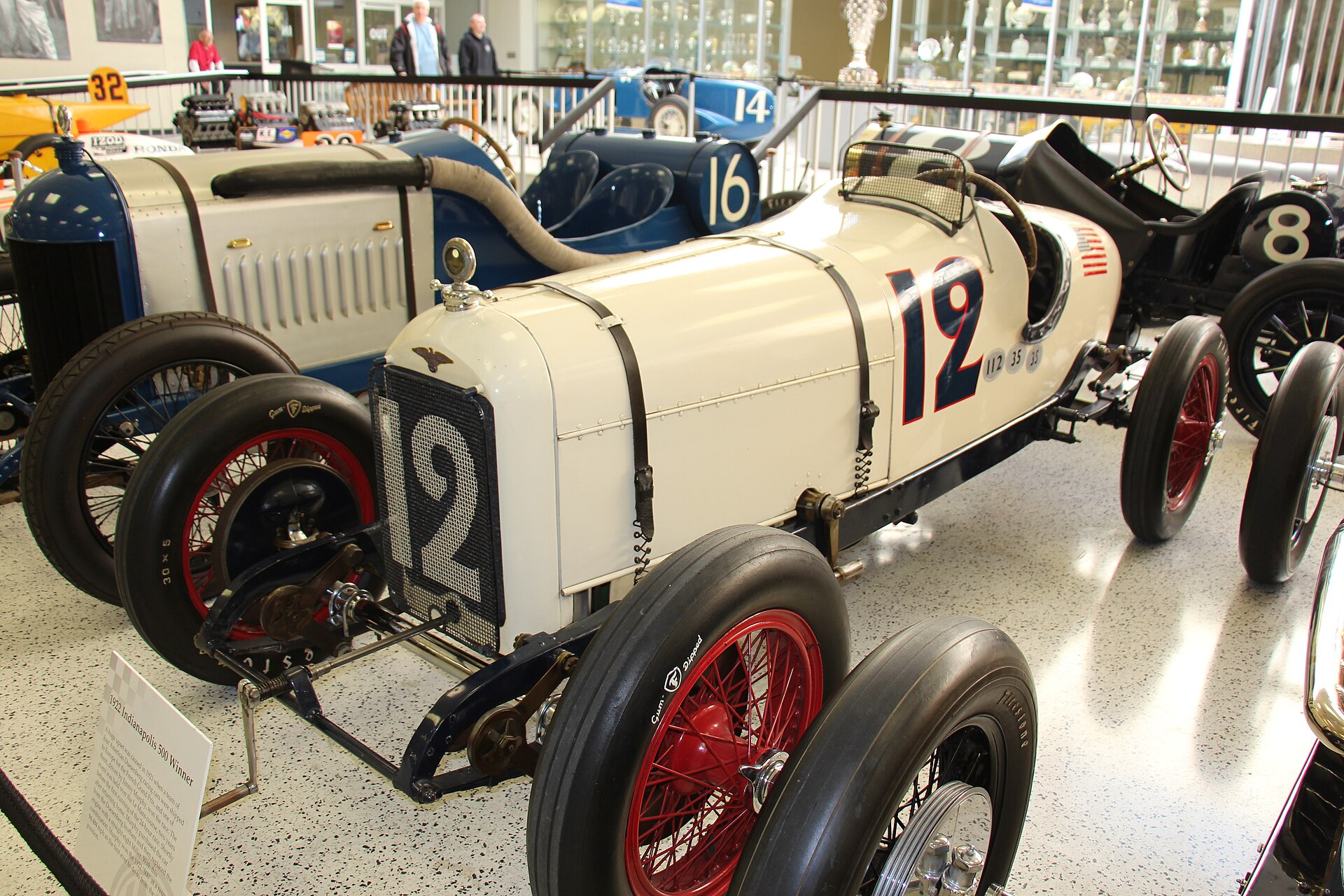
Duesenbergs then won the Indianapolis 500 in 1922 with Murphy, in 1924, in 1925 with Pete DePaolo and in 1927. DePaolo was the first winner to average more than 100 mph. Fred Duesenberg's Hall of Fame summary counts three wins, for 1924, 1925 and 1927.

The Model A and receivership
The first Duesenberg road car was the Model A, delivered to dealers from December 1921. Its 4.3-litre straight-eight had an overhead camshaft and gave 66 kW (88 hp). It was the first passenger car with four-wheel hydraulic brakes. The price was high and the styling plain, so sales were slow: no more than 150 were built in 1922 and about 650 in six years. Thirteen of the sportier Model X, with 75 kW (100 hp), were built. The company went into receivership in 1924 and emerged in 1925.
E. L. Cord and the Model J
In 1926 E. L. Cord bought Duesenberg and made it part of his Cord Corporation, alongside Auburn and Lycoming. Fred became vice-president of engineering. The result of the new ownership was the Model J, shown at the New York show on 1 December 1928 and in Paris in 1929.
Its 6.9-litre straight-eight, built by Lycoming, had twin overhead camshafts and four valves per cylinder and gave 198 kW (265 hp) at 4,250 rpm. Top speed was 187 km/h, with 143 km/h available in second gear. The standard wheelbase was 3,620 mm, and a finished car weighed about 2.5 tonnes. A bare chassis cost US$8,500 in 1929 and US$9,500 after 1932; complete cars mostly cost US$13,000 to US$19,000 at the time. Duesenberg built the chassis, and about half received bodies designed by Gordon Buehrig, the rest coming from coachbuilders such as Derham, LeBaron, Murphy, Rollston and Willoughby in America and Franay, Gurney Nutting and Saoutchik in Europe.
The Depression hit at once. About 200 cars had been built by the crash of October 1929, and another 100 orders followed in 1930, far short of the 500 a year Cord wanted. Owners included Clark Gable, Gary Cooper, Greta Garbo, Mae West, Howard Hughes, William Randolph Hearst and King Alfonso XIII of Spain.
SJ, SSJ and the Mormon Meteor
The supercharged SJ arrived in May 1932 with about 239 kW (320 hp), and only 36 were built. It was reputedly capable of about 130 mph in third gear. On 2 July 1932 Fred Duesenberg crashed a prototype on a wet road near Jennerstown, Pennsylvania. He developed pneumonia and died on 26 July 1932, aged 55. August took over as chief engineer.
Two short-wheelbase SSJ roadsters with bodies by Central Manufacturing were built in 1935, with about 298 kW (400 hp); one went to Gary Cooper and the other was loaned to Clark Gable. The same year a special SJ built for Ab Jenkins, later called the Mormon Meteor, set a one-hour record of 247.79 km/h and a 24-hour record of 218.18 km/h at Bonneville, and the 24-hour mark stood until 1961.
The end and later revivals
Cord sold his holdings in 1937, and Duesenberg went bankrupt and closed its factory that year. Model J production, counted by when the cars were bodied, stopped at 481. The last car was assembled from spare parts between 1938 and 1940 for the artist Rudolf Bauer. August built miniature racing cars from 1940 and died near Indianapolis on 18 January 1955.
The name was revived several times. A 1966 attempt with Fritz Duesenberg and the designer Virgil Exner produced one concept car. Elite Heritage Motors built the Duesenberg II replica in Elroy, Wisconsin, and made 67 cars before closing in 2001.

Collecting a Duesenberg today
Values have risen steadily. A used Model J averaged about US$700 around 1941–1942, a record auction price of US$205,000 was paid in 1974, the Mormon Meteor sold for US$4.5 million in August 2004, and Cooper's SSJ fetched US$22 million in 2018. On these figures, a standard Model J of about 2.5 tonnes had about 79 kW per tonne. Compared with that, an SJ of the same weight had about 96 kW per tonne; the power-to-weight calculator works out the same for any car. The Model J is covered in Duesenberg Model J and SJ history and specifications, the model is listed in the Duesenberg catalogue, and its sister marque is in the Cord catalogue.
Duesenberg timeline
| Year | Event |
|---|---|
| 1906 | Mason Motor Car Company incorporated (April) |
| 1913 | Duesenberg Motor Company founded in Saint Paul (June) |
| 1920 | Duesenberg Automobile & Motors Company, Indianapolis (March) |
| 1921 | French Grand Prix win (25 July); Model A deliveries (December) |
| 1924 | Receivership |
| 1926 | E. L. Cord buys the company |
| 1928 | Model J shown in New York (1 December) |
| 1932 | SJ introduced (May); Fred Duesenberg dies (26 July) |
| 1935 | SSJ roadsters; Mormon Meteor records at Bonneville |
| 1937 | Bankruptcy and factory closure |
| 1940 | Last car delivered to Rudolf Bauer |
Landmark Duesenberg models
| Model | Years | Why it matters |
|---|---|---|
| Model A | 1921–1927 | First passenger car with four-wheel hydraulic brakes |
| Model J | 1928–1937 | 6.9-litre twin-cam eight, 198 kW (265 hp) |
| SJ | from 1932 | Supercharged, about 239 kW (320 hp); 36 built |
| SSJ | 1935 | Two roadsters for Gary Cooper and Clark Gable |
| Mormon Meteor | 1935 | 24-hour record of 218.18 km/h at Bonneville |
FAQ
Who founded Duesenberg?
The brothers Fred and August Duesenberg, born in Germany and raised in Iowa. They founded the Duesenberg Motor Company in Saint Paul in 1913.
Why was the Model J so famous?
Its 198 kW (265 hp) twin-cam straight-eight was far stronger than the Model A's 66 kW, and its custom bodies made it a car of film stars and royalty.
Which drivers won races in Duesenbergs?
Jimmy Murphy won the 1921 French Grand Prix and the 1922 Indianapolis 500; Pete DePaolo won at Indianapolis in 1925.
When did Duesenberg stop making cars?
The company went bankrupt in 1937. The last car was completed in 1940 for Rudolf Bauer.
How much is a Duesenberg worth?
Prices vary by model and history. A 1935 SSJ sold for US$22 million in 2018, the highest auction price for an American car.
Sources
- Wikipedia — Duesenberg (accessed 24 Oct 2026)
- Wikipedia — Duesenberg Model J (accessed 24 Oct 2026)
- Wikipedia — Fred Duesenberg (accessed 24 Oct 2026)
- Wikipedia — August Duesenberg (accessed 24 Oct 2026)
- Wikipedia — 1921 French Grand Prix (accessed 24 Oct 2026)
Found a mistake? Report an error