Auburn — the Indiana Car Maker Behind the Boat-Tail Speedster
Auburn was an American car maker from Auburn, Indiana, that grew out of a carriage works and built cars from about 1903 to 1937. It is remembered above all for the boat-tailed Speedsters of 1928–1936 and for E. L. Cord, the salesman who took over the company in 1924 and built a group around it that included Cord, Duesenberg and Lycoming. The Depression made its fast, stylish cars hard to sell, and car production ended in 1937. Its art deco head office in Auburn is now the Auburn Cord Duesenberg Automobile Museum.
Key takeaways
- Frank and Morris Eckhart, sons of a carriage maker, started building cars in Auburn, Indiana, in about 1903.
- E. L. Cord joined in 1924, completed a buyout before the end of 1925 and by 1931 had made Auburn the 13th-largest car seller in the United States.
- The supercharged 851 Speedster of 1935 had 112 kW (150 bhp) and a top speed of 160 km/h; a 1935 car set 70 American speed records.
- Auburn, Cord and Duesenberg were all discontinued in 1937, after Cord sold his holdings in August that year.
Auburn at a glance
| Fact | Value |
|---|---|
| Company | Auburn Automobile Company |
| Founded | about 1903, by Frank and Morris Eckhart |
| Home | Auburn, Indiana; second plant in Connersville, Indiana |
| Key people | Charles Eckhart, E. L. Cord, Alan Leamy, Gordon Buehrig |
| Best-known models | Speedster (115, 120, 851, 852), Auburn 12 |
| Sister marques | Cord (1929–1932, 1936–1937), Duesenberg |
| End of car production | 1937 |
| Legacy | Auburn Cord Duesenberg Automobile Museum (opened 6 July 1974) |
The Eckhart years, 1874–1919
The story begins with carriages. Charles Eckhart, born in 1841, founded the Eckhart Carriage Company in Auburn in 1874. His sons Frank and Morris tried building cars before they took up the business seriously in about 1903. They absorbed two other local car makers and moved into a larger plant in 1909.
The early cars were simple. The 1904 Auburn was a touring car with a rear tonneau, seating two or four. A single-cylinder engine of 7.5 kW (10 hp) was mounted flat in the middle of the car, with a two-speed planetary gearbox and an angle-steel frame. It weighed 680 kg and cost US$1,000 in 1904. The company did reasonably well until the First World War, when shortages of materials forced the plant to close.
Chicago investors and the arrival of E. L. Cord
In 1919 the Eckharts sold the business to a group of Chicago investors led by Ralph Austin Bard, who later served as Assistant Secretary of the Navy. The new owners revived production, but Auburn still lost money. In 1924 they offered the running of the company to Errett Lobban Cord.
Cord was born in Warrensburg, Missouri, on 20 July 1894 and had worked as a racing driver, mechanic and car salesman. He proposed buying the company outright, and the investors agreed. He began by selling off the stock of unsold cars, and he completed the buyout before the end of 1925. By 1928 he controlled Auburn, and in 1929 he formed the Cord Corporation, a holding company for more than 150 businesses, mostly in transport. Among them were Lycoming engines, Duesenberg, the Checker taxi maker, Stinson Aircraft and American Airways, the later American Airlines.
Eight cylinders and the Speedster
Under Cord, Auburn moved up the market with eight-cylinder engines from Lycoming. The first Auburn Eight-In-Line came in 1925. In 1926 its side-valve engine was enlarged from 4.5 to 4.8 litres, with 51 kW (68 hp), and the car was named 8-88. An 86 kW (115 hp) version followed and was called the 115.
The Speedster was the car that made the name. The Speedster 120 of 1928–1929 had an 89 kW (120 hp) straight-eight, and about 100 were built; roughly eight survive. The Speedster 125 of 1930 had 93 kW (125 bhp) and a top speed of more than 100 mph. For 1931 Auburn added the Auburn 12, with a 6.4-litre V12 designed by George Kublin and built by Lycoming, and about 25 Speedster 160s were built with it. That year Auburn was the 13th-largest seller of cars in the United States.
Styling was as important as speed. Alan Leamy designed the first two Speedster series, and Alexis de Sakhnoffsky the open two-seater body of the 1930 car.
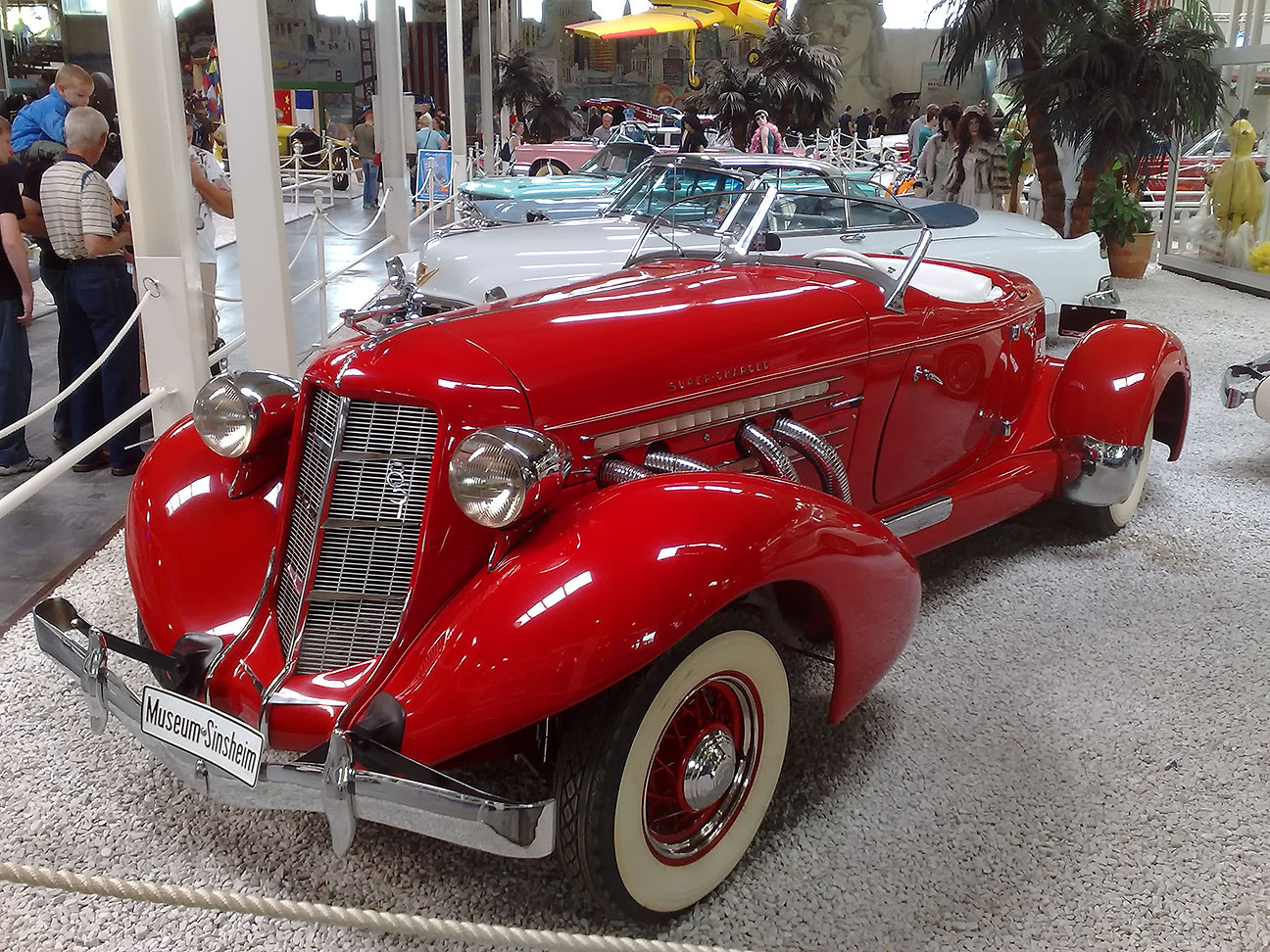
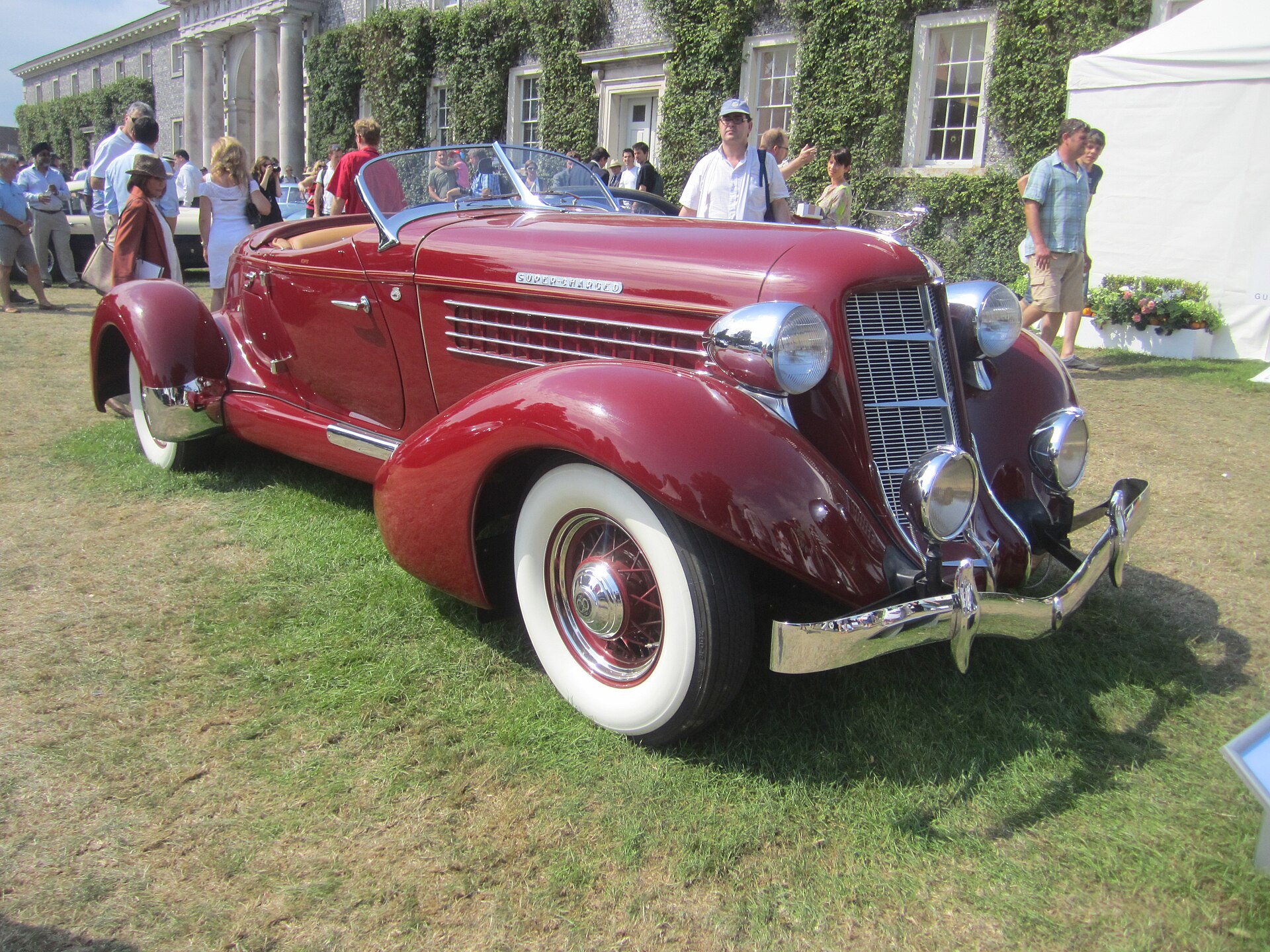
Gordon Buehrig, who had been chief body designer at Duesenberg and styled about half of the Model Js, moved to Auburn in 1934. His 851 Speedster, sold as a 1935 model, reused leftover Speedster bodies. Its 4,585 cc side-valve straight-eight had an aluminium head and a Schweitzer-Cummins centrifugal supercharger, and gave 112 kW (150 bhp) at 4,000 rpm. A dual-ratio rear axle offered a "fast" 4.5:1 and a "leisurely" 3:1, and the car could reach 100 mph (160 km/h). A 1935 car broke 70 American speed records. The 852 of 1936 differed only in its grille badge. The Speedster's development is covered in Auburn Speedster 851 history and specifications.

Cord, Duesenberg and the Depression
Cord used Auburn as the base for two more marques. In 1926 he joined forces with Duesenberg, which launched the expensive Model J in 1928; Duesenberg built the chassis and outside coachbuilders made the bodies. The front-wheel-drive Cord L-29, sold under his own name, followed in 1929. Cord also bought Central Manufacturing, a coachbuilder founded in 1896 that made metal bodies for Auburn and other firms. The later Cord 810 and 812, designed by Buehrig's team as a "Baby Duesenberg", appeared at the New York show in November 1935.
The timing was poor. After the stock market crash of 1929, Auburn's fast and expensive cars sold badly, and around 1935 the company began making kitchen cabinets and sinks to survive. Cord himself moved to England in 1934, reportedly because of kidnapping threats, and returned in 1936. The Securities and Exchange Commission then investigated his dealings in Checker Cab shares. Under an SEC injunction he sold his holdings in August 1937, and production of Auburn, Cord and Duesenberg cars ended that year.
After 1937: military bodies and a museum
The factories lived on. Former Auburn managers built the Pak-Age-Car delivery van in the Connersville plant from 1938 to 1941. A bankruptcy reorganisation in 1940 merged Auburn and Central Manufacturing into Auburn Central Manufacturing (ACM), renamed American Central Manufacturing in March 1942. In March 1941 ACM won a Willys-Overland contract for 1,600 Willys MA bodies. It went on to supply all body tubs for the Willys MB, about 360,000 up to 1945, and about half of the bodies for the Ford GPW. By mid-1943 it had built its 150,000th body for these military vehicles. After 1945 ACM chose sinks, cabinets and appliances as its main products.
The administration building and showroom in Auburn, built in 1930 in art deco style to a design by Alvin M. Strauss, became the Auburn Cord Duesenberg Automobile Museum on 6 July 1974. It holds more than 120 cars in seven galleries and was named a National Historic Landmark on 5 April 2005. E. L. Cord died in Reno, Nevada, on 2 January 1974.
Collecting an Auburn today
Auburns are rare cars. Only 887 Speedsters were built across three series from 1928 to 1936, and about 143 of them were supercharged 851 or 852 boat-tails. With 112 kW for about 1,700 kg, the 851 had about 66 kW per tonne on these figures. the power converter translates the period bhp ratings. The shape has been reproduced by later makers, so the history of a given car matters to buyers. The surviving model is listed in the Auburn catalogue, and more cars of the period are in the 1930s classics section.
Auburn timeline
| Year | Event |
|---|---|
| 1874 | Eckhart Carriage Company founded |
| about 1903 | First Auburn cars |
| 1909 | Move to a larger plant |
| 1919 | Sold to Chicago investors led by Ralph Bard |
| 1924 | E. L. Cord joins; buyout completed by the end of 1925 |
| 1928 | Speedster 120 |
| 1929 | Cord Corporation formed; Cord L-29 |
| 1931 | Auburn 12 V12; 13th-largest US car seller |
| 1935 | 851 Speedster with supercharger |
| 1937 | Car production ends |
| 1974 | Auburn Cord Duesenberg Automobile Museum opens (6 July) |
Landmark Auburn models
| Model | Years | Why it matters |
|---|---|---|
| 1904 touring car | 1904 | Single-cylinder car of 7.5 kW (10 hp), US$1,000 in 1904 |
| 8-88 | from 1926 | 4.8-litre Lycoming straight-eight |
| Speedster 120 | 1928–1929 | First boat-tail Speedster; about 100 built |
| Auburn 12 | from 1931 | 6.4-litre V12 built by Lycoming |
| 851/852 Speedster | 1935–1936 | 112 kW (150 bhp) supercharged, 160 km/h |
FAQ
Who founded Auburn?
Frank and Morris Eckhart, the sons of carriage maker Charles Eckhart, in Auburn, Indiana, in about 1903.
What was the Auburn Speedster?
A two-seat boat-tail sports car built from 1928 to 1936. The supercharged 851 of 1935 had 112 kW (150 bhp) and could exceed 100 mph (160 km/h).
What was E. L. Cord's role?
He took over Auburn in 1924 and built the Cord Corporation around it, with Duesenberg, Lycoming and many transport companies.
Why did Auburn stop making cars?
The Depression hit sales of its expensive cars, and after an SEC investigation E. L. Cord sold his holdings in August 1937. Production ended that year.
Where can Auburn cars be seen?
At the Auburn Cord Duesenberg Automobile Museum in the company's former head office in Auburn, Indiana.
Sources
- Wikipedia — Auburn Automobile (accessed 24 Oct 2026)
- Wikipedia — Errett Lobban Cord (accessed 24 Oct 2026)
- Wikipedia — Auburn Speedster (accessed 24 Oct 2026)
- Wikipedia — Gordon Buehrig (accessed 24 Oct 2026)
- Wikipedia — Auburn Cord Duesenberg Automobile Museum (accessed 24 Oct 2026)
Found a mistake? Report an error