 Vauxhall Prince Henry
Specs, engines and history
Published Sources (1) Report an error
By Felix Hartmann, Automotive Technology & EV Contributor
- Built
- 1911–1915
- Top power
- 56 kW (76 PS)
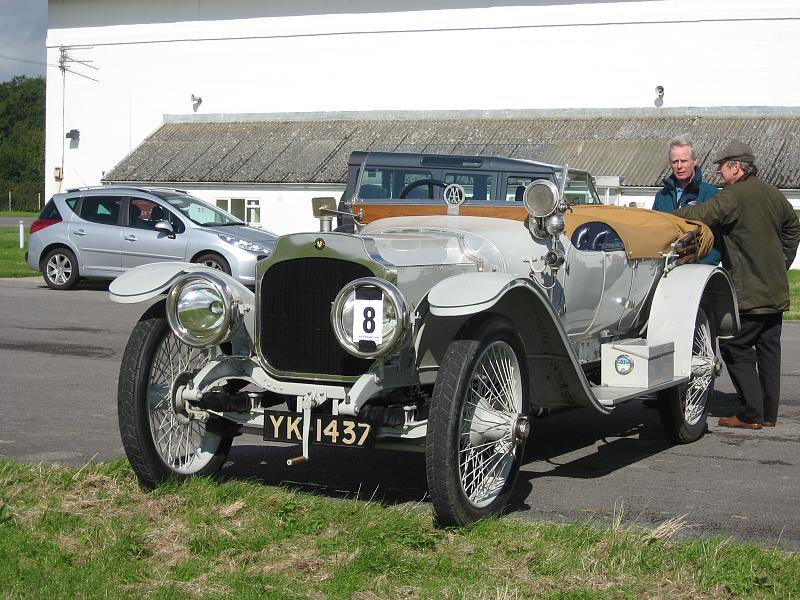
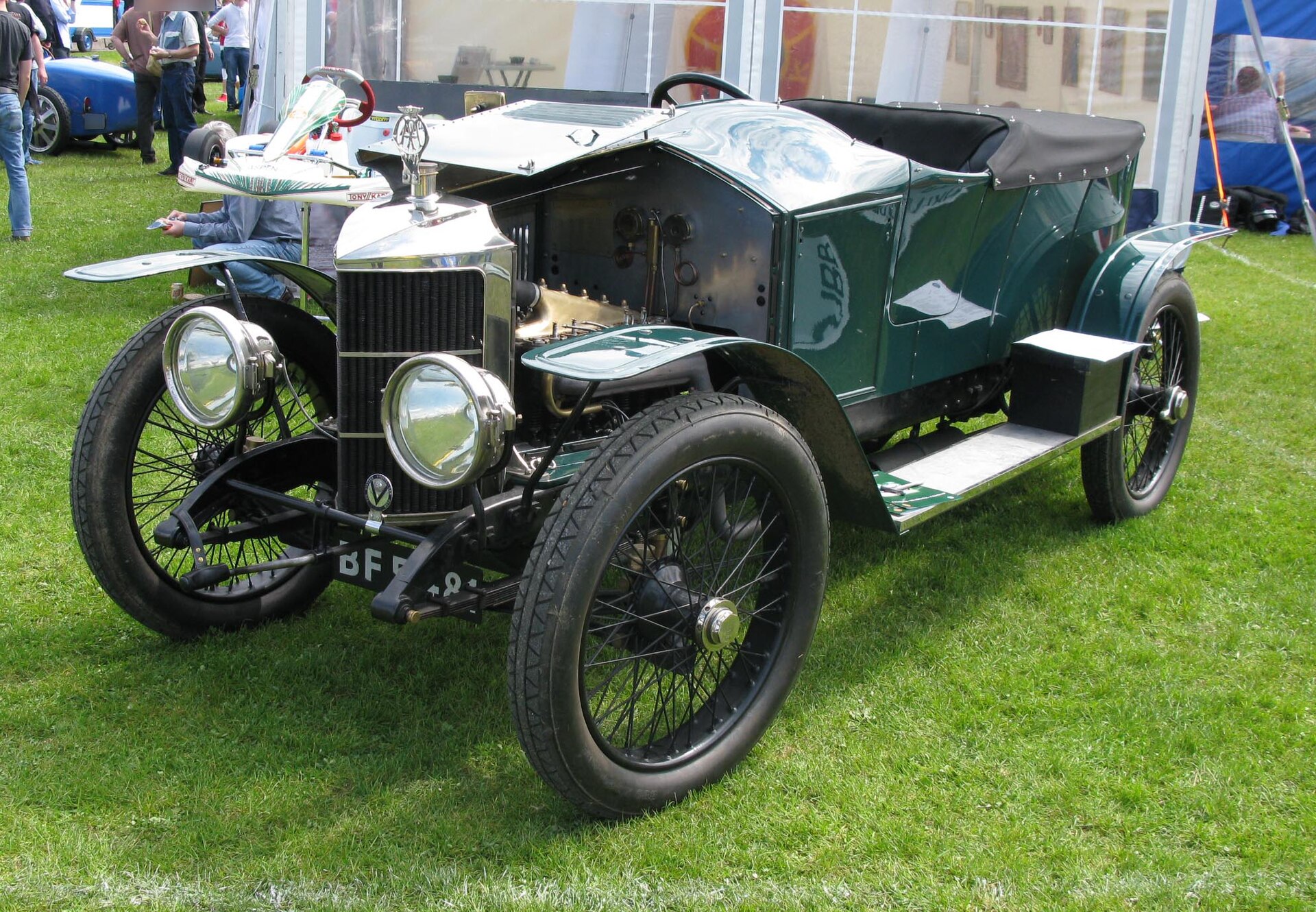
The Vauxhall Prince Henry is the fast touring car that Vauxhall built at Luton from 1911 to 1915, developed from the three cars the company entered in Germany's Prince Henry Trial of 1910. Designed by Laurence Pomeroy, it used a side-valve four-cylinder of 3.0 litres, enlarged to 4.0 litres in 1913. Its chassis became the basis of the Vauxhall 30-98, reported as "the first and perhaps the best British sports car". During the First World War a derated version, the D-type, served as a staff car for British forces.
In short
- Three specially prepared cars ran in the 1910 Prinz-Heinrich-Fahrt, a trial of about 1,900 km in Germany; replicas were sold as the C-type, now known as the Prince Henry.
- 3,054 cc side-valve four with 45 kW (60 bhp) at 2,800 rpm; from 1913 3,969 cc and 56 kW (75 bhp) at 2,500 rpm.
- Four-speed gearbox, live rear axle, about 1,250 kg; wheelbase 2,972 mm, later 3,048 mm.
- Replicas were offered at £580 (1911); German Wikipedia counts nine surviving cars.
Specs by version
Engines
| Version | Engine | Power | Gearbox | Drive | Production years |
|---|---|---|---|---|---|
| 3.0 (C-10, 3054 cc) | 3.1 l · 4 cyl · Petrol 3,054 cc | 45 kW 61 PS60 hp | 4-sp Manual | Rear-wheel drive | 1911–1912 |
| 4.0 (C-type, 3969 cc) | 4.0 l · 4 cyl · Petrol 3,969 cc | 56 kW 76 PS75 hp | 4-sp Manual | Rear-wheel drive | 1913–1915 |
Dimensions and weight
Verified Manufacturer and type-approval data from our catalog · Sources and methodology
Vauxhall Prince Henry at a glance
| Parameter | Value |
|---|---|
| Maker | Vauxhall, Luton, England |
| Production | 1911–1915 (infobox: 1911–1914) |
| Internal code | C-10, later C-type |
| Body | open sports car |
| Engine | side-valve monobloc inline-four, 3,054 cc; 3,969 cc from 1913 |
| Power | 45 kW (60 bhp); 56 kW (75 bhp) from 1913 |
| Gearbox | four-speed sliding-pinion manual |
| Weight | about 1,250 kg |
| Designer | Laurence Pomeroy |
| Predecessor / successor | Vauxhall A-type / 30-98 |
Development and production history
Vauxhall began in 1857, when the Scottish marine engineer Alexander Wilson founded a company at Wandsworth Road in Vauxhall, London, building pumps and marine engines. The firm built its first car in 1903, a five-horsepower single-cylinder model steered by a tiller, with two forward gears and no reverse; wheel steering and a reverse gear followed in 1904.
To expand, the company moved most of its production to Luton in 1905. In 1906 the 22-year-old Laurence Pomeroy joined as an assistant draughtsman. In the winter of 1907–1908 he designed an engine for the RAC and Scottish Reliability Trial of 1908, while the chief engineer F. W. Hodges was on holiday; the cars did so well that Pomeroy took over as chief designer, and the 1908 trial car went into production as the A-type.
The 1910 Prince Henry Trial was a long-distance event in Germany named after Prince Henry of Prussia. For it Vauxhall prepared three special cars based on the A-type, with a streamlined, rounded rear body and a matching radiator and bonnet. According to a contemporary account, two of the three earned full marks for reliability, and all three reached about 65 mph (105 km/h) in the speed test.
The cars did not win the event outright, but they performed well, and the replicas sold so quickly that they became known as Prince Henry Vauxhalls. One of the trial cars also won the Brooklands speed trials and its class's fuel-economy award in the RAC 2,000-mile trial, after which Pomeroy was promoted to works manager.
The production car was offered from 1911 under the code C-10 and shown at the 1911 Olympia Motor Show. In 1913 the engine grew from 3.0 to 4.0 litres, and the car became the C-type. Production at Luton continued until 1915, although the infobox of English Wikipedia ends it in 1914.
| Year | Event |
|---|---|
| 1857 | Alexander Wilson founds the company in Vauxhall, London |
| 1903 | First Vauxhall car |
| 1905 | Production moves to Luton |
| 1908 | Pomeroy's car wins its class in the RAC and Scottish trial |
| 1910 | Three cars in the Prince Henry Trial in Germany |
| 1911 | Replicas on sale (C-10); shown at Olympia |
| 1913 | 3,969 cc engine, C-type; first 30-98 built on the chassis |
| 1914 | Fluted bonnet panels on the 1914 cars |
| 1914–1918 | D-type staff cars for British forces |
| 1915 | End of Prince Henry production |

Design and engineering
The Prince Henry was a front-engined, rear-wheel-drive car with a four-speed sliding-pinion gearbox and a live rear axle. The 1911 cars have a wheelbase of 117 in (2,972 mm) and a length of about 159 in (4,039 mm). The 1913 cars have 120 in (3,048 mm) and about 162 in (4,115 mm), depending on the body. Kerb weight is about 1,250 kg (2,756 lb).
The body of the trial cars was shaped for speed, with a rounded rear and a radiator and bonnet designed to match. Cars built in 1914 have fluted bonnet panels that fade out a short distance behind the radiator.

Engine and drivetrain
| Version | Years | Engine | Bore × stroke | Power |
|---|---|---|---|---|
| C-10 | 1911–1912 | 3,054 cc side-valve monobloc I4 | - | 45 kW (60 bhp) at 2,800 rpm |
| C-type | 1913–1915 | 3,969 cc side-valve I4 | 95 × 140 mm | 56 kW (75 bhp) at 2,500 rpm |
The original trial engine produced about 30 kW (40 bhp) before it was tuned to about 45 kW (60 bhp) for the trial cars. German Wikipedia gives 44 kW (60 PS) at 2,800 rpm for the 3.0-litre engine and 63 kW (86 PS) at 3,300 rpm for the 4.0-litre; the English figures are used in the table. Our power converter translates bhp and PS into kW.

Vauxhall Prince Henry specifications
| Parameter | Metric | Imperial |
|---|---|---|
| Engine | 3,054 cc / 3,969 cc I4, side valves | 186 / 242 cu in |
| Power | 45 kW / 56 kW | 60 / 75 bhp |
| Wheelbase | 2,972 mm (1911); 3,048 mm (1913) | 117 / 120 in |
| Length | about 4,039 mm (1911); about 4,115 mm (1913) | about 159 / 162 in |
| Kerb weight | about 1,250 kg | about 2,756 lb |
| Gearbox | four-speed sliding-pinion | - |
| Drive | rear wheels, live axle | - |
From Prince Henry to 30-98 and D-type
The Prince Henry chassis carried two important successors. In 1913 the car dealer and competitor Joseph Higginson asked Vauxhall for a faster car. Pomeroy bored out and lengthened the stroke of the Prince Henry's side-valve engine, and Higginson won the Shelsley Walsh hill climb on 7 June 1913 in the new car, setting a hill record. This was the first 30-98, built from 1913 to 1927 and later reported as "the first and perhaps the best British sports car". Only 13 were made before the war.
During the First World War Vauxhall built large numbers of the D-type, a Prince Henry chassis with a derated engine, as staff cars for British forces. Pomeroy left for the United States in 1919 and was replaced by C. E. King. On 16 November 1925 General Motors bought Vauxhall for US$2.5 million (1925). At that time, according to English Wikipedia, the company was making only seventeen cars a week, and the purchase was unpopular with senior GM executives. The American group's own history is told in our history of General Motors.

The Prince Henry in numbers
From 1911 to 1913 the engine grew by 30%, from 3,054 to 3,969 cc, and power by 25%, from 45 to 56 kW. With about 1,250 kg, the later car had about 22 kg per kilowatt. At £580 (1911), the replica sold after the 1910 trial cost about half of what Vauxhall asked for a bare 30-98 chassis after the war (£1,125 in 1919). Prices of the two periods are not directly comparable, though.
The later 30-98 itself shows how the idea grew: after only 13 cars before the war, 274 were built with the E engine and 313 with the OE engine, about 600 in all. Production numbers for the Prince Henry itself are not recorded in the sources, but the nine surviving cars counted by German Wikipedia show how rare it is today.
Which Prince Henry to look for
- For the original concept: an early 3.0-litre C-10 of 1911–1912.
- For performance: a 4.0-litre C-type of 1913–1915.
- For the classic Vauxhall look: a 1914 car with fluted bonnet panels.
- For history: a car with documented trial or competition use.
- For the next step: a post-war 30-98 on the same chassis, priced from £950 for a bare chassis in 1921 and 1924.
Surviving cars can have long, documented histories: English Wikipedia follows a 1914 car owned from new by W. T. Badgery, bought by L. E. W. Pomeroy in 1946 and later owned by Reg Long. Today's Vauxhall models are in the Vauxhall catalogue, and more early cars in classic cars.
Photo gallery

Vauxhall Prince Henry in our rankings
- No. 43 of 420 · Smallest cars (4,039 mm · top 11%)
- No. 196 of 557 · Biggest engines: cars (3,969 cc · top 36%)
- No. 11 of 30 · Smallest convertibles and roadsters (4,039 mm · top 37%)
- No. 21 of 49 · Biggest engines: convertibles and roadsters (3,969 cc · top 43%)
- No. 19 of 30 · Longest convertibles and roadsters (4,115 mm · top 64%)
- No. 699 of 912 · Longest-running car nameplates (4 years · top 83%)
Shorter than 89% of ranked cars in the 1CARS catalog (No. 43 of 420).
FAQ
When was the Vauxhall Prince Henry produced?
From 1911 to 1915 at Luton; the infobox of English Wikipedia gives 1911–1914.
Why is it called the Prince Henry?
It was developed from the cars Vauxhall entered in the 1910 Prince Henry Trial (Prinz-Heinrich-Fahrt) in Germany, named after Prince Henry of Prussia.
What engine does the Vauxhall Prince Henry have?
A side-valve four-cylinder of 3,054 cc with 45 kW (60 bhp), enlarged in 1913 to 3,969 cc with 56 kW (75 bhp).
Who designed the Prince Henry?
Laurence Pomeroy, Vauxhall's chief designer, who later turned it into the 30-98.
How many Prince Henry Vauxhalls survive?
German Wikipedia counts nine surviving cars; English Wikipedia gives no production total.
Data sources
Data checked by an editor against the sources below.