 Vector W8
Specs, engines and history
Published Sources (1) Report an error
By Felix Hartmann, Automotive Technology & EV Contributor
- Built
- 1989–1993
- Top power
- 466 kW (634 PS)
Vector was the small American supercar company of Gerald "Jerry" Wiegert, who started it as Vehicle Design Force; English Wikipedia gives both 1971 and 1978 as the founding year. His first Vector concept was planned to cost about US$100,000 and appeared on the cover of Motor Trend in April 1972. A prototype was shown at the 1976 Los Angeles Auto Show. The company became Vector Aeromotive when its work moved to the W2, which ran as a prototype from 1979 and covered more than 100,000 miles. Wiegert died in January 2021, aged 76, and the company is listed as defunct.
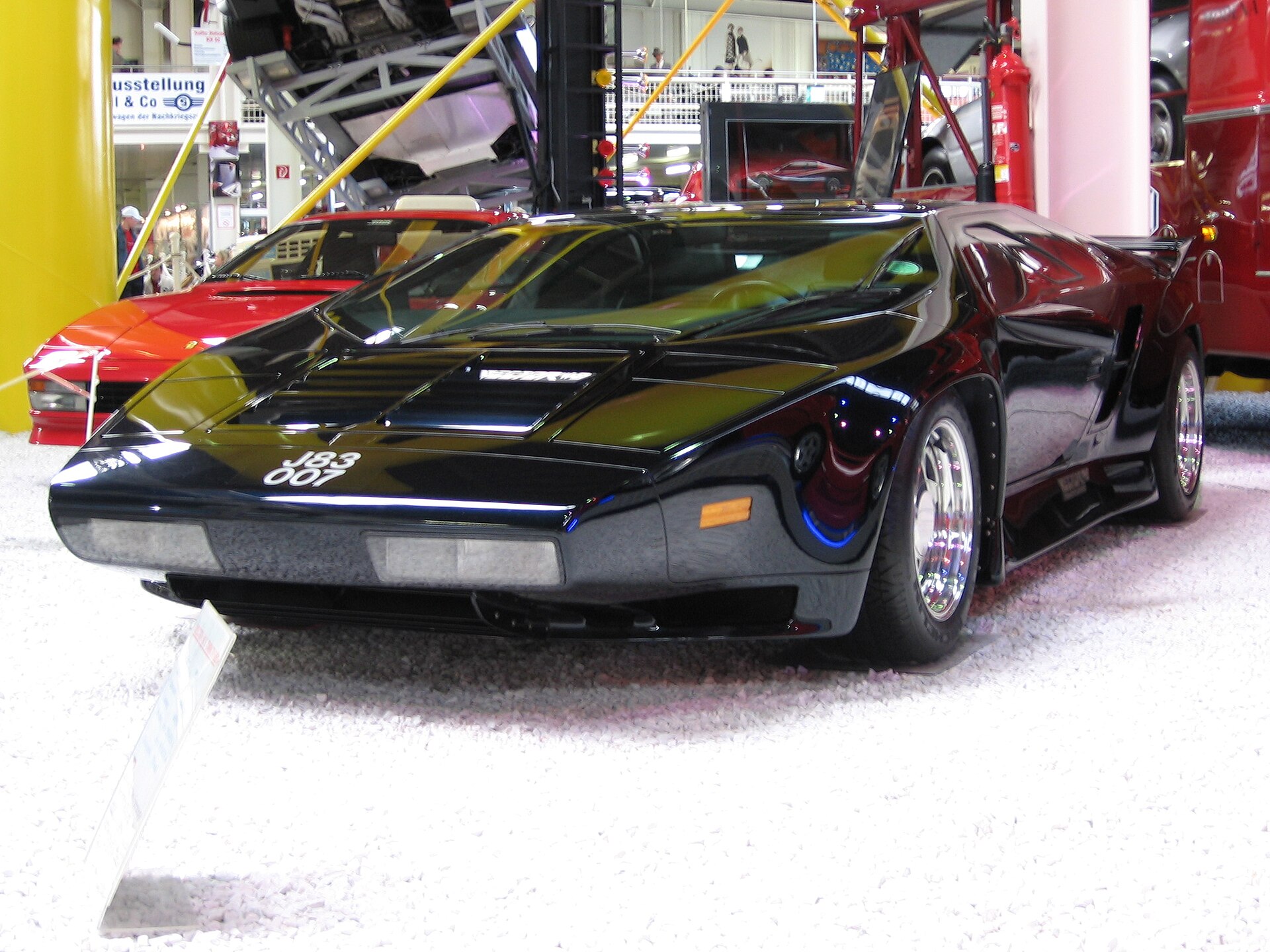
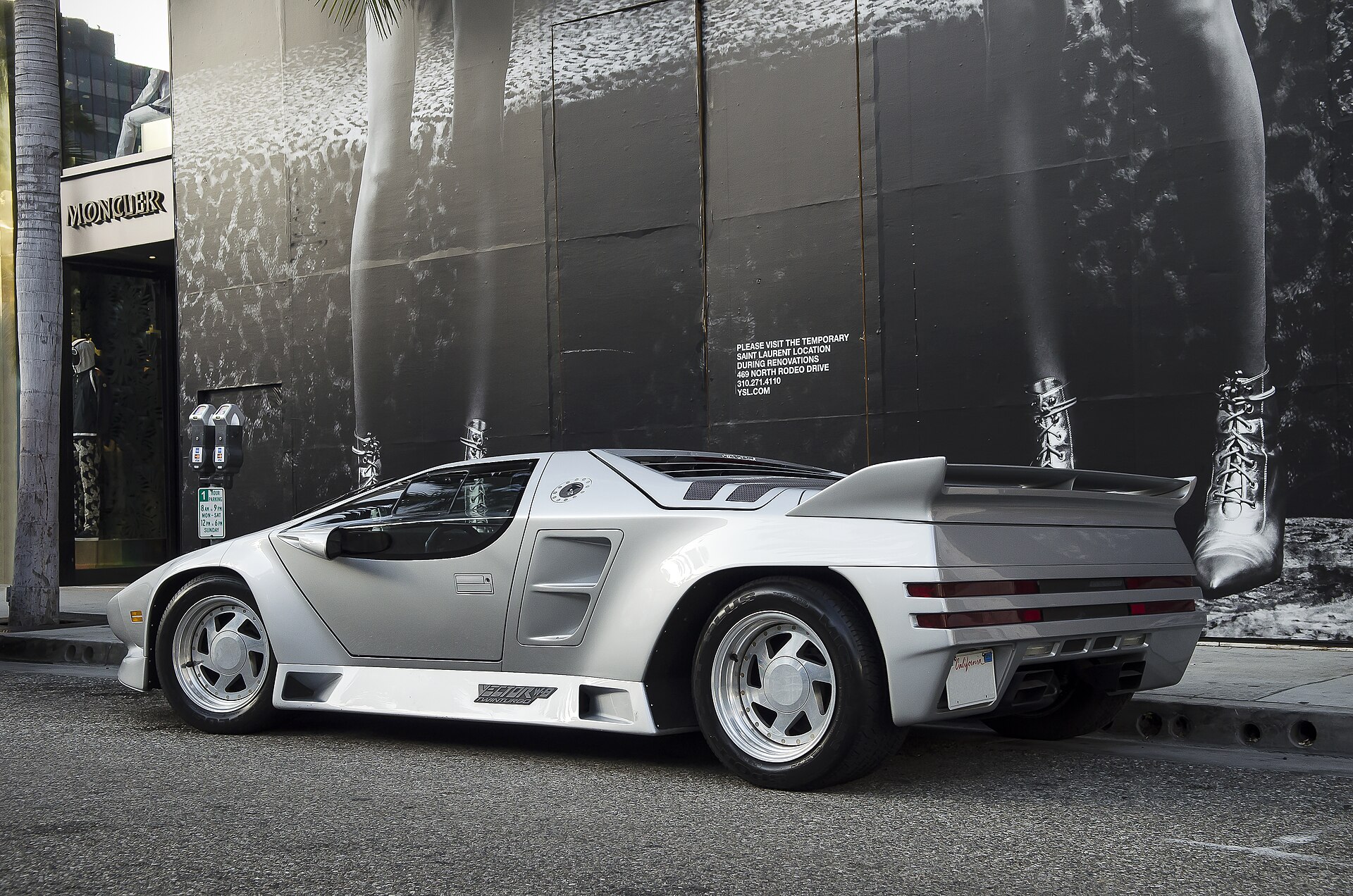
The Vector W8 is the only car Wiegert put into series production. It was a mid-engined wedge with scissor doors, a twin-turbo V8 and a structure built from aircraft materials. Vector made it in Wilmington, Los Angeles, from 1989 to 1993. The text of English Wikipedia counts 17 customer cars and two pre-production cars, while its infobox gives 22. Production stopped after a hostile takeover by the main shareholder, Megatech.
Specs by version
Engines
Dimensions and weight
Show all 1 versions
| Version | Kerb weight |
|---|---|
| 6.0 V8 twin-turbo | 1,506 kg3,320 lb |
Verified Manufacturer and type-approval data from our catalog · Sources and methodology
In short
- Built 1989–1993 (model years 1990–1993) in Wilmington, Los Angeles; 17 customer cars plus two pre-production cars.
- 6.0-litre aluminium twin-turbo V8 prepared by John Rodeck: 466 kW (625 hp) at 5,700 rpm and 880 Nm at 4,900 rpm on 8 psi of boost.
- Carbon-fibre and Kevlar body on an aluminium honeycomb monocoque with about 5,000 aircraft rivets; estimated kerb weight 1,506 kg.
- Vector claimed 389 km/h (242 mph) and 0–60 mph in 3.9 s; Road & Track measured 4.2 s.
Vector W8 at a glance
| Parameter | Metric | Imperial |
|---|---|---|
| Maker | Vector Aeromotive Corporation | — |
| Production | 1989–1993 (model years 1990–1993) | — |
| Plant | Wilmington, Los Angeles, California | — |
| Built | 17 customer cars and 2 pre-production cars (text); 22 (infobox) | — |
| Designers | Jerry Wiegert; engineering refined by David Kostka | — |
| Body | two-door coupé with scissor doors | — |
| Layout | rear transverse mid-engine, rear-wheel drive | — |
| Engine | 6.0 l aluminium twin-turbo V8, two intercooled Garrett turbochargers | 365 cu in |
| Power | 466 kW (625 hp) at 5,700 rpm (8 psi) | — |
| Torque | 880 Nm at 4,900 rpm | 649 lb-ft |
| Gearbox | modified GM Turbo-Hydramatic 425 three-speed automatic | — |
| Wheelbase | 2,616 mm | 103.0 in |
| Length × width × height | 4,369 × 1,930 × 1,080 mm | 172.0 × 76.0 × 42.5 in |
| Kerb weight | 1,506 kg (estimate) | 3,320 lb |
Development and production history
The W8 was the production version of the W2 shown in 1976 and run as a prototype from 1979. A world economic downturn and a lack of money delayed it for years. By the late 1980s Wiegert had found the funding, and Vector grew from one building and four employees to four buildings and 80 employees. The design drew on the Alfa Romeo Carabo and on fighter-jet styling, and Vector called its methods "Aeromotive Engineering".
Before production the car passed US Department of Transportation crash tests in Ann Arbor, Michigan, and emissions tests. Several details changed on the way to production:
- some of the body gills were removed;
- the front fascia was lowered and gained an air splitter;
- the rear wing, mirror intakes and grille were revised;
- the removable glass roof was dropped after top-speed tests showed buffeting at high speed.
Emissions delays stopped production for a time and forced Vector to lay off 50 of its 80 staff. The car passed its emissions test in mid-1991, and Vector began building the 30 cars on order.
| Year | Event |
|---|---|
| April 1972 | first Vector concept on the cover of Motor Trend |
| 1976 | W2 shown in public |
| 1979 | W2 running prototype |
| 1989 | W8 production begins in Wilmington |
| 1991 | Road & Track and Car and Driver tests; Andre Agassi returns his car |
| mid-1991 | emissions approval; production of 30 ordered cars resumes |
| 1993 | Megatech takeover; W8 production ends |
| 1995 | Megatech starts building the M12 |

Design and engineering
Vector used aerospace materials throughout. The body panels are carbon fibre and Kevlar, bonded to a semi-aluminium monocoque that is both epoxy-bonded and riveted, with an aluminium honeycomb floor pan. The structure uses about 5,000 aircraft-specification rivets. Its drag coefficient is given as 0.32, a figure English Wikipedia marks as needing a citation.
| Item | Detail |
|---|---|
| Front suspension | double A-arms |
| Rear suspension | De Dion tube with four trailing arms to the firewall |
| Dampers | Koni adjustable, with concentric springs |
| Brakes | 13 in vented discs, Alcon four-piston aluminium calipers |
| Tyres | Michelin XGT Plus, 255/45ZR16 front, 315/40ZR16 rear |
To save weight, Vector left out power steering and anti-lock brakes. The cabin was not spartan, though: it had leather and suede, wool carpets, electrically adjustable Recaro seats and air conditioning.

Engine and drivetrain
The 6.0-litre (365 cu in) aluminium V8 was prepared by John Rodeck and could be re-sleeved. It used TRW forged pistons, Carrillo stainless-steel connecting rods and dry-sump lubrication, and breathed through two intercooled Garrett turbochargers. Vector advertised 466 kW (625 hp) at 5,700 rpm and 880 Nm (649 lb-ft) at 4,900 rpm on 8 psi of boost. The driver could raise the boost from 8 to 14 psi, and factory dyno testing at 14 psi recorded 895 kW (1,200 bhp).
The power went through a heavily modified GM Turbo-Hydramatic 425, a three-speed automatic from the Oldsmobile Toronado. With 466 kW and an estimated 1,506 kg, the W8 has about 309 kW per tonne. The power-to-weight calculator compares that with later supercars.

Vector W8 performance: claims and tests
| Source | 0–60 mph | Top speed | Notes |
|---|---|---|---|
| Vector (claim) | 3.9 s | 389 km/h (242 mph), projected | — |
| Road & Track, March 1991 and August 1992 | 4.2 s | estimated 351 km/h (218 mph) from top-gear redline | 0.97 g on the skidpad |
| Car and Driver, May 1991 | 4.1 s | — | all three test cars broke down |
Road & Track's review was positive. It praised almost every part of the car and said the skidpad figure was the highest it had recorded for a car not built for racing. Car and Driver could not finish its tests because each of the three cars it received broke down in a different way. In 2017 the magazine called the W8 "vaporware".
The Andre Agassi car
In 1991 the tennis player Andre Agassi bought a W8. He insisted on taking delivery before the car was fully ready; at that point only four cars had been completed before approval. Vector agreed on condition that the car stay in storage until its emissions had been set up for road use. Agassi returned it for a refund after the rear carpet burned from an overheating exhaust.
Variants and derivatives
| Variant | Years | Body / purpose | Engine | Notes |
|---|---|---|---|---|
| Vector (concept) | 1972–1976 | show car | — | Motor Trend cover, April 1972 |
| W2 | 1976–1979 | prototype | — | over 100,000 miles; Vector claimed 230 mph |
| W8 | 1989–1993 | production coupé | 6.0 l twin-turbo V8 | 17 customer cars |
| WX-3 / WX-3R | 1992–1993 | coupé and roadster prototypes | — | one of each; Geneva 1992 |
| M12 | 1995–1999 | production coupé | Lamborghini Diablo base | 14 built by early 1999, US$189,000 |
| SRV8 | — | prototype | — | one built |
| WX-8 | 2007 | prototype | projected 10 l supercharged V8 | Los Angeles Auto Show |
The Avtech WX-3 coupé appeared at the 1992 Geneva show and the WX-3R roadster followed in 1993, but neither reached production.
Megatech, the M12 and the end
When the WX-3 appeared in 1993, Megatech, an Indonesian company, took control of Vector, and Wiegert was later fired. W8 production ended. Wiegert sued and won back the design copyrights, the equipment and the unsold cars. In 1995 Megatech began building the M12 in Florida, based on the Lamborghini Diablo and loosely on the WX-3. It cost US$189,000, and by early 1999 only 14 had been made. The Diablo itself is covered in our article on the Lamborghini Diablo.
Wiegert came back with the WX-8 prototype at the 2007 Los Angeles Auto Show. Vector projected 1,380 kW (1,850 hp) from a supercharged 10-litre V8, 275 mph and 0–60 mph in just under three seconds; in August 2018 it was still said to be in development. The Wilmington site and warehouse have since been cleared.
Collecting today
With 17 customer cars, every W8 is known by its history, and the sources record no auction prices. What matters for a buyer follows from the story above: whether a car is one of the customer cars or a pre-production car, how its emissions and boost were set up, and whether it carries the production changes, such as the lower front fascia and fixed roof. Other American and European wedges of the period are in our supercars section, and the rest of the brand is in the Vector catalogue.
Photo gallery

Vector W8 in our rankings
- No. 1 of 59 · Most powerful cars of the 1980s (466 kW)
- No. 34 of 368 · Most torque: cars (880 Nm · top 10%)
- No. 28 of 301 · Power-to-weight: cars (309 kW/t · top 10%)
- No. 22 of 154 · Most powerful American cars (466 kW · top 15%)
- No. 121 of 859 · Most powerful cars (466 kW · top 15%)
- No. 26 of 154 · Most powerful V8 cars (466 kW · top 17%)
More powerful than 98% of ranked cars of the 1980s in the 1CARS catalog (No. 1 of 59).
FAQ
How many Vector W8s were made?
English Wikipedia's text counts 17 customer cars and two pre-production cars built before Vector entered receivership in 1993; its infobox gives 22.
What engine does the Vector W8 have?
A 6.0-litre aluminium twin-turbo V8 prepared by John Rodeck, rated at 466 kW (625 hp) and 880 Nm on 8 psi of boost, with a three-speed automatic gearbox.
How fast is the Vector W8?
Vector claimed 242 mph (389 km/h) and 0–60 mph in 3.9 seconds. Road & Track measured 0–60 mph in 4.2 seconds and estimated 218 mph (351 km/h).
Why did Andre Agassi return his Vector W8?
The rear carpet burned because the exhaust ran too hot, and Agassi returned the car for a refund; he had taken delivery before it was fully ready.
What happened to the Vector company?
Megatech took control in 1993 and built the Diablo-based M12 from 1995. Wiegert later showed the WX-8 prototype in 2007; he died in January 2021.
Data sources
Data checked by an editor against the sources below.