Vector — Jerry Wiegert's Aerospace-Inspired Supercar Company
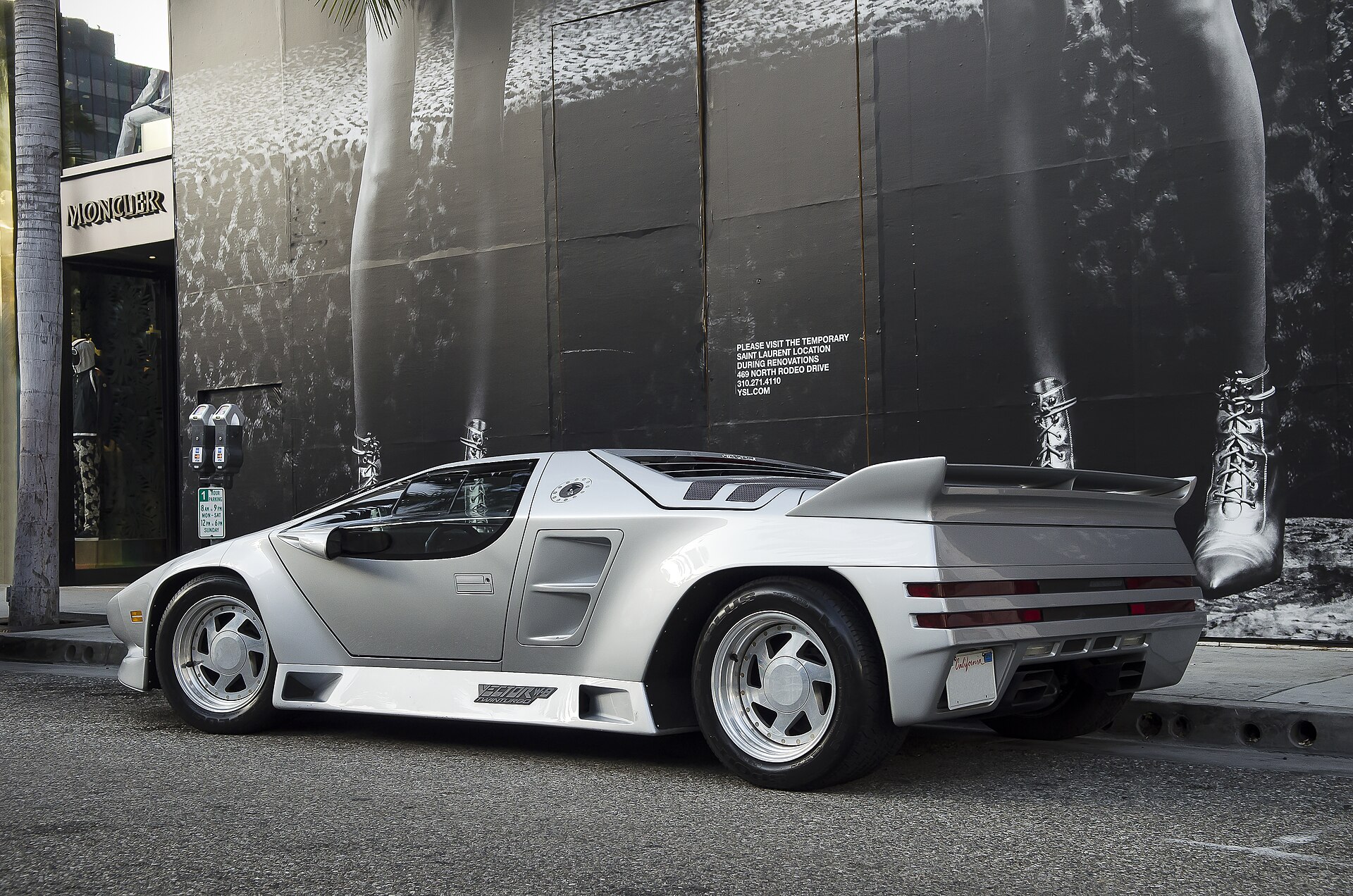
Vector was an American maker of supercars founded by the designer Jerry Wiegert, who wanted to build a supercar with materials and methods taken from aerospace. Work began in 1971, the running W2 prototype followed in 1979, and the W8 Twin Turbo of 1989–1993 became the company's only series car of its own design, with 17 customer cars built. After a takeover by Megatech in 1993 the company built the Lamborghini-engined M12, then closed; Wiegert regained the name and worked on the WX-8 until his death in January 2021.
Key takeaways
- Jerry Wiegert founded Vehicle Design Force in 1971; the first car, "The Vector", was on the cover of Motor Trend in April 1972.
- The W2 prototype of 1978–1979 had a twin-turbo 5.7-litre Chevrolet V8 of over 450 kW (600 hp) and covered more than 160,000 km.
- The W8 of 1989–1993 had a 6.0-litre twin-turbo V8 advertised at 466 kW (625 hp); 17 customer cars and two pre-production cars were built.
- Megatech took control in 1993; 14 production M12s with a Lamborghini V12 followed by early 1999.
Vector at a glance
| Fact | Value |
|---|---|
| Founded | 1971 as Vehicle Design Force |
| Founder | Gerald "Jerry" Wiegert (1944–2021) |
| Later names | Vector Aeromotive, Avtech Motors, Vector Supercars, Vector Motors |
| Series model | W8 Twin Turbo (1989–1993) |
| W8 engine | 6.0-litre twin-turbo V8, 466 kW (625 hp) advertised |
| Later models | M12 (1995–1999), WX-8 prototype (2007–2008) |
| Owner 1993–late 1990s | Megatech |
| Status | Defunct since 2021 |
Origins: Jerry Wiegert and The Vector
Gerald Alden Wiegert was born on 12 July 1944. In high school he won a design contest that paid for university design courses, and from 1970 he worked as a design consultant for Chrysler, Ford and General Motors. In 1971 he formed Vehicle Design Force with Lee Brown to build an American supercar called "The Vector". It was planned with a Wankel rotary engine and a price of US$100,000 in 1971, and it appeared on the cover of Motor Trend in April 1972. A concept prototype was shown at the Los Angeles Auto Show in 1976, but it never went into production, and Brown left in 1977.
The W2 prototype
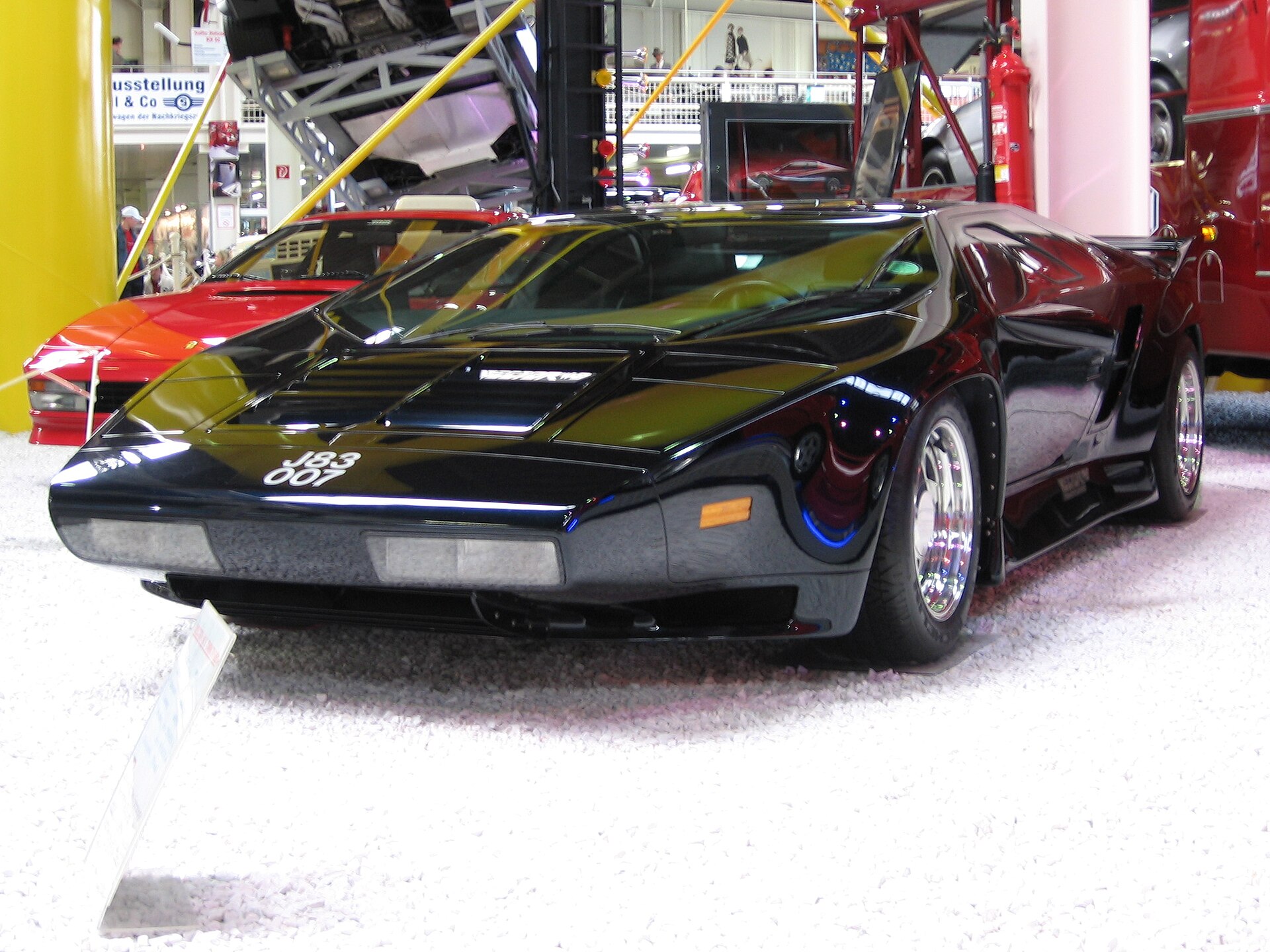
The W2 of 1978 took its name from Wiegert and from its two turbochargers. It was a mid-engined coupé with scissor doors and a twin-turbocharged, fuel-injected 5.7-litre aluminium Chevrolet V8 of over 450 kW (600 hp) and over 800 Nm, driving through a three-speed THM425 automatic. At its first show it could not move under its own power, but a running prototype was built in 1979. It is believed to have covered over 160,000 km in testing, more than any other concept car, and Vector claimed a top speed of 389 km/h. The company was renamed Vector Aeromotive as work moved from the W2 to a production car.

The W8: aerospace methods on the road
Production of the W8 Twin Turbo began in 1989. Its 6.0-litre V8 was prepared by John Rodeck and fitted with two Garrett turbochargers with intercoolers. Vector advertised 466 kW (625 hp) at 5,700 rpm and 880 Nm at 4,900 rpm, and the company said its dynamometer tests reached 895 kW (1,200 bhp) at higher boost. Power went through a heavily modified GM Turbo-Hydramatic 425 three-speed automatic. The body panels were carbon fibre and Kevlar, the floor pan was aluminium honeycomb, and the structure used about 5,000 aircraft-specification rivets; Vector called the process "Aeromotive Engineering".
The estimated kerb weight was 1,506 kg, which gives about 309 W per kg for the advertised output, a ratio the power-to-weight calculator can compare with modern supercars. Vector projected a top speed of 389 km/h. Road & Track did not test it but estimated 218 mph (351 km/h) from the rev limit in top gear. The magazine measured 0–60 mph in 4.2 seconds against the company's 3.9 seconds, and Car and Driver recorded 4.1 seconds.
The best-known customer was the tennis player Andre Agassi. In 1991 he returned the black W8 he had ordered for US$455,000, after driving it before it was fully finished; the rear carpet had burned because of an overheating exhaust, and Vector refunded the price. In all, 17 W8s were built for sale and two pre-production cars, before the company went into receivership in 1993. The Vector W8 article has the full specifications.

Megatech and the M12
The WX-3 coupé was shown at the 1992 Geneva show, followed by the WX-3R roadster. In 1993 Megatech, an Indonesian company that also owned Lamborghini at the time, acquired a controlling interest. The board asked Wiegert to step back to a design role. Wiegert refused, locked down the headquarters and was fired.
Under Megatech the company built the M12 in Florida from 1995, priced at US$189,000 when production began that year. It used a 5.7-litre Lamborghini V12 from the Diablo, with 367 kW (499 PS) at 7,000 rpm and 576 Nm. Sales fell short and production stopped in late 1996, resuming after Megatech sold Lamborghini and Vector to their management. By early 1999 only 14 production M12s had been built, plus three or four pre-production cars. The reviews were harsh: Autoweek called it the worst car it had ever tested. A single SRV8 prototype was shown before Vector closed its doors.
Wiegert's return and the WX-8
Wiegert later regained Vector's assets, trademarks and copyrights through the courts and renamed the company Vector Supercars, then Vector Motors. In the 1990s the designer had also founded Aquajet, whose Jetbike personal watercraft won an innovation award from Boating Magazine in 2000. In August 2006 Wiegert announced a new car. The WX-8 prototype was presented at the Los Angeles Auto Show in 2007–2008, with a projected 1,380 kW (1,850 hp) from a supercharged 10-litre V8 and a claimed top speed of 275 mph (443 km/h). Reports in August 2018 said it was still in development.
Wiegert died on 15 January 2021, aged 76, and the company's facility in Wilmington was later cleared out. Vector is now listed as defunct. Its models are listed in the Vector catalogue, and other American and European supercars are in the supercars section.

Vector timeline
| Year | Event |
|---|---|
| 1971 | Jerry Wiegert forms Vehicle Design Force |
| 1972 | "The Vector" on the cover of Motor Trend (April) |
| 1978 | W2 concept shown |
| 1979 | Running W2 prototype |
| 1989 | W8 Twin Turbo enters production |
| 1991 | Andre Agassi returns his W8 |
| 1992 | WX-3 at the Geneva show |
| 1993 | Megatech takes control; Wiegert fired |
| 1995 | M12 with Lamborghini V12 |
| 1999 | 14 production M12s built by early 1999 |
| 2007 | WX-8 prototype at the Los Angeles show |
| 2021 | Death of Jerry Wiegert (15 January) |
Landmark Vector models
| Model | Years | Why it matters |
|---|---|---|
| The Vector | 1971–1976 | First concept, Motor Trend cover car |
| W2 | 1978–1979 | Twin-turbo prototype, over 160,000 km of testing |
| W8 Twin Turbo | 1989–1993 | Only series Vector of Wiegert's design, 17 customer cars |
| WX-3 | 1992 | Planned successor shown at Geneva |
| M12 | 1995–1999 | Lamborghini V12 car of the Megatech era |
| WX-8 | 2007–2008 | Final prototype, 1,380 kW projected |
FAQ
Who founded Vector?
The designer Gerald "Jerry" Wiegert, who formed Vehicle Design Force in 1971 to build an American supercar.
How many Vector W8s were made?
Seventeen cars were built for customers and two pre-production cars, between 1989 and 1993.
How fast is the Vector W8?
Vector claimed 389 km/h. Road & Track estimated 351 km/h from the rev limit in top gear and measured 0–60 mph in 4.2 seconds.
What engine did the Vector M12 use?
A 5.7-litre Lamborghini V12 from the Diablo, with 367 kW (499 PS).
Does Vector still exist?
No. After Jerry Wiegert's death in January 2021 the company was listed as defunct.
Sources
- Wikipedia — Vector Motors (accessed 24 Oct 2026)
- Wikipedia — Gerald Wiegert (accessed 24 Oct 2026)
- Wikipedia — Vector W2 (accessed 24 Oct 2026)
- Wikipedia — Vector W8 (accessed 24 Oct 2026)
- Wikipedia — Vector M12 (accessed 24 Oct 2026)
Found a mistake? Report an error