 Saturn S-Series
Specs, engines and history
Published Sources (1) Report an error
By Sarah Whitmore, Senior Automotive Writer
- Built
- 1990–2002
- Top power
- 92 kW (125 PS)
Which Saturn S-Series to choose
Our verdict · Sarah Whitmore
- SL1, SC1 or SW1: the SOHC engine and the most economical gearing; 1995-on cars have the 75 kW multi-point engine.
- SL2, SC2 or SW2: the 92 kW DOHC engine for better performance.
- Later cars: 1995-on models have three-point belts and a passenger airbag; 2001–2002 SLs have the best NHTSA ratings and optional curtain airbags.
- SC from 1999: the three-door coupe with the extra rear door.
The rest of the brand's models, from the L-Series to the Sky roadster, are in the Saturn catalogue.
The Saturn S-Series was the first car of Saturn Corporation, a General Motors subsidiary founded on 7 January 1985 to build small cars in a new way. GM chairman Roger B. Smith made the project public in November 1983 and served as Saturn's first president from 1985 to 1990. The company had its own independently managed plant in Spring Hill, Tennessee, and a labour contract of its own with the United Auto Workers, which GM and the UAW dissolved in 2004. Its slogan from 1994 to 2002 was "A Different Kind of Company, A Different Kind of Car". Saturn's best year was 1994, with 286,003 vehicles delivered, and its plant stopped on 7 October 2009 after a planned sale to Penske Automotive Group failed.
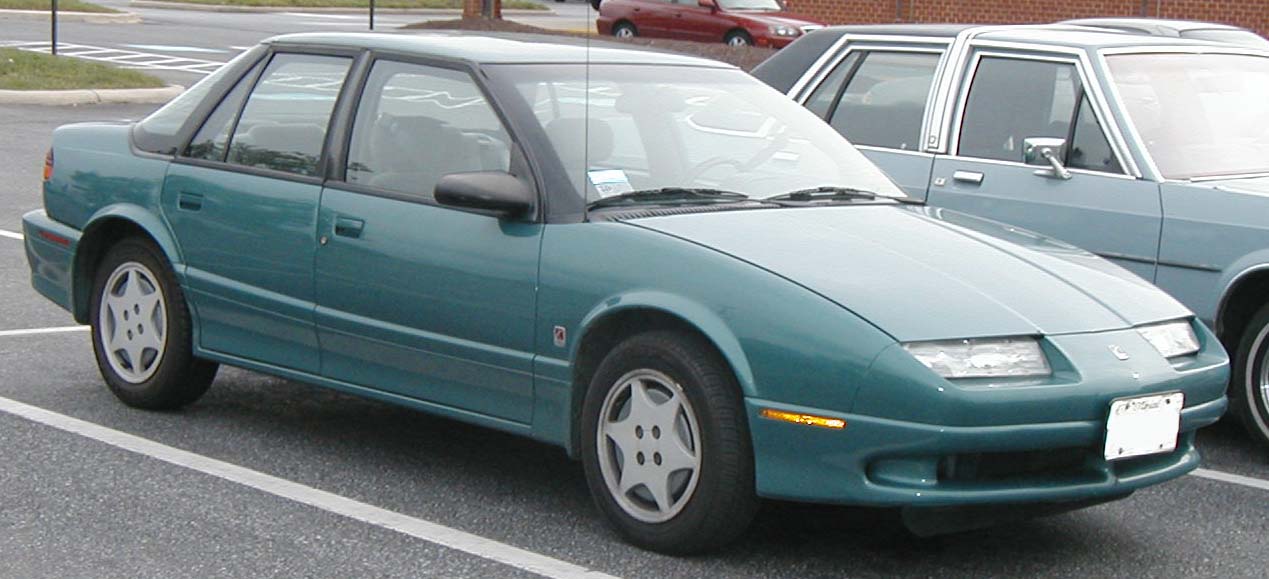
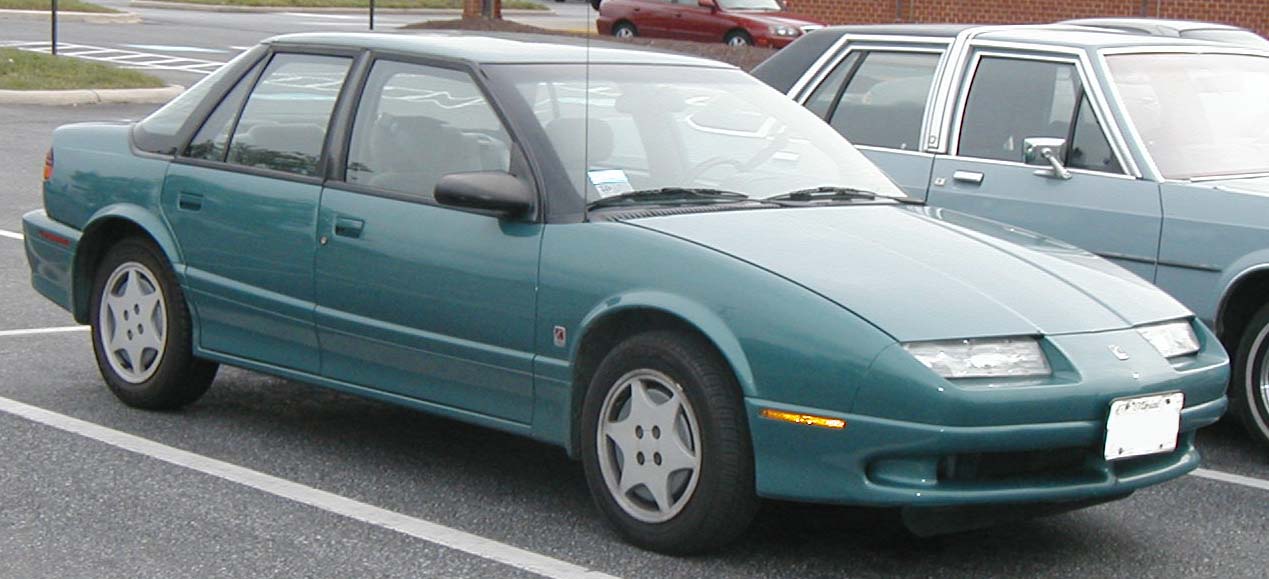
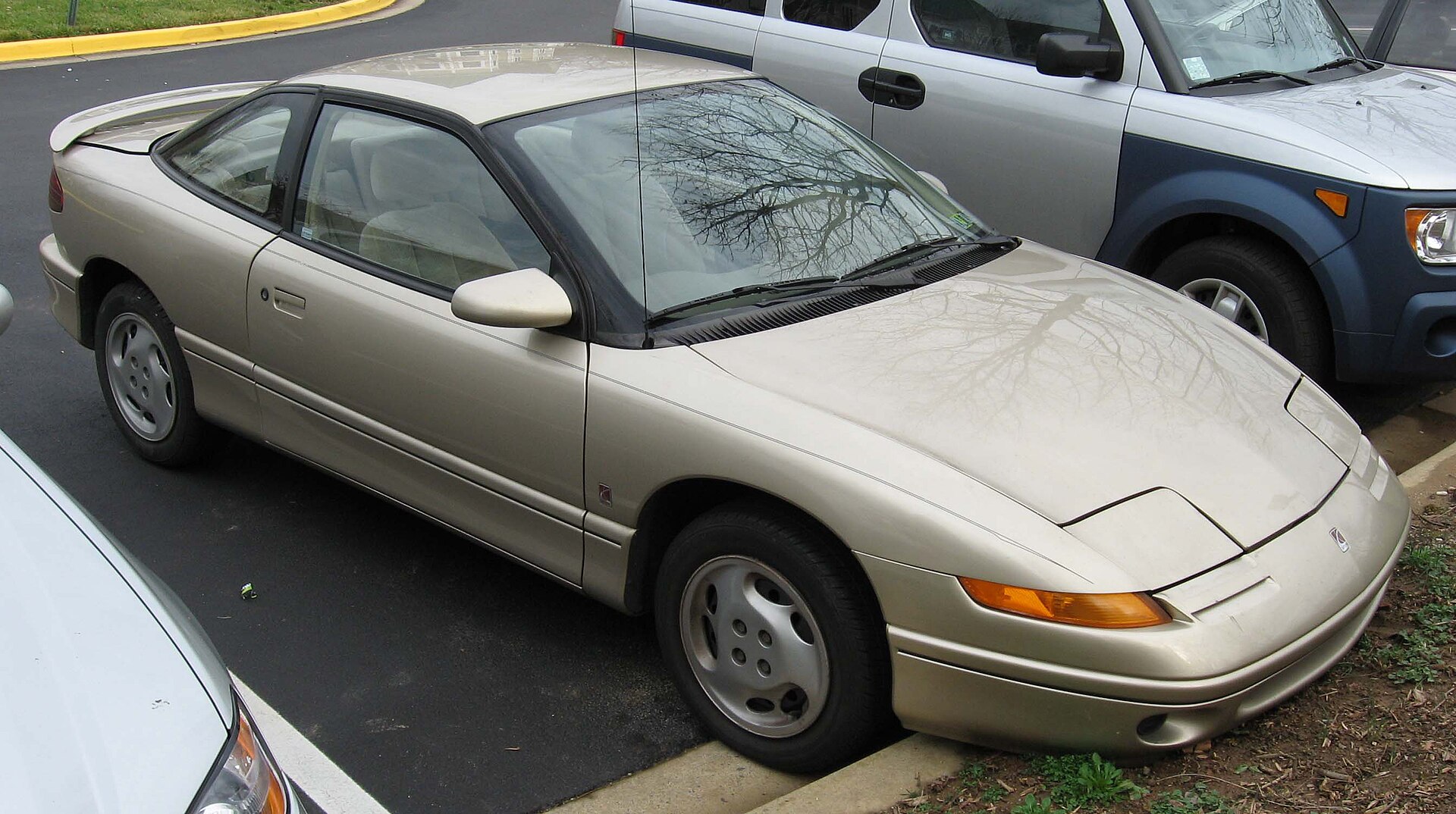
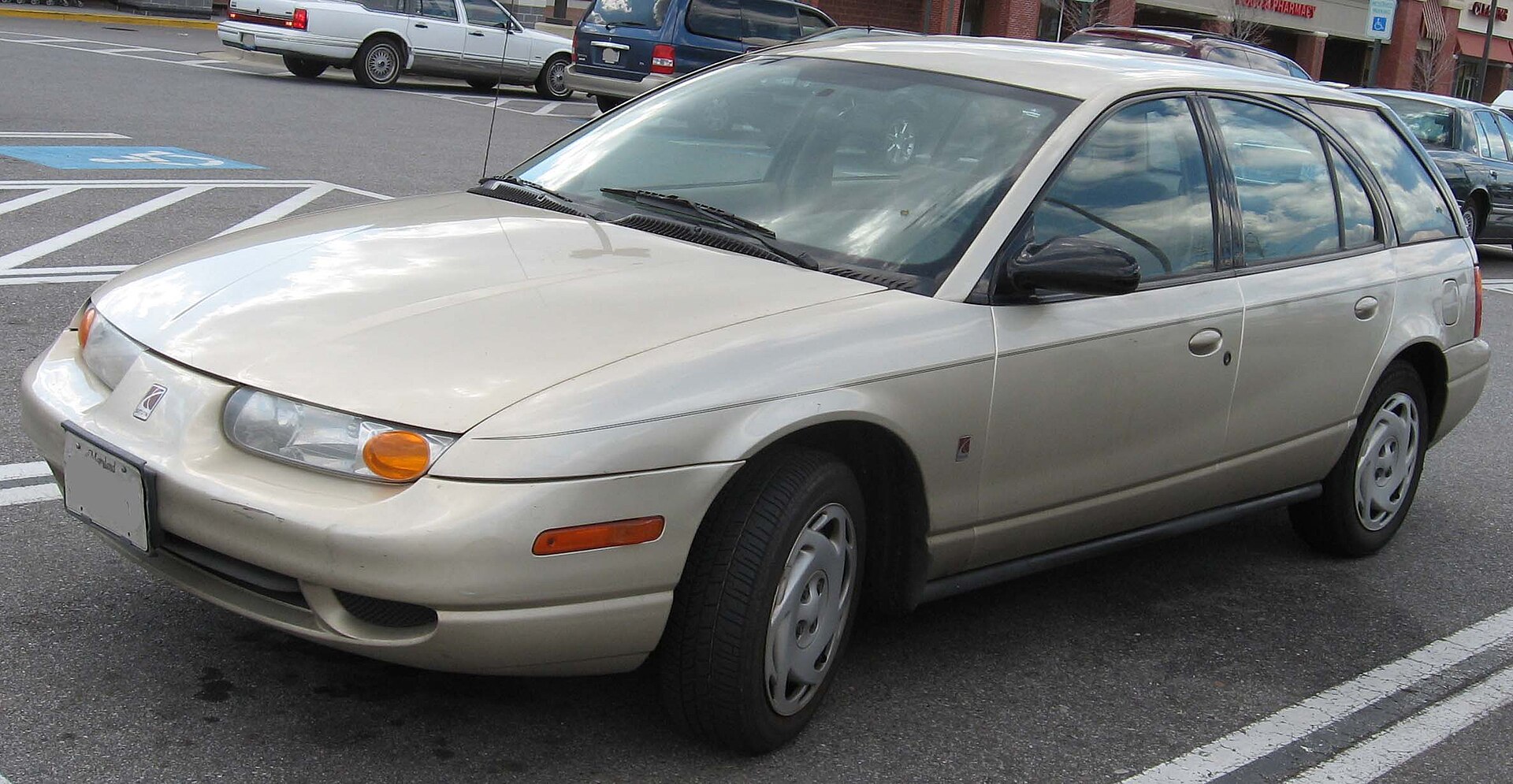
The S-Series was the car that started it all and Saturn's only model for most of the 1990s. It was a compact with front-wheel drive, a steel spaceframe and dent-resistant polymer side panels, sold as the SL sedan, SC coupe and SW wagon. Saturn also sold it at a fixed, "no-haggle" price across the whole brand. Production ran from 1990 to 2002 (model years 1991–2002), and the Saturn Ion replaced it for 2003.
Specs by version
Verified Manufacturer and type-approval data from our catalog · Sources and methodology
In short
- The first Saturn, a red SL2, was built in Spring Hill on 30 July 1990, the day Roger Smith retired.
- Three generations: 1991–1995 (SC to 1996), 1996–1999 (SC 1997–2000) and 2000–2002, all on GM's Z platform developed by Saturn.
- 1.9-litre four-cylinder engines: SOHC with 63 kW (85 hp), from 1995 75 kW (100 hp), and DOHC with 92 kW (123 hp).
- EPA ratings of 27/34 mpg city/highway for the SL1 (8.7 and 6.9 l/100 km); NHTSA gave the 2001–2002 SL five stars in frontal, side and rollover ratings.
Saturn S-Series at a glance
| Specification | Value |
|---|---|
| Maker | Saturn Corporation (General Motors) |
| Production | 1990–2002; model years 1991–2002 |
| Plant | Spring Hill, Tennessee, USA |
| Class | compact car |
| Platform | GM Z platform, steel spaceframe with polymer side panels |
| Bodies | SL four-door sedan, SC two-door (from 1999 three-door) coupe, SW five-door wagon (from 1993) |
| Layout | transverse front engine, front-wheel drive |
| Engines | 1.9 l I4 SOHC (LK0, later L24) and DOHC (LL0) |
| Power | 63–92 kW (85–123 hp) |
| Gearboxes | five-speed manual or four-speed automatic |
| Wheelbase | 2,520 mm |
| Kerb weight | SL 1,053–1,114 kg; SW 1,087–1,134 kg |
| Successor | Saturn Ion (2003 model year) |
A different kind of car: spaceframe and polymer panels
The Z-body used a spaceframe, a construction GM had pioneered on the Pontiac Fiero in the 1980s. The side panels carried no load and were made of dent-resistant plastic. English Wikipedia calls them Saturn's unique selling point until a few years before the brand ended. Saturn sold every car at a fixed, no-haggle price, and the S-Series was the car that introduced this approach.
Model names told buyers what they were getting. SL meant "Sedan Level" and SC "Sport Coupe"; a 1 marked the SOHC engine and a 2 the DOHC engine. Saturn itself is part of the larger story in our history of General Motors.

Saturn S-Series generations
| Generation | SL / SW | SC | Main changes |
|---|---|---|---|
| First | 1991–1995 | 1991–1996 | launch of SL and SC; SW wagon and SC1 added for 1993; 1995: airbag for the front passenger, new dashboard, three-point belts |
| Second | 1996–1999 | 1997–2000 | new exterior; 1999 SC gets a rear-hinged third door; late-1999 engine revisions |
| Third | 2000–2001 (SW), 2000–2002 (SL) | 2000–2002 | new panels, dashboard and console; 2001 side curtain airbags optional; 2001 SC facelift and SC GT |
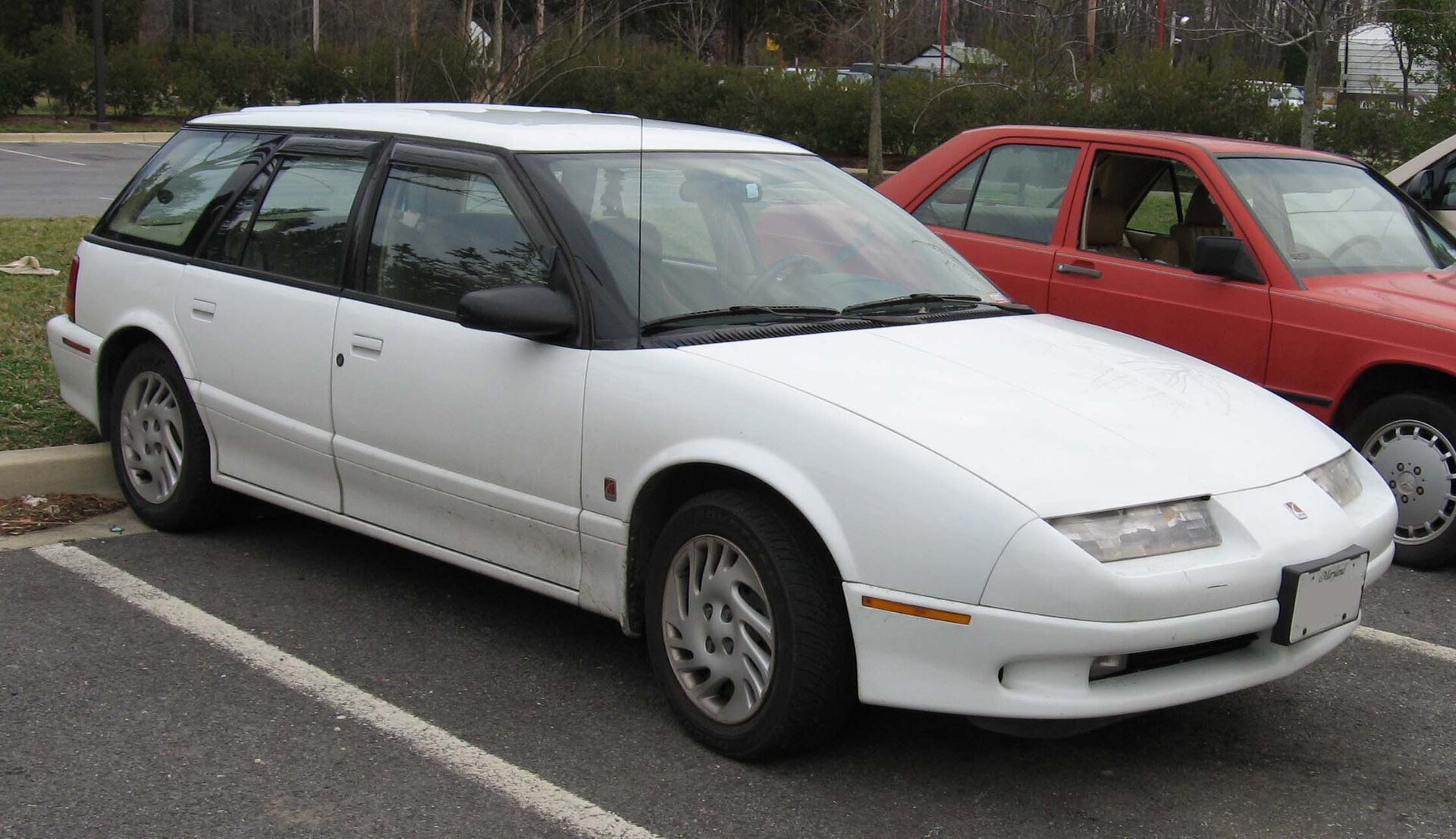
First generation (1991–1995). The S-Series went on sale for 1991 as the SC and SL. For 1993 the SC with the DOHC engine became the SC2, a new SC1 with the SOHC engine joined it, and the SW wagon arrived in SW1 and SW2 trims. For 1995 Saturn replaced the motorised passive seat belts with ordinary three-point belts. The same year brought a new dashboard, a passenger airbag, cup holders and multi-point injection for the SOHC engine.
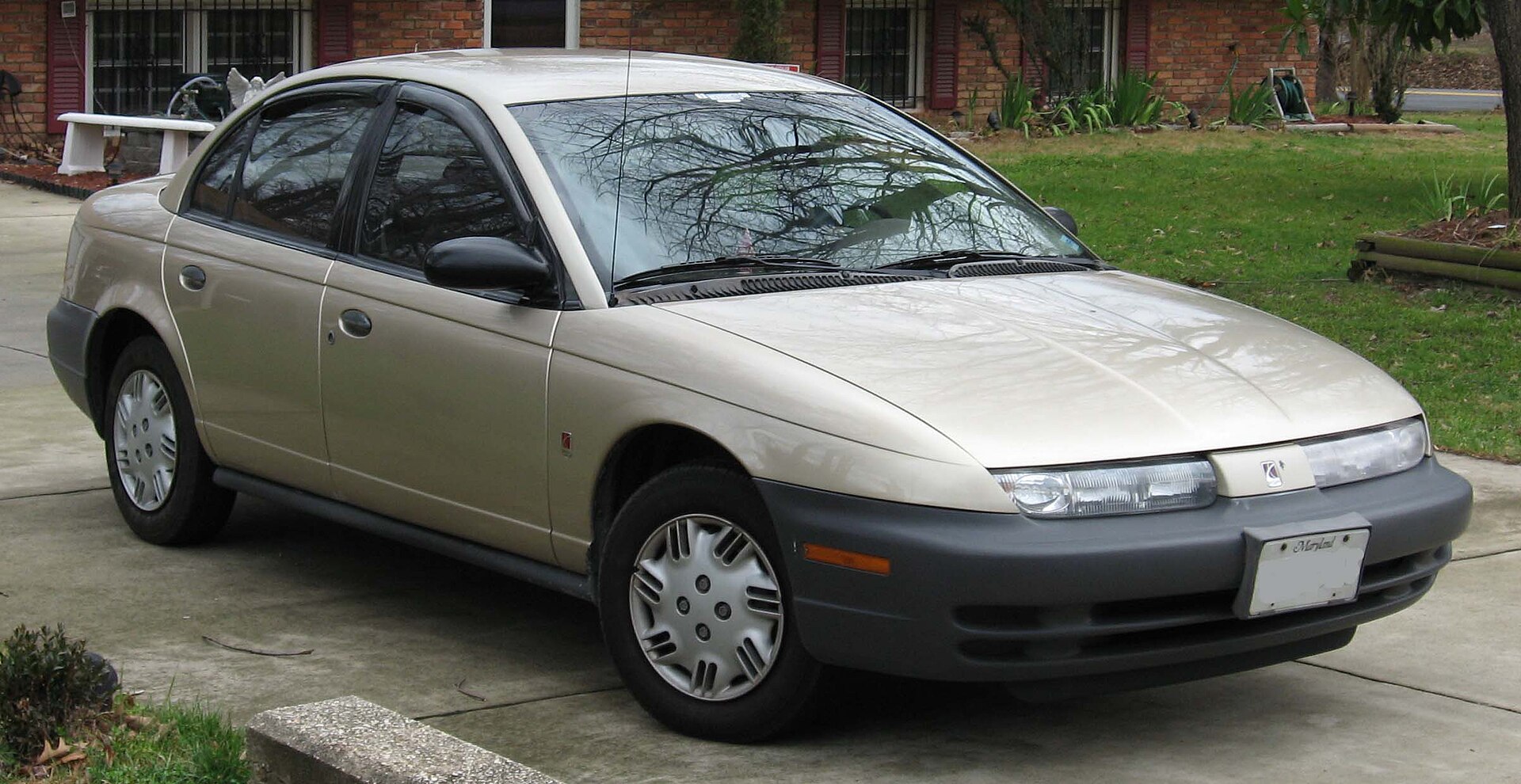
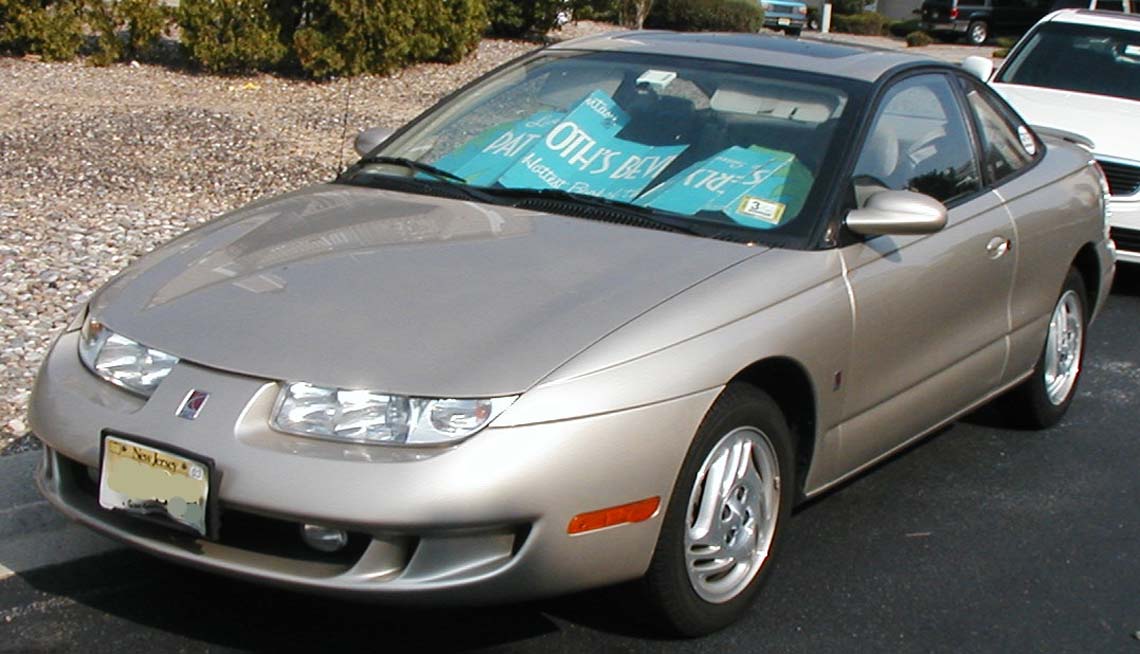
Second generation (1996–1999). The redesigned SL and SW went on sale in 1995 as 1996 models, and the SC followed for 1997. For 1999 the SC gained a front-hinged rear door on the driver's side, opening clamshell-style, and Saturn claimed it as the world's first three-door coupe. The "1999.5" engines received new pistons, connecting rods and crankshaft counterweights. The DOHC head also gained roller rockers with hydraulic tappets. For California, a new exhaust manifold with a catalytic converter close to the engine met the CARB ULEV standard.
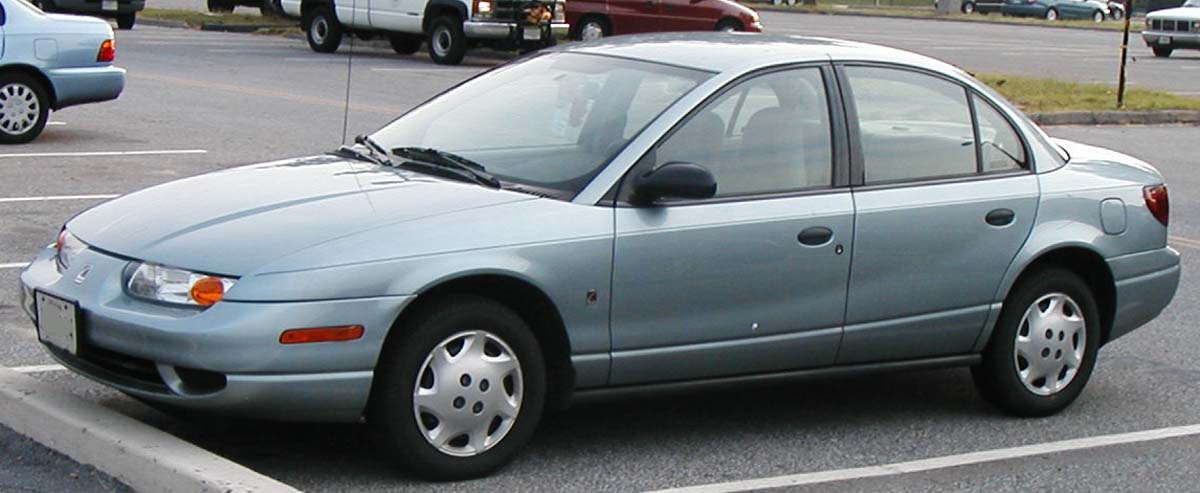
Third generation (2000–2002). A facelift for 2000 brought new body panels, a new dashboard, centre console and steering wheel. It was also Saturn's first car with combined body and powertrain control modules. Side curtain airbags became optional on the SL1 and SL2 for 2001. The SC got new front and rear ends, headlamps and an SC GT trim.

Engines, transmissions and performance
| Engine | Code | Models | Power | Notes |
|---|---|---|---|---|
| 1.9 l SOHC I4 | LK0 | SL1, SC1, SW1 | 63 kW (85 hp) | throttle-body version of the early years |
| 1.9 l SOHC I4, MPFI | L24 | SL1, SC1, SW1 (from 1995) | 75 kW (100 hp) | multi-point injection |
| 1.9 l DOHC I4 | LL0 | SL2, SC2, SW2 | 92 kW (123 hp) | Japanese version: 93 kW (126 PS), 165 Nm |
The SOHC cars used the MP2 five-speed manual or MP6 four-speed automatic, with taller gearing for economy. The DOHC cars had the MP3 manual or MP7 automatic, with closer ratios. English Wikipedia notes that some owners fit the MP2 gearbox to DOHC cars for quieter motorway cruising. It gives no torque figures for the US engines and no acceleration times.

Fuel economy and running costs
| Model | EPA city | EPA highway | Notes |
|---|---|---|---|
| SL1 (SOHC) | 27 mpg (8.7 l/100 km) | 34 mpg (6.9 l/100 km) | ratings of the period |
| SL2 (DOHC) | 24 mpg (9.8 l/100 km) | 34 mpg (6.9 l/100 km) | — |
| manual SOHC cars | — | 40 mpg (5.9 l/100 km) on the old test | about 36 mpg (6.5 l/100 km) by current methods |
The tank held 12.8 US gallons (48 litres), enough for about 384 miles (618 km) at 32 mpg. Owners of base cars with the manual gearbox often reported 38–41 mpg (5.7–6.2 l/100 km) on the highway. To turn these figures into a yearly fuel bill, use the fuel cost calculator.
Dimensions and weight
| Model | Length | Width | Height |
|---|---|---|---|
| SC, 1990–1993 | 4,465 mm | — | — |
| SC1 / SC2, 1994–1996 | 4,399 / 4,435 mm | — | — |
| SL, 1996–1999 | 4,493 mm (1998–1999) | 1,694 mm | — |
| SC, 1997–2000 | — | 1,709 mm | — |
| SL and SW, 2000–2002 | 4,524 mm | 1,687 mm (SL) | 1,397 mm (SL) |
| SC, 2001–2002 | 4,585 mm | 1,732 mm | 1,346 mm |
The wheelbase is listed as 2,520 mm (99.2 in). The SL weighed 1,053–1,114 kg and the SW 1,087–1,134 kg. English Wikipedia's dimension table is partly misaligned, so a few figures may belong to a neighbouring model year.
Safety ratings
| Test | Model years | Result |
|---|---|---|
| NHTSA frontal | 1991–1996 SL | five stars, driver and passenger |
| NHTSA frontal and side | 1997–2000 SL | five stars |
| NHTSA frontal, side and rollover | 2001–2002 SL | five stars |
| IIHS moderate overlap frontal | 1995–2002 SL | Acceptable |
The IIHS did not test the small-overlap crash, side impact or roof strength. One weakness was theft. Cars built before the middle of 1995 lacked the PASSLock system, and a filed blank key could open and start them. The 1995 SL was the most stolen vehicle of 2003, and the 1994 SL ranked third.

Production by year
| Year | Built | Coupe / sedan / wagon |
|---|---|---|
| 1991 | about 48,629 | — |
| 1992 | 169,959 | — |
| 1993 | 244,621 | — |
| 1994 | 267,518 | — |
| 1995 | 302,988 | 62,434 / 221,102 / 19,452 |
| 1996 | 294,198 | — |
| 1997 | 314,992 | 70,711 / 213,182 / 31,099 |
| 1998 | 219,765 | 38,591 / 160,759 / 20,415 |
| 1999 | 275,633 | 52,965 / 203,578 / 19,090 |
| 2000 | 169,866 | 17,241 / 142,992 / 9,633 |
| 2001 | 117,842 | 40,998 / 73,428 / 3,416 |
English Wikipedia flags this table as partly misaligned and gives no figure for 2002. Saturn built its 500,000th car in 1993, its one millionth went on sale in May 1995 and the two millionth left the line in January 1999. Special editions were small: 3,500 Homecoming Editions in 1994 and 4,000 in 1999, 1,000 tenth-anniversary SL2s and 99 "Bumblebee" SC2s in 2001.
Outside the United States and in racing
Saturn sold the car in Canada from 1992 and in Taiwan from 1992 to 1996. Japan received right-hand-drive cars from 1997 to 2000, only with the twin-cam engine, and sold 602 of them from April to December 1997. The SC2 was 30 mm too wide for Japan's compact tax class, and English Wikipedia calls the venture a flop. In 1999 Saturn built 450 SWP "Postal" wagons with right-hand drive. On track, SC coupes won several SCCA World Challenge races from 1995 to 1997.
Photo gallery


Saturn S-Series in our rankings
- No. 643 of 912 · Longest-running car nameplates (5 years · top 77%)
- No. 77 of 91 · Most powerful cars of the 1990s (92 kW · top 85%)
- No. 740 of 859 · Most powerful cars (92 kW · top 87%)
- No. 143 of 154 · Most powerful American cars (92 kW · top 93%)
In production longer than 23% of ranked nameplates in the 1CARS catalog (No. 643 of 912).
Saturn S-Series photos 6
FAQ
What years were Saturn S-Series cars made?
Saturn built the S-Series in Spring Hill, Tennessee, from 1990 to 2002, for the 1991 to 2002 model years; the Saturn Ion replaced it for 2003.
What engine is in a Saturn SL?
A 1.9-litre four-cylinder: the SL1 has the SOHC version with 63 kW (85 hp), or 75 kW (100 hp) from 1995, and the SL2 the DOHC version with 92 kW (123 hp).
Are Saturn S-Series body panels plastic?
Yes. The side panels are dent-resistant polymer and carry no load; the structure is a steel spaceframe like the Pontiac Fiero's.
What fuel economy does a Saturn SL1 get?
EPA rated it at 27 mpg in the city and 34 mpg on the highway, about 8.7 and 6.9 l/100 km. Manual cars reached 40 mpg on the period highway test.
What does SL1, SL2 and SC mean?
SL is the sedan and SC the coupe, with SW for the wagon. A 1 marks the single-cam engine and a 2 the twin-cam engine.
Data sources
Data checked by an editor against the sources below.