 Morris Minor
Specs, engines and history
Published Sources (1) Report an error
By Felix Hartmann, Automotive Technology & EV Contributor
- Built
- 1948–1971
- Top power
- 36 kW (49 PS)
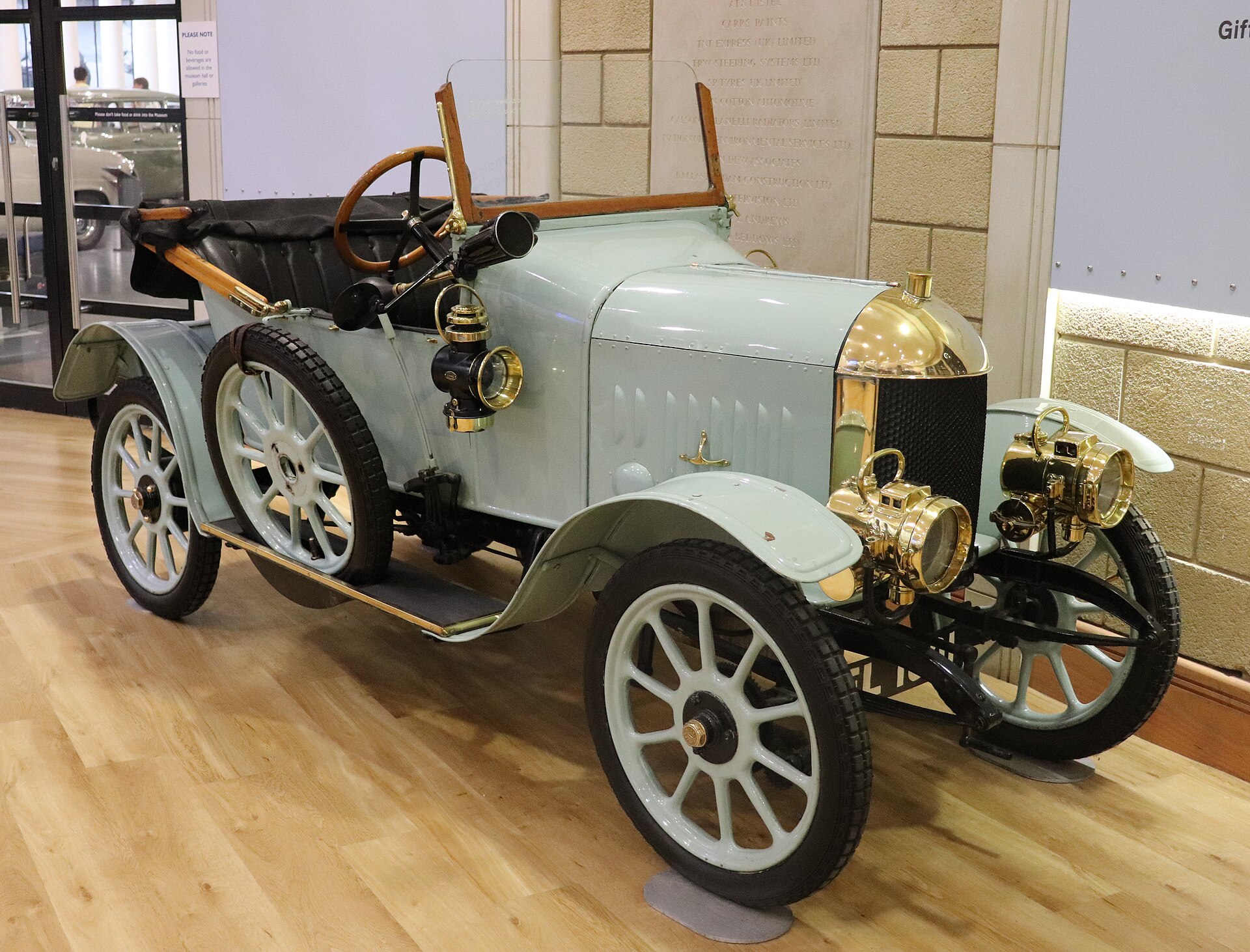
Morris was for decades the biggest name in British motoring. William Richard Morris, later Viscount Nuffield, set up WRM Motors in 1912. He opened a factory at the former Oxford Military College in Cowley in 1913 to build the two-seat Morris Oxford "Bullnose", and formed Morris Motors Ltd in 1919. By 1924 Morris held 51 % of the UK home market. MG and Wolseley became subsidiaries in 1935 and Riley in 1938; in 1952 the Nuffield Organization merged with Austin to form the British Motor Corporation (BMC). The last Morris car, the Ital, was built in 1984, and the name disappeared from vans in 1987.
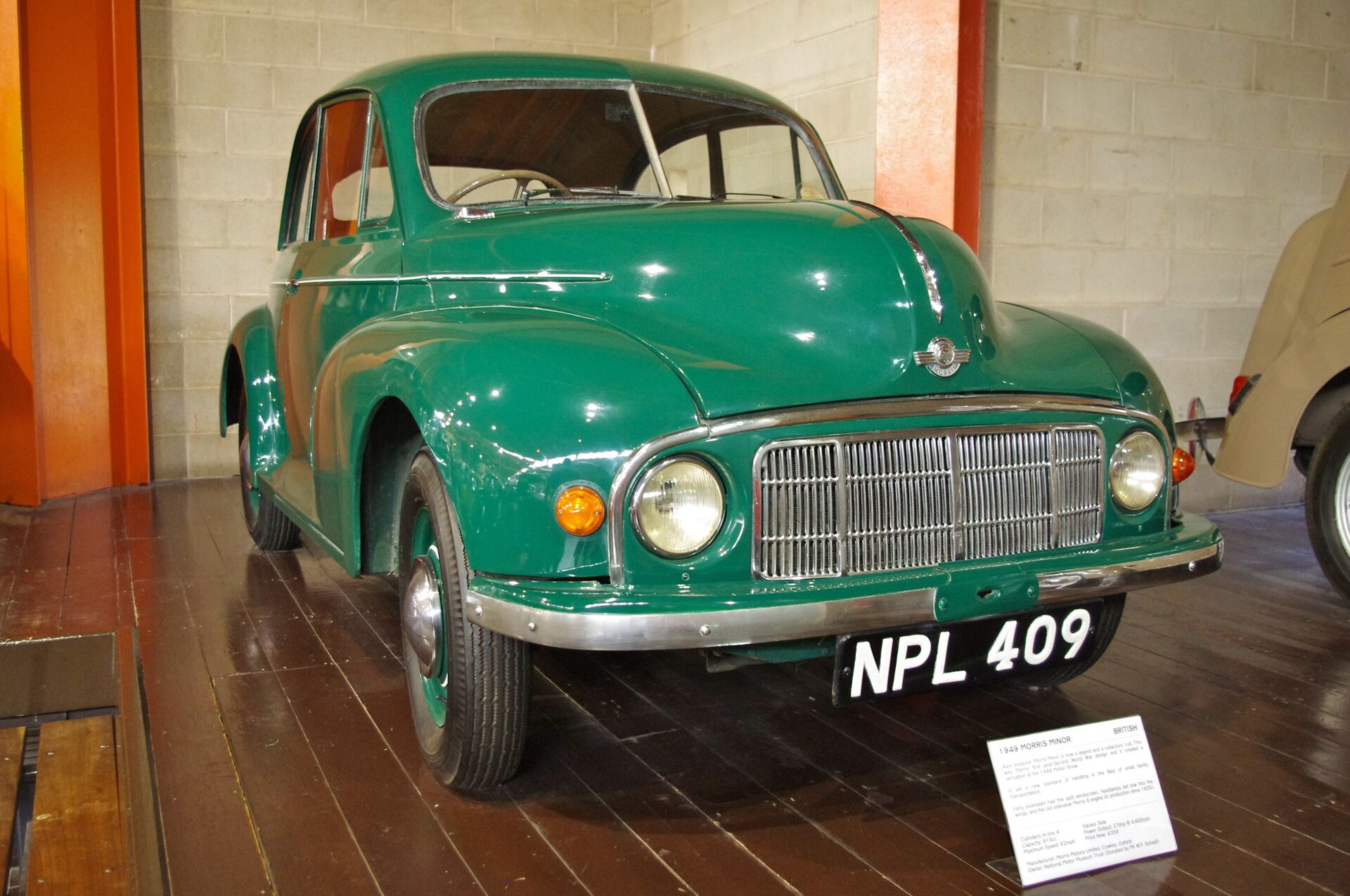
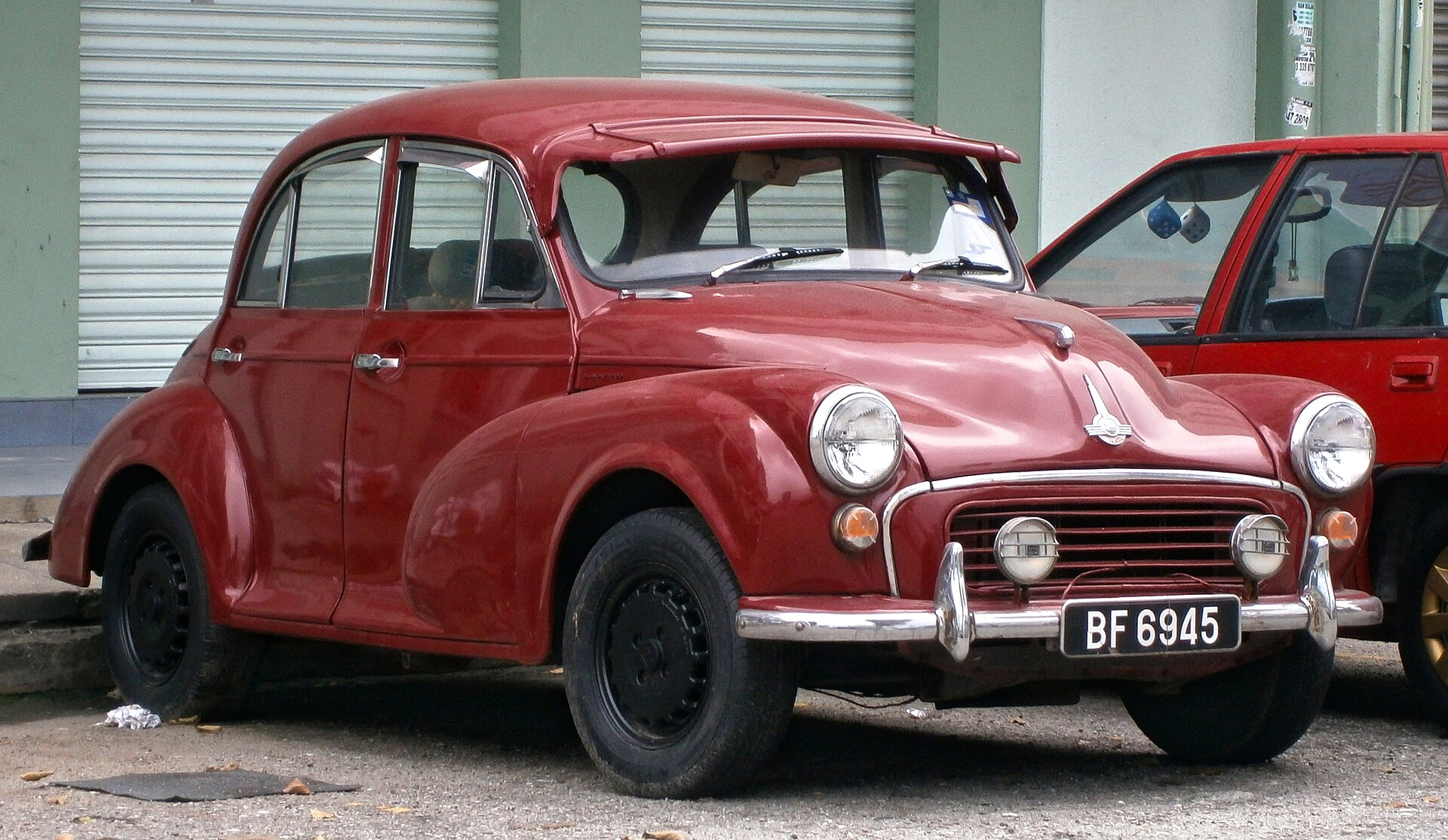
The Minor is the small family car Morris launched in October 1948 and built until 1971, through three series and in six body styles. Designed by a team led by Alec Issigonis, it combined unitary construction, rack-and-pinion steering and independent front suspension with modest side-valve and later A-Series engines. In December 1960 it became the first British car to pass one million units; the infobox total is 1,619,958.
Specs by version
| Version | Engine | Power | Drive | Production years |
|---|---|---|---|---|
| MM 918 cc side-valve | 0.9 l · 4 cyl · Petrol 918 cc | 20 kW 27 PS27 hp | Rear-wheel drive | 1948–1953 |
| 1000 (1,098 cc) | 1.1 l · 4 cyl · Petrol 1,098 cc | 36 kW 49 PS48 hp | Rear-wheel drive | 1962–1971 |
Verified Manufacturer and type-approval data from our catalog · Sources and methodology
In short
- Built from 1948 to 1971 at Cowley, with assembly in Australia, Ireland, Malaysia, Malta, New Zealand, South Africa, Thailand and Denmark (vans).
- 1,619,958 made by the infobox figure (the article text cites 1,619,857).
- Engines from the 918 cc side-valve of 20.5 kW (27.5 hp) to the 1,098 cc A-Series of 36 kW (48 bhp).
- Saloon (two and four doors), Tourer convertible, ash-framed Traveller estate, van and pick-up.
Morris Minor at a glance
| Parameter | Metric | Imperial |
|---|---|---|
| Maker | Morris Motors, from 1952 BMC, from 1968 British Leyland | - |
| Production | 1948–1971 (last CKD car Dublin, 1975) | - |
| Built | 1,619,958 (infobox) | - |
| Designer | Alec Issigonis | - |
| Construction | unitary body, rack-and-pinion steering, 14-inch wheels | - |
| Engines | 918 cc side-valve; 803, 948 and 1,098 cc A-Series OHV | - |
| Power | 20.5–36 kW (27.5–48 hp) | - |
| Wheelbase | 2,184 mm | 86 in |
| Length × width × height (four-door) | 3,759 × 1,524 × 1,524 mm | 148 × 60 × 60 in |
| Kerb weight (four-door) | 775 kg | 1,708 lb |
Morris before the post-war Minor
Morris grew on bought-in parts: almost all major components of the first Bullnose Oxford came from outside suppliers, and William Morris assembled them at Cowley. By 1926 the company made 42 % of all British cars. In 1932 Leonard Lord, the new managing director, brought in a moving assembly line and built what was then described as Europe's largest integrated car plant.
The Minor name was not new in 1948. An earlier Morris Minor, designed by Leonard Lord, was made from 1928 to 1932, and the Eight and Ten carried the small-car line until 1948:
| Morris model | Years |
|---|---|
| Oxford "Bullnose" | 1913–1926 |
| Cowley | 1915–1931 |
| Minor (first car of the name) | 1928–1932 |
| Ten | 1932–1948 |
| Eight | 1935–1948 |
| Oxford MO | 1948–1954 |
| Minor (MM, Series II, 1000) | 1948–1971 |
| Mini Minor | 1959–1969 |
| 1100 | 1962–1971 |
| Marina | 1971–1980 |
| Ital | 1980–1984 |
The Mosquito project
The car began in 1941 as the "Mosquito", led by Alec Issigonis, with Miles Thomas and Vic Oak overseeing the project. Issigonis wanted good roadholding and interior space from a small car: independent front suspension, rack-and-pinion steering, unitary construction, 14-inch wheels and an engine set well forward.
Two plans changed before launch. A flat-four engine, 800 cc for the UK and 1,100 cc for export, was dropped for the existing 918 cc side-valve unit to meet the deadline. Late in development the body was widened by 4 inches (10 cm), and the name Minor replaced Mosquito. Lord Nuffield is reported to have compared the prototype to a "poached egg".
The Minor was shown at the British Motor Show at Earls Court on 27 October 1948, priced from £358 as a two-door saloon or tourer.
| Year | Event |
|---|---|
| 1941 | Mosquito project starts |
| 27 October 1948 | launch at Earls Court |
| 1950 | four-door saloon |
| 1951 | raised headlamps |
| 1952 | BMC formed; Series II with the 803 cc A-Series |
| 1953 | Traveller estate |
| 1956 | Minor 1000 with 948 cc |
| 1958 | best year: 113,699 built |
| December 1960 | first British car past one million |
| 1962 | 1,098 cc engine |
| 1969–1971 | last Tourer, saloon and Traveller |


Three series and their engines
| Series | Years | Engine | Power | Top speed | Built |
|---|---|---|---|---|---|
| MM | 1948–1953 | 918 cc side-valve | 20.5 kW (27.5 hp) | 103 km/h (64 mph) | 250,962 |
| Series II | 1952–1956 | 803 cc A-Series OHV | 22 kW (30 hp) at 4,800 rpm | 101 km/h (63 mph) | 269,838 |
| Minor 1000 (948 cc) | 1956–1962 | 948 cc A-Series | 28 kW (37 bhp) at 4,750 rpm | 121 km/h (75 mph) | - |
| Minor 1000 (1,098 cc) | 1962–1971 | 1,098 cc A-Series | 36 kW (48 bhp) at 5,100 rpm | 124 km/h (77 mph) | 847,491 for all Minor 1000s |
Series MM. The side-valve engine gave 39 lb⋅ft of torque and about 40 mpg (imperial). A 1950 road test of a Tourer recorded 94.5 km/h (58.7 mph), 0–50 mph in 29.2 seconds and more than 50 seconds to 60 mph, at 42 mpg; the test car cost £382.
Series II. After the 1952 merger, the Austin-designed 803 cc overhead-valve A-Series replaced the Morris engine. It gave 40 lb⋅ft at 2,400 rpm and about 36 mpg. A 1952 test of a four-door saloon priced at £631 recorded 62 mph and 0–50 mph in 28.6 seconds.
Minor 1000. The 948 cc engine of 1956 lifted the top speed to 75 mph and cut 0–60 mph to 31.3 seconds. The 1,098 cc engine of 1962 gave 60 lb⋅ft and about 38 mpg.

Saloon, Tourer, Traveller and commercials
Every series was offered with more than one body:
| Variant | Years | Body / purpose | Notes |
|---|---|---|---|
| Two-door saloon | 1948–1970 | family car | the launch model |
| Tourer / convertible | 1948–1969 | open four-seater | last built 18 August 1969 |
| Four-door saloon | 1950–1970 | family car | last saloon 12 November 1970 |
| Traveller | 1953–1971 | estate with an ash wooden frame | last built April 1971 |
| Van and pick-up | from Series II to 1971 | commercial | vans also built in Copenhagen |
| Minor Million | 1961 | 350-car edition | lilac paint, white leather with black piping |
The Traveller's wooden frame made it the most distinctive Minor, and the van and pick-up carried the car's front end into commercial use.

The million and the end of production
The Minor passed one million units in December 1960, the first British car to do so, and Morris marked it with the 350-car Minor Million in lilac. Production peaked in 1958 at 113,699 cars.
By the late 1960s the design was more than 20 years old. The last Tourer was built on 18 August 1969 and the last saloon on 12 November 1970; the Traveller and the commercials lasted until April 1971. At Cowley the Minor was replaced by the Morris Marina, while the front-wheel-drive Morris 1100 is seen as its spiritual successor. Assembly abroad had taken place at Victoria Park in Australia, Dublin, Shah Alam in Malaysia, Marsa in Malta, Newmarket in Auckland, Durban and Blackheath in South Africa and in Thailand. Kit assembly went on in New Zealand until 1974, and the last new Minor, a four-door saloon, was put together in Dublin in 1975.
Autocar ranked the Minor's 23-year run as the 28th longest-lived single generation of any car. Morris belonged to the same group as MG from 1935, a story told in the history of MG cars.
Owning a Minor today
The Minor has a large following, and parts supply has never stopped: replacement panels were still being made in Sri Lanka in 2002. A restored final saloon was presented in November 2020. In 2024 it also emerged that MG Rover had planned a Minor revival in its 2005 bid, which was never pursued.
What to look at:
- Series: an MM with the side-valve engine is the earliest form; a 1,098 cc Minor 1000 has the most power and the highest top speed.
- Traveller wood: check the condition of the ash frame.
- Engine swaps: many cars have later A-Series engines; the engine number shows what was fitted at the factory.
- Body: corrosion in the unitary steel body, which has no separate chassis.
The Minor sits among the British family cars in the 1950s classics section of 1cars.
Photo gallery


FAQ
How many Morris Minors were made?
1,619,958 according to the English Wikipedia infobox; the article text also cites 1,619,857 (Wainwright, 2008).
Who designed the Morris Minor?
Alec Issigonis, who led the Mosquito project from 1941.
What engines did the Morris Minor have?
A 918 cc side-valve four at first, then BMC A-Series engines of 803, 948 and 1,098 cc.
When did Morris Minor production end?
The last saloon was built in November 1970 and the last Traveller and vans in April 1971; CKD assembly continued in New Zealand to 1974 and Dublin to 1975.
What is a Morris Minor Million?
A 1961 edition of 350 lilac cars with white leather seats, marking the first British car to pass one million units.
Data sources
Data checked by an editor against the sources below.