Morris — Lord Nuffield's Oxford Car Maker, 1912–1984
Morris was the British car maker founded by William Morris, later Lord Nuffield, in Oxford. It began in 1912 as W.R.M. Motors, built its first car, the "Bullnose" Morris Oxford, at Cowley in 1913, and by 1924 was Britain's largest car manufacturer. Morris added Wolseley, MG and Riley, merged with Austin in 1952 to form British Motor Corporation and gave the world the Morris Minor and the Morris Mini-Minor. The name ended in 1984 with the Ital and a van version of the Metro.
Key takeaways
- William Morris started W.R.M. Motors in 1912; the Cowley factory built the first Morris Oxford in 1913, and Morris Motors Ltd followed in 1919.
- By 1924 Morris had overtaken Ford in Britain with about 51% of the home market.
- The Morris Minor of 1948 became the first British car to sell more than one million, in December 1960; about 1.62 million were built.
- Morris merged with Austin into BMC in 1952; the last Morris-badged car, the Ital, ended in 1984, and SAIC owns the trademark today.
Morris at a glance
| Fact | Value |
|---|---|
| Founded | 1912 as W.R.M. Motors; Morris Motors Ltd from 1919 |
| Founder | William Richard Morris (Viscount Nuffield from 1938) |
| Plant | Cowley, Oxford (former Oxford Military College) |
| Group | Nuffield Organisation; BMC from 1952; British Leyland from 1968 |
| Brands acquired | Wolseley (1927), MG (Morris Garages), Riley (1938) |
| Best-known models | Oxford "Bullnose", Cowley, Minor (1928 and 1948), Eight, Mini-Minor, 1100, Marina |
| Last cars | Ital (1980–1984); Metro-based van (1984) |
| Trademark today | SAIC |
William Morris: from bicycles to the Bullnose
William Richard Morris was born in Worcester on 10 October 1877. At 15 Morris was apprenticed to a bicycle seller. A year later the young Morris opened a repair business of his own in a shed behind his parents' house, and later still the business assembled bicycles in a shop on the High Street in Oxford. He designed a motorcycle in 1901, and from 1902 his Longwall Street premises offered bicycle repairs, a taxi service and the sale, hire and repair of cars. In 1910 Morris rebuilt them and called the business The Morris Garage, the name that would later give MG its initials.
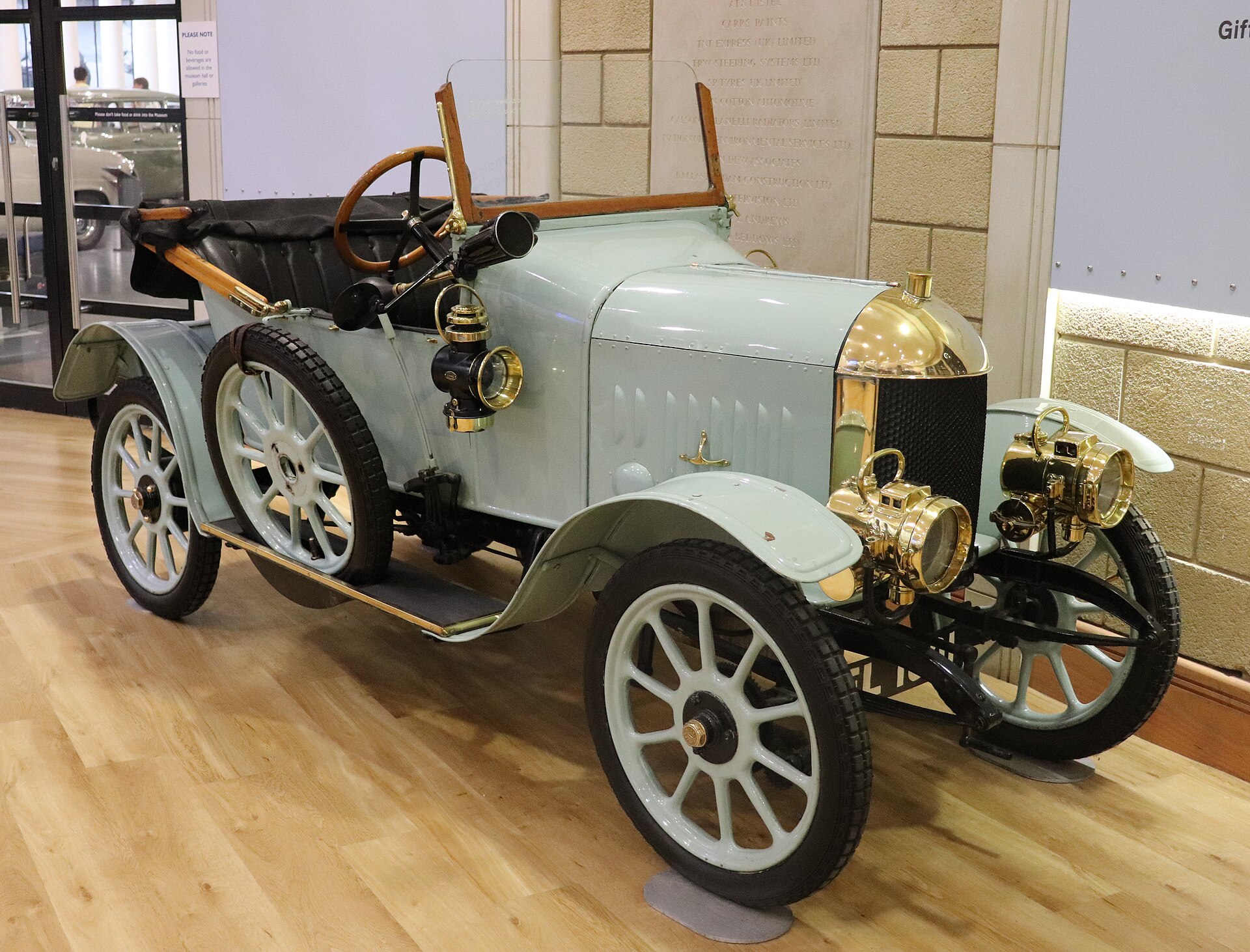
In 1912 Morris set up W.R.M. Motors to build a light car from bought-in parts, a method that let him keep the business within his own capital. In 1913 a factory in the former Oxford Military College at Cowley began to assemble the two-seat Morris Oxford, known from its rounded radiator as the "Bullnose". Its 1,018 cc engine could not carry a four-seat body, so in mid-1915 the larger Morris Cowley arrived with a 1,548 cc engine bought from Continental of Detroit. The full story of the first Morris car is in the Morris Oxford Bullnose history.

Britain's largest car maker
During the First World War the Cowley works made mainly munitions, including 50,000 minesinkers. Car production restarted in 1919, the year Morris Motors Ltd took over W.R.M. Motors. Morris built a reputation for quality and for cutting prices, and his share of British car production grew from 10% in 1921 to 28% in 1923. In 1923 Morris bought the Coventry engine works of Hotchkiss, which became Morris Engines. Frank Woollard reorganised engine building there from batch to flow production, lifting output from fewer than 300 to 1,200 engines a week, and to 2,000 a week by 1924. That year Morris overtook Ford as Britain's largest car maker, with about 51% of the home market. Car output rose from 400 in 1919 to 56,000 in 1925.
The business grew sideways as well. Cecil Kimber began building sporting Morris cars under the MG name in 1924, later at a separate factory in Abingdon. The marque's later story is in the MG history. In 1926 Morris founded the Pressed Steel Company with Budd of Philadelphia and acquired the SU carburettor business. In 1927 Morris bought the collapsed Wolseley Motors for £730,000. The first Morris Minor, designed by Leonard Lord with an 847 cc Wolseley-derived engine, followed in 1928 and helped the company through the Depression.

Leonard Lord, the Eight and the war years
Leonard Lord became managing director in 1932. He introduced a moving assembly line at Cowley and built what Wikipedia describes as the largest integrated car plant in Europe. His Morris Eight, closely based on the Ford Model Y, was launched at the London Motor Show in 1934. In 1935 Morris Motors took over the MG and Wolseley businesses from William Morris personally in exchange for shares. Lord fell out with Morris and left in 1936 for Austin, the rival he would later lead. Morris's market share fell from 33% in 1932 to 23% in 1938.
Morris received a baronetcy in 1929, became Baron Nuffield in 1934 and Viscount Nuffield on 1 January 1938. That year Nuffield bought Riley for £100 and agreed to build the Castle Bromwich shadow factory for Spitfire fighters, later taken over by the Ministry of Aircraft Production. In the Second World War Cowley made parts for and repaired Tiger Moth aircraft, and Morris built about 10,200 C8 artillery tractors. The Morris Bodies works turned out millions of jerry cans. His factory also produced iron lungs, of which more than 1,700 were given to hospitals from 1938.
Nuffield was a major philanthropist. He founded Nuffield College, Oxford, in 1937 and the Nuffield Foundation in 1943 with an endowment of £10 million. Historians also record that Nuffield financed Oswald Mosley's New Party with £50,000 in 1930 and that he was hostile to trade unions.

The Issigonis Minor, BMC and the Mini
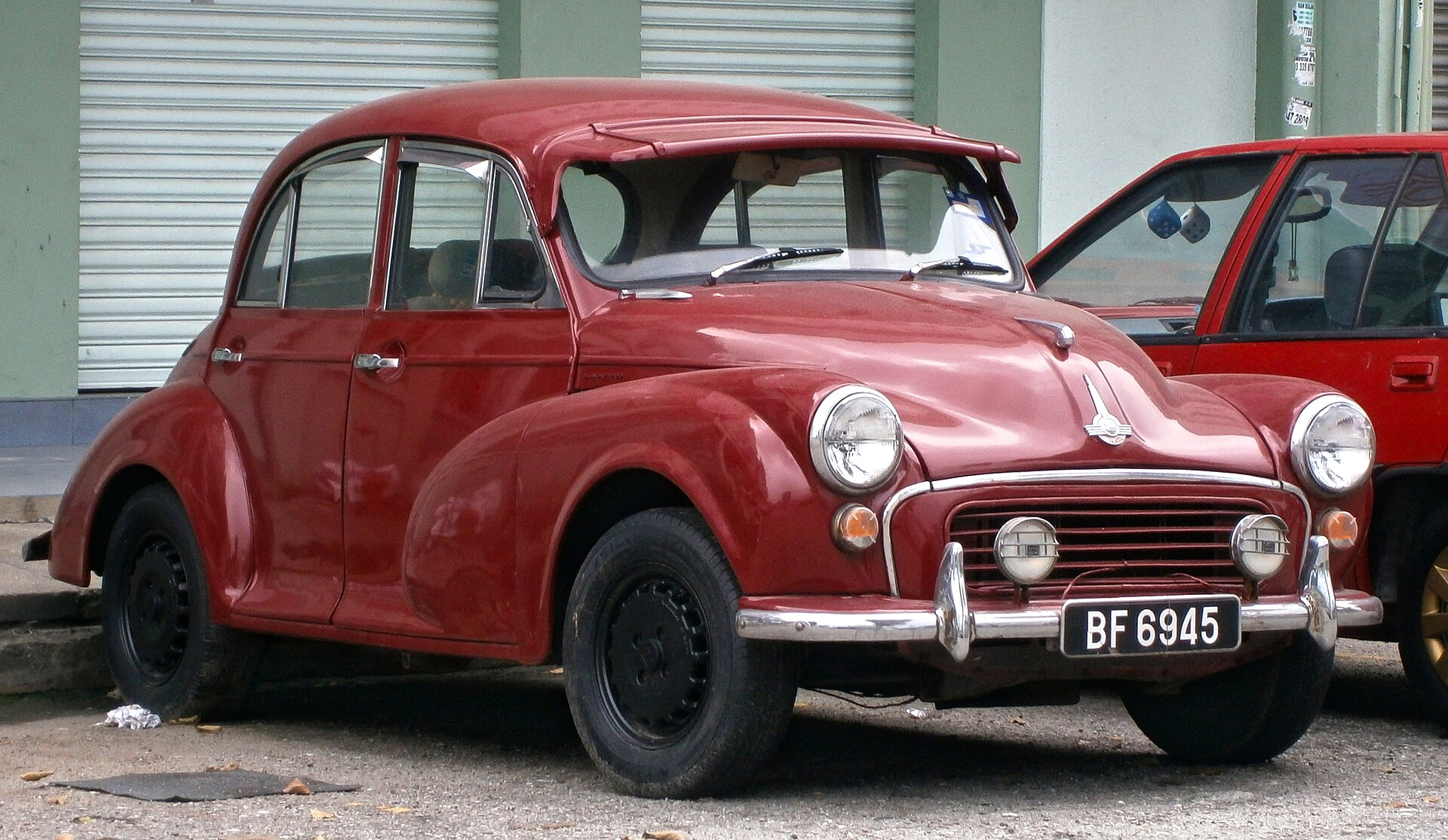
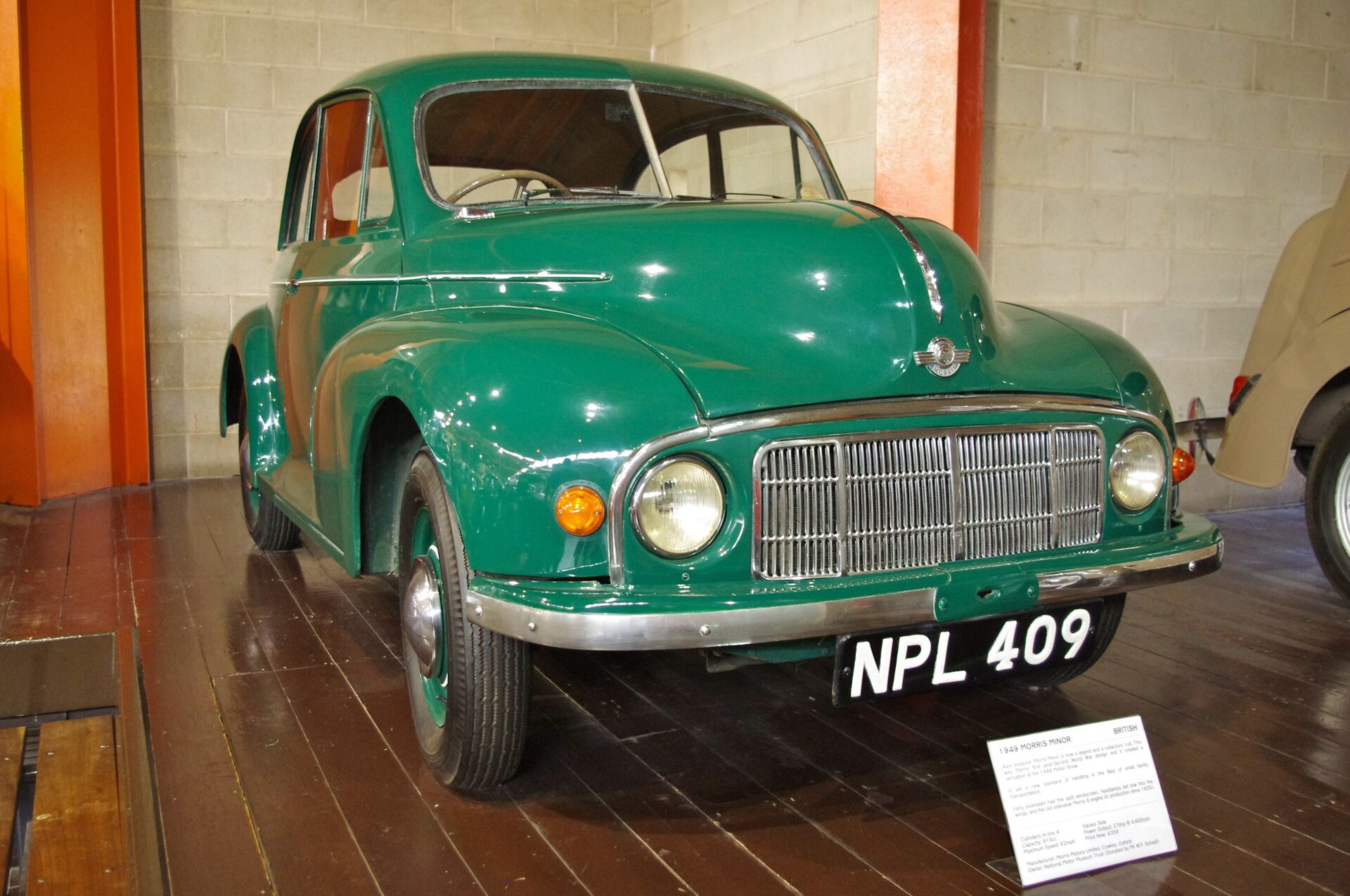
The post-war car that defined Morris was the second Morris Minor, designed under Alec Issigonis and shown at the Earls Court motor show on 27 October 1948. Nuffield is reported to have said that the prototype looked like a poached egg. The first engine was a 918 cc side-valve unit; from 1952 the Minor used the Austin A-series. The last versions had 1,098 cc and 36 kW (48 bhp). Saloon, Tourer convertible, wood-framed Traveller estate, van and pick-up versions followed. In December 1960 the Minor became the first British car to sell more than a million. The event was marked by a run of 350 lilac "Minor 1000000" saloons, one for each British Morris dealer. The last saloon was built on 12 November 1970, and about 1.62 million were made in all. The model is covered in detail in the Morris Minor history.
In 1952 the Nuffield Organisation merged with Austin to form British Motor Corporation, which that year produced 39% of British output. Nuffield was chairman for the first year and retired on 17 December 1952, when Leonard Lord took over and Austin became the dominant partner. Morris models became badge-engineered versions of BMC designs. The Oxford Series III of 1956 became the basis of India's Hindustan Ambassador. In 1959 the Morris Mini-Minor, also designed by Issigonis, appeared alongside the Austin Seven, and the Morris 1100 of 1962–1971 followed. Lord Nuffield died on 22 August 1963.

British Leyland, the Marina and the end
BMC acquired Jaguar to form British Motor Holdings in 1966, and in 1968 it merged with Leyland Motors to form British Leyland; Morris's separate identity ended. The Morris Marina, launched on 27 April 1971 and built at Cowley, was among Britain's best-selling cars and peaked in second place behind the Cortina in 1973. In all, 807,000 were sold in Britain. Its early handling drew heavy criticism, and it often appears in lists of the worst cars ever built. Hyundai developed its Pony from a Marina. The Morris Ital of 1980, essentially the same car with mild styling changes, was the last Morris passenger car.
In 1984 the Austin Montego replaced the Ital. The last vehicle to carry the Morris name was a van version of the Austin Metro; the name was fully abandoned in 1987. After the collapse of MG Rover in 2005 the Morris trademark passed to Nanjing Automobile and then to SAIC. The Morris Commercial name was revived in 2019 for the JE electric van. Morris models on 1cars are listed in the Morris catalogue.

Morris timeline
| Year | Event |
|---|---|
| 1877 | William Morris born in Worcester (10 October) |
| 1912 | W.R.M. Motors founded |
| 1913 | First Morris Oxford built at Cowley |
| 1919 | Morris Motors Ltd formed |
| 1924 | Morris overtakes Ford in Britain; MG cars begin |
| 1927 | Wolseley bought for £730,000 |
| 1928 | First Morris Minor |
| 1934 | Morris Eight; Morris becomes Baron Nuffield |
| 1938 | Riley bought; Viscount Nuffield (1 January) |
| 1948 | Issigonis Morris Minor (27 October) |
| 1952 | Merger with Austin to form BMC |
| 1959 | Morris Mini-Minor |
| 1960 | Minor passes one million (December) |
| 1968 | British Leyland formed |
| 1971 | Morris Marina (27 April) |
| 1984 | Ital ends; Morris name retired from cars |
Landmark Morris models
| Model | Years | Why it matters |
|---|---|---|
| Oxford "Bullnose" | 1913–1926 | First Morris car |
| Cowley | 1915 onwards | Larger car that built Morris's volume |
| Minor (first) | 1928 | Small car that carried Morris through the Depression |
| Eight | 1934–1948 | Lord's mass-market car |
| Minor (Issigonis) | 1948–1971 | First British car to sell a million |
| Mini-Minor | 1959 | Morris version of the Issigonis Mini |
| Marina / Ital | 1971–1984 | Last Morris passenger cars |
Photo gallery

FAQ
Who founded Morris cars?
William Richard Morris, later Viscount Nuffield, who started W.R.M. Motors in Oxford in 1912 and built the first Morris Oxford in 1913.
What does MG have to do with Morris?
MG stands for Morris Garages. Cecil Kimber began building sporting Morris cars under the MG name in 1924.
When did Morris merge with Austin?
In 1952, when the Nuffield Organisation and Austin formed British Motor Corporation (BMC).
What was the last Morris car?
The Ital, built until 1984. The last vehicle with the Morris name was a van version of the Austin Metro.
Who owns the Morris brand today?
SAIC, which took over the trademark from Nanjing Automobile after MG Rover's collapse.
Sources
- Wikipedia — Morris Motors (accessed 24 Oct 2026)
- Wikipedia — William Morris, 1st Viscount Nuffield (accessed 24 Oct 2026)
- Wikipedia — Morris Minor (accessed 24 Oct 2026)
- Wikipedia — Morris Marina (accessed 24 Oct 2026)
- Wikipedia — British Motor Corporation (accessed 24 Oct 2026)
Found a mistake? Report an error