 Hindustan Motors Ambassador
Specs, engines and history
Published Sources (1) Report an error
By Sarah Whitmore, Senior Automotive Writer
- Built
- 1957–2014
- Top power
- 56 kW (76 PS)
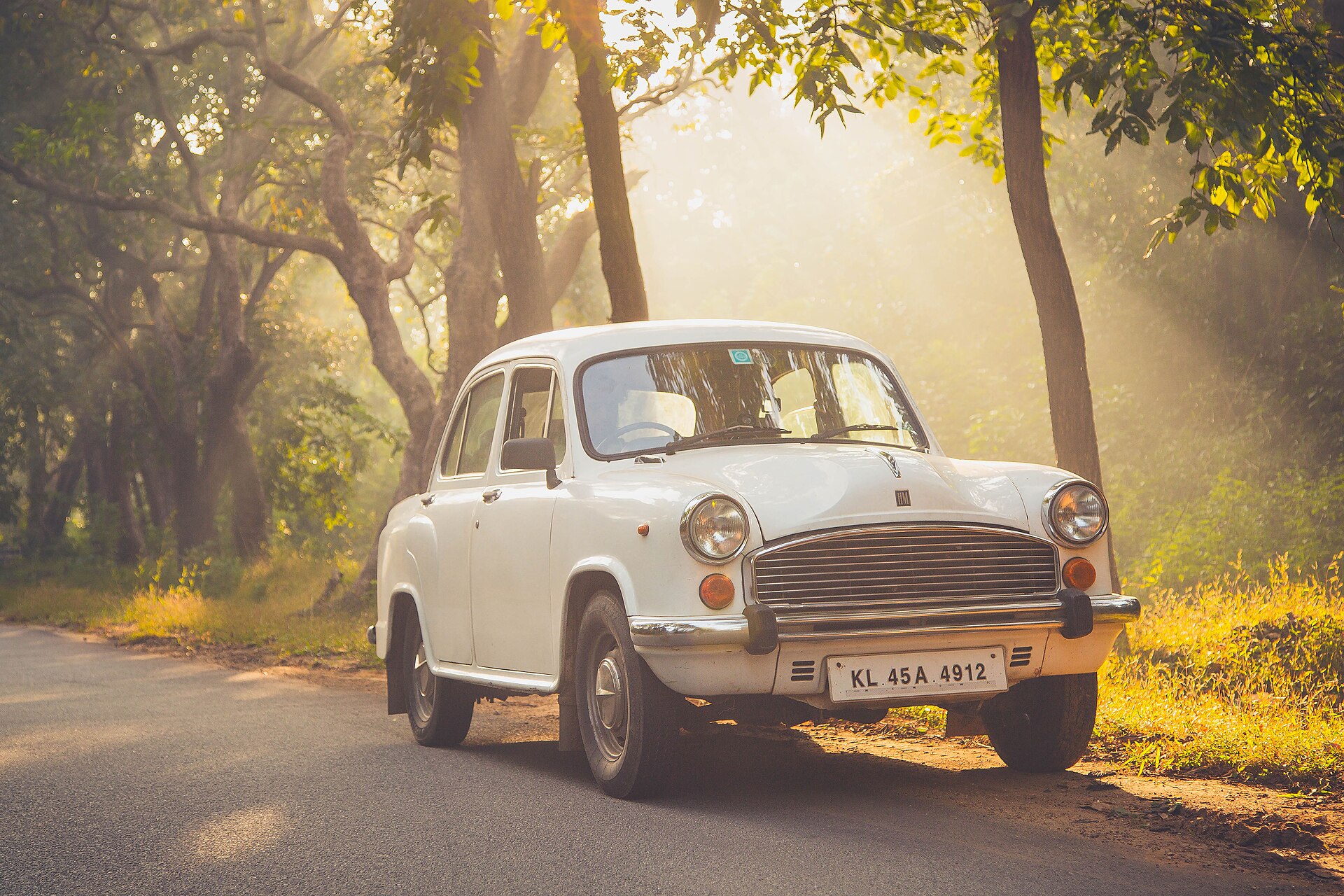
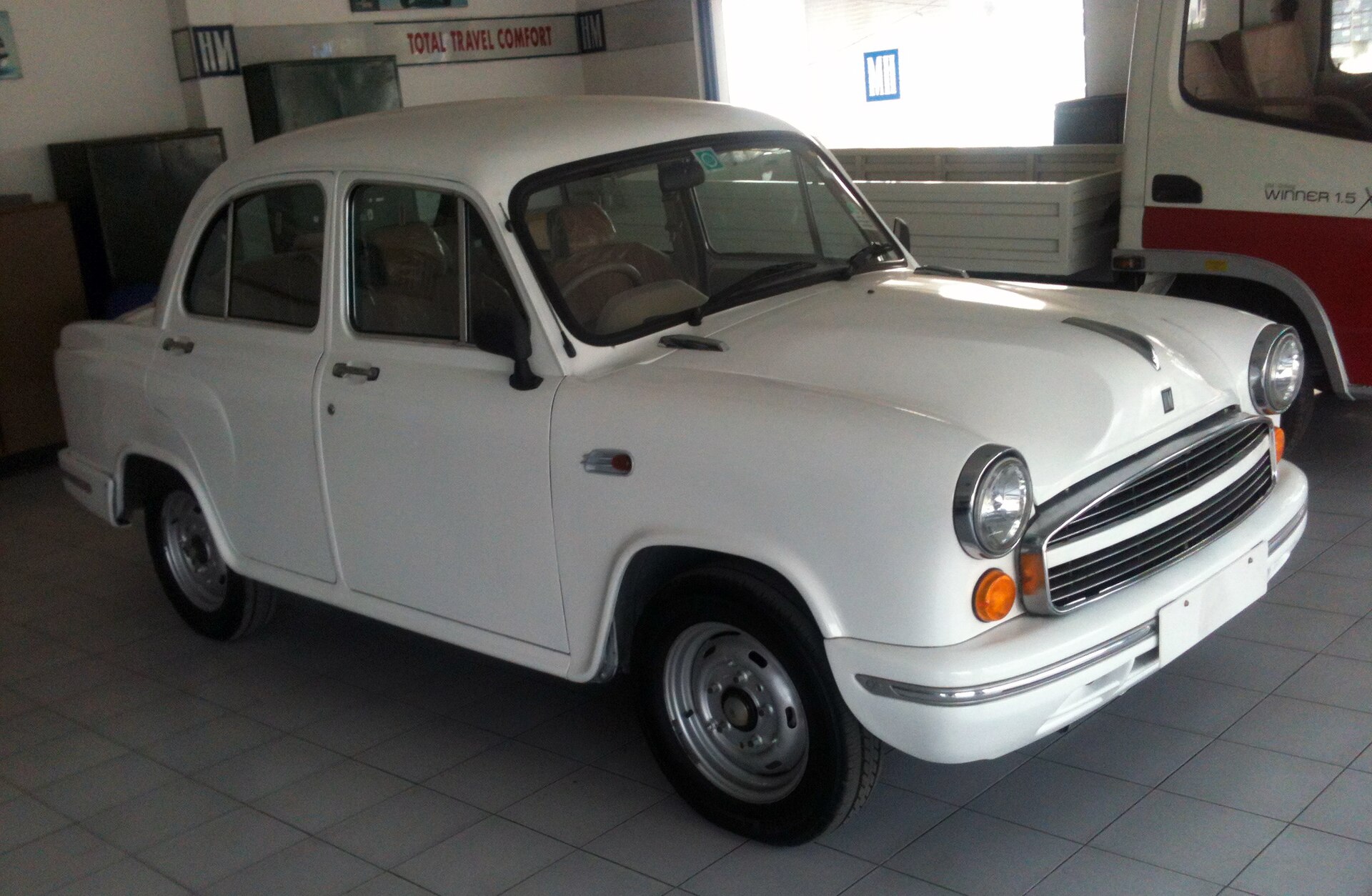
The Hindustan Ambassador is the saloon that Hindustan Motors built in India from 1957 to 2014, based on the Morris Oxford Series III from Britain. For several decades it dominated Indian roads as the car of government offices, companies and taxi drivers; in the early 1980s it still made up more than two-thirds of the country's car production. Its styling changed little after 1979, while the engines moved from the original 1.5-litre BMC unit to Isuzu petrol and diesel engines. Production at Uttarpara near Kolkata ended in May 2014.
Hindustan Motors was founded in 1942 by B. M. Birla of the Birla family, together with Lord Nuffield of Morris Motors. It first assembled the Morris 10 as the Hindustan 10 in a small plant at Port Okha in Gujarat and moved to Uttarpara, in the Hooghly district of West Bengal, in 1948. The Hindustan 14 and the Landmaster, a licence-built Morris Oxford Series II, came before the Ambassador. Later the company built the Contessa, based on the Vauxhall Victor FE, assembled Mitsubishi models from 1998 at Tiruvallur near Chennai, and had a 50–50 joint venture with General Motors from 1994. Car production was suspended in 2014.
Specs by version
Verified Manufacturer and type-approval data from our catalog · Sources and methodology
In short
- Built from 1957 to 2014, mainly at Uttarpara, West Bengal; based on the Morris Oxford Series III, whose tooling Morris sold to Hindustan in 1956.
- Engines: 1,489 cc BMC B-series petrol with 41 kW (55 bhp); India's first diesel car in 1980; Isuzu 1,817 cc petrol with 56 kW (75 bhp) from 1992.
- Versions: Mark I to Mark 4, Nova, 1800 ISZ, Classic, Grand, Avigo and the BS IV diesel Encore of 2013.
- Sold to Groupe PSA (now Stellantis) as a brand in February 2017; a revival with Peugeot was announced in May 2022.
Hindustan Ambassador at a glance: maker, production years (1957–2014), purpose
| Parameter | Hindustan Ambassador |
|---|---|
| Maker | Hindustan Motors Limited, Birla group |
| Production | 1957–2014 (some sources give 1958 as the start) |
| Plants | Uttarpara (Hooghly district, West Bengal); Tiruvallur (Tamil Nadu) |
| Based on | Morris Oxford Series III |
| Body | four-door saloon; estate from the early 1970s |
| Petrol engines | 1,476 cc side-valve (1957–1959); 1,489 cc BMC B-series OHV; 1,760 cc (1977–1978); Isuzu 1,817 cc |
| Diesel engines | 1,489 cc (1980); 2.0-litre Isuzu DSZ and DSZ Turbo; 1.5-litre BS IV (2013) |
| Power | 28 kW (37 bhp) for the first diesel to 56 kW (75 bhp) for the Isuzu petrol and 2.0 turbodiesel |
| Main users | government and company fleets, taxis |
From Morris Oxford to Ambassador
In 1956 Morris Motors sold the rights and tooling of the Oxford Series III to Hindustan Motors. The Ambassador replaced the Landmaster, which had been built from the Oxford Series II at Uttarpara since 1954, and the larger Hindustan Deluxe. The first Ambassador of 1957 was essentially a rebadged Series III with deep headlamp cowls, small rear fins, a dimpled bonnet and a dished three-spoke steering wheel. In 1959 the old 1,476 cc side-valve engine gave way to the 1,489 cc overhead-valve B-series.
| Year | Event |
|---|---|
| 1942 | Hindustan Motors founded by B. M. Birla |
| 1948 | Assembly moves from Port Okha to Uttarpara |
| 1956 | Morris sells the Oxford Series III rights and tooling |
| 1957 | Ambassador Mark I launched |
| 1959 | 1,489 cc OHV engine replaces the side-valve |
| 1963 | Mark II facelift (November) |
| 1975 | Mark III |
| 1979 | Mark 4 |
| 1980 | Diesel version, India's first diesel car |
| 1990 | Nova |
| 1992 | 1800 ISZ with Isuzu engine and five-speed gearbox |
| 2003 | Grand with 137 changes |
| 2004 | Avigo |
| 2013 | Encore BS IV diesel (September) |
| 2014 | Production ends at Uttarpara (May) |
| 2017 | Ambassador brand sold to Groupe PSA (11 February) |
For a long time the Ambassador had few competitors. Its main rivals were the Premier Padmini and the Standard 10, and Wikipedia EN credits its long dominance to its size and ruggedness compared with them. In the early 1980s the waiting list for an Ambassador was 12 months, against nearly five years for a Padmini.

Body and styling: Mark I to Mark 4
The Ambassador kept the Oxford's four-door saloon body. Over the decades Hindustan updated it in small steps rather than replacing it. The Mark II of November 1963 received a closely chequered grille, a new dashboard and new tail lamps; wood-grain trim and an aluminium bezel arrived in 1968, and an estate version in the early 1970s. The Mark III of 1975 had horizontal grille louvres and a dashboard with three instruments on black mesh.
The Mark 4 of 1979 brought a smaller grille, square parking lamps and amber indicators on a lower lip spoiler, and this face stayed largely unchanged until 2014. The Nova of 1990 had a new steering wheel and column, brakes, electrics and a top-hinged brake pedal. With the 1800 ISZ of 1992 the instruments moved behind the steering wheel, bucket seats became an option and seat belts became standard for the first time.
BMC and Isuzu engines
| Engine | Years | Displacement | Power |
|---|---|---|---|
| BMC side-valve petrol | 1957–1959 | 1,476 cc | - |
| BMC B-series OHV petrol | from 1959 | 1,489 cc | 41 kW (55 bhp) |
| BMC B-series diesel | from 1980 | 1,489 cc | 28 kW (37 bhp) |
| 1760 petrol | 1977–1978 | 1,760 cc | - |
| Isuzu 1800 ISZ petrol | from 1992 | 1,817 cc | 56 kW (75 bhp) |
| Isuzu 2000 DSZ diesel | - | 2.0 litres | 37 kW (50 bhp) |
| Isuzu 2000 DSZ Turbo diesel | - | 2.0 litres | 56 kW (75 bhp) |
| BS IV diesel (Encore) | 2013–2014 | 1.5 litres | 36 kW (48.6 bhp) |
The diesel Ambassador of 1980 was India's first diesel car. Because private diesel ownership was restricted at the time, it was first sold only for taxi and government use. The Isuzu engine of 1992 came with a five-speed manual gearbox with a floor-mounted lever.

Ambassador versions: Nova, Classic, Grand, Avigo and Encore
| Variant | Years | Body / purpose | Engine | Notes |
|---|---|---|---|---|
| Mark I | 1957–1963 | saloon | 1.5 petrol | rebadged Oxford Series III |
| Mark II | 1963–1975 | saloon; estate from the early 1970s | 1.5 petrol | new grille and dashboard |
| Mark III | 1975–1979 | saloon | 1.5 petrol; 1,760 cc in 1977–1978 | Deluxe from 1978 |
| Mark 4 | 1979–1990 | saloon | 1.5 petrol and diesel | final face of the car |
| Nova | from 1990 | saloon | 1.5 petrol and diesel | new brakes and electrics |
| 1800 ISZ | 1992–2010 | saloon | Isuzu 1.8 petrol | five-speed floor shift, seat belts |
| Classic | 1998–2010 | saloon | petrol and diesel | name from the 1998 Delhi Motor Show |
| Grand | 2003–2014 | saloon | petrol and diesel; 1.5 from 2007 | 137 changes, anti-roll bar |
| Avigo | from 2004 | saloon | petrol and diesel | facelifted by Manvindra Singh |
| Encore | 2013–2014 | saloon | 1.5 BS IV diesel | developed with Magna Steyr's help |
The Grand of 2003 was the largest update of the standard car. Hindustan claimed 137 changes, including body-coloured wraparound bumpers, fabric seats, central locking, a factory music system, an optional sunroof and an anti-roll bar; the French company Trèves developed the sound insulation. The Avigo of 2004 was the most radical version, with a new exterior by Manvindra Singh, a bonnet inspired by the Landmaster, a retro dashboard and two-tone beige seats, and it cost more than the other models. In 1992 a small number of cars were exported to the United Kingdom as the Fullbore Mark 10, fitted with a heater and seat belts for European rules.

Taxi, official car and decline
The Ambassador was the standard car of official and company fleets and a common taxi. Private buyers began to leave it in the 1980s and 1990s. Wikipedia EN names a high price, poor fuel economy and poor quality as problems, and points to protectionist policy as a cause of the technical standstill. After liberalisation in the mid-1980s, Japanese joint ventures arrived and Maruti opened a new small-car segment with the Maruti 800.
Emission rules then hit the taxi trade. Sales of the old diesel as a taxi were barred from 1 April 2011 in the cities where BS IV standards had applied for a year, which ended most of the Classic taxi market; a cleaner diesel later let Kolkata taxis return. In the financial year ending March 2014 the company sold only 2,200 Ambassadors, about a tenth of the mid-1980s figure, and production at Uttarpara stopped in May 2014. Wikipedia EN describes it as the longest continuously mass-produced model on one assembly line. The Uttarpara plant has been closed since 2015.
Opinions on the car differ. Top Gear named it the best taxi in the world in series 20, episode 2, while a BBC Magazine article in July 2014 called it India's "appalling" national car.


The Ambassador name after 2014
On 11 February 2017 Hindustan Motors agreed to sell the Ambassador brand and trademarks to Groupe PSA, now Stellantis. In May 2022 Hindustan announced that the name would return with a new design and engine, developed with Peugeot and built in Chennai. The car also has a place in Indian record books: a customised Ambassador limousine by Parikh Coach Builders was listed in the Limca Book of Records. For anyone looking at a surviving car, the variant history matters: seat belts became standard only in 1992, the Isuzu petrol engine arrived the same year, and the Grand of 2003 added an anti-roll bar and central locking.
The car's British parent is covered in the Morris catalogue, Hindustan's models are in the Hindustan Motors catalogue, more cars of the period are in the classic cars section, and the power converter turns the bhp figures into kW and PS.
Photo gallery

Hindustan Motors Ambassador in our rankings
- No. 7 of 912 · Longest-running car nameplates (57 years)
- No. 93 of 131 · Biggest engines: sedans (1,817 cc · top 71%)
- No. 425 of 557 · Biggest engines: cars (1,817 cc · top 77%)
- No. 135 of 149 · Most powerful sedans (56 kW · top 91%)
- No. 821 of 859 · Most powerful cars (56 kW · top 96%)
- No. 143 of 143 · Most powerful diesel cars (28 kW)
In production longer than 99% of ranked nameplates in the 1CARS catalog (No. 7 of 912).
FAQ
When was the Hindustan Ambassador produced, and where?
From 1957 to 2014, mainly at Uttarpara in the Hooghly district of West Bengal, India.
What car is the Hindustan Ambassador based on?
The Morris Oxford Series III, built in Britain; Morris sold its rights and tooling to Hindustan Motors in 1956.
What engine does the Hindustan Ambassador have?
At first a 1,489 cc BMC B-series petrol with 41 kW (55 bhp); later a diesel from 1980 and Isuzu 1.8-litre petrol and 2.0-litre diesel engines from 1992.
What variants of the Hindustan Ambassador were made?
Mark I to Mark 4, Nova, 1800 ISZ, Classic, Grand, Avigo and Encore, plus an estate from the early 1970s.
Why did Ambassador production end?
Private buyers moved to modern cars after the 1980s, emission rules closed most of the taxi market from 2011, and only 2,200 cars were sold in the year to March 2014.
Data sources
Data checked by an editor against the sources below.