Gordon Murray Automotive T.50
Specs, engines and history
Published Sources (1) Report an error
By Felix Hartmann, Automotive Technology & EV Contributor
- Built
- 2023–present
- Top power
- 488 kW (663 PS)
Gordon Murray Automotive (GMA) is the British carmaker founded in 2017 by Gordon Murray, the Formula One designer who drew the McLaren F1 road car. It belongs to the Gordon Murray Group. GMA lists Windlesham, Surrey, as its home, and in 2022 it moved into a new headquarters at Highams Park in Surrey, completed by 2024 with a test road and production halls. Its models so far are the T.50, the track-only T.50s Niki Lauda and the T.33. In 2025 the company received a King's Award for Enterprise for the T.50 and launched a Special Vehicles Division for bespoke cars.
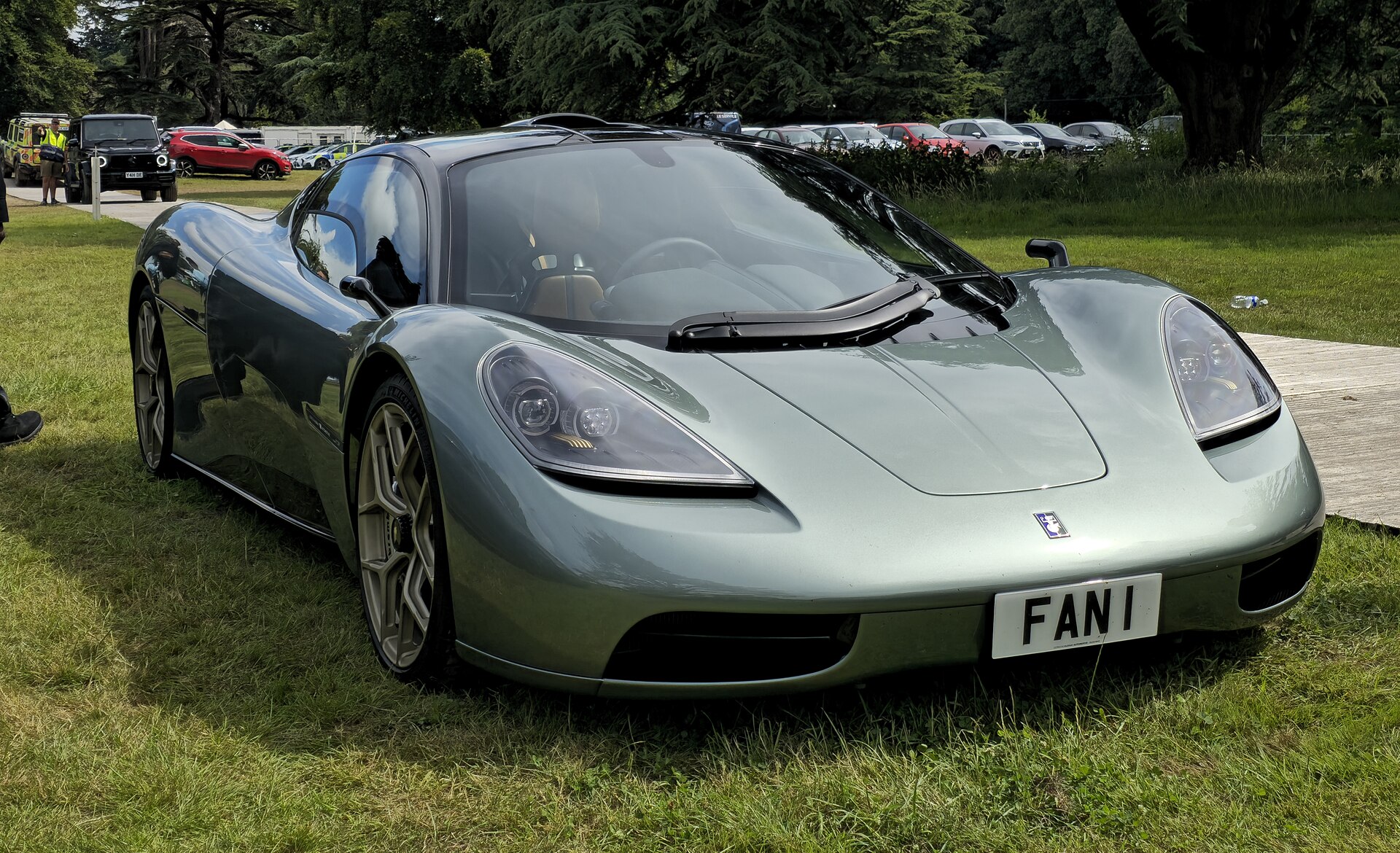
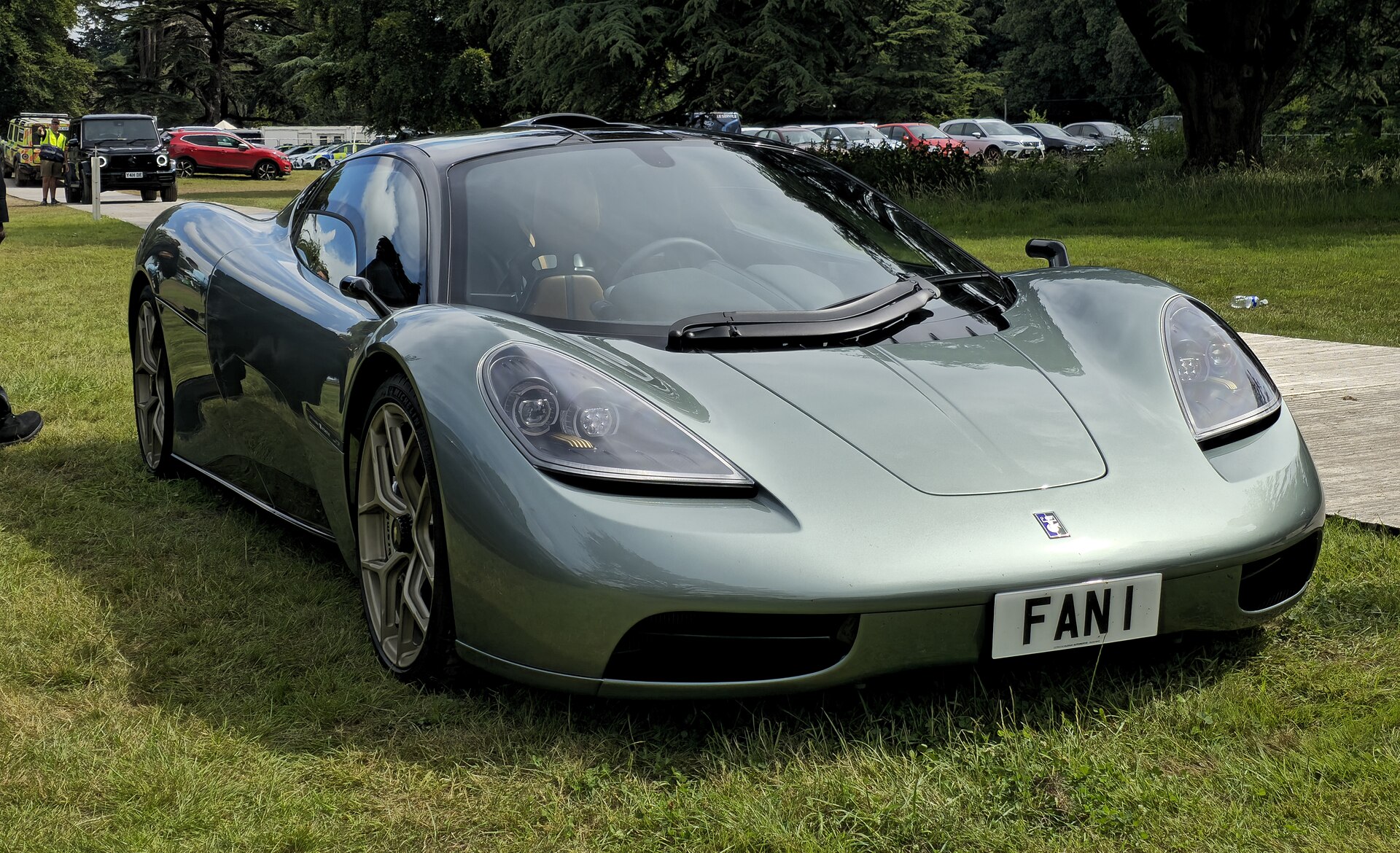
The T.50 is GMA's first car and the one that introduced the brand. Murray presents it as the "spiritual successor" to the McLaren F1: a three-seat mid-engined coupé with a central driving position, a naturally aspirated V12 and a six-speed manual gearbox. It adds a 40 cm rear fan, an idea from Murray's Brabham BT46B Formula One car of 1978. GMA unveiled it on 4 August 2020. All 100 road cars were sold within 48 hours of the premiere, and production began in March 2023 and ended in 2025.
Specs by version
Verified Manufacturer and type-approval data from our catalog · Sources and methodology
In short
- 100 road cars plus 25 track-only T.50s Niki Lauda; production from March 2023, ending in 2025.
- Cosworth-developed 3,994 cc V12 that revs to 12,100 rpm: 488 kW (663 PS) at 11,500 rpm and 467 Nm at 9,000 rpm; the engine weighs 178 kg.
- Dry weight 997 kg, giving 501 kW per tonne; six-speed Xtrac H-pattern manual.
- Car and Driver measured 0–60 mph in 2.9 seconds and gave a top speed of 364 km/h (226 mph).
GMA T.50 at a glance
| Specification | Value |
|---|---|
| Maker | Gordon Murray Automotive, Surrey, England |
| Unveiled | 4 August 2020 |
| Production | March 2023 to 2025; 100 road cars |
| Designer | Gordon Murray |
| Body | two-door coupé with dihedral doors, three seats with central driving position |
| Layout | rear mid-engine, rear-wheel drive |
| Engine | 3,994 cc naturally aspirated V12 developed by Cosworth, 178 kg |
| Power | 488 kW (663 PS) at 11,500 rpm |
| Torque | 467 Nm at 9,000 rpm |
| Specific output | 122.1 kW per litre |
| Gearbox | six-speed Xtrac H-pattern manual |
| Length × width × height | 4,352 × 1,850 × 1,164 mm |
| Wheelbase | 2,700 mm |
| Dry weight | 997 kg |
Gordon Murray and the road to the T.50
Murray made his name in Formula One with Brabham. In 1978 he designed the Brabham BT46B "fan car", whose rear fan sucked air from under the car to press it to the road. His best-known road car is the McLaren F1 of 1992–1998, with its central seat and V12 engine; its story is told in our article on the McLaren F1. Murray's career is on his page in our people section.
The T.50 brings both ideas together. GMA calls it the F1's spiritual successor. It shares the central driving position, six-speed manual, V12 layout, small opening "ticket" windows and dihedral doors. Murray said he set out to fix the F1's shortcomings: the width of the central spine, the headlamps, air conditioning, brakes, clutch, fuel bag and luggage lockers.
The fan and active aerodynamics
The T.50's 40 cm fan sits at the rear and is driven by a 48-volt electric motor of 8.5 kW. It pulls air from under the car to strengthen the ground effect, working with active rear spoilers. The driver can choose from six presets. English Wikipedia names only two of them, "Streamline" and "Vmax"; the effects it gives are:
| Setting | Effect |
|---|---|
| High downforce | about 30 % more downforce |
| Braking | about 100 % extra downforce, spoilers raised to 45 degrees |
| Streamline and Vmax | about 12.5 % less drag |

Engine and performance
The Cosworth V12 has a displacement of 3,994 cc, listed as 4.0 litres in the infobox and 3.9 litres in the text. It weighs 178 kg and revs to 12,100 rpm. Peak power of 488 kW (663 PS) arrives at 11,500 rpm and peak torque of 467 Nm at 9,000 rpm, which gives 122.1 kW per litre.
| Version | Engine | Power | Torque | Weight | Gearbox |
|---|---|---|---|---|---|
| T.50 (road) | 3,994 cc V12 | 488 kW (663 PS) at 11,500 rpm | 467 Nm at 9,000 rpm | 997 kg dry | six-speed Xtrac manual |
| T.50s Niki Lauda (track) | 3,994 cc V12, 12 throttle bodies, 15:1 compression | 568 kW (772 PS) | 497 Nm | 852 kg (development weight, Top Gear) | six-speed sequential with paddles |
Car and Driver measured 0–60 mph in 2.9 seconds and gives a top speed of 226 mph (364 km/h). With 488 kW and 997 kg, the road car has 501 kW per tonne. The power-to-weight calculator shows how few road cars reach that figure.

Chassis, dimensions and cabin
| Dimension | Value |
|---|---|
| Length | 4,352 mm |
| Width | 1,850 mm |
| Height | 1,164 mm |
| Wheelbase | 2,700 mm |
| Dry weight | 997 kg |
According to English Wikipedia, the T.50's chassis is 30 kg lighter than the McLaren F1's. At 4,352 mm long and 1,850 mm wide, the car is smaller than most current supercars; the size comparison tool shows it next to an everyday car. The driver sits in the middle, with a passenger seat on each side. The text calls the doors dihedral "wing" doors, while the infobox lists them as butterfly doors.
T.50s Niki Lauda
GMA built 25 track-only T.50s Niki Lauda cars. The engine has 12 throttle bodies instead of four, no variable valve timing, no catalytic converters and a compression ratio of 15:1. It produces 568 kW (772 PS) and 497 Nm. The road car's manual is replaced by a six-speed sequential pre-selector gearbox with paddles. The aerodynamics are adjusted by hand front and rear, with no active rear flaps, and Top Gear reported up to 1,500 kg of downforce. An optional seat for a co-driver adds 5.1 kg.

Production and the GMA range
| Model | Years | Built | Notes |
|---|---|---|---|
| T.50 | 2020 launch; built 2023–2025 | 100 | road car |
| T.50s Niki Lauda | from 2020/2021 | 25 | track only |
| T.33 | from 2023/2024 | 100 (text) or 300 (table) | coupé and convertible, sold out before production |
| S1 LM | 2026 (expected) | 5 | Special Vehicles model based on the T.50 |
| Le Mans GTR | 2026 | 24 | Special Vehicles model |
As of August 2020, 13 prototypes were planned for crash, durability and emissions testing. GMA's figures for the later models differ between the text and the table of English Wikipedia, so both are shown. Prices were set in pounds sterling, and no euro price appears in the sources, so this article gives none.
Rivals: how the T.50 compares
| Car | Engine | Power | Weight | Gearbox |
|---|---|---|---|---|
| GMA T.50 | 3.9 l V12, naturally aspirated | 488 kW (663 PS) | 997 kg dry | six-speed manual |
| McLaren F1 (1992–1998) | V12, naturally aspirated | - | - | six-speed manual |
The comparison GMA itself invites is with the F1, which shares the central seat, V12 and six-speed manual. More cars in this class are in our supercars section, and the brand's other models are in the Gordon Murray Automotive catalogue.
Which T.50 is which
- T.50: the road car, with the manual gearbox, the active fan modes and 488 kW.
- T.50s Niki Lauda: the track car, with 568 kW, a sequential gearbox and hand-set aerodynamics.
- S1 LM: a five-car Special Vehicles model based on the T.50, expected in 2026.
Photo gallery


Gordon Murray Automotive T.50 in our rankings
- No. 9 of 28 · Most powerful V12 cars (488 kW)
- No. 102 of 859 · Most powerful cars (488 kW · top 12%)
- No. 23 of 109 · Most powerful British cars (488 kW · top 22%)
- No. 57 of 239 · Most powerful cars of the 2020s (488 kW · top 24%)
- No. 75 of 313 · Most powerful coupes (488 kW · top 25%)
- No. 191 of 557 · Biggest engines: cars (3,994 cc · top 35%)
More powerful than 88% of ranked cars in the 1CARS catalog (No. 102 of 859).
FAQ
How much horsepower does the GMA T.50 have?
The Cosworth V12 produces 488 kW (663 PS) at 11,500 rpm and 467 Nm at 9,000 rpm; the track-only T.50s Niki Lauda has 568 kW (772 PS).
How many GMA T.50s were made?
GMA built 100 road cars from March 2023, with production ending in 2025, plus 25 track-only T.50s Niki Lauda cars. All 100 road cars sold within 48 hours of the 2020 premiere.
What does the fan on the T.50 do?
The 40 cm rear fan, driven by a 48-volt motor, pulls air from under the car to increase downforce. In braking mode it adds about 100 % extra downforce, and in Streamline and Vmax modes it cuts drag by about 12.5 %.
How fast is the GMA T.50?
Car and Driver measured 0–60 mph in 2.9 seconds and gives a top speed of 226 mph (364 km/h).
Is the GMA T.50 related to the McLaren F1?
Both were designed by Gordon Murray, and GMA calls the T.50 the F1's spiritual successor. The two cars share the central driving position, a V12 engine and a six-speed manual gearbox.
Data sources
Data checked by an editor against the sources below.