 Dodge Challenger T/A
Specs, engines and history
Published Sources (1) Report an error
By Sarah Whitmore, Senior Automotive Writer
- Built
- 1970
- Top power
- 216 kW (294 PS)
Which Challenger T/A to choose
Our verdict · Sarah Whitmore
- For the homologation story: an original 1970 T/A with its 340 Six Pack and side exhausts.
- For a more powerful classic Challenger: a 1970 R/T with a 440 or the Hemi.
- For a modern road car with the T/A look: a 2017 or later T/A 392 with the Brembo brakes.
Its Plymouth twin, the AAR 'Cuda, used the same engine and the same idea. For more cars of the period see the Plymouth Barracuda, Ford's Trans-Am rival Mustang Boss 302, the Dodge catalogue, the American muscle car guide and the car rankings.
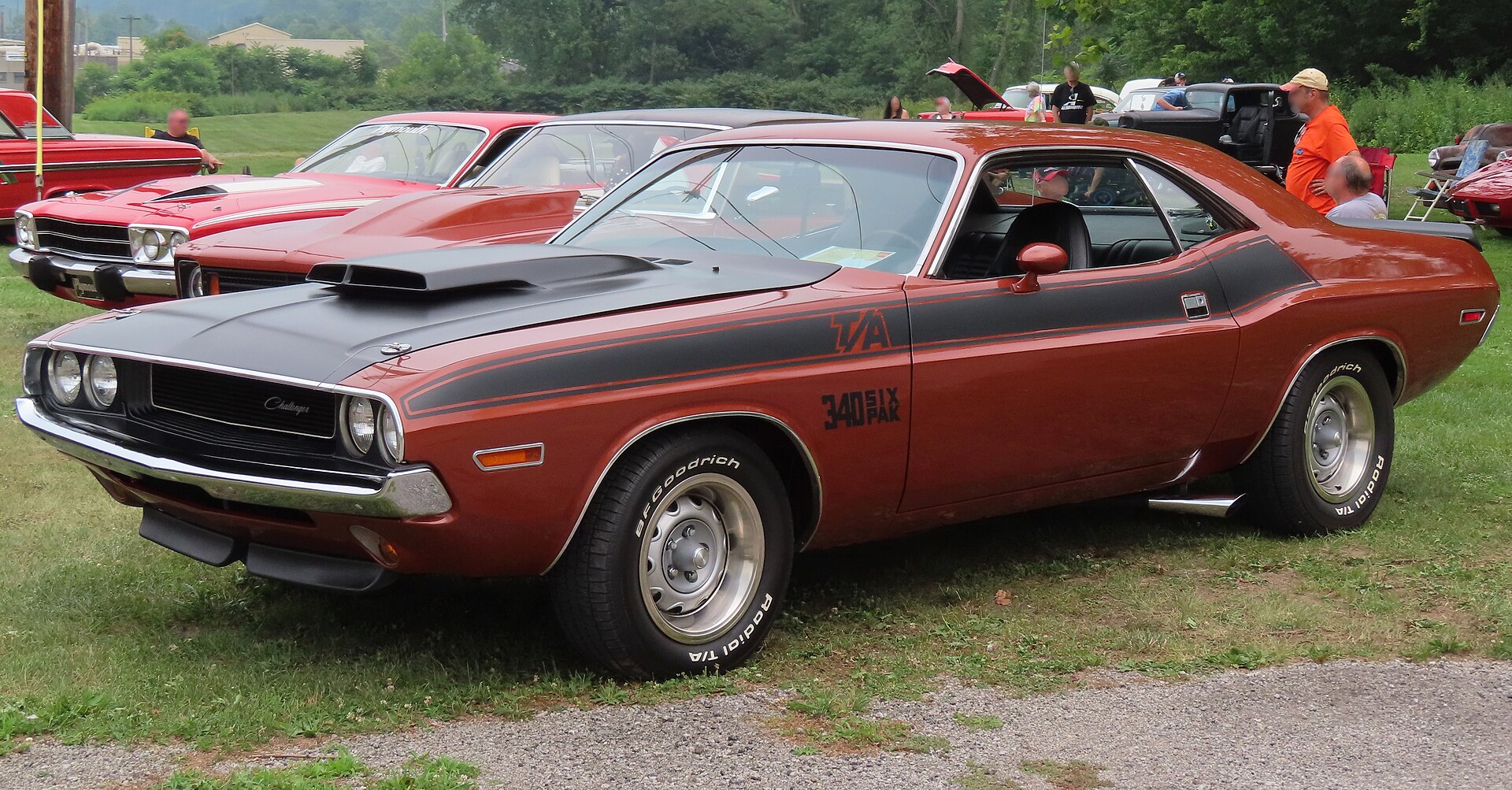
The Dodge Challenger T/A was a one-year homologation special of 1970: a road version of the car Dodge raced in the SCCA Trans-Am Series. It combined a 340 small-block V8 with three two-barrel carburettors, a matte black glass-fibre bonnet with a large scoop, side exhausts and staggered tyres. Wikipedia gives 2,399 cars in its text and 2,539 in its production table. The T/A name returned on the modern Challenger from 2017.
In short
- Engine: 340 Six Pack V8 with 216 kW (290 hp, SAE gross), the same rating as Plymouth's AAR 'Cuda.
- Body parts: glass-fibre bonnet with a scoop, front spoiler and ducktail rear spoiler.
- Tyres: E60x15 at the front and G60x15 at the rear, an unusual staggered set-up for 1970.
- Racing: two factory-backed cars prepared by Autodynamics for Sam Posey and Tony Adamowicz.
Specs by version
Engines
| Version | Engine | Power | Drive | Production years |
|---|---|---|---|---|
| 340 Six Pack V8 (SAE gross) | 5.6 l · 8 cyl · Petrol 5,572 cc | 216 kW 294 PS290 hp | Rear-wheel drive | 1970 |
Dimensions and weight
Show all 1 versions
| Version | Wheelbase |
|---|---|
| 340 Six Pack V8 (SAE gross) | 2,794 mm110.0 in |
Verified Manufacturer and type-approval data from our catalog · Sources and methodology
Challenger T/A at a glance
| Specification | Dodge Challenger T/A (1970) |
|---|---|
| Model year | 1970 only |
| Body | two-door hardtop coupé |
| Platform | Chrysler E-body, 2,794 mm (110 in) wheelbase |
| Engine | 340 cu in (5.6 l) V8, three two-barrel carburettors on an aluminium intake |
| Power | 216 kW (290 hp, SAE gross) |
| Exhaust | side outlets in front of the rear wheels |
| Tyres | Goodyear Polyglas E60x15 front, G60x15 rear |
| Built | 2,399 (Wikipedia text and Street Muscle) or 2,539 (Wikipedia table) |
| Sister car | Plymouth AAR 'Cuda |
The T/A is a version of the first-generation Dodge Challenger, Dodge's pony car of 1970–1974.
The 1970 Challenger and the Trans-Am rules
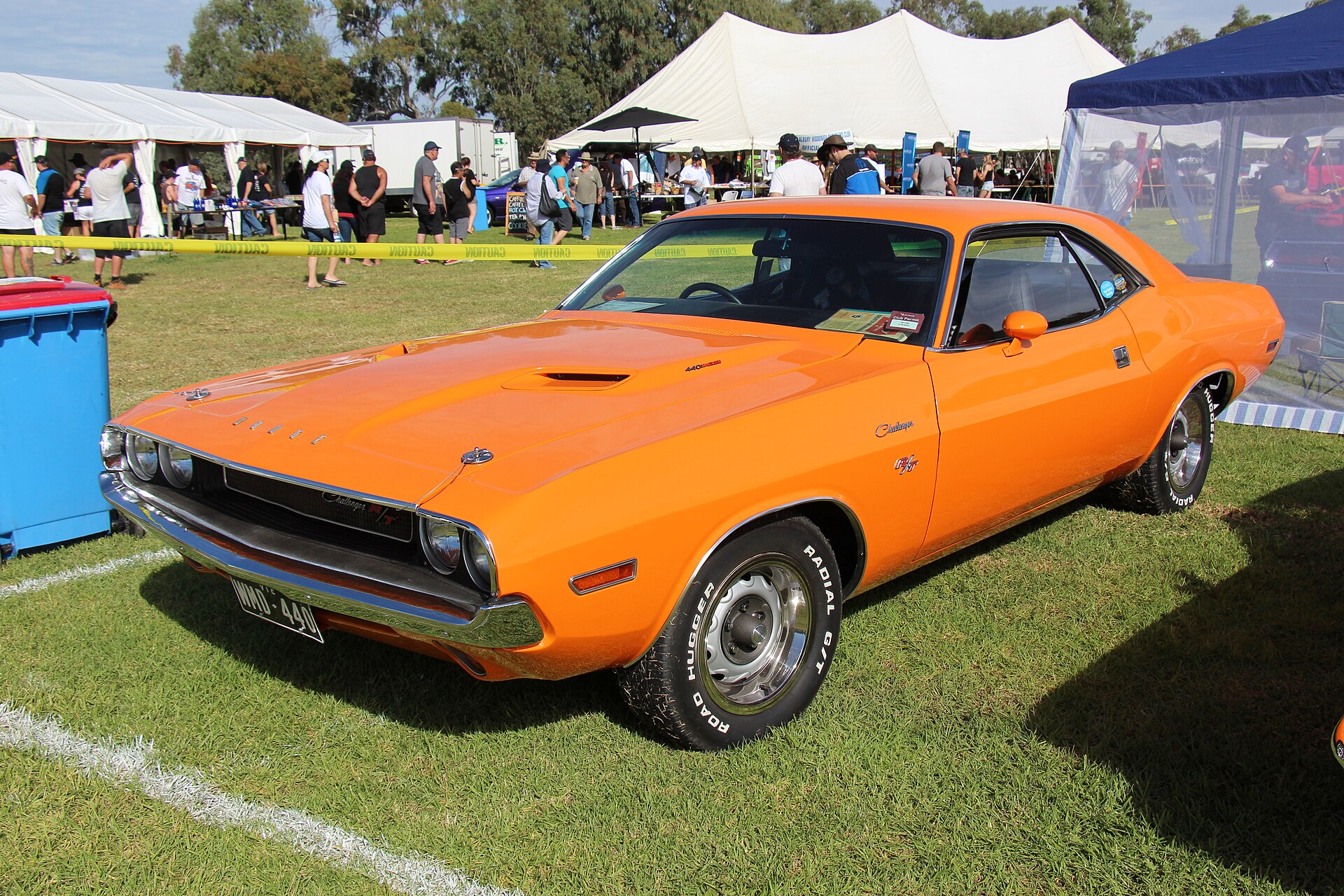
Dodge launched the Challenger for 1970 on Chrysler's new E platform, which it shared with the Plymouth Barracuda; its wheelbase was 2 inches longer than the Barracuda's. Carl Cameron, who had also styled the 1966 Charger, drew the body. Almost every engine in Chrysler's range was offered, from sixes to the 426 Hemi, and Dodge sold 76,935 Challengers in the first year according to Wikipedia's table.
The SCCA Trans-Am Series, which started in 1966, required makers to sell limited road versions of the cars they raced, as Street Muscle explains. The racing engines were limited to 305 cubic inches, so Chrysler used a destroked 340 in competition and sold the full 340 in the road cars. The road version for Dodge was the Challenger T/A, built only in 1970.

Engine and equipment
The T/A's 340 Six Pack had three two-barrel carburettors on an aluminium intake manifold and was rated at 216 kW (290 hp, SAE gross). Wikipedia gives no torque figure. Street Muscle notes that the same engine in the AAR 'Cuda was believed to produce more than 239 kW (320 hp) in reality.
The rest of the package made the car easy to recognise:
- a matte black glass-fibre bonnet with what Wikipedia calls a "suitcase-sized" scoop;
- dual exhausts that ran to the standard silencer position, then turned out through chrome-tipped megaphone outlets in front of the rear wheels;
- glass-fibre front and ducktail rear spoilers;
- Goodyear Polyglas tyres, E60x15 at the front and wider G60x15 at the rear.

Challenger T/A in the 1970 Trans-Am
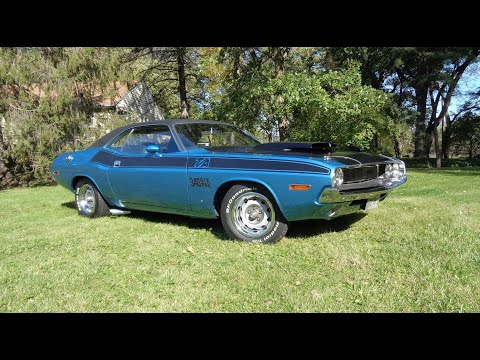
Chrysler entered two factory-backed Challengers in the 1970 Trans-Am Series. They were prepared by Ray Caldwell's Autodynamics and driven by Sam Posey and Tony Adamowicz. The No. 77 car was built at Autodynamics from a road-going Challenger T/A taken from a local dealer's showroom. The chassis of the No. 76 car arrived in the middle of the season from Dan Gurney's All American Racers and was completed by Autodynamics.
Posey drove the No. 77 and switched between the two cars once the No. 76 was ready; both ran in the last two races. According to Wikipedia the Challengers scored a few top-three finishes but no win. Chrysler left the Trans-Am after that single season, Street Muscle reports, and although a 1971 Challenger T/A was planned and even advertised, none was built.
The 1970 Challenger range compared
| Engine (1970) | Power (SAE gross) | Where |
|---|---|---|
| 340 Six Pack V8 | 216 kW (290 hp) | Challenger T/A |
| 383 Magnum V8 | 250 kW (335 hp) | standard in the Challenger R/T |
| 440 Magnum V8 | 280 kW (375 hp) | R/T option |
| 440 Six Pack V8 | 291 kW (390 hp) | R/T option |
| 426 Hemi V8 | 317 kW (425 hp) at 5,000 rpm | R/T option |
The T/A was not the most powerful Challenger: it existed to qualify the racing car, so it used the small-block 340 that the race engine was derived from. Dodge built 18,512 Challenger R/Ts in 1970, so the T/A was a small part of the range.

Production and sales
| Figure | Value | Source |
|---|---|---|
| Challenger T/A built | 2,399 | Wikipedia text; Street Muscle |
| Challenger T/A built | 2,539 | Wikipedia production table |
| AAR 'Cuda built (sister car) | 2,724 | Street Muscle |
| All Challengers, 1970 | 76,935 | Wikipedia table |
| All Challengers, 1971 | 26,299 | Wikipedia table |
Street Muscle says the AAR 'Cuda was built in March and April 1970; for the T/A the sources give no build dates. First-generation Challenger production ended in April 1974 after 165,437 cars.
The modern Challenger T/A
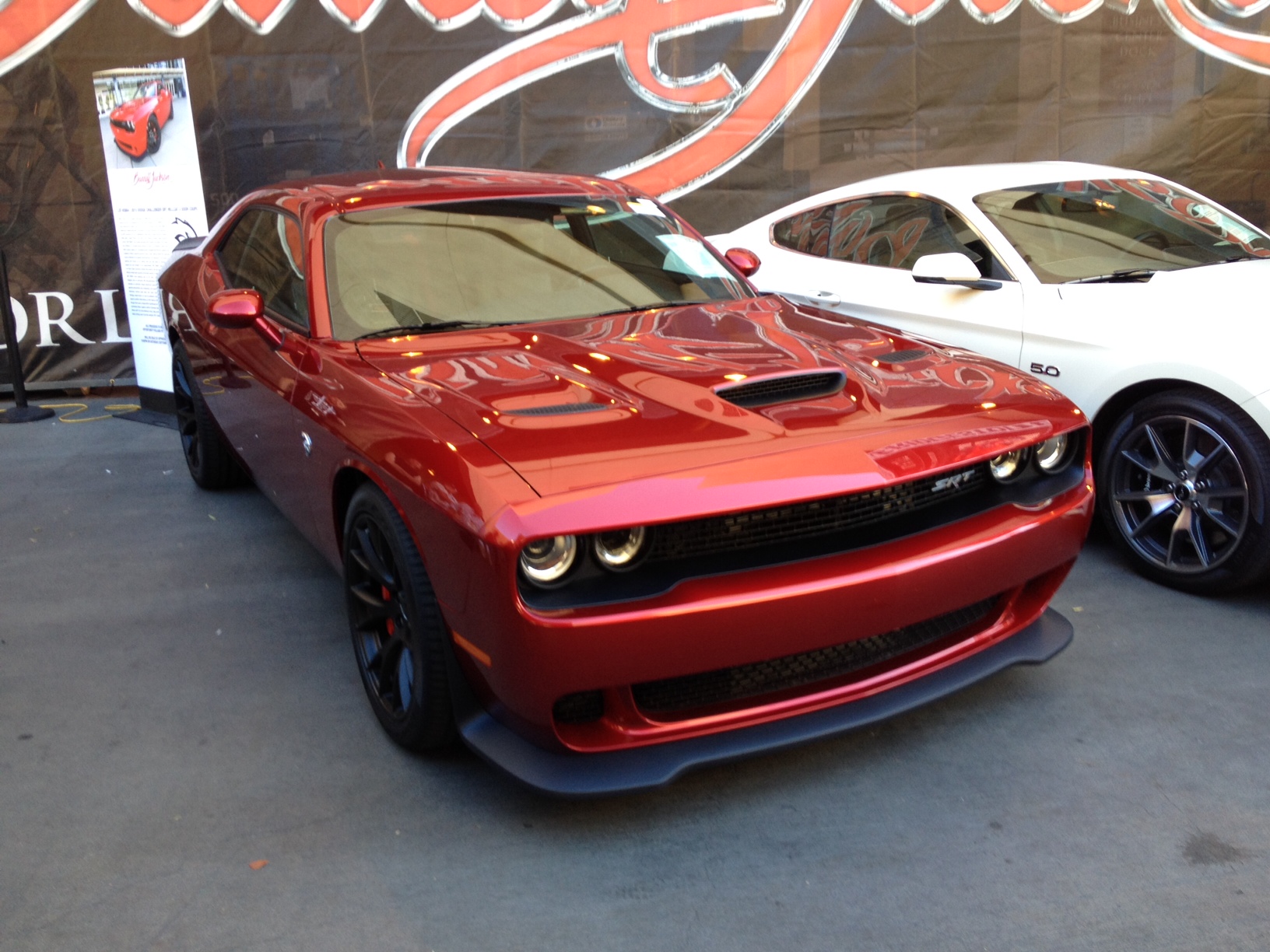
Dodge revived the name on the third-generation Challenger. A Challenger T/A concept with a 392 cu in V8 of 362 kW (485 hp) was shown at SEMA in 2014, and Street Muscle links it to the original. For 2017 Dodge offered two production versions:
- T/A with the 5.7-litre Hemi V8 and an electronically controlled active exhaust;
- T/A 392 with the 6.4-litre Hemi, six-piston front Brembo brakes with 15.4-inch discs, four-piston rear Brembos and 20 × 9.5-inch wheels with 275/40ZR20 tyres.
Both had a black bonnet with a centre air intake, a black roof and boot lid, cold-air induction through the headlamps, houndstooth sports seats and white-faced instruments. From 2021 the widebody option was available on the T/A 392. Wikipedia gives no power figure specific to the modern T/A trims. Challenger production ended on 22 December 2023.
Photo gallery

Dodge Challenger T/A in our rankings
- No. 113 of 557 · Biggest engines: cars (5,572 cc · top 21%)
- No. 69 of 173 · Biggest engines: coupes (5,572 cc · top 41%)
- No. 40 of 88 · Most powerful cars of the 1970s (216 kW · top 47%)
- No. 447 of 859 · Most powerful cars (216 kW · top 53%)
- No. 102 of 154 · Most powerful American cars (216 kW · top 67%)
- No. 230 of 313 · Most powerful coupes (216 kW · top 75%)
Bigger engine than 79% of ranked cars in the 1CARS catalog (No. 113 of 557).
FAQ
What does T/A stand for on the Dodge Challenger?
Trans-Am: the car was the road version of Dodge's entry in the SCCA Trans-Am Series of 1970.
How many 1970 Challenger T/As were built?
2,399 according to Wikipedia's text and Street Muscle; Wikipedia's production table gives 2,539.
What engine did the Challenger T/A have?
A 340 cu in V8 with three two-barrel carburettors, rated at 216 kW (290 hp, SAE gross).
Was there a 1971 Challenger T/A?
No. Chrysler planned and advertised one, but none was built after it left the Trans-Am Series.
Who raced the Challenger T/A?
Sam Posey and Tony Adamowicz, in cars prepared by Ray Caldwell's Autodynamics.
Data sources
Data checked by an editor against the sources below.