Ariel Atom
Specs, engines and history
Published Sources (1) Report an error
By Felix Hartmann, Automotive Technology & EV Contributor
- Built
- 2000–present
- Top power
- 239 kW (325 PS)
Which Ariel Atom to choose
Our verdict · Felix Hartmann
- Atom 4: the current car, with 239 kW from the Civic Type R turbo, a new chassis and steering.
- Atom 3 and 3.5: Honda engines with or without a supercharger; the 3.5R is the lightest and quickest of the line at 550 kg.
- Atom 2: the first Honda-engined cars, with naturally aspirated or supercharged 2.0-litre units.
- Atom 500 V8: a 25-car special with 373 kW, a sequential gearbox and a former Top Gear lap record.
Ariel Motor Company is a small British carmaker in Crewkerne, Somerset, with about 30 employees and a capacity of up to 100 cars a year. Simon Saunders founded it in 1991 as Solocrest Ltd, with the aim of building a modern Lotus Seven, and renamed it Ariel Motor Company Ltd in 1999. Besides the Atom it makes the Nomad, a road-legal buggy introduced in January 2015 with a 2.4-litre Honda engine of 175 kW (235 bhp). It also announced the Ace motorcycle with a Honda 1,237 cc V4 in June 2014 and the HIPERCAR electric sports car in August 2017.
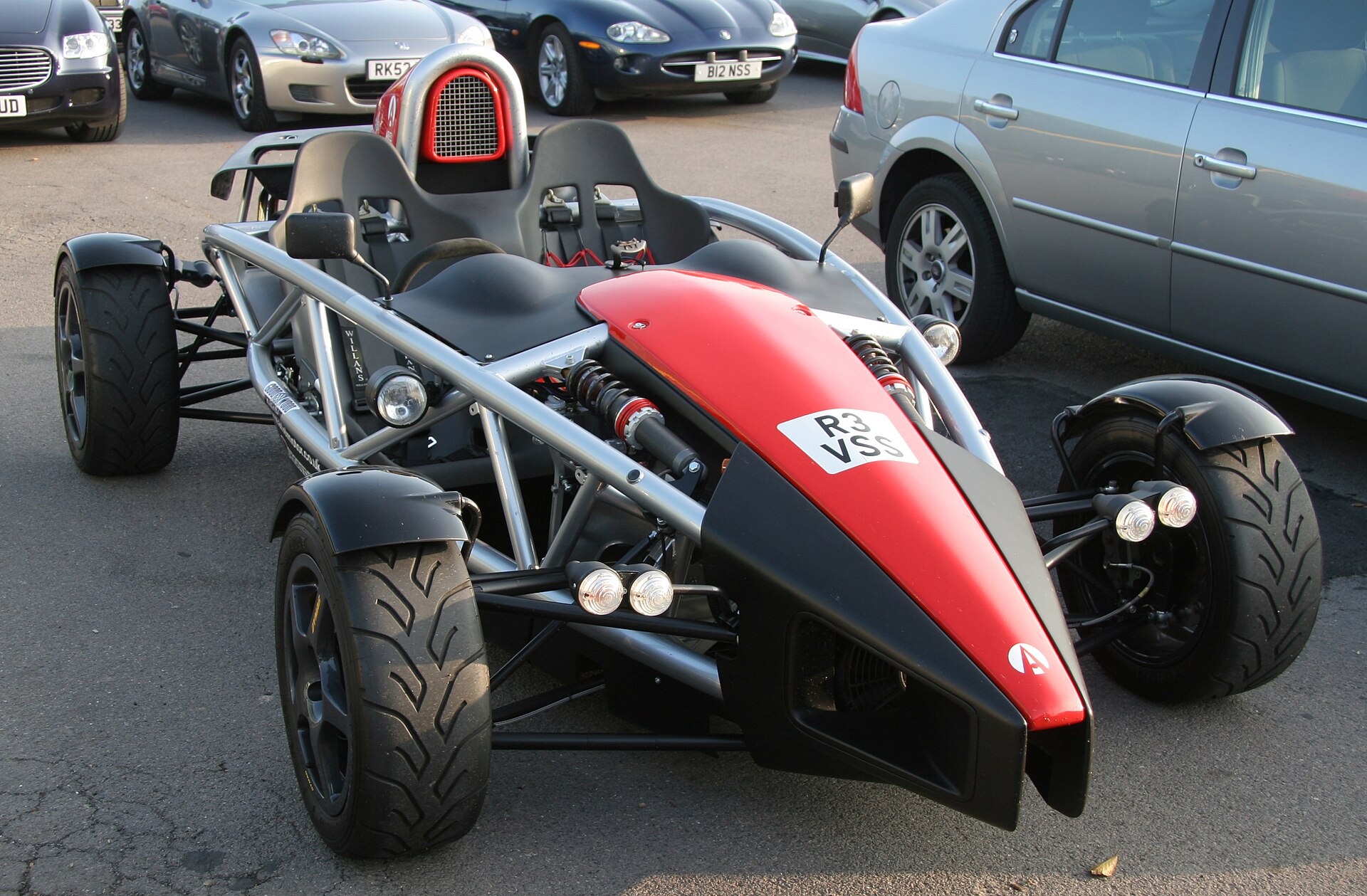
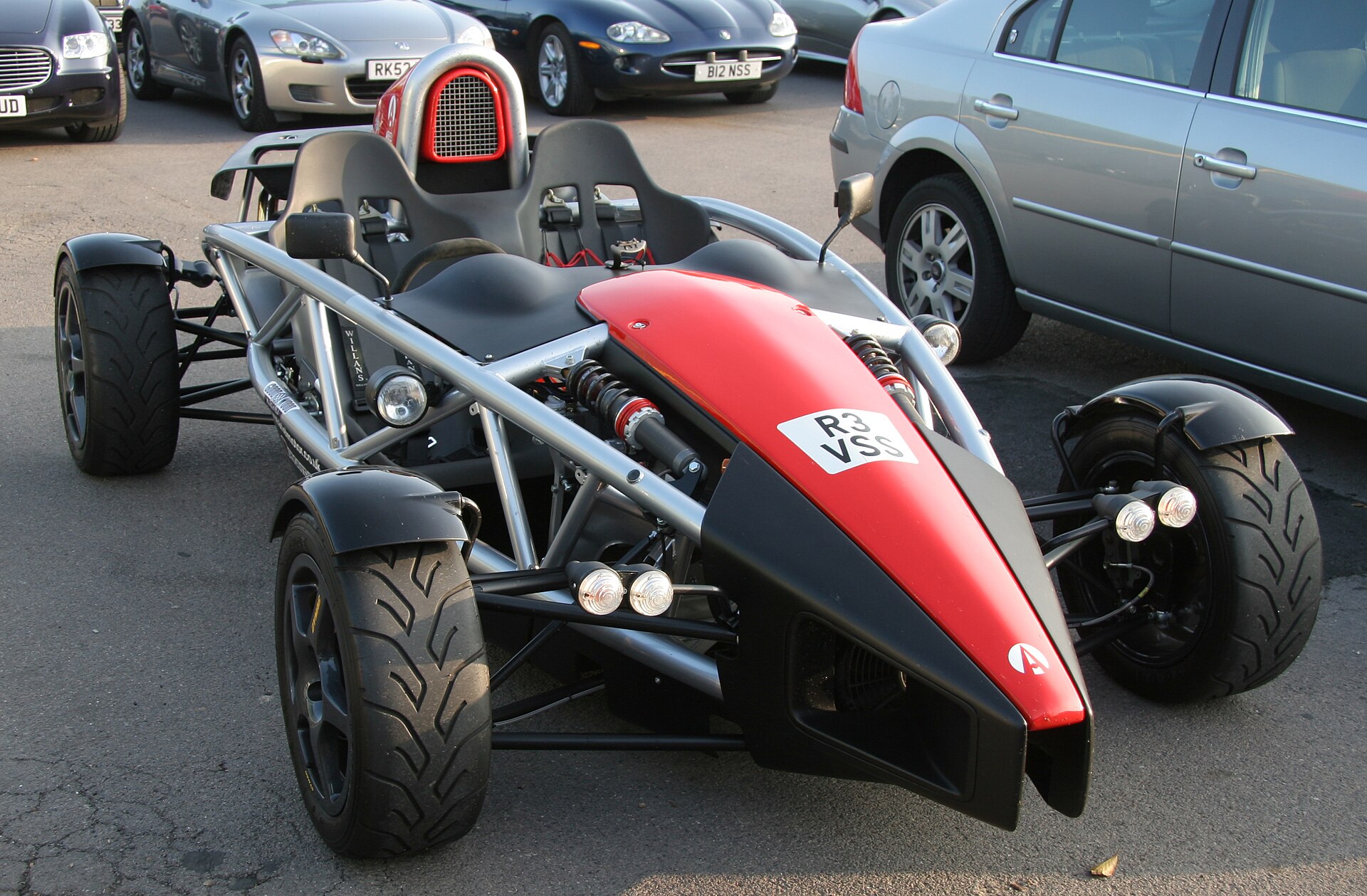
The Atom is the car that made Ariel famous. It is a road-legal open two-seater with no body in the usual sense: the tubular chassis is on the outside, and there is no roof, no windows and, as standard, no windscreen. It began as a student project at Coventry University in 1996 and has been in production since 2000. Over four generations the engine moved from a Rover K-Series to Honda units, and the Atom 4 of 2018 uses the turbocharged 2.0-litre from the Honda Civic Type R.
Specs by version
Engines
| Version | Engine | Power | Gearbox |
|---|---|---|---|
| Atom 4 2.0 Turbo | 4 cyl · Petrol K20C1 | 239 kW 325 PS321 hp | 6-sp Manual |
Dimensions and weight
Show all 1 versions
| Version | Kerb weight |
|---|---|
| Atom 4 2.0 Turbo | 612 kg1,349 lb |
Verified Manufacturer and type-approval data from our catalog · Sources and methodology
In short
- Built since 2000 in Crewkerne, Somerset; designed by Niki Smart from the 1996 Lightweight Sports Car (LSC) student project.
- Engines: Rover K-Series 1.8 with 142 kW (190 hp) in the first car, then Honda 2.0 and 2.4 units with or without supercharging or turbo.
- Atom 4 (deliveries from June 2019): 2.0-litre Honda turbo with 239 kW (321 bhp); Autocar's Britain's Best Driver's Car in 2020.
- Atom 500 V8 of 2008: 3.0-litre V8 with 373 kW (500 hp) and 550 kg, 25 cars; it lapped the Top Gear track in 1:15.1 in 2011.
Ariel Atom at a glance
| Specification | Value |
|---|---|
| Maker | Ariel Motor Company, Crewkerne, Somerset, England |
| Production | since 2000 |
| Designer | Niki Smart |
| Body | open two-seater, exoskeleton chassis, no roof or windows, optional small windscreen |
| Suspension | double unequal-length wishbones front and rear, inboard pushrod dampers, adjustable Bilstein dampers |
| Engines | Rover K-Series 1.8; Honda 2.0 and 2.4 (naturally aspirated, supercharged, turbo); GM Ecotec; 3.0 l V8 (Atom 500) |
| Power | 142 kW (190 hp) in the first Atom to 373 kW (500 hp) in the Atom 500 V8 |
| Length × width × height | 3,410 × 1,890 × 1,195 mm |
| Wheelbase | 2,345 mm |
| Kerb weight | 612 kg (infobox); 550 kg for the Atom 3.5R and Atom 500 |
| Drag coefficient | 0.40 |
From student project to Crewkerne
The Atom started in 1996 as the Lightweight Sports Car, or LSC, a project on the transport design course at Coventry University. Niki Smart, a transport design student, did most of the design. Simon Saunders, a senior lecturer, acted as financial manager and design critic and called Smart "the best all-round design student I've ever seen". British Steel and TWR gave input and funding, and Lotus tuned the suspension. The LSC was shown at the British International Motor Show at the NEC in Birmingham in October 1996.
Saunders had set up Solocrest with the aim of building a modern Lotus Seven; the original is described in our article on the Lotus Seven. The suspension uses double unequal-length wishbones front and rear with inboard pushrod-operated dampers. Every setting can be changed with a spanner.
Ariel Atom generations
| Generation | Years | Engines | Power | Notes |
|---|---|---|---|---|
| Atom | from 2000 | 1.8 l Rover K-Series | 142 kW (190 hp) | first production car |
| Atom 2 | from 2003 | 2.0 l Honda K20Z4 i-VTEC; supercharged versions; GM Ecotec 2.2/2.4 | 183 kW (245 bhp); 231 kW (310 bhp) supercharged; 153–224 kW (205–300 bhp) for GM | 10 built in the US by Brammo |
| Atom 3 | from 2007–2008 | Honda Civic Type R, later Civic Si drivetrain | — | US cars by TMI AutoTech |
| Atom 3.5 / 3.5R | — | 1,998 cc supercharged Honda | 261 kW (3.5R) | 3.5R weighs 550 kg |
| Atom 500 V8 | from February 2008 | 3.0 l V8 by John Hartley | 373 kW (500 hp) | 25 cars |
| Atom 4 | from July 2018 (deliveries June 2019) | 2.0 l Honda Civic Type R turbo | 239 kW (321 bhp) | new chassis, suspension and steering |
Atom 2. Launched in 2003, it used the Honda K20Z4 i-VTEC 2.0-litre with 183 kW (245 bhp), or 231 kW (310 bhp) with a supercharger. Ariel also lists supercharged 2.2- and 2.4-litre GM Ecotec engines with 153–224 kW (205–300 bhp). US cars had a naturally aspirated 2.4-litre Honda with 183 kW (245 bhp), or 224 kW (300 bhp) supercharged.
Atom 3 and 3.5. The Atom 3 of 2007–2008 used the Honda Civic Type R engine; since 2008 all Atom 3 cars have had a Civic Si drivetrain. The Atom 3.5R has a supercharged 1,998 cc Honda engine with 261 kW and weighs 550 kg. English Wikipedia gives it about 522 kW (700 bhp) per tonne. In the US, the turbocharged Atom 3S, announced in October 2014, had 272 kW (365 hp) and over 407 Nm.
Atom 4. Shown at Goodwood in July 2018 and delivered from June 2019, the fourth generation has a new chassis, suspension and steering. Its 2.0-litre turbocharged Honda engine from the Civic Type R produces 239 kW (321 bhp) with three-stage boost. Autocar named it Britain's Best Driver's Car in 2020.

Atom 500 V8
The Atom 500 appeared in February 2008. Its 3.0-litre V8, designed by John Hartley, gives 373 kW (500 hp) and weighs only 90 kg. With a car weight of 550 kg, that is 678 kW per tonne (909 bhp per tonne). Power goes through a SADEV six-speed sequential gearbox, and Ariel claims 0–100 km/h in under 2.3 seconds. Only 25 were made. On 23 January 2011 an Atom 500 lapped the Top Gear test track in 1:15.1, the fastest time for a road-legal car at that point. The Pagani Huayra beat it on 27 January 2013 with 1:13.8.
Engines and performance
| Version / test | Figure | Source |
|---|---|---|
| Atom 3.5R | 0–100 km/h in 2.6 s; top speed 249.45 km/h | English Wikipedia |
| Atom 3S (US) | 0–60 mph in 2.6 s; 0–100 km/h under 2.8 s | English Wikipedia |
| Atom 500 V8 | 0–100 km/h under 2.3 s (Ariel claim) | English Wikipedia |
| Supercharged Atom 2 | 0–161–0 km/h (0–100–0 mph) in 10.88 s | Road & Track, 2005 |
| Supercharged Atom 2, 224 kW (300 bhp) | 0–100 mph in 6.86 s; 100–0 mph in 3.8 s | Autocar, 2006 |
| Atom 2 | 0–97 km/h (0–60 mph) in 2.89 s | The Sunday Times, 2005 |
The Atom 4 has 239 kW for 612 kg, the kerb weight given in the infobox, or about 390 kW per tonne. The power-to-weight calculator compares it with heavier supercars. The Atom also set an indoor speed record at the NEC in Birmingham, on a floor 220 metres long.


Built under licence in the United States
Brammo Motorsports of Ashland, Oregon, began building Atoms under licence in late 2005. It made 10 Atom 2s in 2006–2007 with imported Honda K20A engines and stopped in 2007. In January 2008 TMI AutoTech became the US licensee for the Atom 3. It builds the cars at Virginia International Raceway, moved to South Boston, Virginia, in January 2016 and markets them as Ariel North America.
Racing and other uses
Ariel announced the Atom Cup, a one-make series in the UK, in 2012, using 3.5-chassis cars with 183 kW naturally aspirated engines. An Atom 3.5R was presented to Avon and Somerset Police in June 2014. Wrightspeed used an Atom, unofficially, as the base for its X1 electric proof-of-concept car.
Atom 4 and Atom 500 compared
| Car | Engine | Power | Weight | Notes |
|---|---|---|---|---|
| Ariel Atom 4 | 2.0 l Honda turbo | 239 kW (321 bhp) | 612 kg | exoskeleton, no bodywork |
| Ariel Atom 500 V8 | 3.0 l V8 | 373 kW (500 hp) | 550 kg | 25 built |
Lightweight rivals built on the Lotus Seven idea are in the Caterham catalogue. More road cars ranked by speed and power are in our car rankings, and the brand's other models are in the Ariel catalogue.

Photo gallery

Ariel Atom in our rankings
- No. 1 of 24 · Power-to-weight: convertibles and roadsters (391 kW/t)
- No. 2 of 24 · Lightest convertibles and roadsters (612 kg)
- No. 2 of 304 · Lightest cars (612 kg)
- No. 11 of 301 · Power-to-weight: cars (391 kW/t · top 4%)
- No. 118 of 312 · Most powerful cars of the 2010s (239 kW · top 38%)
- No. 31 of 79 · Most powerful convertibles and roadsters (239 kW · top 40%)
Lighter than 99% of ranked cars in the 1CARS catalog (No. 2 of 304).
FAQ
How much does an Ariel Atom weigh?
The infobox gives a kerb weight of 612 kg; the Atom 3.5R and Atom 500 V8 weigh 550 kg.
What engine is in the Ariel Atom 4?
The 2.0-litre turbocharged Honda engine from the Civic Type R, with 239 kW (321 bhp) and three-stage boost; deliveries began in June 2019.
How fast is an Ariel Atom?
The Atom 3.5R reaches 100 km/h in 2.6 seconds and 249.45 km/h, and Ariel claims under 2.3 seconds to 100 km/h for the Atom 500 V8.
Who designed the Ariel Atom?
Niki Smart, a transport design student at Coventry University, designed most of it in 1996 as the Lightweight Sports Car project, with lecturer Simon Saunders.
How many Ariel Atom 500 V8s were made?
Twenty-five. Each has a 3.0-litre V8 of 373 kW (500 hp) and weighs 550 kg; one lapped the Top Gear track in 1:15.1 in 2011.
Data sources
Data checked by an editor against the sources below.