 Rolls-Royce Silver Ghost
Specs, engines and history
Published Sources (1) Report an error
By Felix Hartmann, Automotive Technology & EV Contributor
- Built
- 1906–1926
- Top power
- 60 kW (82 PS)
Which Silver Ghost to choose
Our verdict · Felix Hartmann
- For touring: a post-1913 car with the four-speed gearbox and rear drum brakes; from 1919 it also has electric lighting and starting.
- For the most usable car: a 1923–1926 chassis with optional four-wheel servo brakes.
- For history: an early three-speed car or one of the Alpine Eagle replicas of 1913–1914.
- For North American buyers: a Springfield car, built in Massachusetts from 1921.
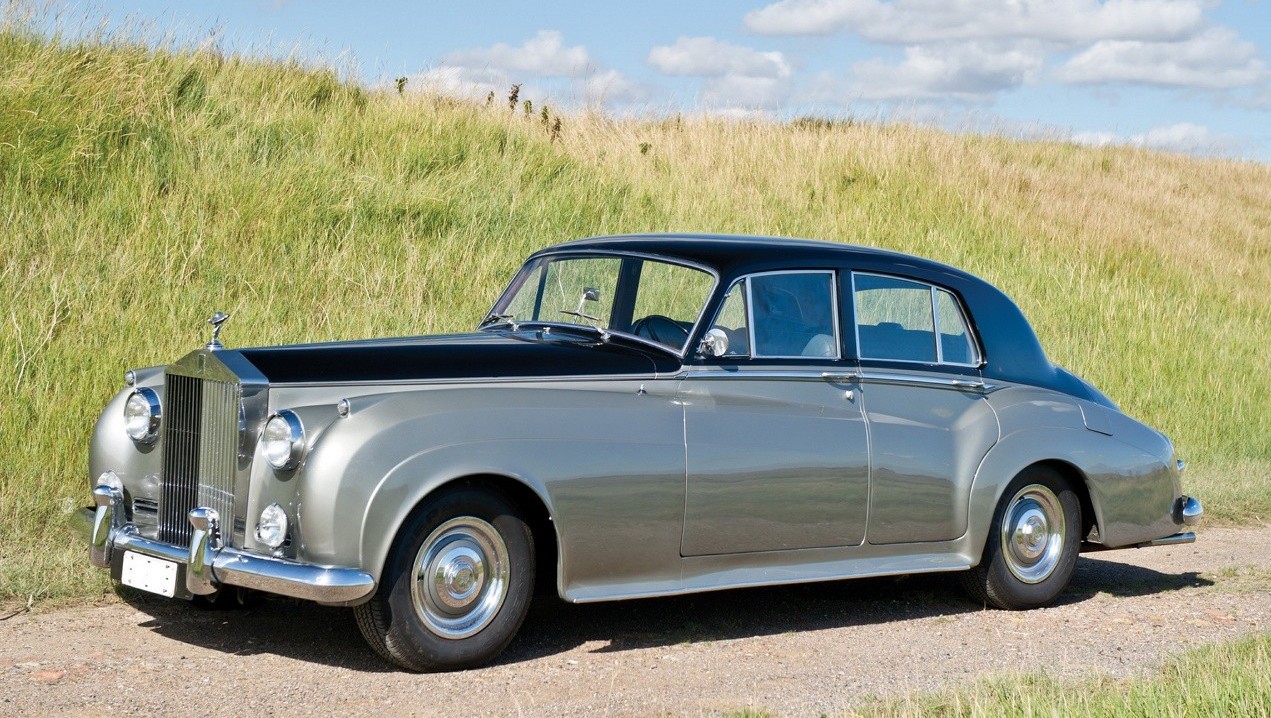
Many Silver Ghosts still run, and a fine example is on display at the National Motor Museum, Beaulieu. Bodies vary from open tourers to formal limousines, so check that the coachwork matches the chassis records. Other models of the marque are listed in the Rolls-Royce catalogue.
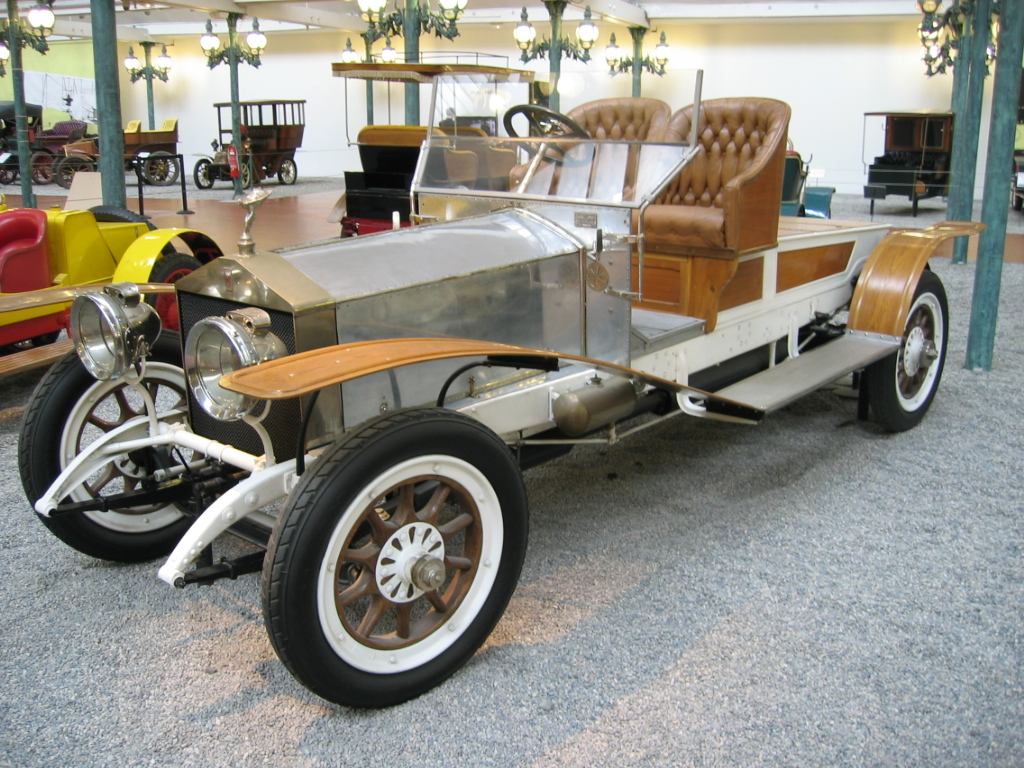
The Rolls-Royce Silver Ghost is the name now used for every Rolls-Royce 40/50 hp, the six-cylinder luxury chassis built from 1906 to 1926 in Manchester, Derby and Springfield, Massachusetts. It made the company's reputation for quiet, reliable cars: the motoring press called it the best car in the world in 1907. In fact the name belonged at first to a single car, AX 201, painted silver and famous for its silence. The Phantom replaced the 40/50 in 1925–1926.
In short
- 7,874 chassis built from 1906 to 1926, including 1,701 at Springfield in the United States.
- Side-valve straight-six of 7,036 cc, enlarged to 7,428 cc in 1910; 36 kW (48 bhp) at first, 60 kW (80 bhp) by the end.
- AX 201 completed a 15,000-mile (24,000 km) reliability trial in 1907, including 27 runs between London and Glasgow.
- The chassis also carried the Rolls-Royce armoured cars of the First World War.
Silver Ghost at a glance
| Parameter | Metric | Imperial |
|---|---|---|
| Maker | Rolls-Royce Ltd (UK), Rolls-Royce of America (US) | - |
| Official name | 40/50 hp | - |
| Production | 1906–1926 | - |
| Built | 7,874 (1,701 in Springfield) | - |
| Plants | Manchester, Derby (from July 1908), Springfield (1921–1926) | - |
| Engine | side-valve straight-six, 7,036 cc (1906–1910), 7,428 cc (from 1910) | 429.4 / 453.3 cu in |
| Power | 36 kW (48 bhp) at 1,250 rpm rising to 60 kW (80 bhp) at 2,250 rpm | - |
| Gearbox | three-speed manual, four-speed from 1913 | - |
| Wheelbase | 3,442 mm (to 1913), 3,645 mm (1913–1923), 3,658 or 3,823 mm (from 1923) | 135.5 / 143.5 / 144 / 150.5 in |
| Brakes | rear wheels and transmission; four-wheel servo brakes optional from 1923 | - |
| Predecessor / successor | Rolls-Royce 30 HP / Phantom I | - |
Manchester, Olympia and Derby
Rolls-Royce built the first 40/50 chassis at Henry Royce's works in Manchester. Two show chassis appeared at the Olympia motor show in London in 1906, and the press began test drives in March 1907. In July 1908 production moved to a new factory in Derby.
The phrase "the best car in the world" did not come from the company. English Wikipedia traces it to Autocar in 1907. German Wikipedia adds that a British journalist first used the word "waftability" for the car's effortless progress in 1906, a term still linked with the brand. The early history of the company and its founders is covered in our history of Rolls-Royce.
AX 201: the original Silver Ghost
The car that gave the model its name was chassis 60551, the twelfth 40/50 built, registered AX 201. Claude Johnson ordered it in 1907 as a company demonstrator. It received an open Roi-des-Belges touring body by Barker, aluminium paint and silver-plated fittings, and a plaque under the windscreen read "The Silver Ghost". German Wikipedia adds an aluminium dashboard and green leather seats.
AX 201 took part in the 1907 Scottish Reliability Trial and then in a 15,000-mile (24,000 km) test that included 27 runs between London and Glasgow. In 1908 the company sold it to Sir Daniel Hanbury, who drove it between England and his villa at Alassio in Italy. Rolls-Royce bought it back in 1948 (German Wikipedia says 1945) and used it for publicity; it was restored in 1991 (German Wikipedia: 1989) and kept its metal wheels. After the sale of Rolls-Royce Motors in 1998 it belonged to Bentley Motors, and in January 2020 it was sold to Sir Michael Kadoorie.
| Year | Event |
|---|---|
| 1906 | two 40/50 show chassis at Olympia, London |
| March 1907 | first press test drives |
| 1907 | AX 201 completes the Scottish trial and the 15,000-mile test |
| July 1908 | production moves from Manchester to Derby |
| 1910 | engine enlarged to 7,428 cc |
| 1913 | four-speed gearbox; Alpine Trial success |
| 1914–1918 | civil development paused; armoured cars on the chassis |
| 1919 | electric lighting and starting standard |
| 1921 | production starts in Springfield, Massachusetts |
| 1923 | four-wheel servo brakes offered |
| 1925 | New Phantom launched; the name Silver Ghost recognised officially |
| 1926 | production ends |

Silver Ghost engine and chassis
The engine was a side-valve straight-six, with its cylinders cast in two blocks of three. A seven-bearing crankshaft with pressure lubrication and an enlarged centre main bearing kept vibration low, and every cylinder had two spark plugs. From 1921 buyers could choose magneto or coil ignition. Compared with the 1906 engine, the 1910 enlargement added 392 cc. Output rose from 36 kW (48 bhp) at 1,250 rpm to 60 kW (80 bhp) at 2,250 rpm over the production run, an increase of about two thirds. Our power converter translates these brake-horsepower figures into PS as well. Per litre of displacement the engine was gentle: about 5 kW per litre in 1906 and about 8 kW per litre at the end, figures that explain its quiet, low-revving character. The Alpine Trial cars of 1913, with 56 kW from 7.4 litres, sat in between.
The first cars had a three-speed gearbox; a four-speed gearbox arrived in 1913. Early cars braked the rear wheels with a hand lever and the propeller shaft with a pedal. In 1913 the footbrake moved to drums on the rear axle, and from 1923 four-wheel brakes with a servo were optional. Both axles were rigid, with leaf springs all round. Electric lighting was optional from 1914 and standard from 1919, the year electric starting arrived. The wheelbase grew in steps, from 3,442 mm before 1913 to 3,823 mm for the longest chassis from 1923.


Alpine Eagle, armoured cars and other versions
| Variant | Years | Body / purpose | Engine | Notes |
|---|---|---|---|---|
| 40/50 hp (Derby) | 1906–1926 | chassis for coachbuilt bodies | 7.0–7.4 l six, 36–60 kW | 6,173 built in Britain (7,874 minus 1,701) |
| Alpine Eagle (Continental) | 1913–1914 | sporting tourer | uprated six | replicas of the 1913 Alpine Trial cars |
| Armoured car | First World War | military | 40/50 chassis and engine | used again early in the Second World War |
| Springfield 40/50 | 1921–1926 | chassis for US buyers | 7.4 l six | 1,701 built |
In the 1912 Austrian Alpine Trial a privately entered three-speed car driven by James Radley failed on the Katschberg Pass. Rolls-Royce returned in 1913 with a team of four cars with four-speed gearboxes and power raised from 45 kW (60 bhp) to 56 kW (75 bhp). The team won six awards, including the Archduke Leopold Cup, and the production replicas, sold as Continental models, became known as Alpine Eagles. During the First World War the chassis and engine became the basis of the Rolls-Royce armoured car, and civil development stopped until the war ended.

Owners and later years
The 40/50 sold to heads of state and public figures. In December 1923 four friends bought one for Woodrow Wilson, modified for his disability; he died in February 1924. T. E. Lawrence used a blue 1909 car, "Blue Mist", as his staff car, and a replica of it was begun in 2018. German Wikipedia notes that AX 201 was one of two Silver Ghosts used in the film Chitty Chitty Bang Bang, and lists the model in films from Citizen Kane (1941) to Lawrence of Arabia (1962).
After the war the design aged. Sales fell from 742 in 1913 to 430 in 1922. The New Phantom of 1925 took over, and from then on the older cars were called Silver Ghosts; Rolls-Royce recognised the name officially only in 1925. The successor's story, from the Phantom I to today's car, is in our Rolls-Royce Phantom guide, and the modern car that revived the Ghost name is covered in our Rolls-Royce Ghost overview.
Photo gallery

Rolls-Royce Silver Ghost in our rankings
- No. 158 of 912 · Longest-running car nameplates (20 years · top 19%)
- No. 816 of 859 · Most powerful cars (60 kW · top 95%)
- No. 106 of 109 · Most powerful British cars (60 kW · top 98%)
In production longer than 81% of ranked nameplates in the 1CARS catalog (No. 158 of 912).
FAQ
Why is it called the Silver Ghost?
The name belonged to one car, AX 201 of 1907, which was painted silver and ran very quietly. The press later applied it to all 40/50 hp cars, and Rolls-Royce adopted it officially in 1925.
How many Silver Ghosts were built?
7,874 between 1906 and 1926, including 1,701 at the Springfield plant in Massachusetts.
What engine does the Silver Ghost have?
A six-cylinder side-valve engine that grew by 392 cc in 1910 and gained about two thirds more power during production, ending at 60 kW (80 bhp).
What replaced the Silver Ghost?
The New Phantom, later called the Phantom I, introduced in 1925.
Who owns AX 201 today?
AX 201 belonged to Rolls-Royce and later Bentley Motors for decades; since January 2020 it has been owned by Sir Michael Kadoorie.
Data sources
Data checked by an editor against the sources below.