
 Lincoln Continental Mark
All generations, specs and history
Published Sources (3) Report an error
By Sarah Whitmore, Senior Automotive Writer
- Built
- 1956–1960
- Generations
- 4
- Top power
- 298 kW (405 PS)
Timeline
Continental Mark generations
Click a generation for its own page
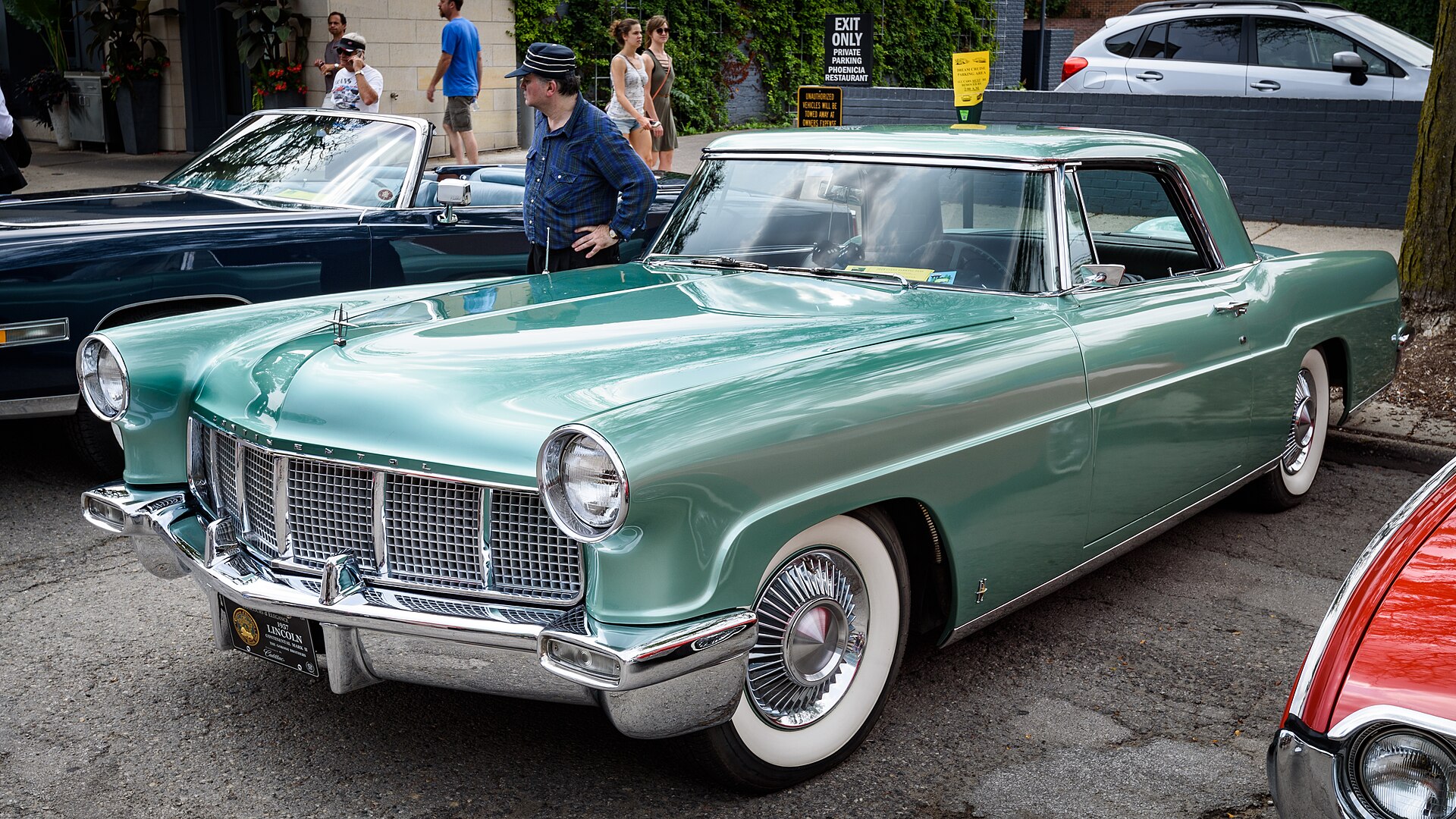
- Continental Mark II 1956–1957 · Coupe · 213–224 kW (290–305 PS)
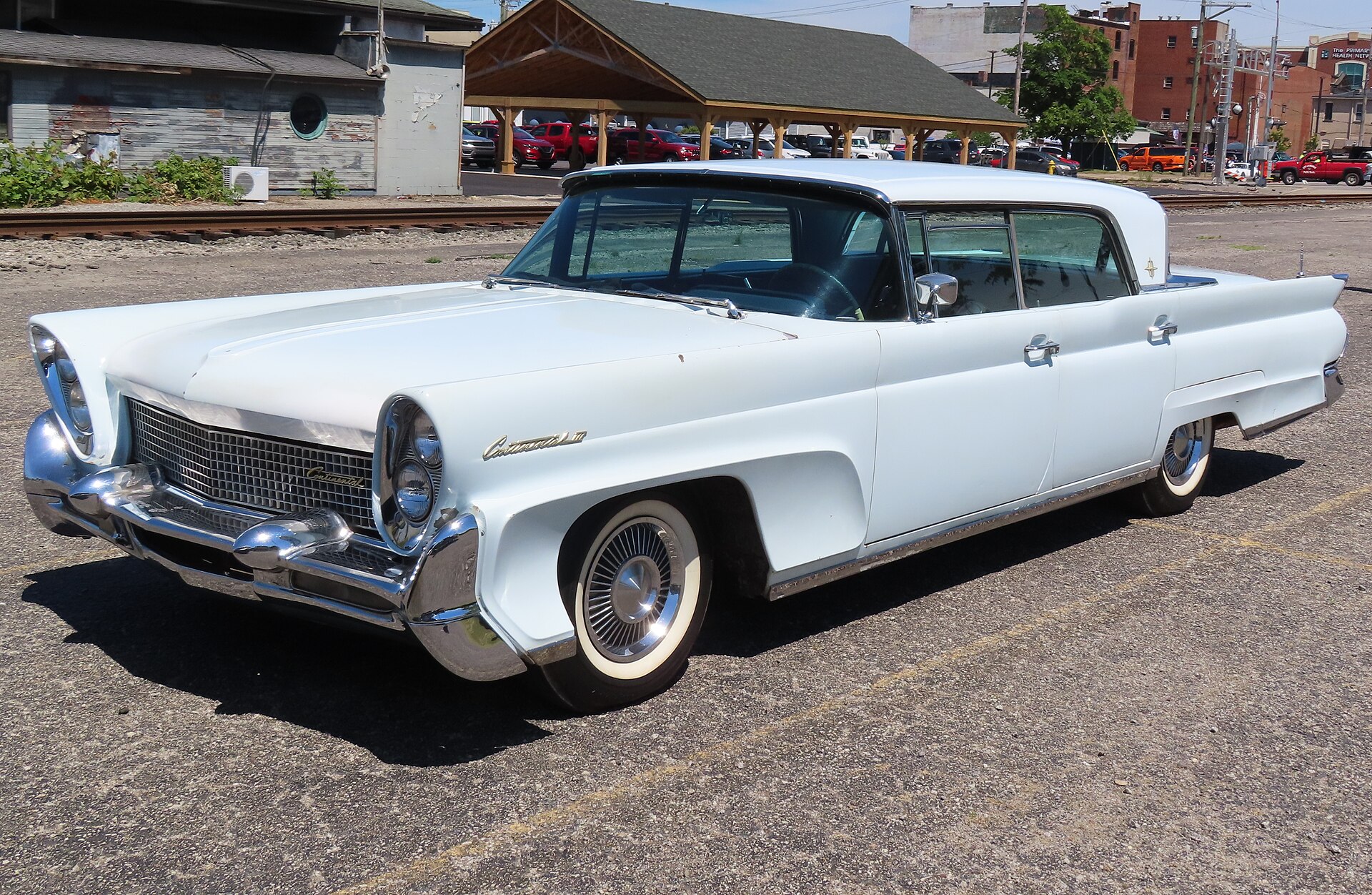
- Continental Mark III 1958
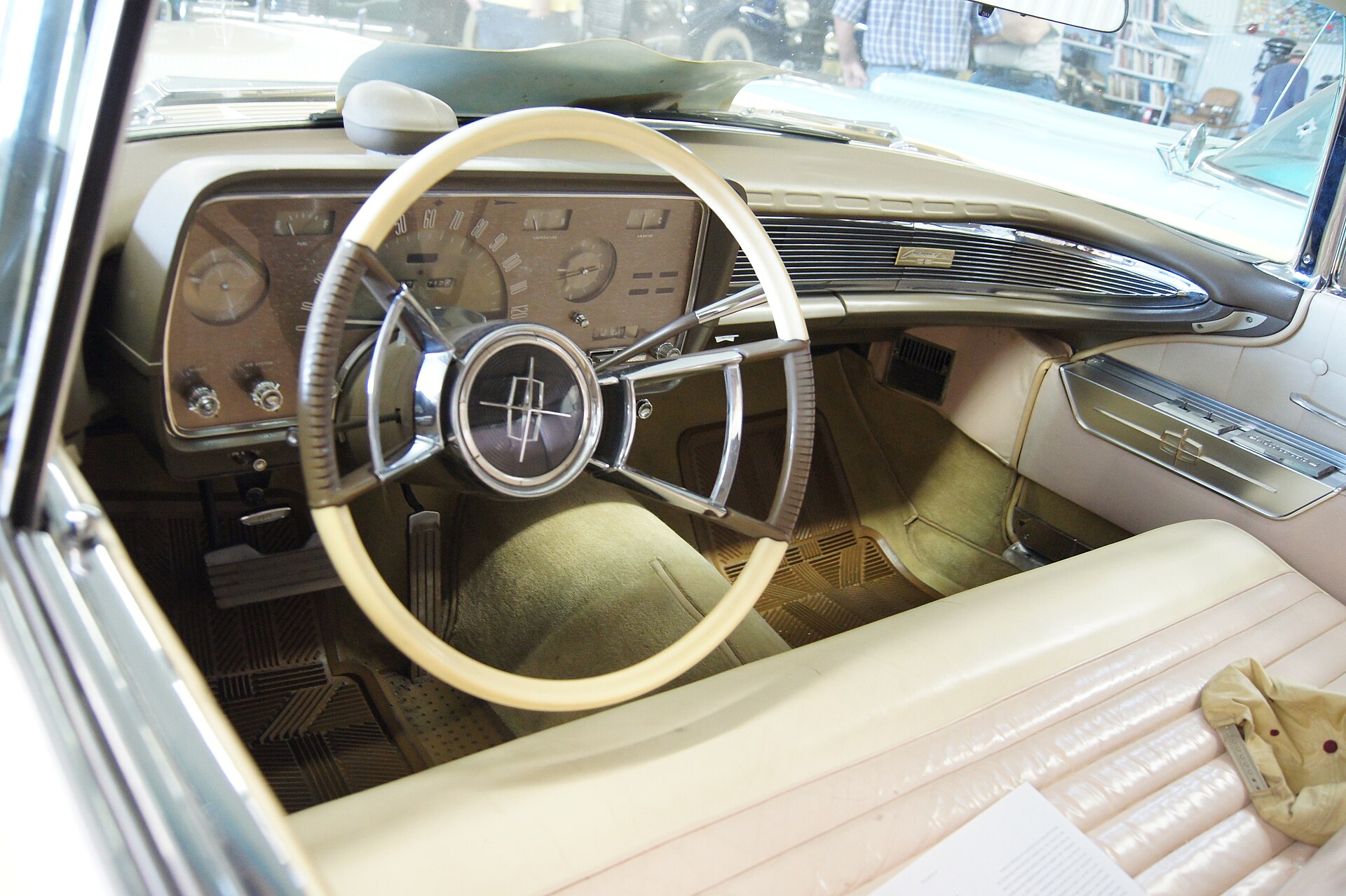
- Continental Mark IV 1959
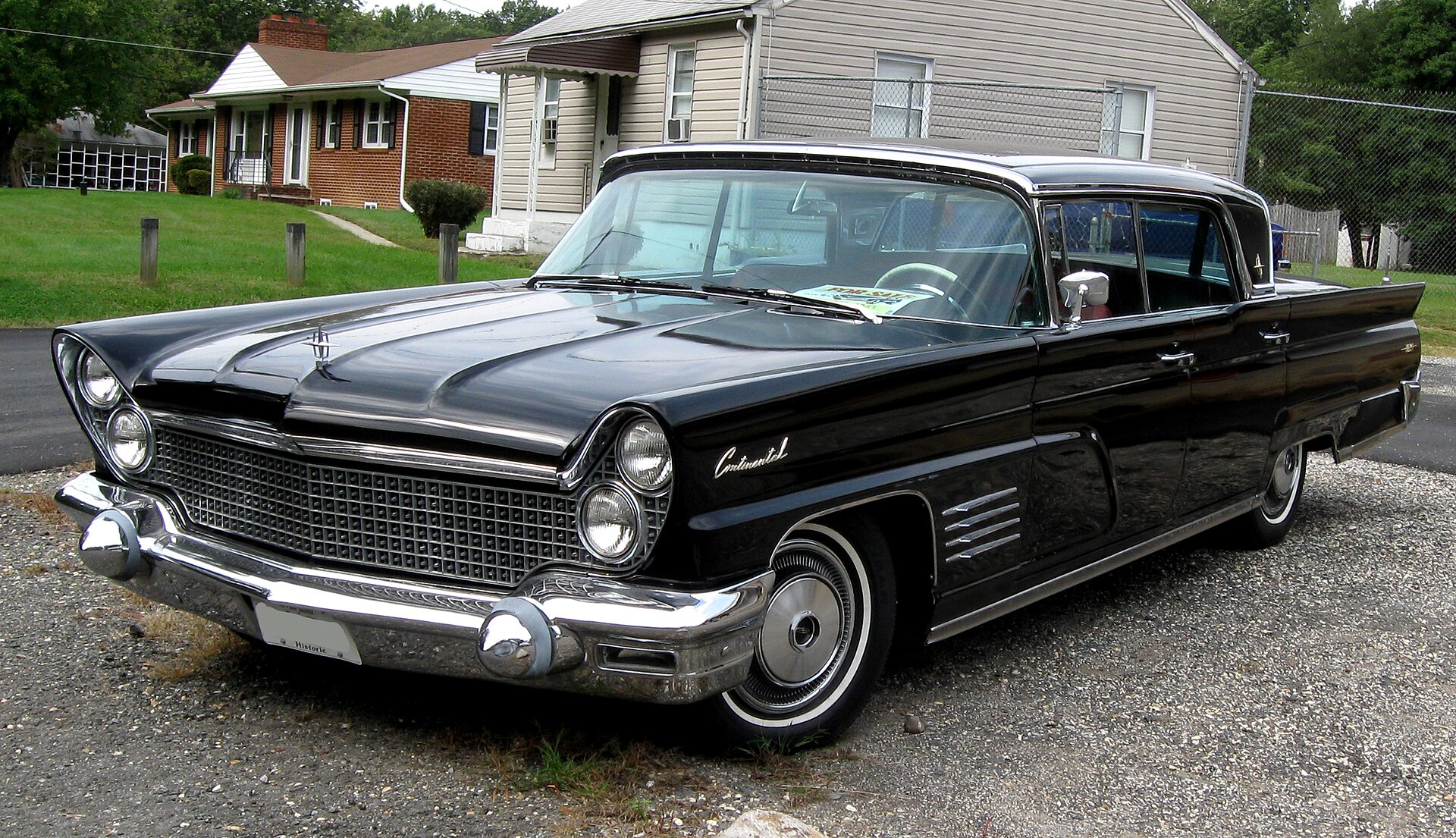
- Continental Mark V 1960
Newest first · 4 generations since 1956
-
1960
-
1959
-
1958
-
1956
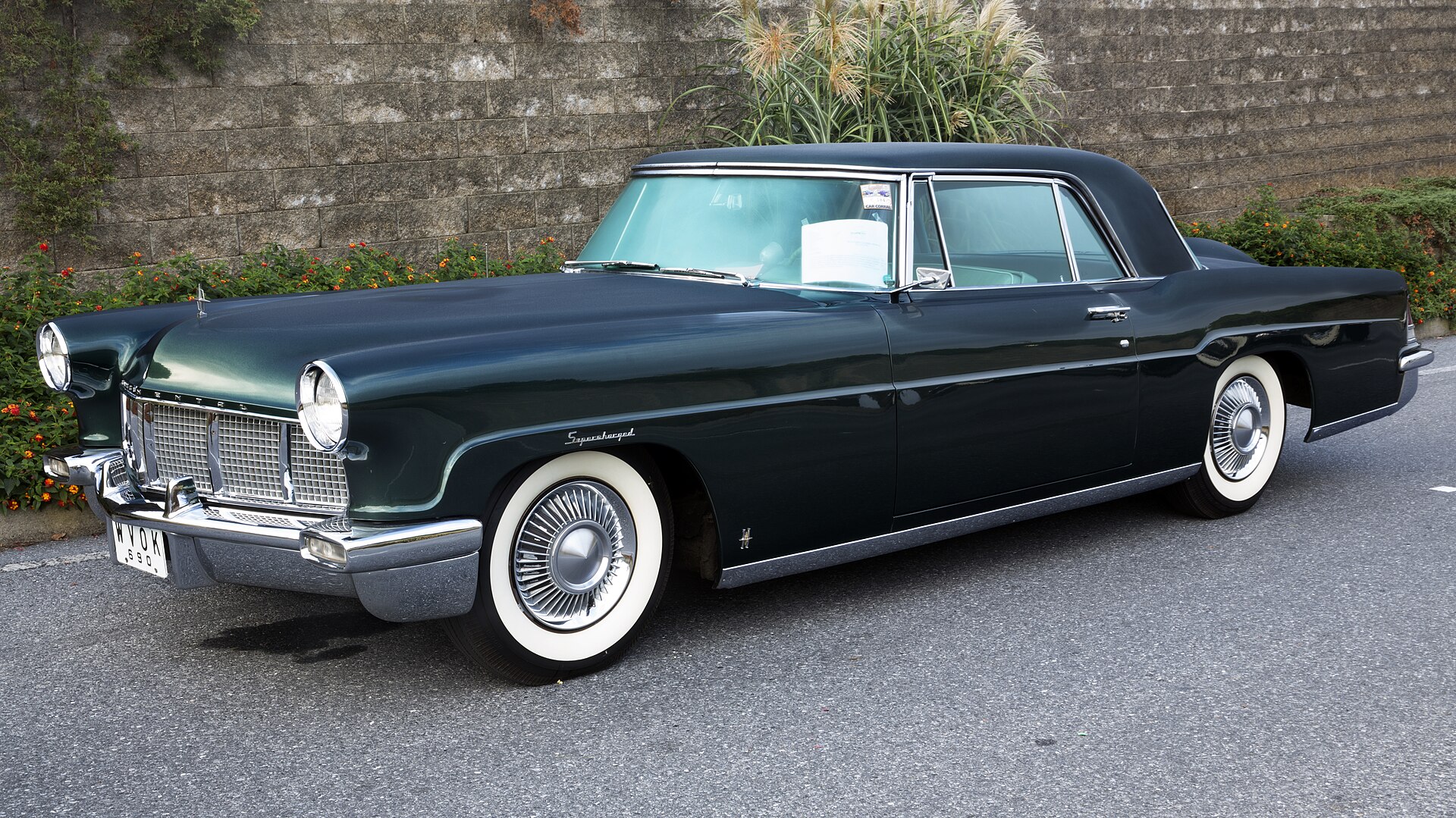


All generations by year: Continental Mark V (1960) · Continental Mark IV (1959) · Continental Mark III (1958) · Continental Mark II (1956–1957)
Which one is mine?
Pick the year of first registration to see which generation it is.
- Continental Mark V 1960
- Continental Mark IV 1959
- Continental Mark III 1958
- Continental Mark II 1956–1957
The Continental Mark cars were Ford Motor Company's flagship luxury cars of the late 1950s, positioned above Lincoln. The hand-finished Continental Mark II of 1956–1957 came from a separate Continental Division and cost about US$10,000, more than any other American car of its day. From 1958 to 1960 the much larger Continental Mark III, Mark IV and Mark V followed: unibody luxury cars with a 7.0-litre V8 and a retractable "Breezeway" rear window, sold through Lincoln-Mercury dealers. In 1961 Ford replaced them with a single Lincoln Continental.
In short
- Mark II (1956–1957): 368 cu in V8 with 213–224 kW (285–300 hp), US$9,966 in 1956, about 3,000 built.
- Mark III (1958), Mark IV (1959), Mark V (1960): 430 cu in V8 with 280, 261 and 235 kW (375, 350 and 315 hp).
- Body styles: Mark II coupe only; from 1958 coupe, convertible and four-door sedans, from 1959 also the Town Car and Limousine.
- The Mark name returned in 1969 on the Continental Mark III coupe and lived on in the Lincoln Mark series until 1998.
Size at a glance
Lincoln Continental Mark IV
| Dimensions | Lincoln Continental Mark V | Lincoln Continental Mark IV | Difference |
|---|---|---|---|
| Length | 5,771 mm227.2 in | 5,768 mm227.1 in | +3 mm+0.1 in |
| Width | 2,040 mm80.3 in | 2,040 mm80.3 in | Same |
| Height | 1,440 mm56.7 in | 1,440 mm56.7 in | Same |
| Wheelbase | 3,327 mm131.0 in | 3,327 mm131.0 in | Same |
Specs by version
Engines
| Version | Engine | Power | Torque | Gearbox | Drive | Production years |
|---|---|---|---|---|---|---|
| Continental Mark II · 368 V8 | 6.0 l · 8 cyl · Petrol 6,030 cc | 213 kW 290 PS286 hp | 545 Nm402 lb-ft | 3-sp Automatic | Rear-wheel drive | 1956 |
| Continental Mark II · 368 V8 | 6.0 l · 8 cyl · Petrol 6,030 cc | 224 kW 305 PS300 hp | 563 Nm415 lb-ft | 3-sp Automatic | Rear-wheel drive | 1957 |
| Continental Mark III · 430 MEL V8 | 7.0 l · 8 cyl · Petrol 7,044 cc | 280 kW 381 PS375 hp | — | 3-sp Automatic | Rear-wheel drive | 1958 |
| Continental Mark III · 430 Super Marauder V8 | 7.0 l · 8 cyl · Petrol 7,044 cc | 298 kW 405 PS400 hp | — | 3-sp Automatic | Rear-wheel drive | 1958 |
| Continental Mark IV · 430 MEL V8 | 7.0 l · 8 cyl · Petrol 7,044 cc | 261 kW 355 PS350 hp | — | 3-sp Automatic | Rear-wheel drive | 1959 |
| Continental Mark V · 430 MEL V8 | 7.0 l · 8 cyl · Petrol 7,044 cc | 235 kW 320 PS315 hp | — | 3-sp Automatic | Rear-wheel drive | 1960 |
Performance
Show all 1 versions
| Version | 0–100 km/h | Top speed |
|---|---|---|
| Continental Mark II · 368 V8 | 12.0 s 0–62 mph | 184 km/h114 mph |
Dimensions and weight
Show all 6 versions
| Version | Length | Width | Height | Wheelbase | Kerb weight |
|---|---|---|---|---|---|
| Continental Mark II · 368 V8 | 5,547 mm218.4 in | 1,969 mm77.5 in | 1,430 mm56.3 in | 3,200 mm126.0 in | 2,268 kg5,000 lb |
| Continental Mark II · 368 V8 | 5,547 mm218.4 in | 1,969 mm77.5 in | 1,430 mm56.3 in | 3,200 mm126.0 in | 2,268 kg5,000 lb |
| Continental Mark III · 430 MEL V8 | 5,817 mm229.0 in | 2,035 mm80.1 in | 1,435 mm56.5 in | 3,327 mm131.0 in | — |
| Continental Mark III · 430 Super Marauder V8 | 5,817 mm229.0 in | 2,035 mm80.1 in | 1,435 mm56.5 in | 3,327 mm131.0 in | — |
| Continental Mark IV · 430 MEL V8 | 5,768 mm227.1 in | 2,040 mm80.3 in | 1,440 mm56.7 in | 3,327 mm131.0 in | — |
| Continental Mark V · 430 MEL V8 | 5,771 mm227.2 in | 2,040 mm80.3 in | 1,440 mm56.7 in | 3,327 mm131.0 in | — |
Verified Manufacturer and type-approval data from our catalog · Sources and methodology
Continental Mark at a glance
| Item | Details |
|---|---|
| Maker | Ford Motor Company: Continental Division (1956–1957), then Lincoln-Mercury |
| Production | 1956–1960 model years |
| Purpose | flagship luxury car above Lincoln |
| Generations | Mark II (1956–1957), Mark III (1958), Mark IV (1959), Mark V (1960) |
| Plant | Mark II hand-built by the Continental Division; Mark III–V at the new Wixom plant, Michigan |
| Engines | 368 cu in (6.0 l) Lincoln V8; 430 cu in (7.0 l) MEL V8 |
| Gearbox | 3-speed Turbo-Drive automatic |
| Successor | 1961 Lincoln Continental |
The cars are listed in our Ford catalogue; later Mark models and the rest of the brand are covered in the Lincoln catalogue and in our article on the unusual history of Lincoln cars.
Timeline
| Year | Event |
|---|---|
| 1952 | Special Product Operations team formed under William Clay Ford |
| 1955 | Ford creates the separate Continental Division (April); Mark II shown at the Paris Motor Show (October) |
| 1956 | Mark II on sale at US$9,966; Continental Division merged into Lincoln in July |
| 1957 | last Mark II built in May |
| 1958 | Continental Mark III, built at Wixom alongside the Lincolns |
| 1959 | Mark IV; Town Car and Limousine added |
| 1960 | Mark V, the only year advertised as a "Lincoln Continental" |
| 1961 | single Lincoln Continental replaces the Mark V and the Lincoln range |
The Continental Mark II: 1956–1957
The Mark II was developed by the Special Product Operations team that William Clay Ford led from 1952, with John Reinhart as chief stylist, Gordon Buehrig as chief body engineer and Harley Copp as chief engineer. Ford made the team a separate Continental Division in April 1955. Paris saw the car first, at the October 1955 motor show; the American presentation in Dearborn came afterwards.
The design was a long two-door coupe with a low roofline and gentle curves, and each car was built and painted largely by hand. Power came from the 368 cu in Lincoln Y-block V8 with a three-speed Turbo-Drive automatic built by Lincoln and Borg-Warner. The 1956 rating was 213 kW (285 hp) with 545 Nm, raised for 1957 to 224 kW (300 hp) with 563 Nm. German Wikipedia gives 0–100 km/h in about 12 seconds and a top speed of 184 km/h.
The base price of US$9,966 in 1956 made it the most expensive American-built car of its time; in 1957 it cost US$9,695. Air conditioning was an option at US$595 in 1956. Even at these prices Ford reportedly lost nearly US$1,000 on every car. Wikipedia counts 3,005 cars including three prototypes and 13 pre-production vehicles; German Wikipedia splits production into 2,550 cars for 1956 and 444 for 1957. No factory convertible was sold, but two 1956 coupes were converted, one by Hess & Eisenhardt and one by Derham.
Owners included Dwight Eisenhower, Barry Goldwater, Frank Sinatra, Elvis Presley and Elizabeth Taylor. The Continental Division itself closed in July 1956, and the last Mark II was built on 8 May 1957.
Mark III, IV and V: the big unibody Continentals
For 1958 Ford changed strategy. Instead of a hand-built coupe for about US$10,000, the new Continental Mark III had to sell for under US$6,000, according to a 1958 target quoted by BangShift. It shared its unibody structure with the new 1958 Lincolns and was built with them at the new Wixom plant in Michigan. Curbside Classic calls these cars the world's largest unibody automobiles, and Wikipedia notes that the 1959 and 1960 Town Car and Limousine were the heaviest American standard-wheelbase sedans built after the Second World War.
The cars were sold and serviced by Lincoln-Mercury dealers, but documents and serial numbers carried the Continental name, not Lincoln. Only the 1960 Mark V was advertised as a "Lincoln Continental". The most recognisable feature was the reverse-slanted "Breezeway" rear window, which could be lowered for ventilation. It was fitted to the Mark III and to the Mark IV and V coupes and convertibles.
| Parameter | Metric | Imperial |
|---|---|---|
| Wheelbase | 3,327 mm | 131.0 in |
| Length (1958) | 5,817 mm | 229.0 in |
| Length (1959–1960) | 5,768–5,771 mm | 227.1–227.2 in |
| Width | 2,035–2,040 mm | 80.1–80.3 in |
| Height | 1,435–1,440 mm | 56.5–56.7 in |
| Kerb weight | about 2,270 kg | about 5,000 lb |
| Engine | 7,044 cc V8 | 430 cu in |
Figures from Wikipedia's 1958–1960 Lincoln data; the weight is the approximate figure quoted by BangShift for the 1958 Mark III.


The 430 V8 and its decline in power
| Year | Model | Power | Compression |
|---|---|---|---|
| 1958 | Mark III | 280 kW (375 hp) | 10.5:1 |
| 1958 | Super Marauder option | 298 kW (400 hp) | three two-barrel carburettors |
| 1959 | Mark IV | 261 kW (350 hp) | 10.0:1 |
| 1960 | Mark V | 235 kW (315 hp) | — |
The 430 cu in MEL engine (7,044 cc, 109.2 mm bore, 94.0 mm stroke) was shared with all Lincolns of these years. In 1958 the Continental Mark III used a Holley four-barrel carburettor, and buyers could order the Super Marauder version with three two-barrel carburettors and 298 kW (400 hp). Compression was lowered for 1959, and the rating fell again for 1960, so the last Mark V had 45 kW less than the first Mark III.

Body styles and the rarest versions
| Variant | Years | Body | Built | Notes |
|---|---|---|---|---|
| Mark II coupe | 1956–1957 | 2-door coupe | 3,005 (incl. prototypes) | hand-finished |
| Mark II convertible | 1956 | 2-door convertible | 2 conversions | Hess & Eisenhardt, Derham |
| Mark III–V convertible | 1958–1960 | 2-door convertible | 3,048 | with Breezeway window |
| Mark IV/V Town Car | 1959–1960 | 4-door formal sedan | 214 | black only |
| Mark IV/V Limousine | 1959–1960 | 4-door sedan with partition | 83 | black only |
The Town Car and the Limousine had a forward-sloping rear window instead of the Breezeway glass, and the Limousine added a glass partition behind the driver. With only 297 cars between them, they are the rarest Continental Marks.

Why the series ended in 1960
The big Continentals arrived at the start of a recession, and sales never met Ford's hopes. Wikipedia reports that Lincoln lost more than US$60 million from 1958 to 1960, partly because of the high cost of developing the new unibody cars. Curbside Classic writes that Robert McNamara was "about ready to take Lincoln out to the woodshed". For 1961 Lincoln-Mercury replaced the Mark V and both Lincoln series with one Lincoln Continental, developed from a last-minute redo of a Thunderbird design, and the Mark name disappeared for eight years.
The Mark name after 1960
The Mark series came back for 1969 with the Continental Mark III, a personal-luxury coupe, followed by the Mark IV (1972–1976), Mark V (1977–1979), Mark VI (1980–1983), Mark VII (1984–1992) and Mark VIII (1993–1998). Until 1985 these cars were still badged Continental; from 1986 they were sold as Lincolns. From 2005 to 2008 Lincoln also sold the Mark LT pickup based on the F-150. These later cars belong to the Lincoln line-up rather than to the 1950s Continental Marks described here.
Collecting the Continental Marks today
The Mark II, with about 3,000 cars and its list of famous owners, is the best known of these cars among collectors. Hagerty describes a 1956 example as one of 189 cars in its colour combination, a sign of how much attention collectors pay to original specification. The 1958–1960 cars were built in larger numbers, but their convertibles, Town Cars and Limousines are rare today. To compare their data with rivals such as the Cadillac Eldorado Biarritz, use the 1cars comparison tool.
Lincoln Continental Mark evolution in numbers
Did you know?
- The Lincoln Continental Mark ran for 4 years, from 1956 to 1960, over 4 generations in our catalog.
- The biggest jump in power came with the Continental Mark III: up to 298 kW (405 PS), 74 kW more than the Continental Mark II.
- The most powerful Lincoln Continental Mark is not the newest: the Continental Mark III (1958) offered up to 298 kW (405 PS), the Continental Mark V up to 235 kW (320 PS).
Most powerful version, kW
Length, mm
Figures from the 1cars catalog: power is the strongest version of each generation; generations without the figure are left out.
Lincoln Continental Mark: first vs latest generation
| Spec | Continental Mark II | Continental Mark V | Change |
|---|---|---|---|
| Years | 1956–1957 | 1960 | 4 years apart |
| Most powerful version | 224 kW (305 PS) | 235 kW (320 PS) | +11 kW (+5%) |
| Length | 5,547 mm | 5,771 mm | +224 mm |
| Width | 1,969 mm | 2,040 mm | +71 mm |
| Wheelbase | 3,200 mm | 3,327 mm | +127 mm |
Oldest and newest generation in the 1cars catalog. Power is the strongest version of each; other rows are shown only when both generations have the figure.
Image credits · Photos from Wikimedia Commons under free licences
- Lincoln Continental Mark II · Photo: Mr.choppers / Wikimedia Commons, CC BY-SA 3.0
- Lincoln Continental Mark III · Photo: MercurySable99 / Wikimedia Commons, CC BY-SA 4.0
- Lincoln Continental Mark IV · Photo: Greg Gjerdingen from Willmar, USA / Wikimedia Commons, CC BY 2.0
- Lincoln Continental Mark V · Photo: IFCAR / Wikimedia Commons, Public domain
Lincoln Continental Mark in our rankings
- No. 1 of 89 · Longest coupes (5,817 mm)
- No. 3 of 79 · Heaviest coupes (2,268 kg)
- No. 3 of 420 · Longest cars (5,817 mm)
- No. 6 of 89 · Widest coupes (2,040 mm)
- No. 19 of 403 · Widest cars (2,040 mm · top 5%)
- No. 31 of 557 · Biggest engines: cars (7,044 cc · top 6%)
Longer than 99% of ranked cars in the 1CARS catalog (No. 3 of 420).
FAQ
Was the Continental Mark II a Lincoln?
No. It was built by Ford's separate Continental Division and never carried the Lincoln name; the Division was merged into Lincoln in July 1956.
How much did a Continental Mark II cost?
US$9,966 in 1956 and US$9,695 in 1957, more than any other American-built car of the time.
What is the Breezeway window?
A reverse-slanted rear window that could be lowered for ventilation. It was used on the 1958–1960 Continental Mark III, IV and V.
How many Continental Mark IIs were built?
3,005 including prototypes, according to Wikipedia; German Wikipedia gives 2,550 for 1956 and 444 for 1957.
Data sources
Data checked by an editor against the sources below.
- Wikipedia — Continental Mark II
- Macsmotorcitygarage — The Misplaced Continental Marks Of 1958 60
- Wikipedia — Ford MEL engine


