 Chevrolet Onix
All generations, specs and history
Published Sources (1) Report an error
By Sarah Whitmore, Senior Automotive Writer
- Built
- 2012–present
- Generations
- 2
- Top power
- 96 kW (131 PS)
Timeline
Onix generations
Click a generation for its own page


Newest first · 2 generations since 2012
-
2019
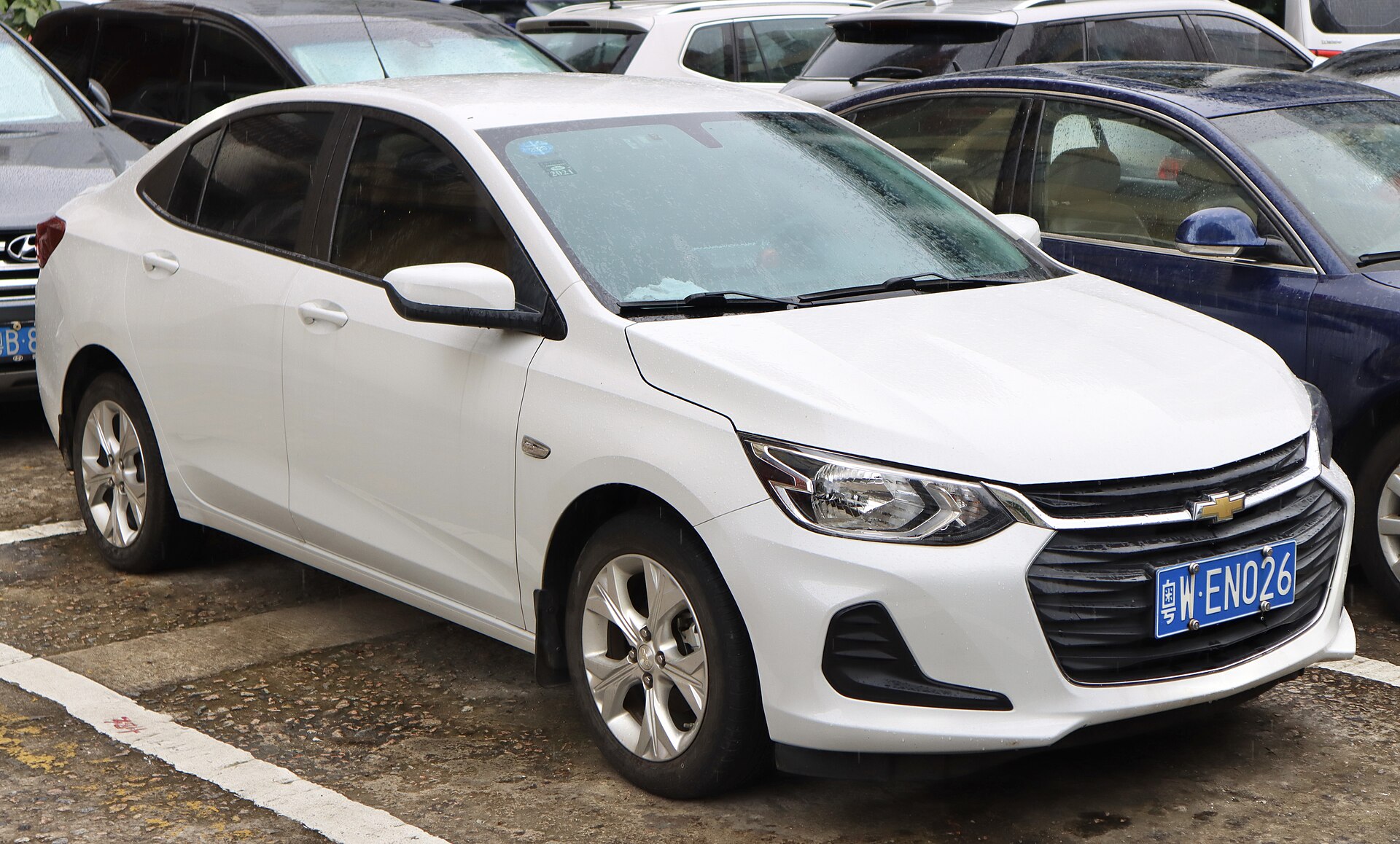
-
2012
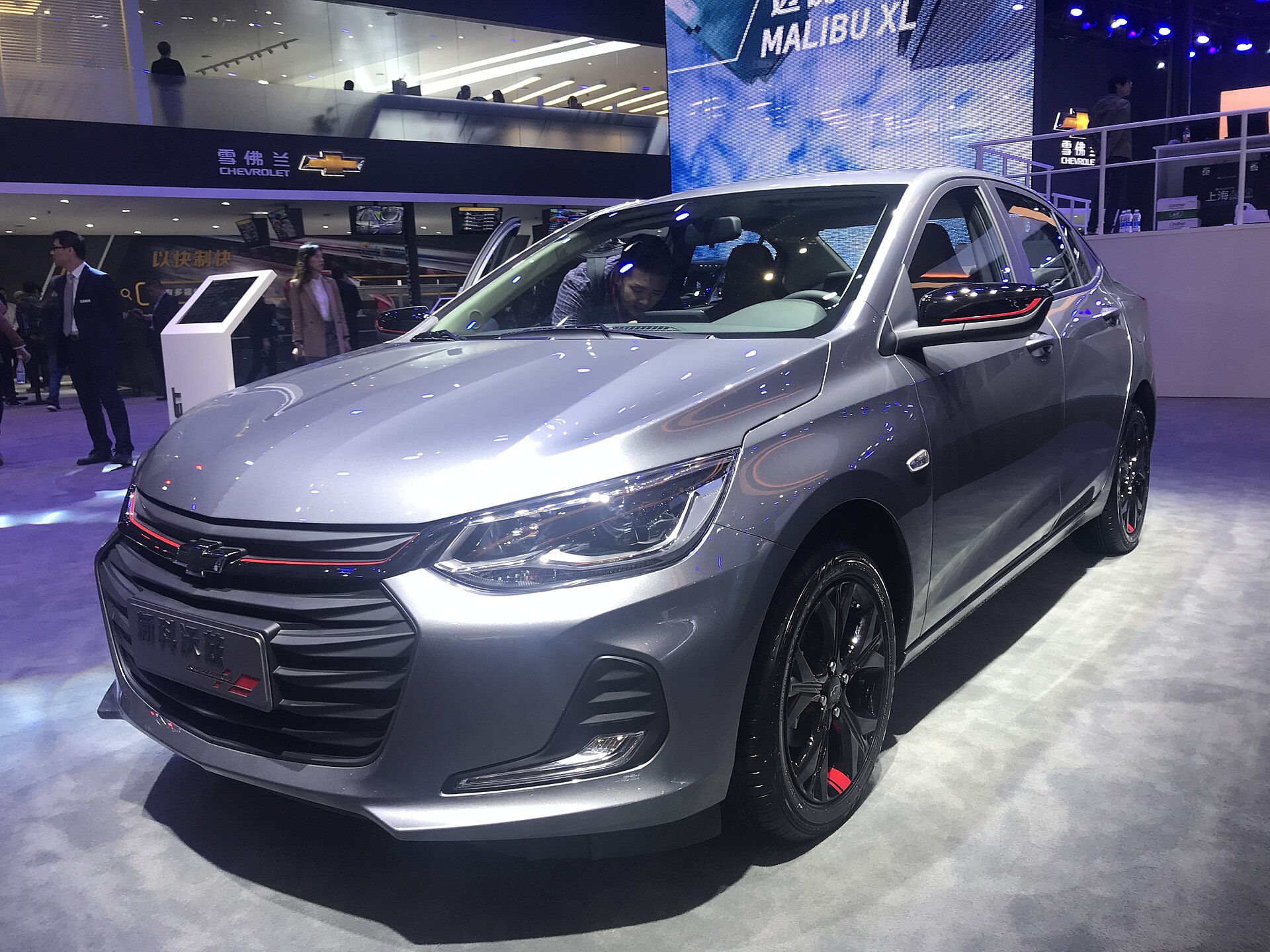
All generations by year: Onix II (2019–now) · Onix I (2012–2019)
Which one is mine?
Pick the year of first registration to see which generation it is.
Check by VINWhich Onix to choose
Our verdict · Sarah Whitmore
- For low running costs: a second-generation 1.0 with the six-speed manual, or a first-generation 1.0 in markets where ethanol is cheap.
- For performance and safety: the 1.0 turbo of the second generation, five-star Latin NCAP rated, with the six-speed automatic.
- For space: the Onix Plus sedan; the first-generation Prisma sedan offered a 500-litre boot.
- To compare: our comparison tool sets the Onix against other small hatchbacks and sedans.
- Avoid if safety matters: first-generation cars without stability control tested before 2018.
The Onix's Brazilian stablemate is covered in our Chevrolet Cobalt article, and the earlier small Chevrolet in our Chevrolet Aveo guide. Both Onix generations and their versions can be found in the Chevrolet catalogue.
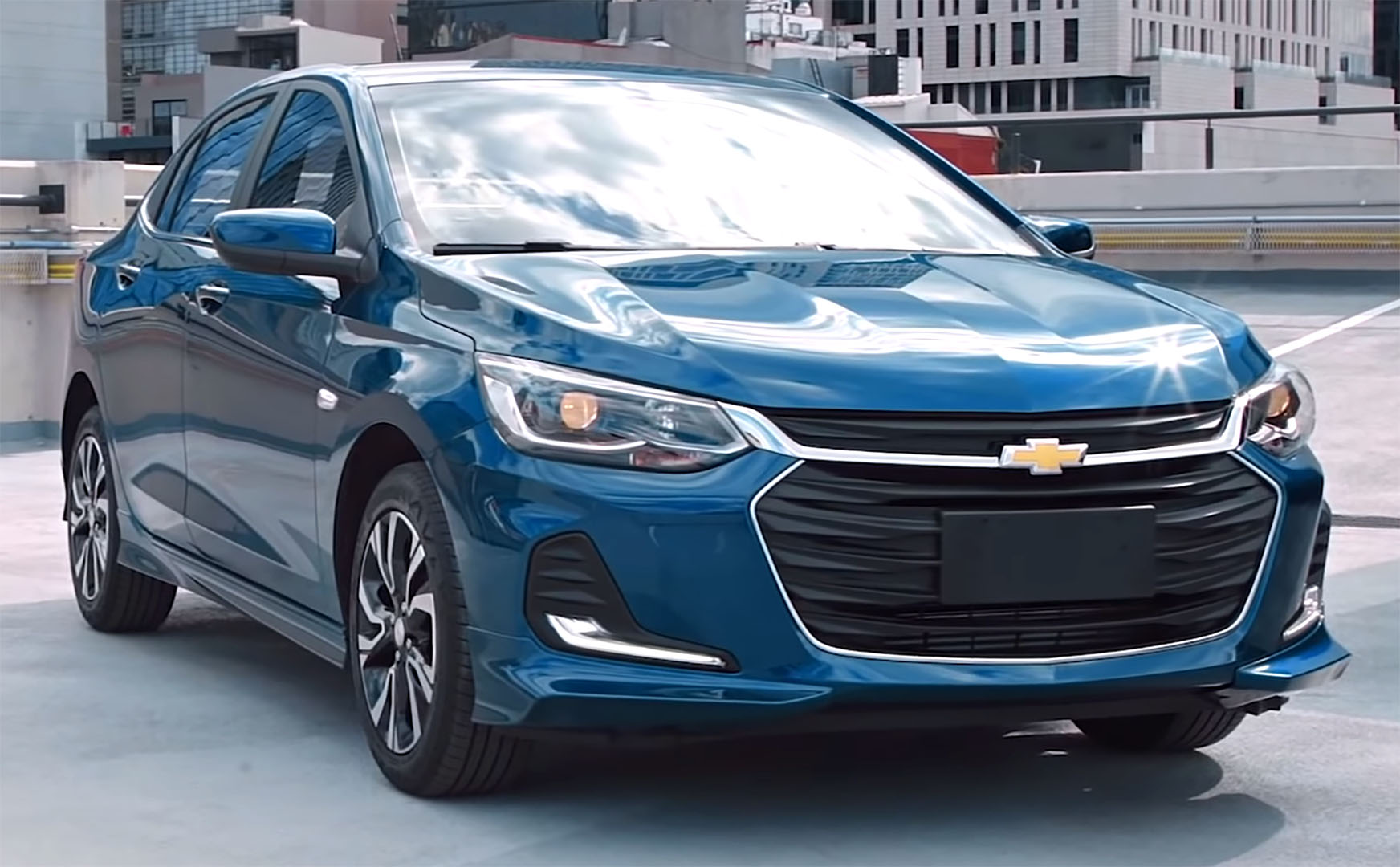
The Chevrolet Onix is a small hatchback and sedan that GM has built in Brazil since 2012. It was Brazil's best-selling car every year from 2015 to 2020 and Latin America's best seller in 2018 and 2019. The second generation of 2019 moved to GM's Global Emerging Markets (GEM) platform, gained a 1.0 turbo engine and is also built in Argentina, China and Uzbekistan.
In short
- First generation 2012–2019 (Joy versions to 2024), second generation since 2019; hatchback, and Onix Plus or Prisma sedan.
- Engines from a 1.0-litre with 57 kW (78 PS) on petrol to a 1.2 turbo with 96 kW (129 hp) in Mexico; Brazilian versions run on petrol or ethanol.
- Second generation: five stars for adults and children in the 2019 Latin NCAP test.
- More than 268,000 sold in Brazil in 2019 alone.
Specs by version
Engines
| Version | Engine | Power | Gearbox | Drive |
|---|---|---|---|---|
| Onix I · 1.0 flex (petrol rating) | 1.0 l · 4 cyl · Petrol 1,000 cc | 57 kW 77 PS76 hp | — | Front-wheel drive |
| Onix I · 1.4 flex (petrol rating) | 1.4 l · 4 cyl · Petrol 1,400 cc | 72 kW 98 PS97 hp | — | Front-wheel drive |
| Onix II · 1.0 (naturally aspirated) | 1.0 l · 3 cyl · Petrol 1,000 cc | 61 kW 83 PS82 hp | 6-sp Manual | Front-wheel drive |
| Onix II · 1.0 Turbo | 1.0 l · 3 cyl · Petrol 1,000 cc | 87 kW 118 PS117 hp | — | Front-wheel drive |
| Onix II · 1.2 Turbo (Premier, Mexico) | 1.2 l · 3 cyl · Petrol 1,200 cc | 96 kW 131 PS129 hp | 6-sp Automatic | Front-wheel drive |
Dimensions and weight
Verified Manufacturer and type-approval data from our catalog · Sources and methodology
Chevrolet Onix at a glance
| Parameter | First generation | Second generation |
|---|---|---|
| Years | 2012–2019 (Joy to 2024) | 2019– |
| Bodies | hatchback; Prisma sedan (2013) | hatchback; Onix Plus sedan |
| Platform | — | GM GEM |
| Plants | Gravataí, São Caetano do Sul (Brazil) | Gravataí, Alvear (Argentina), Yantai (China), Uzbekistan; San Luis Potosí (Mexico) to 2022 |
| Engines | 1.0 and 1.4 flex-fuel four-cylinder | 1.0, 1.0 turbo, 1.2, 1.2 turbo three-cylinder |
| Power | 57–78 kW | 61–96 kW |
| Gearboxes | 5-speed manual, automatic | 5- or 6-speed manual, 6-speed automatic |
| Length | 3,930–3,958 mm | — |
| Latin NCAP | 0–3 stars (2014–2018) | 5 stars (2019) |
First generation (2012–2019): Brazil's number one
The first Onix was built at Gravataí in Rio Grande do Sul and at São Caetano do Sul near São Paulo. It came with flex-fuel engines that give more power on ethanol than on petrol. The 1.0 delivered 57 kW (78 PS) on petrol and 59 kW (80 PS) on ethanol, while the 1.4 managed 72 kW (98 PS) on petrol and reached 78 kW (106 PS) with ethanol. Trims were LS, LT and LTZ, with 14-inch wheels on the 1.0 and 15-inch on the 1.4, and buyers could choose a five-speed manual or an automatic.
In February 2013 the Prisma sedan joined the hatchback, offering a 500-litre boot. The 2016 facelift brought smartphone mirroring (Android Auto, Apple CarPlay) on a touchscreen and an Onix Activ with crossover styling and a width of 1,737 mm. The base LS kept the original front and became the Joy. The Joy and Joy Plus, renamed in late 2019, stayed in production until 2024, latterly in Colombia.
Sales grew almost every year, and the Onix led the Brazilian market from 2015 to 2020, when the Fiat Strada took over first place.
| Year | Brazil sales |
|---|---|
| 2013 | 122,340 |
| 2014 | 150,838 |
| 2015 | 125,034 |
| 2016 | 153,380 |
| 2017 | 188,668 |
| 2018 | 210,466 |
| 2019 | 268,085 |

Safety: from zero to five stars
The first Onix had a poor Latin NCAP record. In December 2014 the 1.0 with two airbags received three stars for adults and two for children. Under the 2017 protocol and without stability control it scored zero stars for adults and three for children (0 of 34 adult points). An updated version tested in January 2018 improved to three stars for both.
The second generation changed the picture. Tested with six airbags, the Onix Plus sedan scored 28.34 of 34 adult points and 42.33 of 49 child points in 2019, and the hatchback 28.90 and 42.33. Both received five stars for adult and child occupants and Latin NCAP's Advanced Award.
Second generation (since 2019): GEM platform and turbo
The new Onix was launched first in China in April 2019, as a sedan built by SAIC-GM in Yantai, where it replaced the Sonic and the Cavalier. Brazil followed with the Onix Plus sedan in September 2019 and the hatchback in November, adding a Premier trim above LT and LTZ. Mexico received the sedan in spring 2020 from the San Luis Potosí plant, which stopped building it in May 2022. Colombia got the Onix Turbo in March 2020, and UzAuto Motors began production in Uzbekistan in 2022.
In July 2025 the Brazilian Onix received a facelift for the 2026 model year with a new front, optional LED headlights, an 8-inch digital cluster and an 11-inch touchscreen. GM claimed fuel economy of up to 17.7 km/l (5.6 l/100 km) for the revised engine.
| Year | Brazil | Argentina | Mexico | Colombia |
|---|---|---|---|---|
| 2020 | 218,770 | 16,569 | 25,283 | 8,659 |
| 2021 | 128,352 | 8,724 | 12,362 | 5,659 |
| 2022 | 160,506 | 6,070 | 26,280 | 10,126 |
| 2023 | 176,946 | 5,395 | 18,545 | 5,717 |
| 2024 | 157,443 | 3,811 | 17,919 | 4,126 |
| 2025 | 132,854 | — | 11,764 | — |


Onix engines: flex-fuel, three-cylinder and turbo
| Engine | Market | Power | Torque | Gearbox |
|---|---|---|---|---|
| 1.0 flex (first generation) | Brazil | 57 kW petrol / 59 kW ethanol | — | 5-speed manual or automatic |
| 1.4 flex (first generation) | Brazil | 72 kW petrol / 78 kW ethanol | — | 5-speed manual or automatic |
| 1.0 three-cylinder | Brazil | 61 kW (82 hp) | — | 6-speed manual |
| 1.0 turbo | Brazil | 87 kW (116 hp) | — | 6-speed manual or automatic |
| 1.0 turbo | Mexico | 85 kW (114 hp) | 163 Nm | — |
| 1.2 turbo (Premier) | Mexico | 96 kW (129 hp) | 191 Nm | 6-speed automatic |
| 1.0 turbo (direct injection) | China | 92 kW (125 PS) | 180 Nm | — |
| 1.2 three-cylinder | markets without the 1.0 tax break | — | — | 5-speed manual |
In markets that do not tax engines up to one litre at a lower rate, a naturally aspirated 1.2 replaces the small 1.0, and those versions have no flex-fuel capability. The 1.0 turbo built in China is rated at 4.9 l/100 km. In Brazil the turbo gives 87 kW against 61 kW for the naturally aspirated 1.0, about 43 percent more from the same displacement. Our power converter translates between kW, PS and hp.

Photo gallery

Chevrolet Onix: first vs latest generation
| Spec | Onix I | Onix II | Change |
|---|---|---|---|
| Years | 2012–2019 | 2019–present | 7 years apart |
| Most powerful version | 78 kW (106 PS) | 96 kW (131 PS) | +18 kW (+23%) |
Oldest and newest generation in the 1cars catalog. Power is the strongest version of each; other rows are shown only when both generations have the figure.
Chevrolet Onix in our rankings
- No. 31 of 420 · Smallest cars (3,930 mm · top 8%)
- No. 20 of 67 · Smallest hatchbacks (3,930 mm · top 30%)
- No. 266 of 912 · Longest-running car nameplates (14 years · top 30%)
- No. 134 of 305 · Oldest car models still on sale (14 years · top 46%)
- No. 72 of 106 · Most powerful hatchbacks (87 kW · top 68%)
- No. 104 of 149 · Most powerful sedans (96 kW · top 71%)
Shorter than 92% of ranked cars in the 1CARS catalog (No. 31 of 420).
FAQ
Where is the Chevrolet Onix made?
In Gravataí, Brazil, and also in Alvear (Argentina), Yantai (China) and Uzbekistan; Mexico built it at San Luis Potosí until May 2022.
What engine does the Chevrolet Onix have?
The first generation used 1.0 and 1.4 flex-fuel four-cylinders with 57–78 kW. The second generation has three-cylinder engines: a 1.0 with 61 kW, a 1.0 turbo with 87 kW and, in some markets, a 1.2 or a 1.2 turbo with 96 kW.
How safe is the Chevrolet Onix?
The second generation scored five stars for adults and children in the 2019 Latin NCAP test. The first generation ranged from zero to three stars for adult occupants.
Which countries sell the Chevrolet Onix?
Brazil, Argentina, Colombia and Mexico in Latin America, China, and Uzbekistan, where UzAuto Motors builds it; the platform name GEM stands for Global Emerging Markets.
What is the Onix Plus?
The sedan version of the second generation, launched in Brazil in September 2019, two months before the new hatchback.
Data sources
Data checked by an editor against the sources below.