
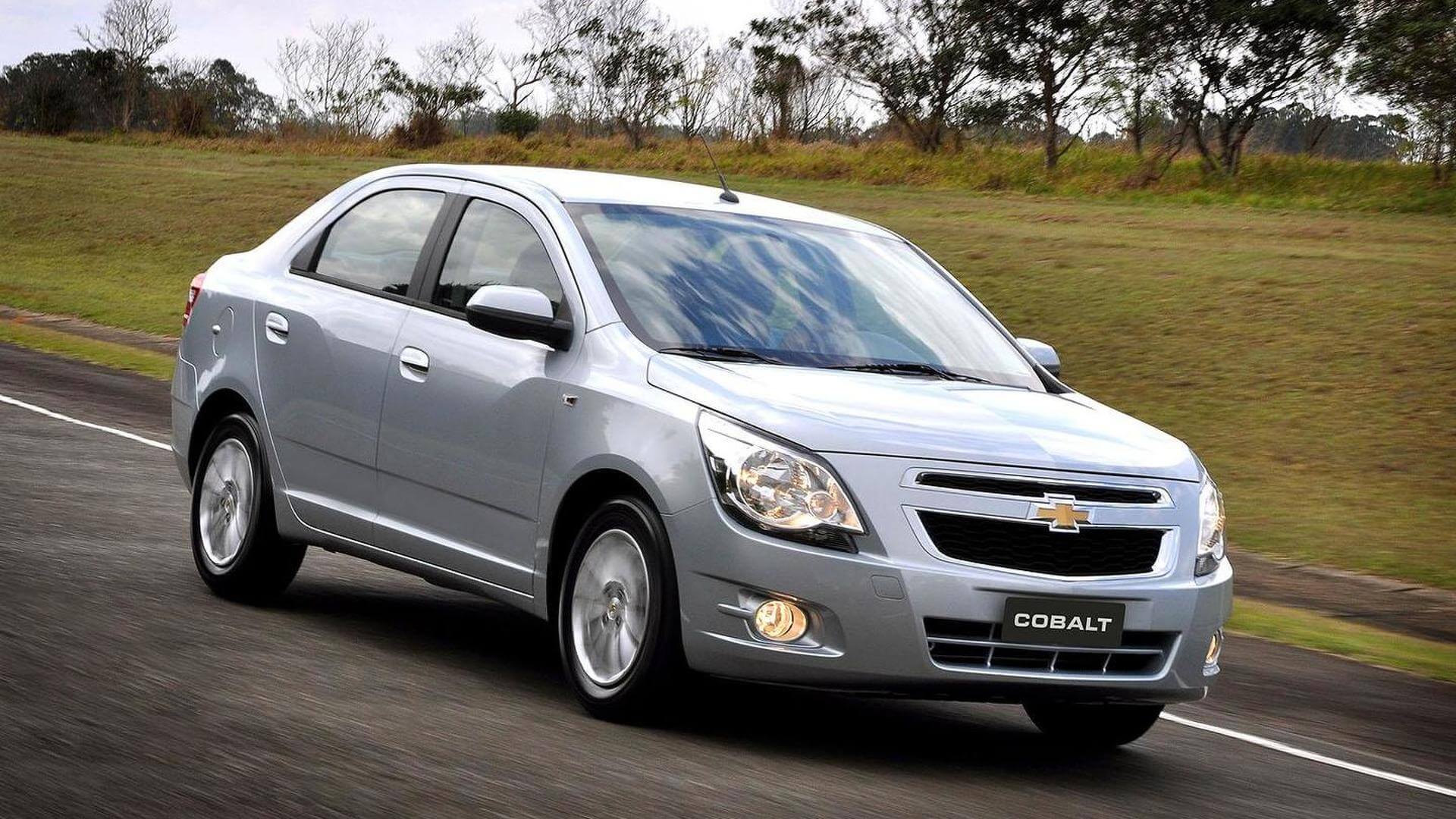
 Chevrolet Cobalt
Specs, engines and history
Updated Published Sources (2) Report an error
By Sarah Whitmore, Senior Automotive Writer Reviewed by Oleksandr Hnatiuk
- Built
- 2011–present
- Top power
- 77 kW (105 PS)
Which Chevrolet Cobalt to buy
Our verdict · Sarah Whitmore
For most buyers, the version with the manual gearbox is the most economical, while the six-speed automatic suits city driving. In Brazil, the facelifted 1.8 cars from the 2016 model year offer the most modern design and the option of a six-speed manual. Uzbek-built cars did not receive the facelift but use the same basic body and the 1.5 engine. As with any budget saloon, check the service history, the condition of the suspension and the body for corrosion.
The second Chevrolet Cobalt is a compact four-door saloon developed by General Motors Brazil and introduced in 2011 to replace the ageing Chevrolet Astra in Brazil. Sharing its underpinnings with the 2011 Chevrolet Sonic, it was built in Brazil until late 2019 and is still produced in Uzbekistan, where it was sold as the Ravon R4 from 2016 to 2020.
In short
- Developed by GM Brazil; launched in 2011 on the platform of the Chevrolet Sonic.
- Engines: 1.4 and 1.8 flex-fuel units in Brazil, a 1.5 petrol with 77 kW (105 PS) and 134 Nm in Uzbekistan.
- Gearboxes: 5-speed manual, 6-speed GF6 automatic; 6-speed manual on the facelifted 1.8.
- Practical: about 545-litre boot with a 60:40 split-folding rear seat, according to the old 1cars text.

Specs by version
Engines
Dimensions and weight
Verified Manufacturer and type-approval data from our catalog · Sources and methodology
Chevrolet Cobalt at a glance
The name Cobalt was used earlier for a compact car in North America; this second Cobalt is a different model aimed at emerging markets. In Brazil it filled the gap left by the Astra saloon, and it was later replaced there by the Onix Plus. Production spread to Uzbekistan in 2013, to Colombia until early 2016 and to Kazakhstan from 2020. Chevrolet's current and past models are in the Chevrolet catalogue.
| Fact | Value |
|---|---|
| Maker | General Motors (GM Brazil) |
| Introduced | 2011 |
| Platform | Shared with the 2011 Chevrolet Sonic |
| Body | 4-door saloon |
| Production | Brazil 2011–2019; Uzbekistan from 2013; Colombia to 2016; Kazakhstan from 2020 |
| Other name | Ravon R4 (Uzbekistan, 2016–2020) |
| Facelift | Late 2015 (2016 model year, not for Uzbek-built cars) |
| Successor (Brazil) | Chevrolet Onix Plus |
Cobalt timeline

| Year | Event |
|---|---|
| 2011 | Launched by GM Brazil with the 1.4 Econo.Flex engine |
| 2013 | 1.8 flex-fuel engine with LS, LT and LTZ trims; production starts in Uzbekistan |
| 2015 | Facelift in late 2015 for the 2016 model year |
| 2016 | Colombian assembly ends; Uzbek cars rebadged Ravon R4 from late 2016 |
| 2019 | Brazilian production ends; replaced by the Onix Plus |
| 2020 | Ravon brand phased out, car renamed Chevrolet Cobalt; assembly in Kazakhstan |
Design
The Cobalt's design is practical rather than flashy. According to the old 1cars text, the front has a large two-section grille divided by a wide bar carrying the Chevrolet emblem, almond-shaped headlights and fog lamps in the bumper. The side view shows a high waistline, flat panels and round wheel arches, and the roof and rear pillars are styled like those of the Chevrolet Corsa saloon. The large boot lid and vertical tail lights make loading easy. Steel or alloy 15-inch wheels were offered.

Interior and boot
The cabin has two-tone trim, chrome accents and a three-spoke steering wheel that adjusts for height and reach. The instrument panel combines an analogue rev counter with a digital speedometer. The old 1cars text notes that the front seats come from the Chevrolet Aveo and have good side support, and that rear legroom and headroom are generous, though the rear bench has only two head restraints.

The boot is the Cobalt's highlight: the old 1cars text gives about 545 litres, with a 60:40 split-folding rear seat. To make room for it, the fuel tank was reduced to 46 litres.
Flex-fuel and petrol engines
| Engine | Market | Power | Torque | Gearboxes |
|---|---|---|---|---|
| 1.4 Econo.Flex | Brazil (from 2011) | about 64–75 kW on petrol/ethanol (old 1cars text) | – | 5-speed manual |
| 1.8 flex-fuel, 8V | Brazil (from 2013), Colombia | 106 hp in Colombia | – | 5MT, 6AT; 6MT after facelift |
| 1.5 petrol | Uzbekistan-built cars | 77 kW (105 PS) | 134 Nm | 5-speed manual, 6-speed automatic |
The flex-fuel engines run on petrol or ethanol, a common fuel in Brazil, and produce more power on ethanol. The 1.8 arrived in Brazil in 2013 with LS, LT and LTZ trims. The old 1cars text gives 0–100 km/h in 11.9 seconds with the manual gearbox and a top speed of 170 km/h, and, for the 1.5, combined fuel use of 6.5 litres per 100 km with the manual and 7.6 litres with the automatic.

Suspension and body structure
The Cobalt uses MacPherson struts at the front and a semi-independent torsion-beam rear axle, a typical layout for a budget saloon. The old 1cars text notes that the body uses high-strength steel and that the long wheelbase gives good stability on the road.

Cobalt size and fuel tank
| Parameter | Metric | Imperial |
|---|---|---|
| Length | 4,479 mm | 176.3 in |
| Width | 1,753 mm | 69.0 in |
| Height | 1,514 mm | 59.6 in |
| Wheelbase | 2,620 mm | 103.1 in |
| Ground clearance | 160 mm | 6.3 in |
| Boot | about 545 L | 19.2 cu ft |
| Fuel tank | 46 L | 12.2 US gal |
Dimensions are from the old 1cars text.

Sales in Brazil
| Year | Units |
|---|---|
| 2011 | 2,342 |
| 2012 | 66,658 |
| 2013 | 59,690 |
| 2014 | 47,061 |
| 2015 | 22,957 |
| 2016 | 22,467 |
| 2017 | 22,949 |
| 2018 | 21,490 |
| 2019 | 13,103 |
| 2020 | 537 |
Sales peaked in 2012, the first full year, and production in Brazil ended in late 2019, with 2020 as the final model year.

Airbags, ABS and trim levels
According to the old 1cars text, the Cobalt has two front airbags, ABS with brake-force distribution and ISOFIX child-seat mounts; the passenger airbag can be deactivated, but seat-belt pretensioners were limited to the top LTZ trim, and the middle rear seat has only a lap belt. Better-equipped versions add electric windows and heated mirrors, an on-board computer, a radio with USB and AUX, 15-inch alloy wheels, rear parking sensors and steering-wheel audio controls. The Cobalt was not tested by Euro NCAP.

Rivals: how the Cobalt compares
The Cobalt competes with budget saloons such as the Renault Logan, the Volkswagen Polo saloon, the Renault Symbol and the Lada Granta. Its strengths are a huge boot, a roomy cabin and simple, durable mechanicals. Its weaknesses are plain styling, limited safety equipment and modest performance.

Rivals
Compare with…
Compare Chevrolet Cobalt with
- Daewoo Gentra quick spec comparison
- Renault Logan quick spec comparison
- Lada Granta quick spec comparison
-
Ended 2020
- Years
- 2012–2020
- Body
- Sedan
- Fuel
- Petrol, Diesel
- Power
- 55–75 kW (75–102 PS)
-
In production
- Years
- 2011–present
- Body
- Sedan, Hatchback
- Fuel
- Petrol
- Power
- 64–87 kW (87–118 PS)


Chevrolet Cobalt in our rankings
- No. 7 of 67 · Biggest boot: sedans (545 l)
- No. 56 of 321 · Biggest boot: cars (545 l · top 18%)
- No. 298 of 1105 · Longest-running car nameplates (15 years · top 28%)
- No. 150 of 381 · Oldest car models still on sale (15 years · top 40%)
- No. 152 of 182 · Most powerful sedans (77 kW · top 84%)
- No. 949 of 1036 · Most powerful cars (77 kW · top 92%)
Bigger boot than 89% of ranked sedans in the 1CARS catalog (No. 7 of 67).
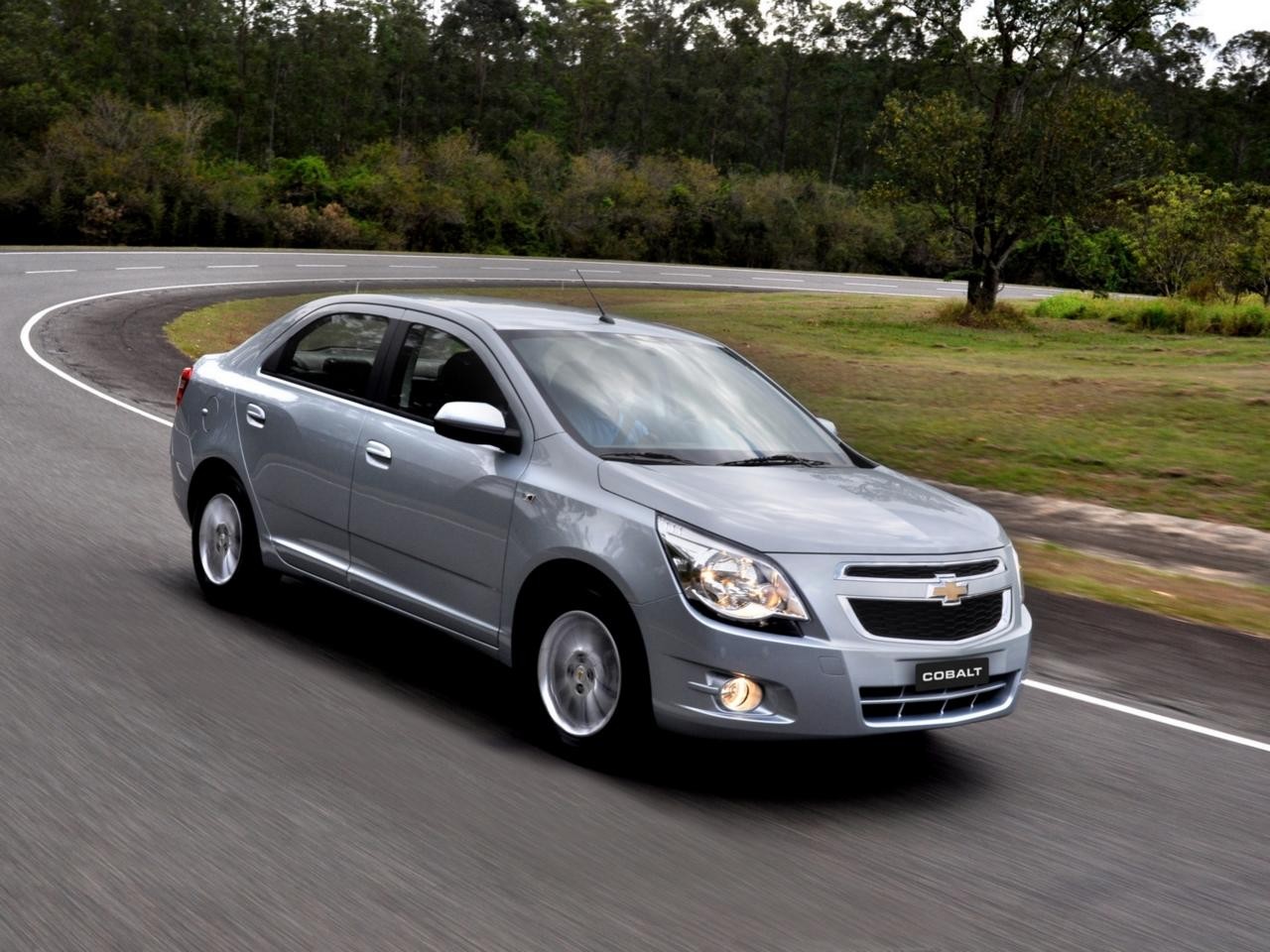
Chevrolet Cobalt photos 18



Chevrolet Cobalt videos 2

Chevrolet Cobalt video 1

Chevrolet Cobalt video 2
FAQ
Who makes the Chevrolet Cobalt?
The second Cobalt was developed by General Motors Brazil and launched in 2011. It was built in Brazil until 2019 and is still produced in Uzbekistan, where it was also sold as the Ravon R4 between 2016 and 2020.
What engines does the Chevrolet Cobalt have?
Brazilian cars used 1.4 and 1.8 flex-fuel engines that run on petrol or ethanol, while Uzbek-built cars use a 1.5 petrol engine with 77 kW (105 PS) and 134 Nm.
How big is the Chevrolet Cobalt's boot?
The old 1cars text gives about 545 litres, a large figure for a compact saloon. The rear seat folds 60:40 to carry longer items, and the fuel tank holds 46 litres.
What is the Ravon R4?
The Ravon R4 is the Uzbek-built Chevrolet Cobalt sold under the Ravon brand from late 2016. When Ravon was phased out in 2020, the car was renamed Chevrolet Cobalt again.
Is the Chevrolet Cobalt automatic?
Yes, a six-speed GF6 automatic was offered alongside the five-speed manual. After the late-2015 facelift, Brazilian 1.8 versions could also be ordered with a six-speed manual.
Data sources
Data checked by an editor against the sources below.
- The text of this article (1cars archive)
- Wikipedia - Chevrolet Cobalt


