 AMC SC/Rambler
Specs, engines and history
Published Sources (1) Report an error
By Sarah Whitmore, Senior Automotive Writer
- Built
- 1969
- Top power
- 235 kW (320 PS)
The SC/Rambler was a limited-production muscle car that American Motors and Hurst Performance built for the 1969 model year. AMC took the two-door hardtop of its smallest car, the Rambler Rogue, and installed the 390 cu in V8 from the AMX. "SC" stood for "Super Car". The car was meant for drag racing as much as for the street: stock-class rules required at least 500 identical cars, and AMC built 1,512. Its loud red, white and blue paint made it one of the most recognisable cars of the year.
In short
- 1969 model year only, 1,512 built, based on the Rambler American Rogue hardtop.
- 390 V8 from the AMX: 235 kW (315 hp, SAE gross), no other engine offered.
- BorgWarner T-10 four-speed with a Hurst "T" shifter and a 3.54:1 Twin-Grip axle.
- Road Test: quarter mile in 14.4 seconds at 100.44 mph; built for the NHRA F/Stock class.
SC/Rambler at a glance
| Specification | Hurst SC/Rambler |
|---|---|
| Production | 1969 model year |
| Built | 1,512 |
| Base | Rambler American Rogue two-door hardtop, 106 in (2,692 mm) wheelbase |
| Engine | 390 cu in (6.4 l) V8, Carter AFB four-barrel |
| Power | 235 kW (315 hp, SAE gross) |
| Gearbox | BorgWarner T-10 four-speed, Hurst shifter |
| Axle | Twin-Grip limited slip, 3.54:1 |
| Brakes | front discs |
| Wheels | 14x6 in Magnum 500, E70-14 Polyglas tyres |
| Quarter mile | 14.4 s at 100.44 mph (Road Test) |
| Top speed | 109 mph (175 km/h) |
The SC/Rambler is one of the golden-age cars in our American muscle car guide.
The last Rambler American
The third-generation Rambler American arrived for 1964, the only all-new design in the model's history, with a wheelbase six inches longer at 106 in. In the middle of 1966 the sporty Rogue hardtop received AMC's new 290 cu in "Typhoon" V8, rated 149 or 168 kW (200 or 225 hp). In 1969, the final year, AMC built 96,029 Ramblers, and the last American-built Rambler left Kenosha on 30 June 1969.
The SC was the most extreme car of that last season. American Motors wanted a car that customers would take racing, not just drive on the street. The NHRA stock classes demanded at least 500 identical cars, so AMC turned to Hurst Performance and built three times that number.
A 390 V8 in a compact car
Only one specification was available. The 390 V8 came from the AMX and was rated at 235 kW (315 hp). With the car's weight that gave 10.03 pounds per horsepower. This placed the SC in the NHRA F/Stock class. A box-type bonnet scoop with a vacuum-operated flap fed cooler, higher-pressure air to the Carter AFB carburettor; its sides read "390 CU. IN." and "AIR".
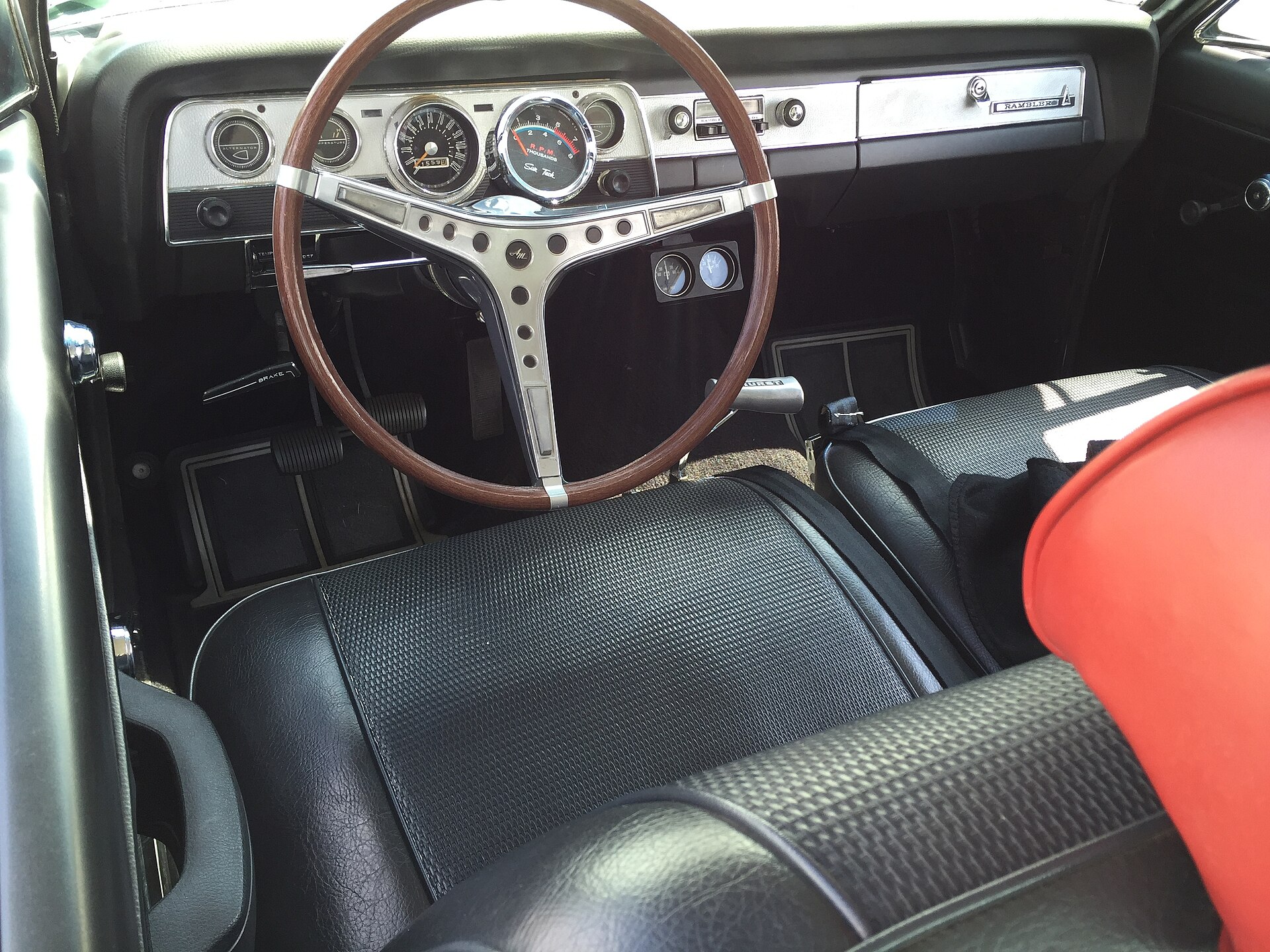
The drivetrain was prepared for hard launches. It had a close-ratio BorgWarner T-10 four-speed with a Hurst shifter and a big metal "T" handle, and a 10.5 in clutch. At the rear there was a Twin-Grip limited-slip axle with a 3.54:1 ratio and Dana internals, anti-hop links and staggered shock absorbers. Front disc brakes, a heavier anti-roll bar and stronger subframe connections were standard. A Sun tachometer was mounted on the steering column.

Paint schemes A and B
All cars were painted red, white and blue, in two different schemes called "A" and "B", which appeared in random order early in production. Historians disagree on the split. One version says 500 "A" cars were followed by 500 "B" and a final 512 "A"; the painter, Paul Hatton, said he painted 1,215 cars in scheme "A", which would leave 297 in scheme "B". The paint codes are the same for both, so the factory records cannot settle the question.
Inside, the cars had charcoal grey vinyl reclining seats and head restraints in red, white and blue stripes. The only factory option was an AM radio.

Performance
| Test | Result |
|---|---|
| Road Test magazine, quarter mile | 14.4 s at 100.44 mph |
| Road Test magazine, top speed | 109 mph (175 km/h) |
| Owners, street trim on street tyres | 12.07 s at 114 mph |
Prepared race cars later ran the quarter mile in the 9-second range. Its figures show what AMC achieved by putting a big engine in its lightest body. Plymouth used the same recipe with the Road Runner and Dodge with the Dart GTS.
Legacy
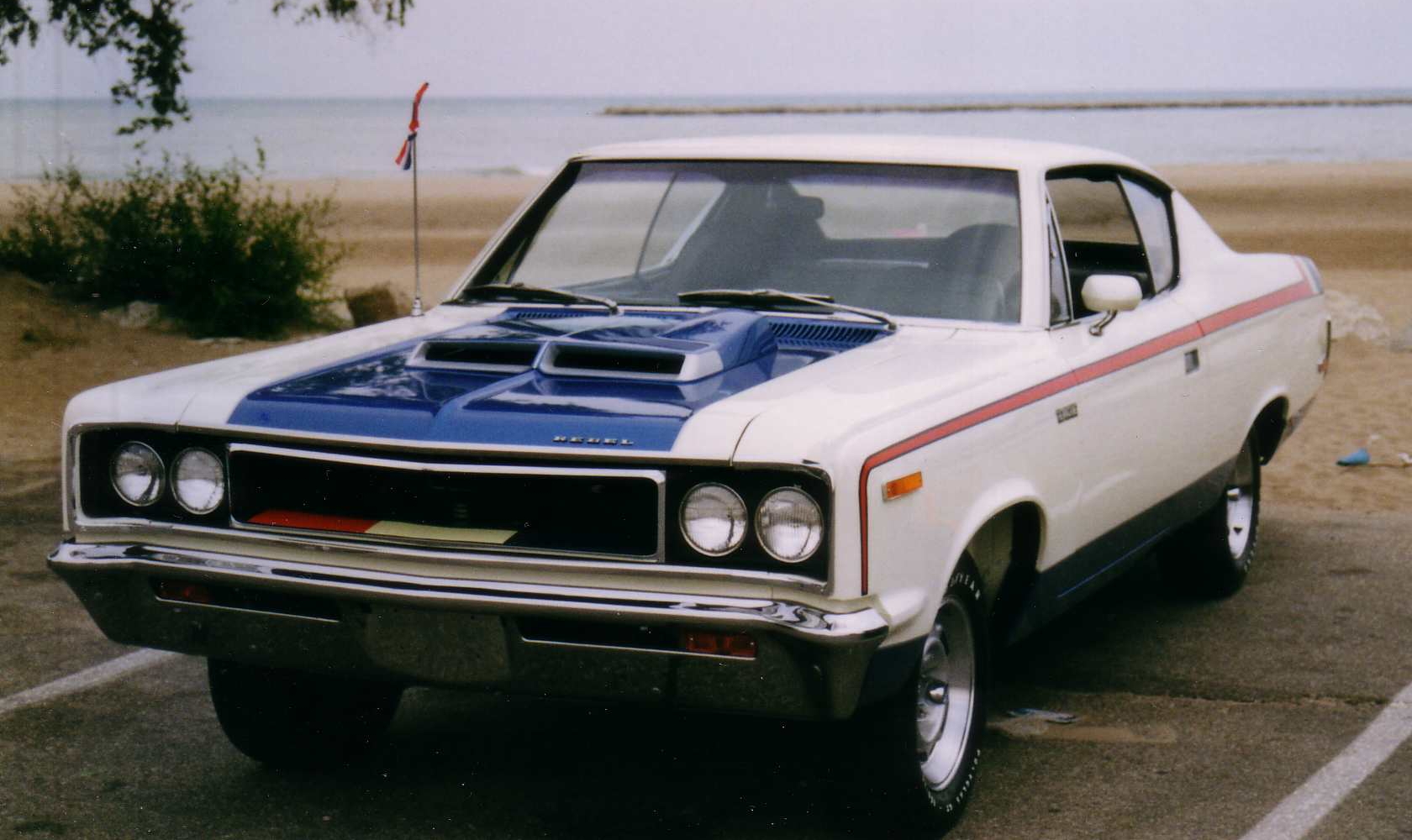
In 1970 AMC moved its muscle car effort to the mid-size Rebel, whose performance version used a stronger 390. The Rambler name left the American market after 1969. That makes this car the last and best-known performance Rambler. Compare it with the other compact muscle cars in our power ranking.
SC/Rambler against the other AMC muscle cars
AMC built three very different muscle cars in two years, all around the same 390 V8. The SC was the lightest and the rarest. From AMC's power-to-weight figure of 10.03 lb per hp, the car weighed about 3,160 lb (1,430 kg), or about 6.1 kg per kW.
| Car | Year | Power (SAE gross) | Built | kg per kW |
|---|---|---|---|---|
| SC/Rambler | 1969 | 235 kW (315 hp) | 1,512 | about 6.1 |
| Rebel Machine | 1970 | 254 kW (340 hp) | 2,326 | about 6.5 |
| AMX (390) | 1968–1970 | 235–242 kW | 19,134 (all engines) | about 5.6–5.8 |
The figures are our calculation from the published power and weight data. The SC is the choice for a buyer who wants the most unusual car of the three and a factory drag-racing specification; the AMX is the more refined road car.
Photo gallery


AMC SC/Rambler in our rankings
- No. 40 of 94 · Most powerful cars of the 1960s (235 kW · top 46%)
- No. 397 of 859 · Most powerful cars (235 kW · top 47%)
- No. 92 of 154 · Most powerful American cars (235 kW · top 60%)
- No. 214 of 313 · Most powerful coupes (235 kW · top 70%)
More powerful than 54% of ranked cars of the 1960s in the 1CARS catalog (No. 40 of 94).
FAQ
What does SC/Rambler mean?
"SC" stands for "Super Car". Enthusiasts also call the car the "Scrambler".
How many SC/Ramblers were built?
1,512, all in the 1969 model year.
What engine did the SC/Rambler have?
The 390 cu in V8 from the AMX, rated at 235 kW (315 hp, SAE gross), with a four-speed manual gearbox; no other engine was offered.
How fast was the SC/Rambler?
Road Test magazine recorded a 14.4-second quarter mile at 100.44 mph and a top speed of 109 mph.
Data sources
Data checked by an editor against the sources below.