 AMC Rebel Machine
Specs, engines and history
Published Sources (1) Report an error
By Sarah Whitmore, Senior Automotive Writer
- Built
- 1970
- Top power
- 254 kW (345 PS)
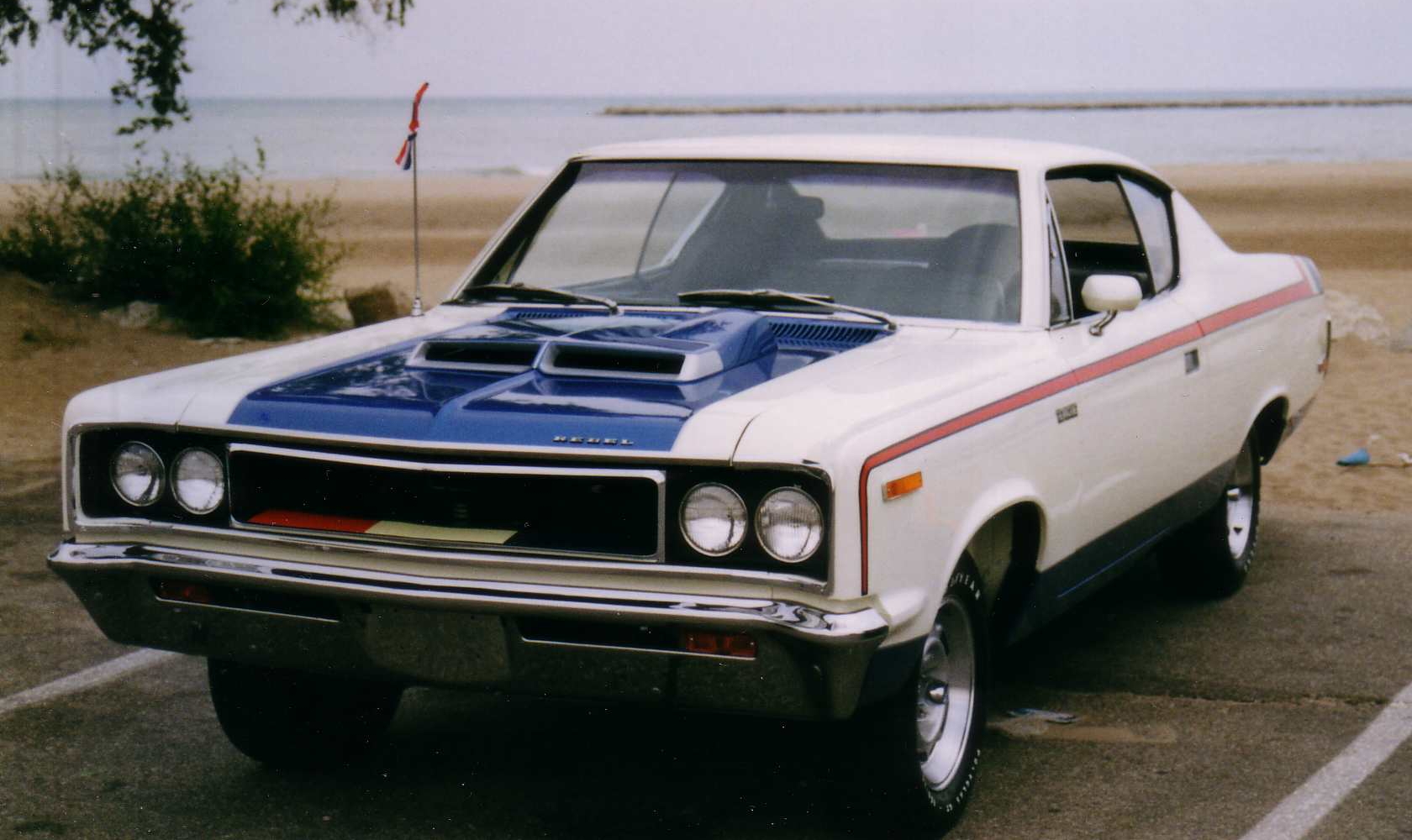
The Rebel Machine was the muscle car version of the AMC Rebel, built for the 1970 model year only. American Motors put the strongest engine it ever offered in a regular production car into the two-door hardtop of its mid-size Rebel. This 390 cu in V8 was rated at 254 kW (340 hp). AMC added a ram-air bonnet with a tachometer on top and painted most of the cars white with red and blue stripes. 2,326 were built before the Rebel itself was replaced by the Matador.
In short
- Only the 1970 model year; 2,326 built at Kenosha.
- 390 V8: 254 kW (340 hp gross) at 5,100 rpm and 583 Nm at 3,600 rpm, 10.0:1 compression.
- BorgWarner T-10 four-speed with a Hurst shifter as standard; automatic optional.
- Debut on 25 October 1969 at the NHRA World Finals in Dallas.
The 1970 Rebel performance model at a glance
| Specification | AMC Rebel, 1970 performance model |
|---|---|
| Production | 1970 model year |
| Built | 2,326 |
| Body | two-door hardtop |
| Base | AMC Rebel, 114 in (2,896 mm) wheelbase |
| Engine | 390 cu in (6.4 l) V8, 690 cfm four-barrel |
| Power | 254 kW (340 hp, SAE gross) at 5,100 rpm |
| Torque | 583 Nm at 3,600 rpm |
| Gearbox | four-speed manual, Hurst shifter; automatic optional |
| Axle ratio | 3.54:1 or 3.91:1, Twin-Grip limited slip |
| 0–60 mph | 6.4 s |
| Top speed | 127 mph (204 km/h) |
The car sits in the golden age of our American muscle car guide, between the GTO-style mid-size cars it was built to fight.
The idea and the debut
The Rebel was AMC's mid-size car from 1967 to 1970, built in Kenosha, Wisconsin, and Brampton, Ontario, on a 114 in wheelbase. A performance version had been discussed for some time. A 1967 two-door development car had a modified 390 estimated at around 373 kW (500 hp). A June 1968 proposal described a plain black 1969 Rebel coupé without stripes or scoops. Only its rear name decal made it into production.
The car was developed together with Hurst Performance, although Hurst had no official role once production began and supplied only the floor shifter. The official debut was on 25 October 1969 at the NHRA World Championship Drag Race Finals in Dallas. Ten demonstrators, five automatics and five four-speeds, were driven from Kenosha and raced in arrival condition. Four of them ran mid-14-second quarter miles in stock trim on press day.

Engine and chassis
The Rebel's 390 had special heads, valve train and camshaft, redesigned intake and exhaust and a 690 cfm Motorcraft four-barrel carburettor. With 10.0:1 compression it needed high-octane fuel. AMC rated it at 254 kW (340 hp) at 5,100 rpm and 583 Nm at 3,600 rpm. AMC calculated 10.7 pounds per horsepower, a figure chosen to place the car in the NHRA F-Stock class.
The chassis used heavy-duty suspension with station-wagon springs at the rear, which gave the car a nose-down stance. Power front disc brakes were standard, and the car rode on Goodyear Polyglas E60x15 white-letter tyres on 15x7 in steel wheels painted in silver metal flake. Rear axle ratios were 3.54:1 or 3.91:1, and dealers sold a 5.00:1 set over the counter.
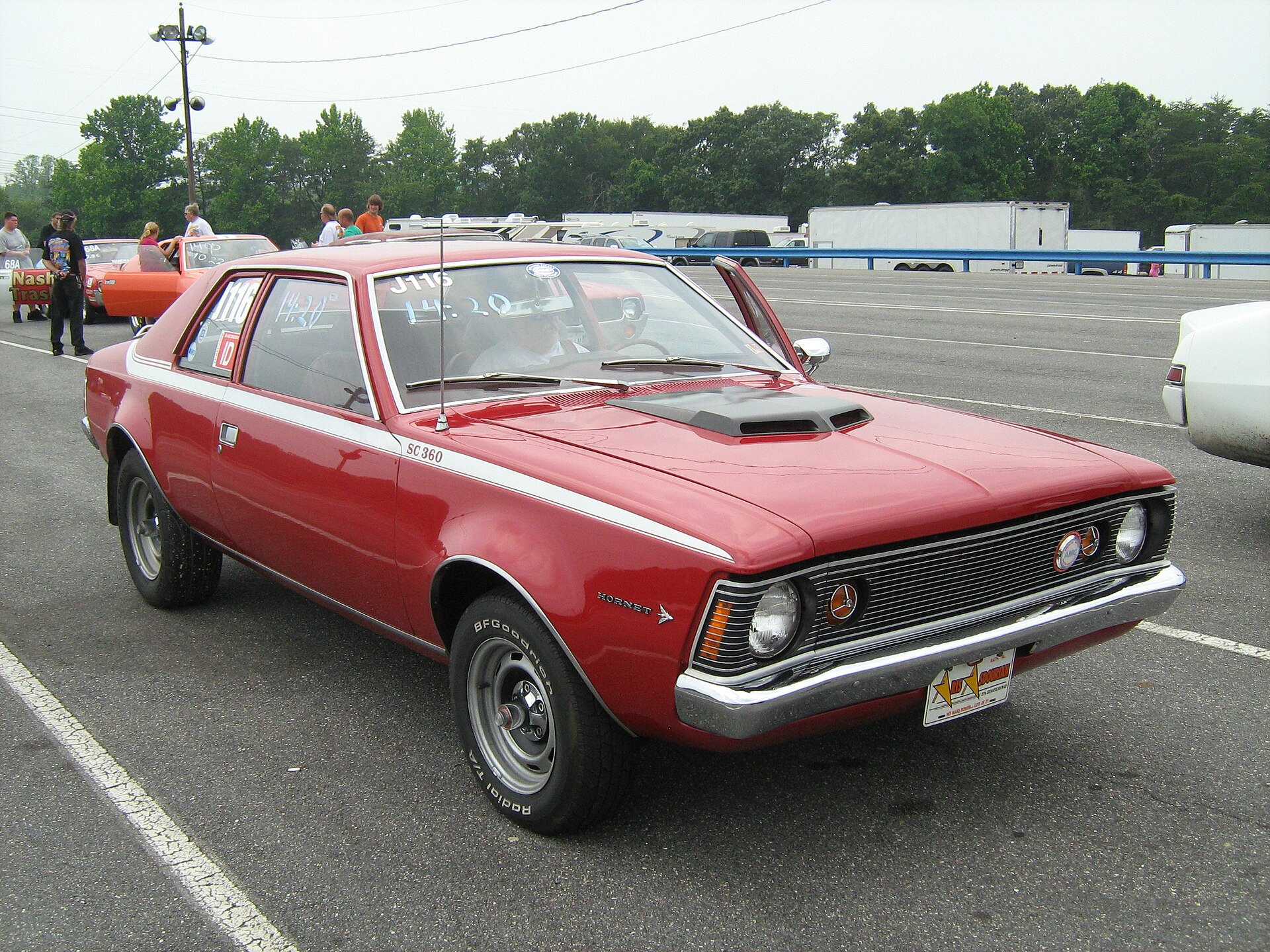
The ram-air scoop on the bonnet was painted Electric Blue and carried a large tachometer in a raised fairing at its rear, facing the driver. Early scoops were made of fibreglass; from 1 January 1970 they were injection-moulded.


Colours and equipment
AMC gave the car a deliberately loud look to match the drag-strip launch. The first 1,000 cars were white with a large blue bonnet stripe and red, white and blue reflective stripes. After that, the car was offered without stripes in other colours with a blacked-out bonnet, and the original scheme became an option. Three cars were made in Frost White with a flat-black bonnet, and at least three in Big Bad Green. Inside there were black bucket seats with a centre armrest and red, white and blue vinyl.
Performance
AMC quoted 0–60 mph in 6.4 seconds and a top speed of 127 mph (204 km/h). In stock trim the factory carburettor setup produced wheel hop under hard launches, and the quarter mile took about 14.4 seconds. An optional service kit raised output to well over 298 kW (400 hp) and cut the time to 12.72 seconds.
| Figure | Value |
|---|---|
| Power-to-weight (AMC) | 10.7 lb per hp |
| Quarter mile, stock | about 14.4 s |
| Quarter mile, service kit | 12.72 s |
Legacy of the Rebel Machine
Its wheels were later offered on the 1970 AMX and Javelin, and through 1972 they were part of the Go Package on the Javelin AMX. For 1971 the Rebel was replaced by the AMC Matador, and the performance version did not return. With 2,326 cars it remains one of the rarer American muscle cars of the 1970 model year. Compare its 254 kW with the other classic muscle cars in our power ranking and the car rankings.
Options and size
The performance Rebel was not a stripped racing car. Buyers could add comfort options such as cruise control, a tilt steering wheel and air conditioning, and the automatic gearbox with a centre console. The 1970 two-door Rebel was 199 in (5,055 mm) long on its 114 in (2,896 mm) wheelbase, a full-size family car by European standards. That size is the main difference from the compact SC/Rambler and the two-seat AMX, which used the same engine family.
How it compares
With 254 kW the 1970 Rebel was 19 kW stronger than the SC/Rambler of 1969, which used the same 390 V8 in a smaller body. AMC's figure of 10.7 lb per hp implies a weight of about 3,640 lb (1,650 kg), or 6.5 kg per kW, against about 6.1 kg per kW for the lighter Rambler. The two cars aimed at the same drag-strip classes, but the Rebel offered more room on its 114 in wheelbase.
| Car | Power (SAE gross) | Built | kg per kW |
|---|---|---|---|
| Rebel, 1970 | 254 kW (340 hp) | 2,326 | about 6.5 |
| SC/Rambler 1969 | 235 kW (315 hp) | 1,512 | about 6.1 |
Among the golden-age mid-size cars the Rebel sits below the 317 kW Hemi cars from Chrysler. For a collector the original red, white and blue cars of the first 1,000 are the most sought after. The rare Frost White and Big Bad Green cars are a matter for specialists.
Photo gallery


AMC Rebel Machine in our rankings
- No. 26 of 88 · Most powerful cars of the 1970s (254 kW · top 30%)
- No. 355 of 859 · Most powerful cars (254 kW · top 42%)
- No. 85 of 154 · Most powerful American cars (254 kW · top 56%)
- No. 193 of 313 · Most powerful coupes (254 kW · top 62%)
More powerful than 70% of ranked cars of the 1970s in the 1CARS catalog (No. 26 of 88).
FAQ
How many were built?
2,326, all in the 1970 model year.
How much power did it have?
254 kW (340 hp, SAE gross) at 5,100 rpm and 583 Nm from its 390 cu in V8 — the most powerful engine AMC ever offered in a regular production car.
Why is there a tachometer on the bonnet?
The tachometer was built into the rear of the ram-air hood scoop, where the driver could read it through the windscreen.
Was the car built with Hurst?
Hurst Performance collaborated on the project and supplied the shifter, but had no official role in production, unlike the SC/Rambler.
Data sources
Data checked by an editor against the sources below.