 Pagani Huayra
Specs, engines and history
Published Sources (2) Report an error
By Felix Hartmann, Automotive Technology & EV Contributor
- Built
- 2012–2022
- Top power
- 625 kW (850 PS)
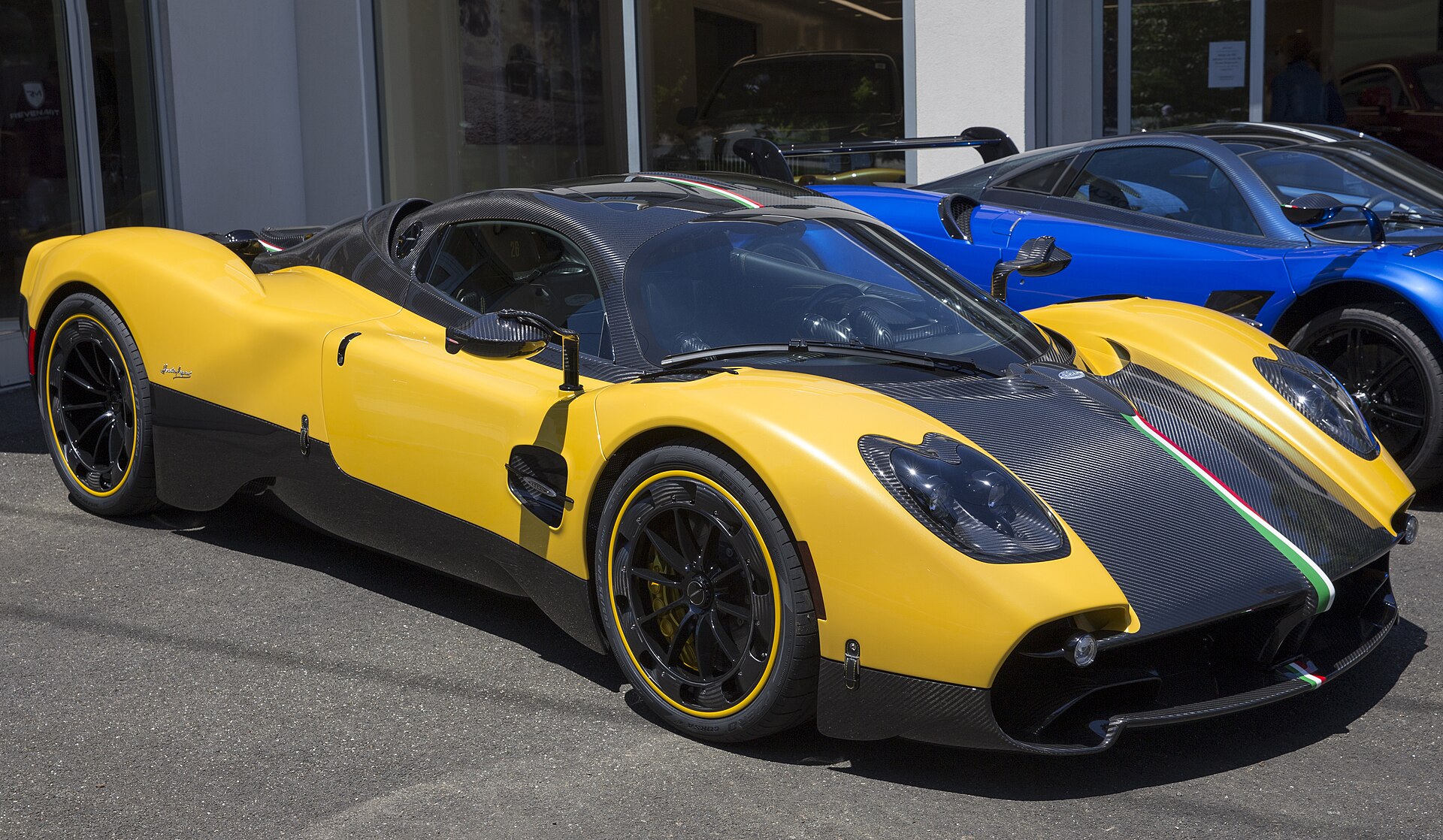
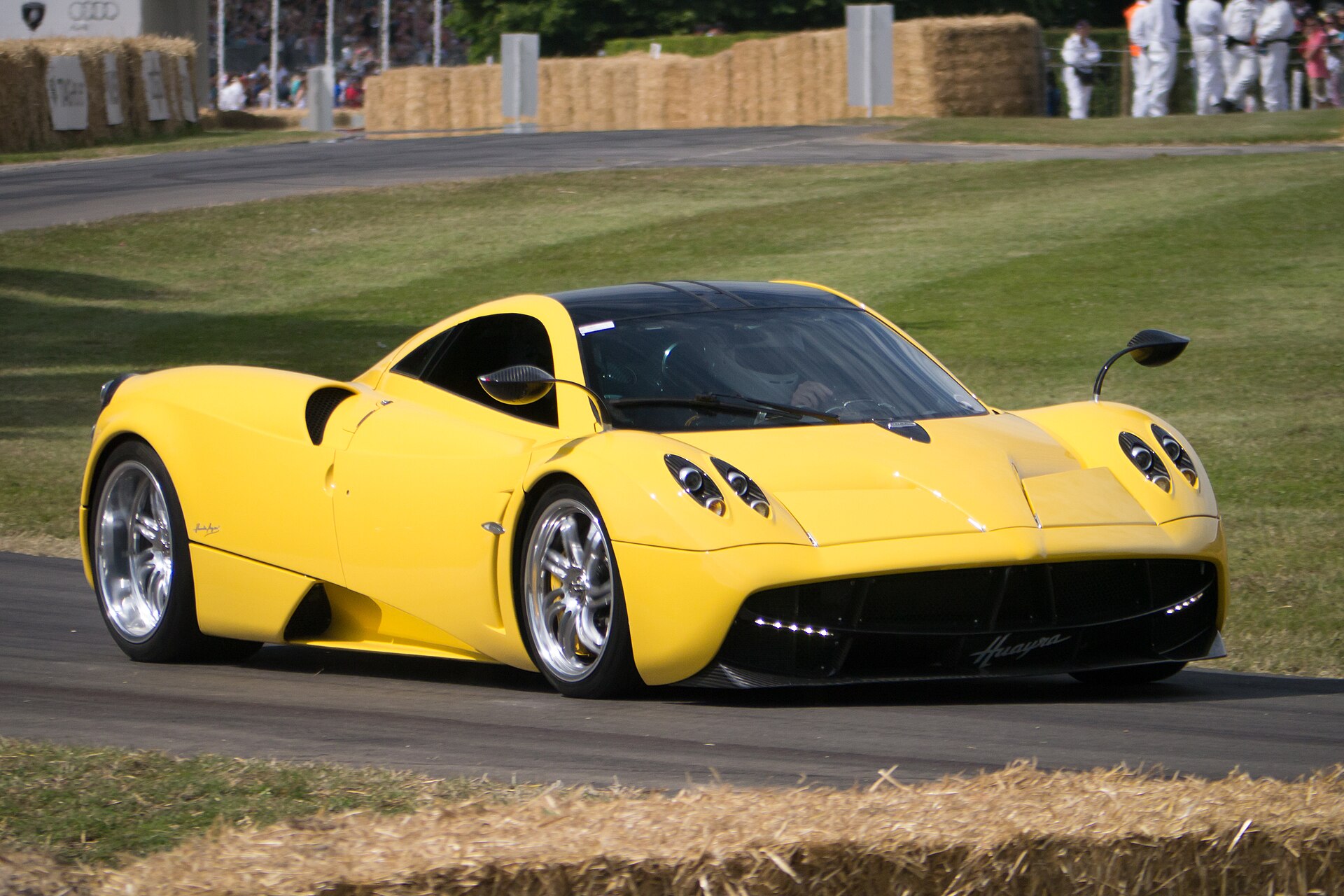
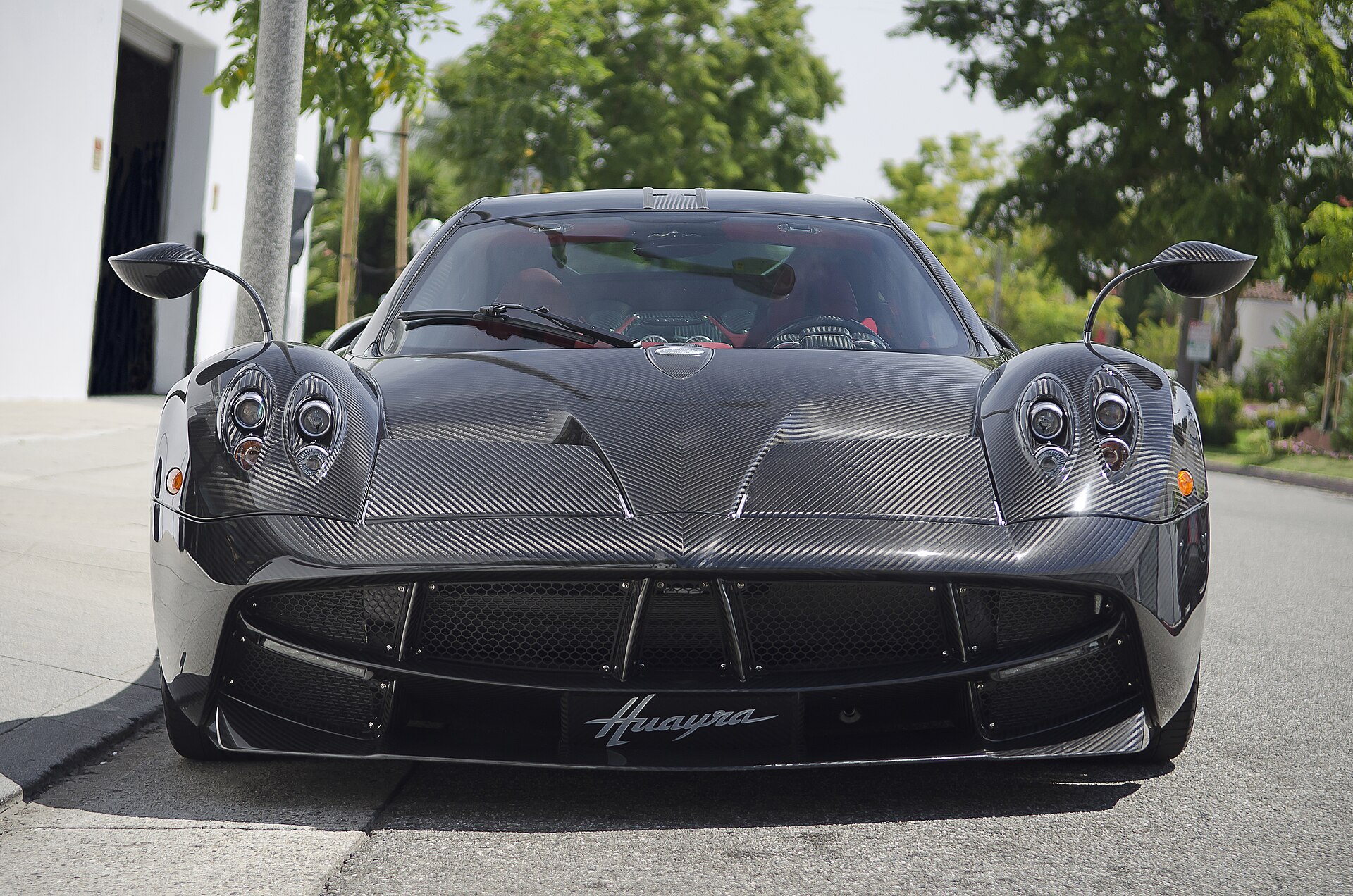
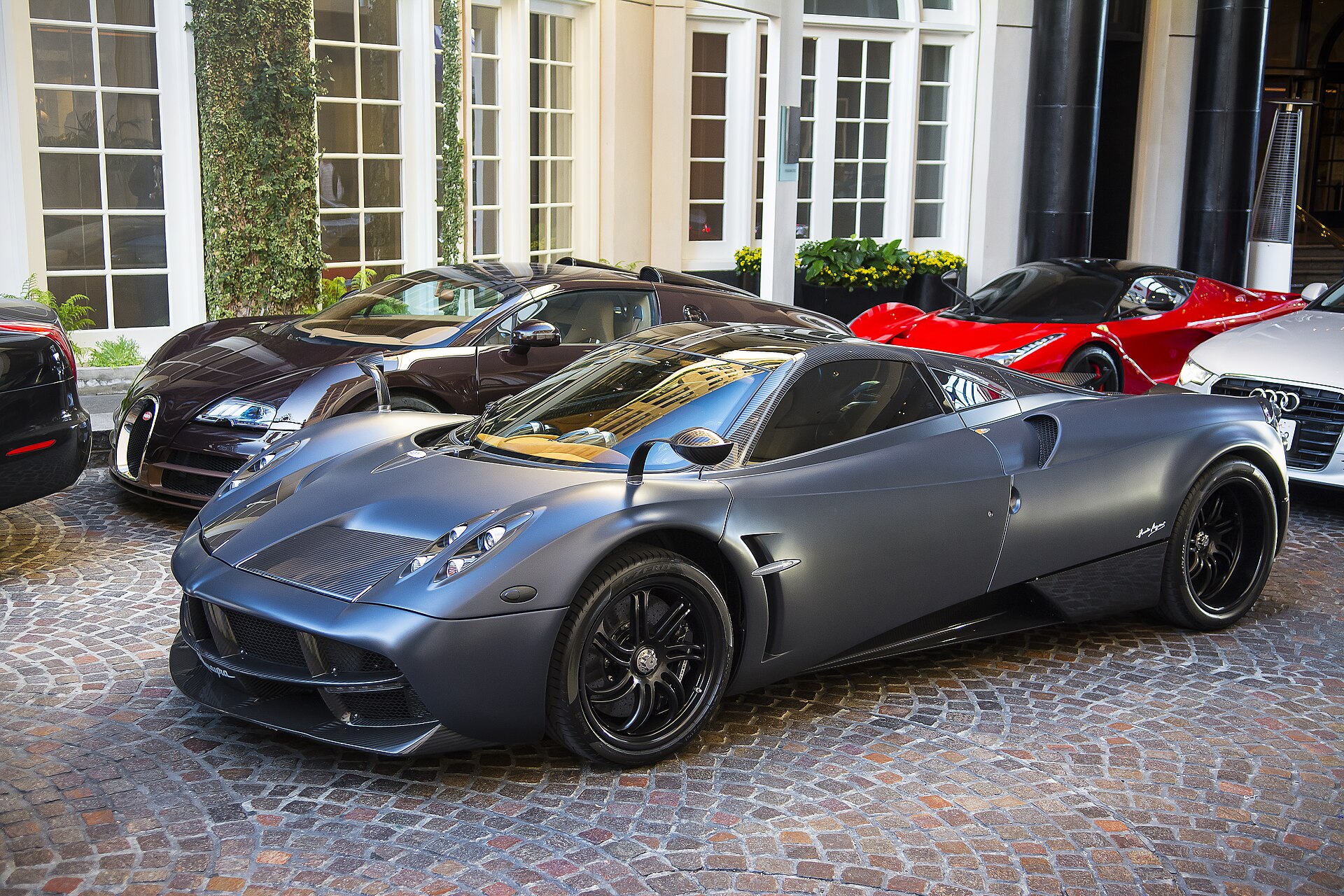
The Pagani Huayra is the hypercar with which Horacio Pagani's small company followed the Zonda. Presented in February 2011, it uses a 6.0-litre twin-turbo V12 from Mercedes-AMG, a carbon composite body with gull-wing doors and active aerodynamic flaps at both ends. Only 100 coupés were built between 2011 and 2018. The Huayra then became the basis of a family of even rarer versions: the BC, the Roadster, the Imola, the Codalunga and the track-only Huayra R. The Utopia later replaced it.
In short
- Images released on 25 January 2011, world debut in February 2011 in Milan; built in San Cesario sul Panaro, Italy; 100 coupés (2011–2018).
- Mercedes-AMG M158 5,980 cc twin-turbo V12 with 544 kW (740 PS) and 1,000 Nm in the original coupé; up to 625 kW (850 PS) in later versions.
- Four active flaps front and rear change the drag coefficient between 0.31 and 0.37; dry weight 1,350 kg.
- Named "Hypercar of the Year 2012" by Top Gear; successor: Pagani Utopia.
Specs by version
Engines
| Version | Engine | Gearbox | Drive | Production years |
|---|---|---|---|---|
| 6 L 12 cyl Automatic (AM7) · 2018 (EPA) | 6.0 l · 12 cyl 6,000 cc | 7-sp Dual-clutch | Rear-wheel drive | 2018 |
Performance
Show all 1 versions
| Version | Fuel consumption |
|---|---|
| 6 L 12 cyl Automatic (AM7) · 2018 (EPA) | 18.1 l/100 km13.0 mpg US · 15.6 mpg UK |
Verified Manufacturer and type-approval data from our catalog · Sources and methodology
Pagani Huayra at a glance
| Specification | Pagani Huayra (coupé) |
|---|---|
| Production | 2011–2018, San Cesario sul Panaro (Italy) |
| Cars built | 100 coupés (derivatives built separately) |
| Designer | Horacio Pagani |
| Body | two-door coupé with gull-wing doors |
| Layout | rear mid-engine, rear-wheel drive |
| Engine | Mercedes-AMG M158 5,980 cc 60° V12, two turbochargers |
| Power | 544 kW (740 PS) |
| Torque | 1,000 Nm at 2,250–4,500 rpm |
| Gearbox | seven-speed Xtrac sequential, single-plate clutch |
| Dry weight | 1,350 kg |
| Predecessor / successor | Zonda / Utopia |
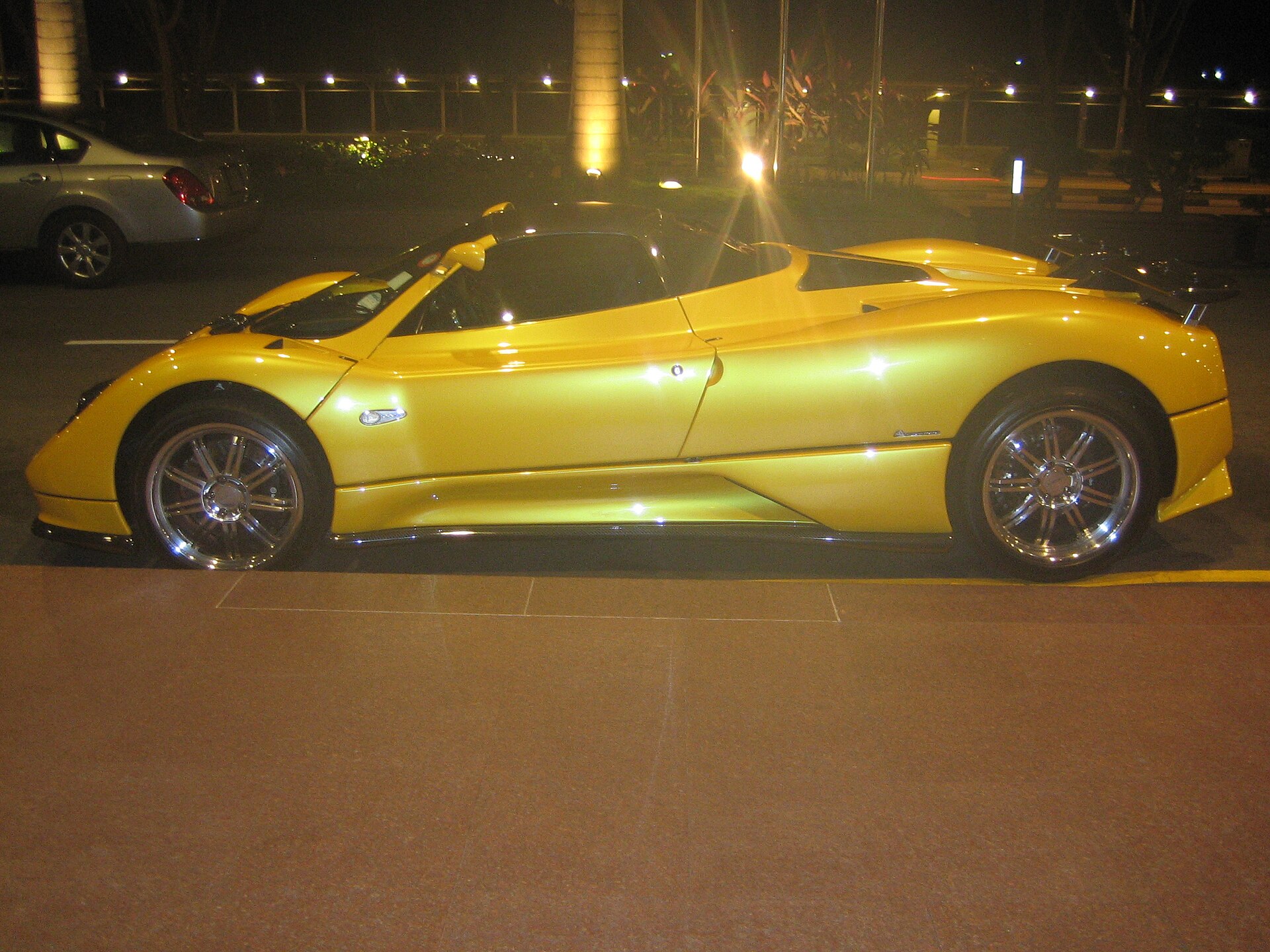
The Huayra followed the Zonda, including track versions such as the Pagani Zonda R. All Pagani models are in the Pagani catalogue.
Name and launch
The car is named after Wayra Tata, the god of wind in Quechua mythology. Pagani released the first official images online on 25 January 2011, and the car's world premiere took place in February 2011 at the headquarters of Pirelli in Milan.
Like the Zonda, the Huayra was designed by Horacio Pagani himself and built in small numbers at San Cesario sul Panaro. The coupé remained in production until 2018, with 100 cars built. In 2012 the British programme Top Gear named it its "Hypercar of the Year".
Design and body
The Huayra is 4,625 mm long, 2,036 mm wide and 1,169 mm high, on a 2,795 mm wheelbase. The coupé has gull-wing doors that open upwards from the roof line. Later versions use newer materials: the Roadster BC has a monocoque in a carbon-titanium composite called HP62, and the BC uses "carbon triax" and suspension wishbones in Avional aluminium alloy.
Engine and gearbox
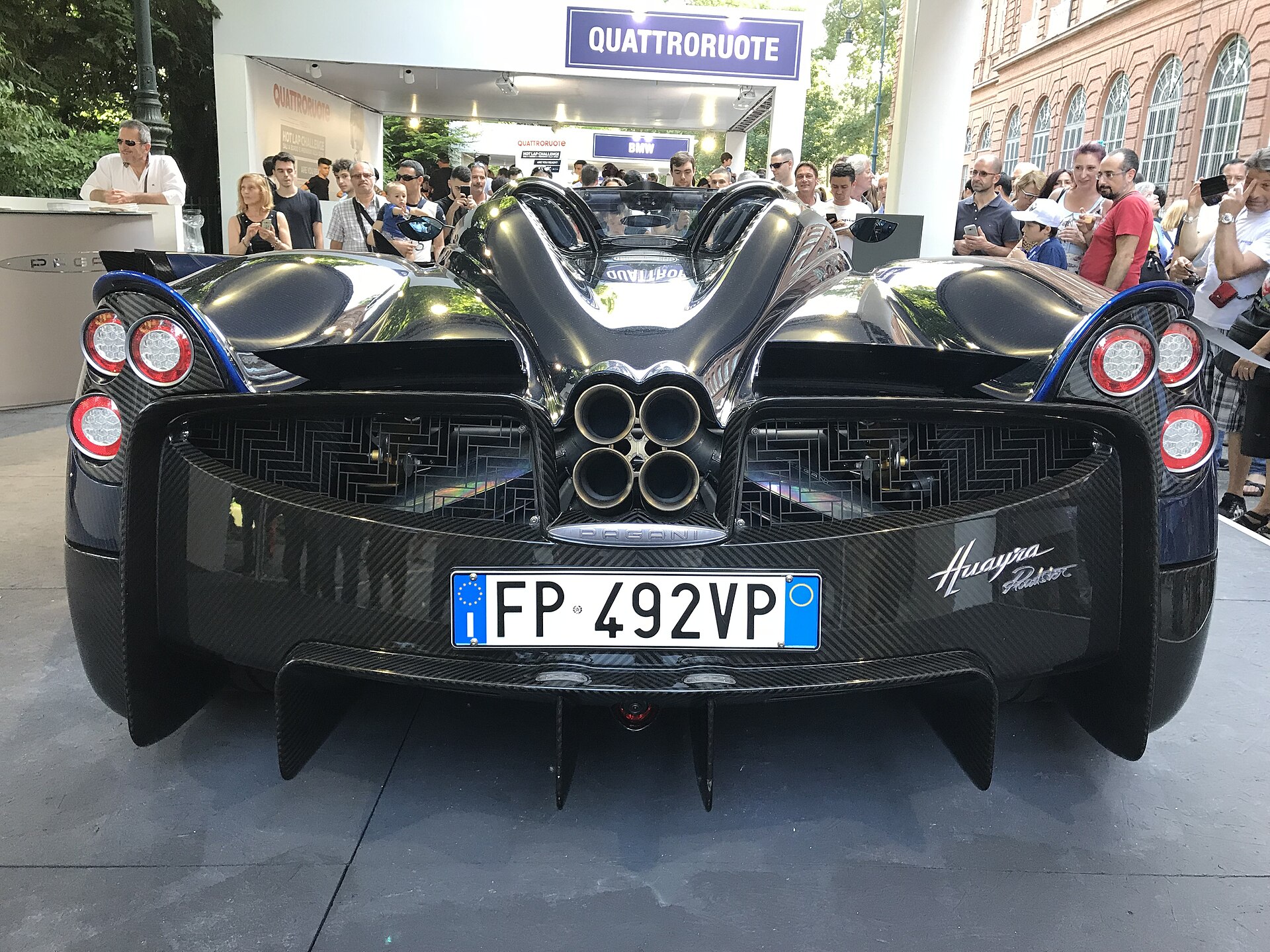
The engine is supplied by Mercedes-AMG: the M158, a 5,980 cc 60° V12 with two turbochargers. In the original Huayra it produces 544 kW (740 PS) and 1,000 Nm from 2,250 to 4,500 rpm. It drives the rear wheels through a seven-speed Xtrac sequential gearbox with a single-plate clutch; the Roadster has a seven-speed automated manual gearbox, also from Xtrac.
According to Wikipedia, the coupé has a top speed of about 383 km/h and can corner at 1.66 g on its Pirelli tyres.
| Version | Power | Torque | Dry weight |
|---|---|---|---|
| Huayra (coupé) | 544 kW (740 PS) | 1,000 Nm | 1,350 kg |
| Huayra BC | 562 kW (764 PS) | 1,000 Nm | 1,218 kg |
| Huayra Roadster | 562 kW (764 PS) | 1,000 Nm | 1,280 kg |
| Huayra Roadster BC | 590 kW (802 PS) | 1,050 Nm | 1,250 kg |
| Huayra Imola | 616 kW (838 PS) | 1,100 Nm | 1,246 kg |
| Huayra Tricolore | 618 kW (840 PS) | - | 1,270 kg |
| Huayra Codalunga | 618 kW (840 PS) | - | 1,280 kg |
| Imola Roadster | 625 kW (850 PS) | 1,100 Nm | 1,260 kg |
| Huayra R (track only) | 625 kW (850 PS), naturally aspirated | 750 Nm | 1,050 kg |

Active aerodynamics and brakes
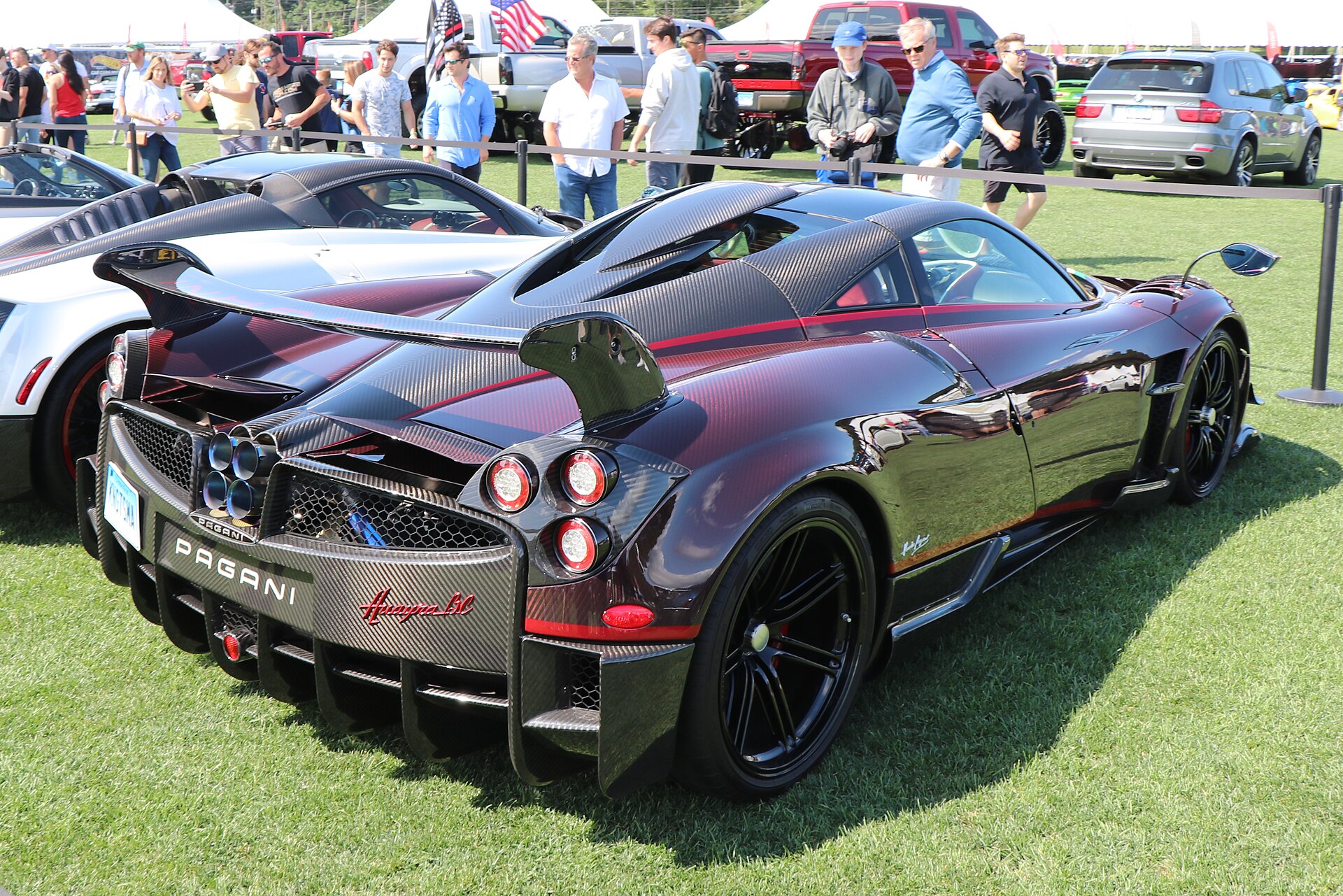
Instead of a large fixed wing, the coupé has four independently controlled flaps - two at the front and two at the rear - and an adjustable front ride height. The system changes the drag coefficient between 0.31 and 0.37, depending on whether the car needs low drag or more downforce. Under hard braking the rear flaps rise to act as an air brake.
The brakes are by Brembo, with six-piston calipers at the front and four-piston calipers at the rear, and carbon-ceramic discs of 380 mm diameter and 34 mm thickness.

Huayra BC and the Roadsters
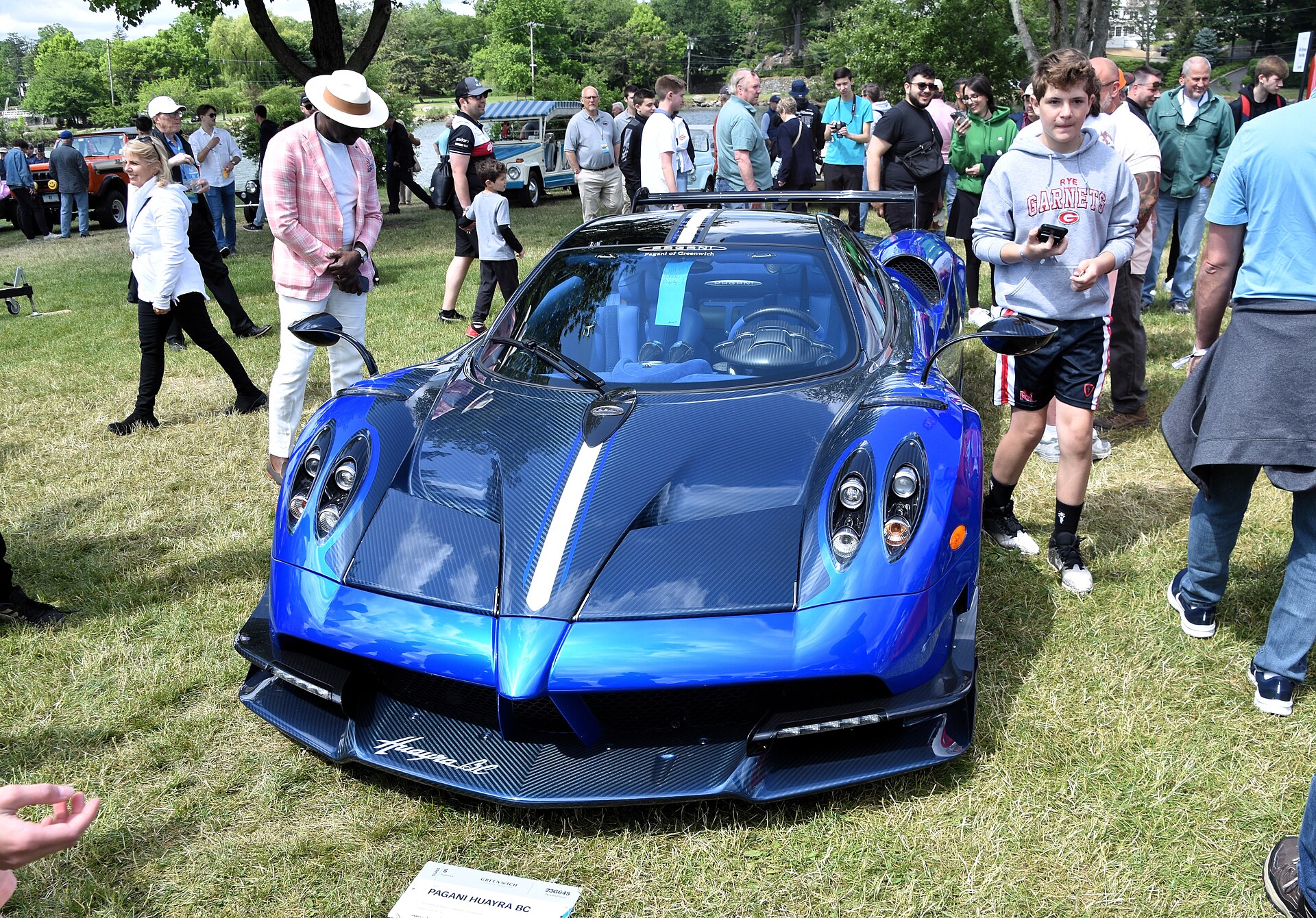
The Huayra BC was unveiled in 2016. It was planned in 20 cars; Wikipedia's table lists 29, and the text says about 30 were built. With 562 kW (764 PS) and 1,218 kg dry, it was much lighter and more powerful than the coupé. See also our article on the Pagani Huayra BC.
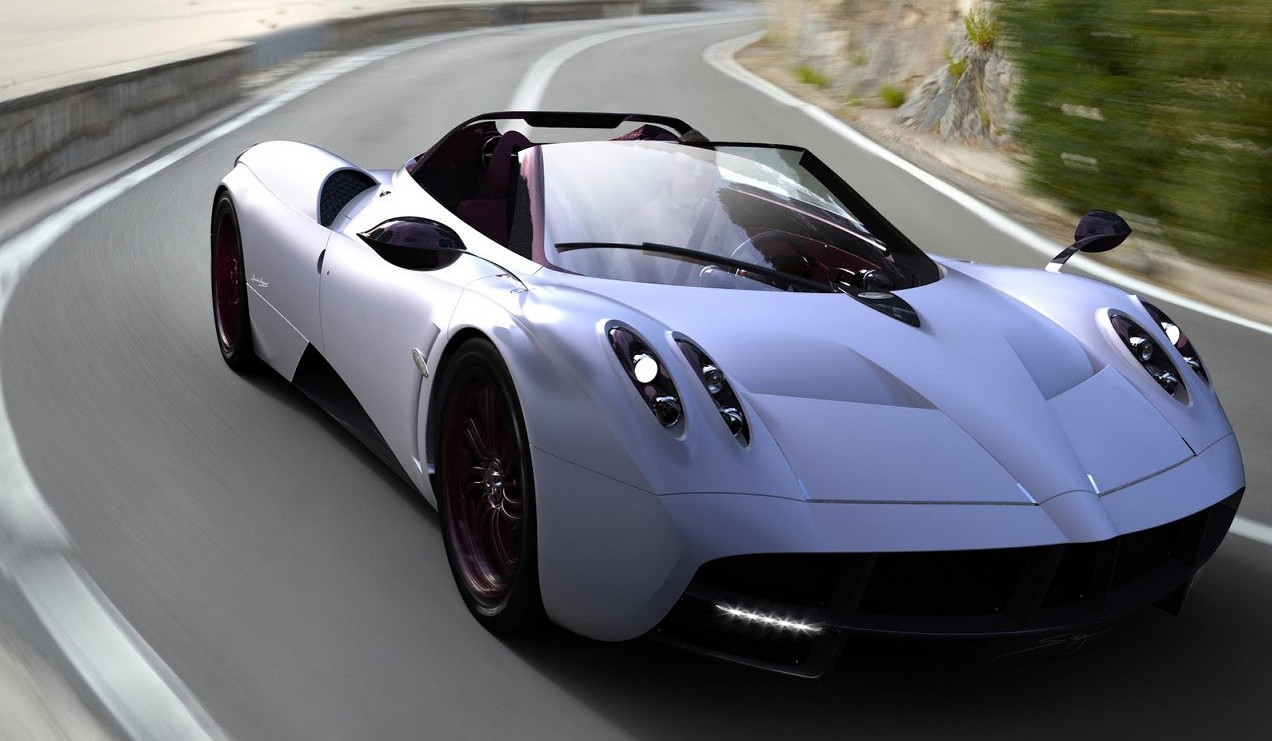
The Huayra Roadster followed in 2017 with a removable roof and conventional doors instead of gull-wings, built in 100 cars until 2020. Pagani claimed up to 816 kg of downforce and 1.8 g of lateral acceleration, figures that Wikipedia describes as unproven. The Roadster BC (2019–2022, 40 cars) has 590 kW (802 PS), the HP62 carbon-titanium monocoque and a claimed 500 kg of downforce at 280 km/h.

Imola, Tricolore, Codalunga and the R
From 2020 Pagani built a series of very small runs:
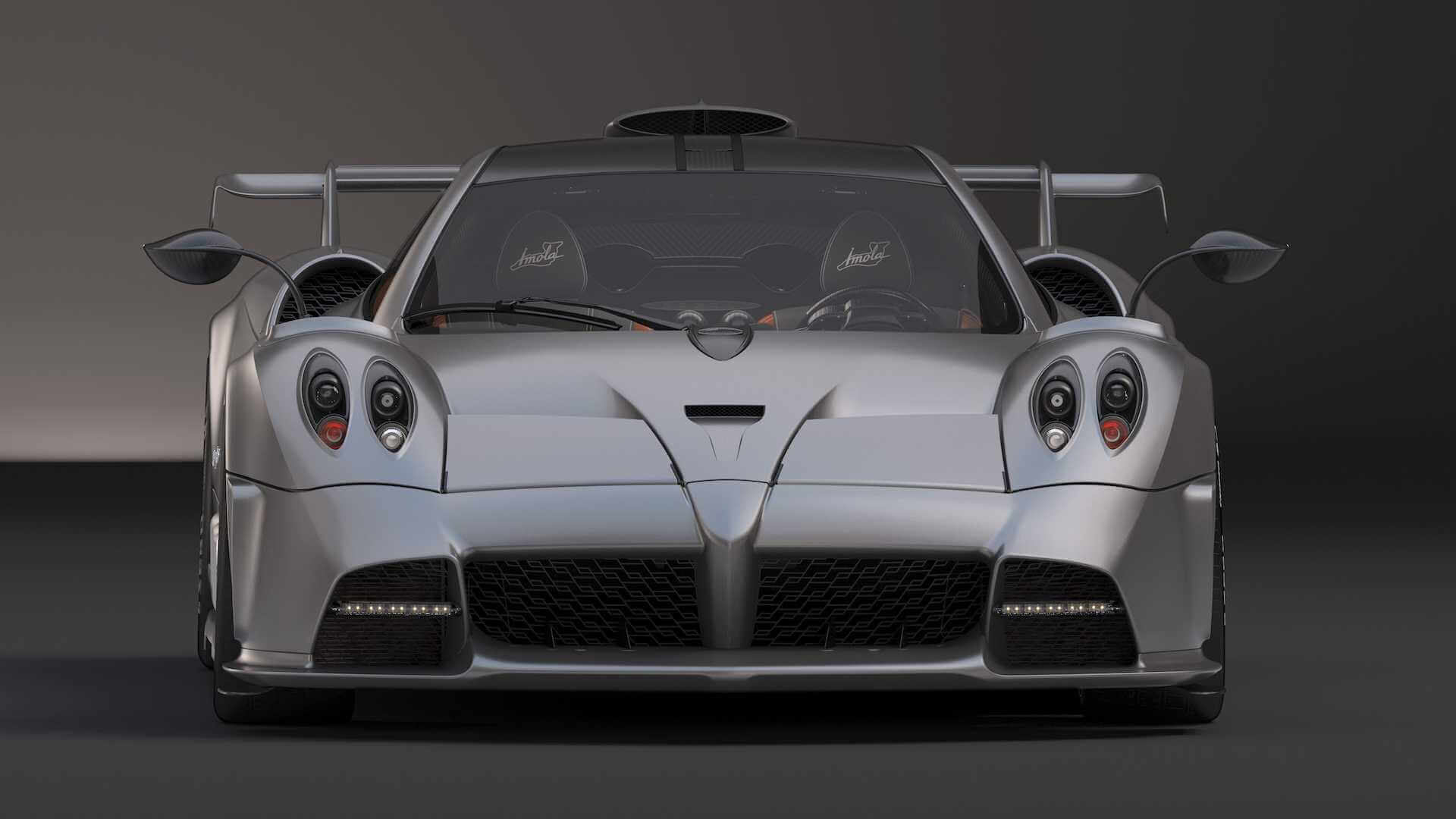
- Huayra Imola (2020): five customer cars (six including a prototype), 616 kW (838 PS) and 1,100 Nm. Our article on the Pagani Huayra Imola tells its story.
- Huayra Tricolore: three customer cars (four including a prototype), 618 kW (840 PS). Wikipedia gives a price of €5.5 million before taxes at its announcement in 2020.
- Huayra R (2021–2026): a track-only car with a naturally aspirated 5,987 cc V12 developed by HWA. It has 625 kW (850 PS), 750 Nm, a 9,000 rpm redline, a six-speed sequential gearbox, butterfly doors and a dry weight of 1,050 kg. 30 cars were built; Wikipedia gives €2.6 million before taxes at its announcement in 2021. An R Evo with 662 kW (900 PS) followed in 2025.
- Huayra Codalunga (2022): a long-tail coupé in five cars, 618 kW (840 PS); €7 million before taxes at its announcement in 2022, according to Wikipedia. A Codalunga Speedster followed in 2025 in ten cars.
- Imola Roadster (2023–2026): eight cars with 625 kW (850 PS).
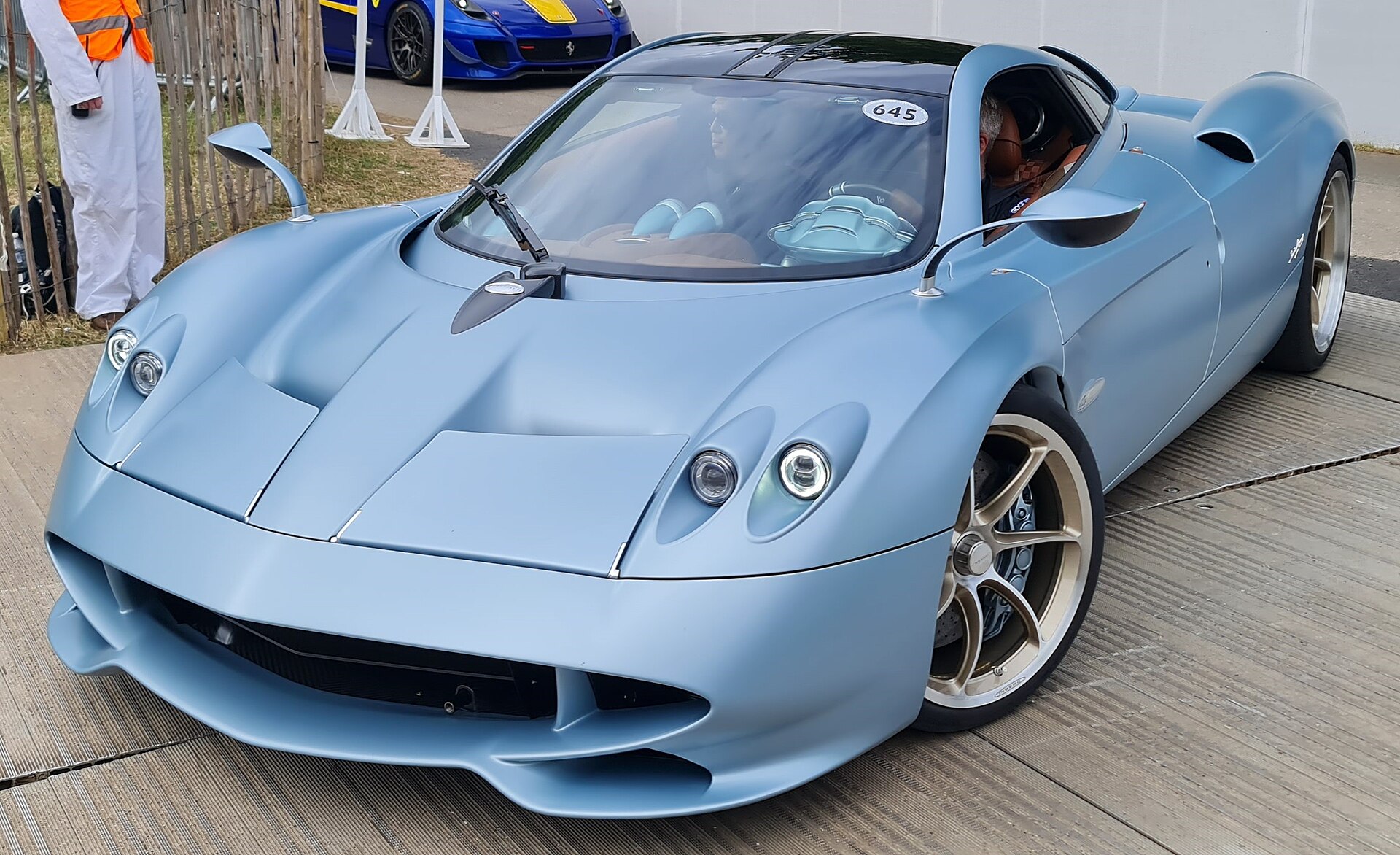
There were also one-off cars, among them the Huayra Lampo of 2017, created with Lapo Elkann, and the Huayra Epitome of 2024 with a seven-speed manual gearbox.

Legacy
The Huayra showed that a very small manufacturer could build a twin-turbo V12 hypercar, sell it in strictly limited numbers and keep it in production for more than a decade through ever rarer derivatives. Wikipedia's production table lists 100 coupés, 29 BCs, 100 Roadsters and 40 Roadster BCs, plus the small Imola, Tricolore, R, Codalunga, Imola Roadster and Codalunga Speedster runs. Together that is more than 300 cars, not counting one-offs and the R Evo. Its successor is the Pagani Utopia. The history of the company is told in our history of Pagani.
Photo gallery


Pagani Huayra in our rankings
- No. 9 of 127 · Most powerful Italian cars (625 kW)
- No. 39 of 859 · Most powerful cars (625 kW · top 5%)
- No. 33 of 313 · Most powerful coupes (625 kW · top 11%)
- No. 90 of 557 · Biggest engines: cars (6,000 cc · top 17%)
- No. 58 of 173 · Biggest engines: coupes (6,000 cc · top 35%)
- No. 375 of 912 · Longest-running car nameplates (10 years · top 43%)
More powerful than 95% of ranked cars in the 1CARS catalog (No. 39 of 859).
Pagani Huayra photos 6
FAQ
What does the name Huayra mean?
It comes from Wayra Tata, the god of wind in the Quechua culture of South America.
What engine does the Pagani Huayra have?
A 5,980 cc twin-turbo V12 from Mercedes-AMG (M158), with 544 kW (740 PS) and 1,000 Nm in the original coupé. The track-only Huayra R uses a naturally aspirated 5,987 cc V12 developed by HWA.
How many Pagani Huayras were built?
100 coupés, 100 Roadsters, 40 Roadster BCs and about 30 BCs, plus small runs of the Imola, Tricolore, R, Codalunga and other derivatives.
What replaced the Pagani Huayra?
The Pagani Utopia.
Is the Pagani Huayra R road-legal?
No. The Huayra R is a track-only car with a naturally aspirated V12, 625 kW (850 PS), a six-speed sequential gearbox and a dry weight of 1,050 kg; 30 were built.
Data sources
Data checked by an editor against the sources below.
- Wikipedia - Pagani Huayra
- US EPA fueleconomy.gov - 39812.shtml