Mitsubishi L200: Generations, Specs and History
The Mitsubishi L200, known in many markets as the Triton, is a compact pickup with rear- or four-wheel drive. It is offered with three cab styles: Single Cab with two doors and two seats, Club Cab with two doors and four seats, and Double Cab with four doors and five seats. Mitsubishi says more than 4 million L200s were sold worldwide between the start of production and 2014.
Key takeaways
- Six generations since 1978: the first was sold in Japan as the Mitsubishi Forte.
- The fifth generation was unveiled in 2014, reached Europe in 2015 and was facelifted with Mitsubishi's Dynamic Shield face for the 2019 model year.
- The fifth-generation 2.4-litre diesel produces 113 kW (154 PS) or 133 kW (181 PS), with manual or automatic gearboxes and Easy Select or Super Select four-wheel drive.
- A sixth generation with a new 2.4-litre diesel was unveiled on 26 July 2023.
Mitsubishi L200 at a glance
The L200's production career began in 1978, when the first generation went on sale in Japan in September as the Forte. The second generation followed in 1986, sold in Australia as the Triton, and ten years later the third generation arrived, built exclusively at Mitsubishi's Laem Chabang plant in Thailand. The fourth generation was released in 2005 and updated in 2014 with a refreshed exterior, an improved cabin and a new 131 kW (178 PS) diesel. The fifth generation was unveiled in 2014 and shown to European audiences at the Geneva motor show in March 2015; its facelift, previewed in late 2018, brought the Dynamic Shield design, an improved cabin, new equipment and technical changes. The sixth generation followed in 2023. More of the brand's range is in our Mitsubishi catalogue, and the brand's background is covered in Mitsubishi Motors, advanced Japanese cars.
Generations
| Generation | Years | Notes |
|---|---|---|
| First | 1978–1986 | Sold in Japan as the Forte |
| Second | 1986–1996 | Sold as the Triton in Australia |
| Third | 1996–2006 | Built in Laem Chabang, Thailand |
| Fourth | 2005–2015 | Updated in 2014 with a 131 kW (178 PS) diesel |
| Fifth | 2015–2023 | Facelift for the 2019 model year with Dynamic Shield design |
| Sixth | from 2023 | New 4N16 2.4-litre diesel |
Exterior of the facelifted fifth generation
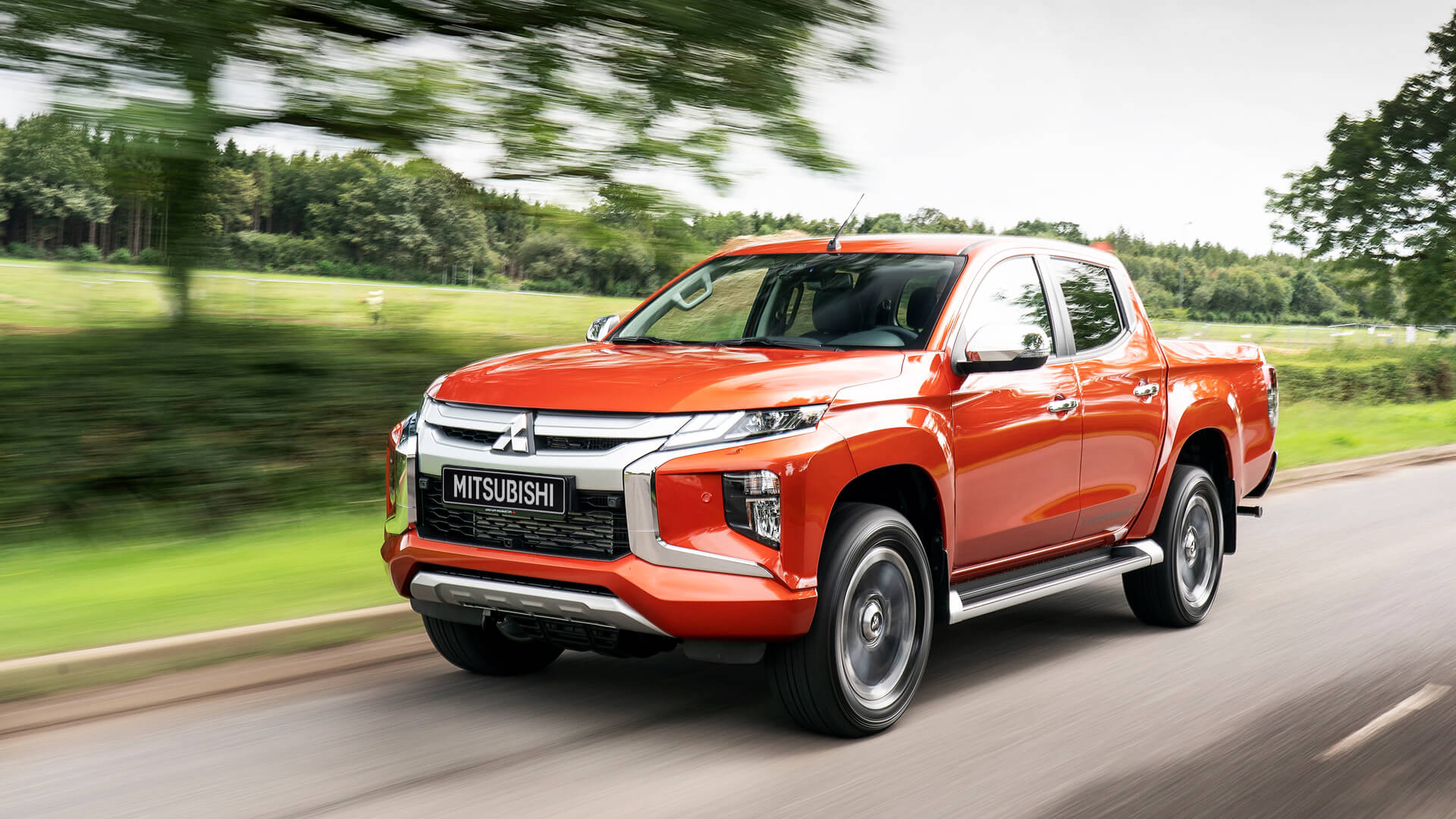
The changes are obvious at first glance: almost every detail at the front and sides was reworked. The front adopts Mitsubishi's Dynamic Shield design, introduced on the Eclipse Cross and Xpander, with slim headlights that use halogen bulbs on base versions and LEDs on top ones. A narrow upper grille has strong horizontal chrome bars, while the main cooling intake is a mesh-filled grille in the centre of the front. Large lamp units at the corners of the bumper serve as fog lights, indicators and daytime running lights, framed by C-shaped chrome trims, and a skid plate protects the engine. The large bonnet has two creases at the sides and is held up by two gas struts. The windscreen has a heated wiper rest area as standard and full heating on higher trims.
The profile resembles the previous model, but the wheel arches were enlarged, flared and squared off. The doors were left unchanged, along with the position of the handles and mirrors. Even base versions have electrically adjustable, power-folding mirrors with LED indicators, and heating, two-position memory and an anti-glare function are optional. Side steps, chrome door mouldings and chrome mirror caps are available. Higher trims have new 18-inch alloy wheels, while basic ones use 16- or 17-inch steel wheels. Ground clearance is a generous 200–220 mm.
The rear changed less, but gained distinctive LED tail lights; the familiar tailgate, a bumper with a small step and plenty of chrome remain. Accessories include a canopy or hard top, storage boxes and roll bars, and the designers ensured that many accessories from the previous generation still fit. The roof has stiffening ribs, and higher trims can have an electric sunroof.
Interior and practicality
At first sight little has changed inside, but closer inspection reveals many small improvements. Materials include decent plastics, silver inserts and, on the top-spec version, synthetic leather; the armrests and door inserts are now softer. The driver has a familiar four-spoke leather multifunction steering wheel, now heated (though not around its whole rim), and a soft pad near the pedals stops the driver's leg from chafing. The instruments are unchanged: analogue rev counter and speedometer with an informative trip-computer display between them.
The front seats are simple and fairly flat, with light side support and heating. The centre console holds a 7-inch touchscreen with Android Auto and Apple CarPlay on better versions, while basic ones have a simple radio and heating knobs. Below are the dual-zone climate controls and the buttons for the differential locks, and the tunnel carries the gear lever, the four-wheel-drive selector, cupholders and a storage box under the armrest.
The rear bench has three headrests and its own two USB ports, and its backrest has a comfortable 25-degree angle, although it is really best for two adults. The backrest can be folded, and rear seat heating is optional. The fifth generation's turning radius of only 5.9 metres is among the best in the class. A plastic load-bed cover on gas struts is optional, the full-size spare wheel hangs under the body, and payload is up to 915 kg.
Engines and transmissions (fifth generation)
| Engine | Power (kW / PS) | Torque | Top speed | Consumption |
|---|---|---|---|---|
| 2.4 MIVEC turbodiesel (4N15) | 113 kW / 154 PS | 380 Nm | 169–177 km/h | 7.1–7.5 l/100 km |
| 2.4 MIVEC turbodiesel (4N15) | 133 kW / 181 PS | 430 Nm | 169–177 km/h | 7.1–7.5 l/100 km |
The 4N15 is a four-cylinder diesel with common-rail injection, a 16-valve twin-cam head with chain drive and MIVEC variable valve timing. Acceleration to 100 km/h takes around 14 seconds, according to published figures. Other markets also offered 2.5-litre diesels.
Base versions have a six-speed manual gearbox. Before the facelift, more expensive ones had a five-speed automatic with manual mode; the facelift introduced a six-speed automatic. Easy Select 4WD is a part-time system with a two-speed transfer case: the truck is rear-wheel drive by default and the front axle is engaged manually. Better-equipped versions have Super Select 4WD, with a centre differential, low range and four operating modes, allowing four-wheel drive on dry roads.
Chassis and off-road ability
The fifth generation is based on a modernised version of the previous platform, with a strong ladder frame and a body made largely of high-strength steel. Suspension is independent with double wishbones at the front, with a rigid axle on leaf springs at the rear. Steering is rack-and-pinion with hydraulic assistance, and the brakes are ventilated discs at the front and drums at the rear, with ABS, EBD and brake assist. The approach and departure angles are 30° and 24°, and the breakover angle is 24°.
Safety and equipment
The facelift added a surround-view camera, where only a reversing camera had been available before. Equipment includes front and side airbags, ABS and stability control, hill-start assist, hill descent control, an off-road mode selector, lane-departure warning, blind-spot monitoring, rear cross-traffic alert, parking sensors, forward collision mitigation with pedestrian detection, adaptive cruise control, light and rain sensors, automatic door locking, an immobiliser and ISOFIX mounts. Depending on the market, base versions have two airbags, air conditioning, cloth upholstery, steel wheels, Easy Select 4WD and a simple audio system; the top-spec version adds cruise control, dual-zone climate control, a reversing camera, LED lights, a heated steering wheel, the 7-inch infotainment system and 17-inch alloy wheels.
Strengths and weaknesses
Owners describe the L200 as an affordable, reliable, simple and economical pickup that carries loads well. They like the high ground clearance, the responsive diesel, four-wheel drive and the robustness of the ladder frame, and fuel consumption is modest for the class. On the downside, the paint is not very resistant to corrosion, the cabin ergonomics feel dated, the engine is slow to warm up in winter, the size makes parking difficult, and the ride could be softer. Rivals over its life included the Toyota Hilux, Nissan Navara, Volkswagen Amarok, Isuzu D-Max, Fiat Fullback, Renault Alaskan and Mercedes-Benz X-Class.
FAQ
Is the Mitsubishi L200 the same as the Triton?
Yes. The same pickup is sold as the L200 in many markets, including Europe, and as the Triton in others.
How many generations of the Mitsubishi L200 are there?
Six: 1978, 1986, 1996, 2005, 2014/2015 and 2023.
What engine does the fifth-generation L200 have?
A 2.4-litre MIVEC turbodiesel with 113 kW (154 PS) and 380 Nm or 133 kW (181 PS) and 430 Nm.
What is the difference between Easy Select and Super Select 4WD?
Easy Select is part-time four-wheel drive engaged manually; Super Select adds a centre differential, so four-wheel drive can also be used on dry roads.
How much can the Mitsubishi L200 carry?
According to published figures, the fifth generation can carry up to 915 kg.