 Honda Insight
All generations, specs and history
Published Sources (1) Report an error
By Felix Hartmann, Automotive Technology & EV Contributor
- Built
- 1999–present
- Generations
- 4
Timeline
Insight generations
Click a generation for its own page
- Insight I (ZE1) 1999–2006 · Liftback
- Insight II (ZE2) 2009–2014 · Liftback
- Insight III (ZE4) 2018–2022 · Sedan
- Insight IV (EV) Current 2026–now · SUV
Newest first · 4 generations since 1999
- 2026 ⚡IV (EV) In production 2026–now · SUV
-
2018
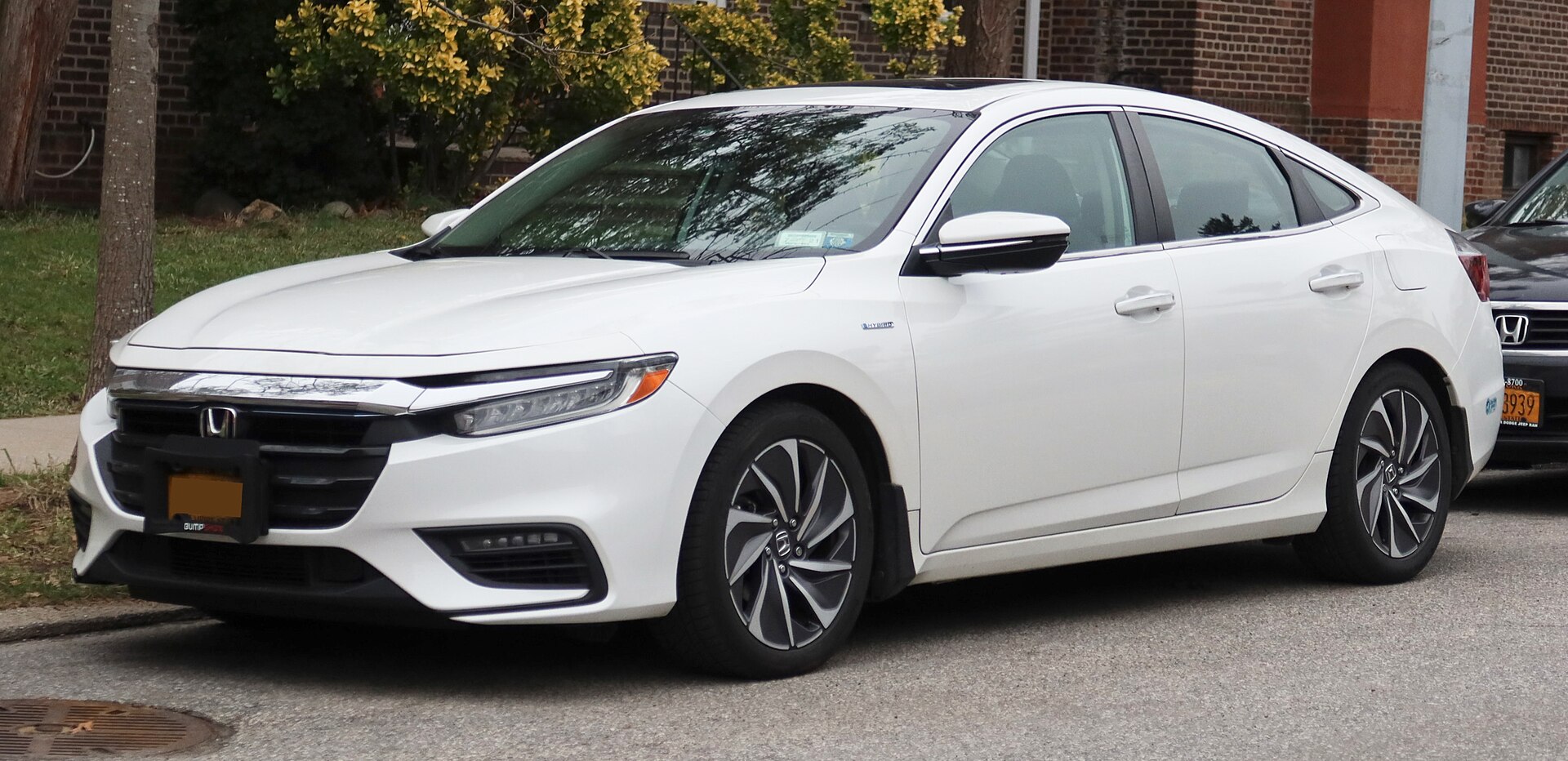
-
2009
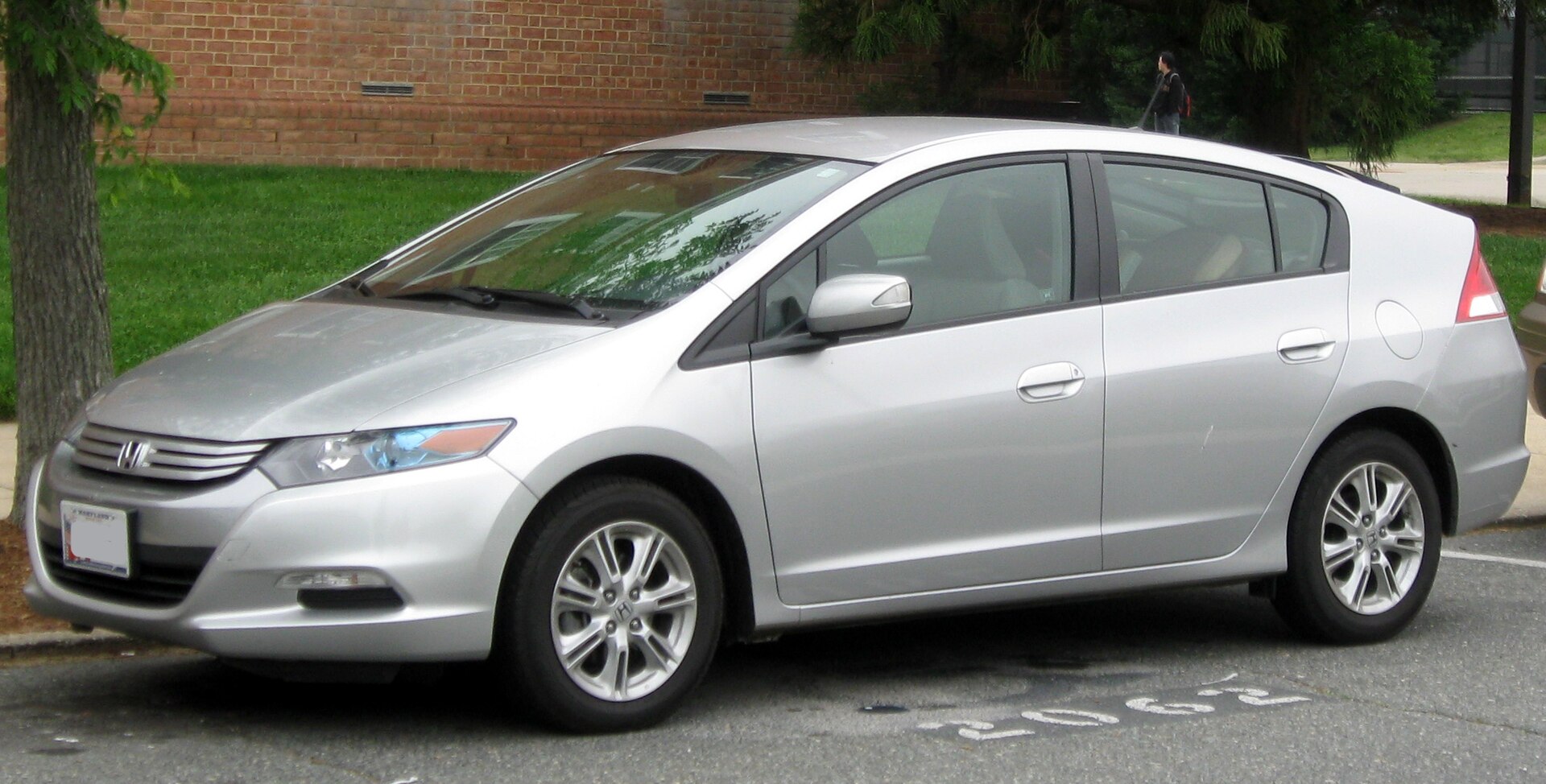
-
1999
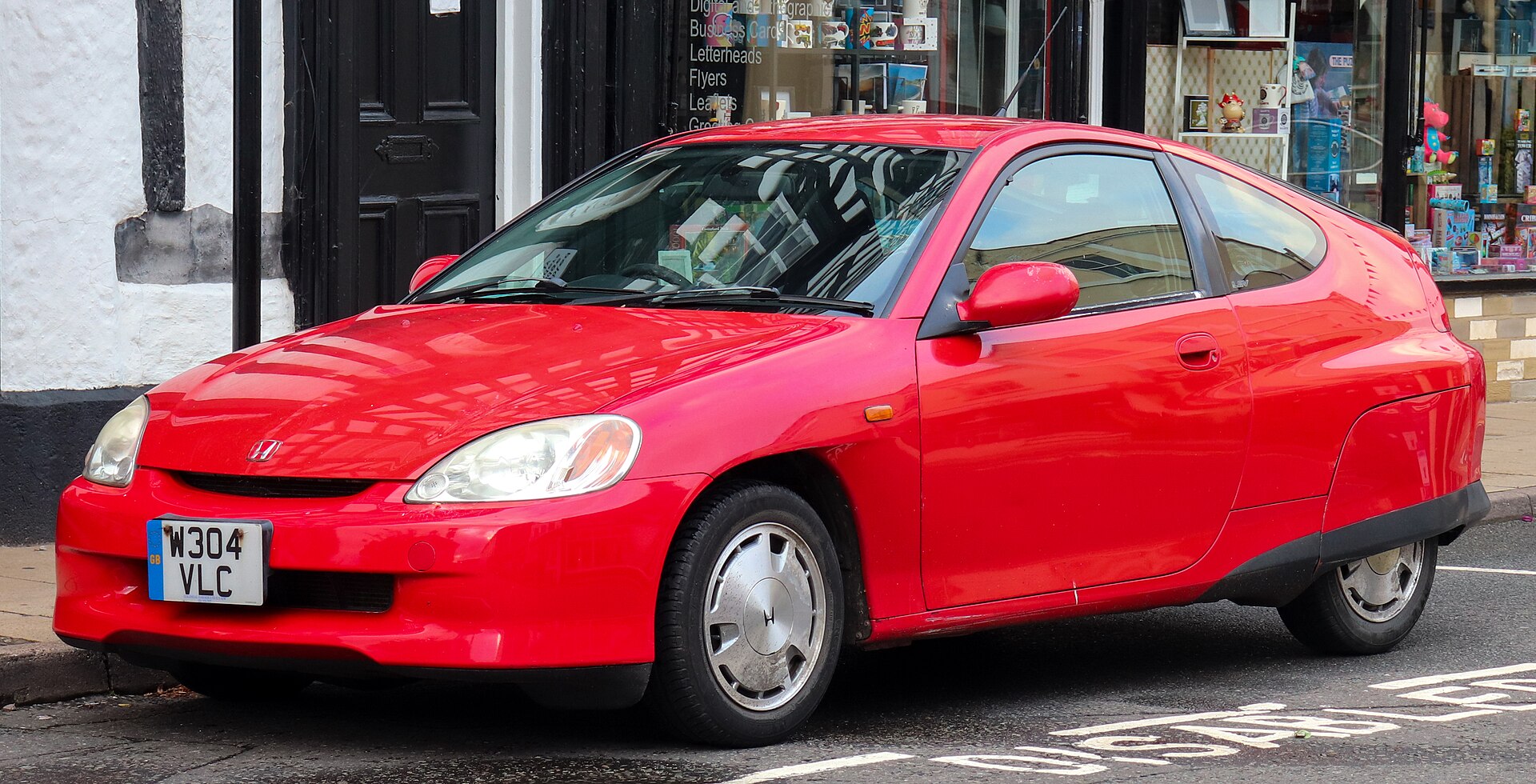


All generations by year: Insight IV (EV) (2026–now) · Insight III (ZE4) (2018–2022) · Insight II (ZE2) (2009–2014) · Insight I (ZE1) (1999–2006)
Which one is mine?
Pick the year of first registration to see which generation it is.
- Insight IV (EV) 2026–present
- ZE4 2018–2022
- ZE2 2009–2014
- ZE1 1999–2006
The Honda Insight is Honda's best-known hybrid and the company's first series-production hybrid car. The name means "insight" or "intuition". Previewed by the J-VX concept at the 1997 Tokyo motor show, the first Insight was launched in Japan in November 1999 as an unusual two-seater. The second generation, shown at the 2008 Paris motor show, went on sale in 2009 as a five-door liftback. The third, previewed in Detroit in January 2018 and launched as a production car in New York shortly afterwards, became a Civic-based saloon. In 2026 Honda revived the name for an electric crossover.
In short
- First generation (1999–2006): two-seat aluminium coupé with a 1.0-litre three-cylinder and a drag coefficient of just 0.25.
- Second generation (2009–2014): five-seat liftback with a 1.3-litre hybrid system and a CVT.
- Third generation (2018–2022): Civic-based saloon with a 1.5-litre Atkinson-cycle engine and two electric motors, 113 kW (153 PS) combined.
- Fourth generation (2026): electric crossover, limited to 3,000 units.
Honda Insight at a glance
Every Insight so far has been front-wheel drive. More Honda models are listed in our Honda catalogue.
Honda Insight generations
First generation: ZE1 (1999–2006)
The first Insight went on sale in Japan in November 1999 and in North America in December 1999. It was a two-door, two-seat liftback with a striking aerodynamic shape (drag coefficient 0.25) and a kerb weight of only 838–891 kg. A 1.0-litre three-cylinder petrol engine produced 50 kW (67 hp), or 54 kW (73 hp) with electric assist from a nickel-metal-hydride battery, through a five-speed manual or, from 2001, a CVT. It achieved an EPA combined rating of 53 mpg (about 4.4 l/100 km). Production ended in 2006.
Second generation: ZE2/ZE3 (2009–2014)
The second Insight was very different: a five-door, five-seat liftback that went on sale in Japan in February 2009 and in the United States in March 2009. The base hybrid system combined a 1.3-litre i-VTEC four-cylinder with an electric motor for 73 kW (98 hp); a Japan-only Exclusive version used a 1.5-litre engine. A CVT was fitted, and the battery was a nickel-metal-hydride pack. Production stopped after the 2014 model year because of weak demand.
Third generation: ZE4 (2018–2022)
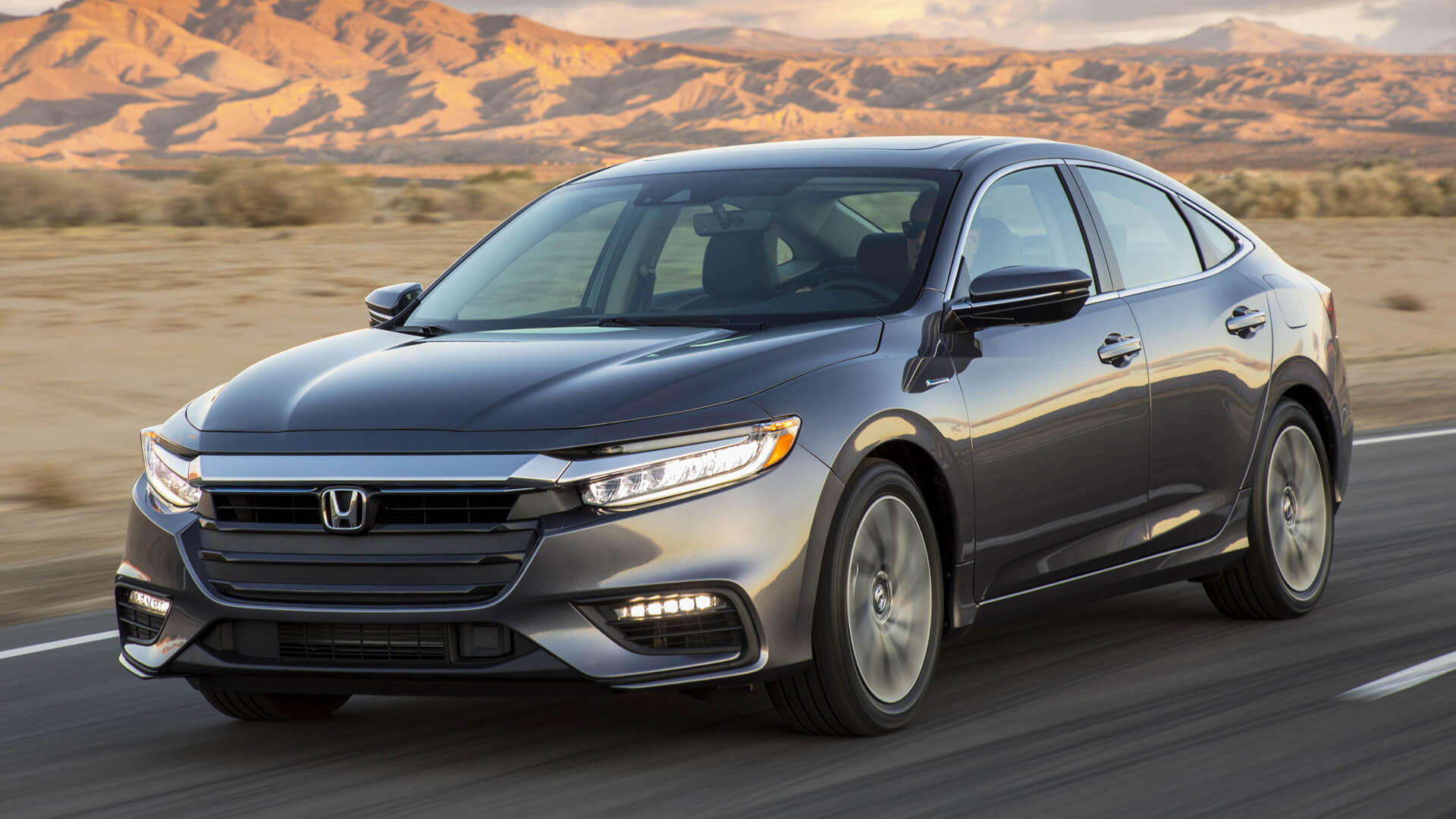
The third generation was previewed as a prototype at the Detroit motor show in January 2018 and went on sale in the United States in June 2018 as a 2019 model. It became a saloon closely resembling the Honda Civic, with a lot of wave-like surfacing, aggressive headlights and large air intakes.
Exterior
The low, sloping front improves visibility and aerodynamics. The bonnet has strong ridges at its sides, leading to a near-trapezoidal grille topped by a wide chrome bar that continues into the triangular headlights; LED headlights are available on every version. The lower bumper has central and side intakes, gloss-black inserts and fog lamps in side recesses. The profile is more restrained, with an arched window line, thin black pillars, chrome trim, rectangular mirrors with indicators, chrome door handles, flared arches and sculpted sills. Base versions have 16-inch alloys, with 17-inch alloys optional. Ground clearance is only 130 mm. The short boot lid carries triangular tail lights and chrome badges, and the bumper has fog lamps, a metal diffuser and a single exhaust hidden under the body.
Interior
The interior follows Honda's current style with good plastics and optional leather seats. A three-spoke multifunction steering wheel with chrome details and a flattened bottom faces instruments with an analogue speedometer on the right and a 7-inch display on the left. The driver's seat has eight-way electric adjustment and heating. Extra sound-deadening in the engine bay, wheel arches and floor makes the cabin much quieter than its predecessor's. An 8-inch touchscreen shows camera images, navigation and audio, with an eight-speaker system on some versions, above the climate controls. The tunnel has two USB ports, a wireless charging pad (too small for large phones), push-button gear selection, a cupholder and an armrest. LaneWatch shows the passenger-side blind spot on the central screen, which some drivers find distracting. The rear bench has a fold-down armrest and plenty of room even for tall passengers, but no USB ports. The boot holds 428 litres and the rear backrest folds 60/40, though a small step remains.
Hybrid system
The third Insight uses Honda's two-motor series-parallel hybrid system. A naturally aspirated 1.5-litre Atkinson-cycle four-cylinder (also used in the Honda Vezel) produces 76 kW (103 PS) and 134 Nm. One electric motor works as a generator driven by the engine, while the other drives the front wheels; the engine only connects directly to the wheels at higher speeds. Combined output is 113 kW (153 PS) and 267 Nm. The lithium-ion battery sits under the rear seat, and the car can travel only about 1.6 km on electricity alone. EPA ratings are 52 mpg combined (about 4.5 l/100 km) for the LX and EX, and 48 mpg for the Touring.
Chassis and safety
The platform uses plenty of high-strength steel and an aluminium bonnet. Suspension is independent, with MacPherson struts at the front and a multi-link rear. Steering has electric assistance, and the brakes are discs all round (ventilated at the front). Equipment includes ABS and ESP, LED headlights and running lights, lane departure warning, adaptive cruise control, traffic-sign and pedestrian recognition, parking assistance, a rear camera, tyre-pressure monitoring, a full set of airbags, blind-spot monitoring, hill-start assist and automatic emergency braking. Higher versions add an upgraded audio system, a rain sensor, a sunroof, electric front seats, perforated leather, dual-zone climate control and 17-inch wheels.
US production of the third Insight ended in June 2022, and it was replaced by the Civic Hybrid.
Fourth generation (2026)
Honda unveiled a fourth-generation Insight in March 2026 and launched it on 16 April 2026 as a battery-electric crossover, with sales limited to 3,000 units.
Key specifications by generation
| Parameter | 1st (ZE1) | 2nd (ZE2/ZE3) | 3rd (ZE4) | 4th |
|---|---|---|---|---|
| Years | 1999–2006 | 2009–2014 | 2018–2022 | 2026 |
| Body | 2-seat liftback | 5-door liftback | Saloon | Crossover |
| Powertrain | 1.0 I3 hybrid | 1.3 or 1.5 I4 hybrid | 1.5 I4 two-motor hybrid | Electric |
| Power | 54 kW / 73 hp (with assist) | 73 kW / 98 hp (1.3) | 113 kW / 153 PS (combined) | — |
| Gearbox | 5MT, later CVT | CVT | e-CVT | — |
Strengths and weaknesses
Owners of earlier Insights praise their economy, nimbleness, reliability, decent performance and pleasant interior, and find them easy to drive. Drawbacks include low ground clearance, electronic faults, difficult operation in cold weather, limited space and no spare wheel; the third generation also has a very short electric-only range. Rivals included the Toyota Prius, Hyundai Ioniq Hybrid, Ford Fusion Hybrid and, among plug-in cars, the Chevrolet Volt.
Honda Insight evolution in numbers
Did you know?
- The Honda Insight has been around for 27 years: 4 generations in our catalog since 1999.
- The longest-running generation is the Insight I (ZE1) (1999–2006): 7 years.
Image credits · Photos from Wikimedia Commons under free licences
- Honda Insight I (ZE1) · Photo: Vauxford / Wikimedia Commons, CC BY-SA 4.0
- Honda Insight II (ZE2) · Photo: IFCAR / Wikimedia Commons, Public domain
- Honda Insight III (ZE4) · Photo: Kevauto / Wikimedia Commons, CC BY-SA 4.0
Honda Insight in our rankings
- No. 90 of 912 · Longest-running car nameplates (27 years · top 11%)
- No. 63 of 305 · Oldest car models still on sale (27 years · top 22%)
- No. 118 of 345 · Cars with the most generations (4 generations · top 41%)
In production longer than 89% of ranked nameplates in the 1CARS catalog (No. 90 of 912).
FAQ
Was the Honda Insight Honda's first hybrid?
Yes, the 1999 Insight was Honda's first series-production hybrid.
What engine does the third-generation Honda Insight have?
A 1.5-litre Atkinson-cycle four-cylinder working with two electric motors, for 113 kW (153 PS) and 267 Nm combined.
When was the Honda Insight discontinued?
US production of the third generation ended in June 2022; Honda revived the name in 2026 for an electric crossover.
What was special about the first Honda Insight?
It was a lightweight two-seater weighing under 900 kg with a drag coefficient of 0.25.
Data sources
Data checked by an editor against the sources below.