 Porsche 918 Spyder
Specs, engines and history
Published Sources (1) Report an error
By Felix Hartmann, Automotive Technology & EV Contributor
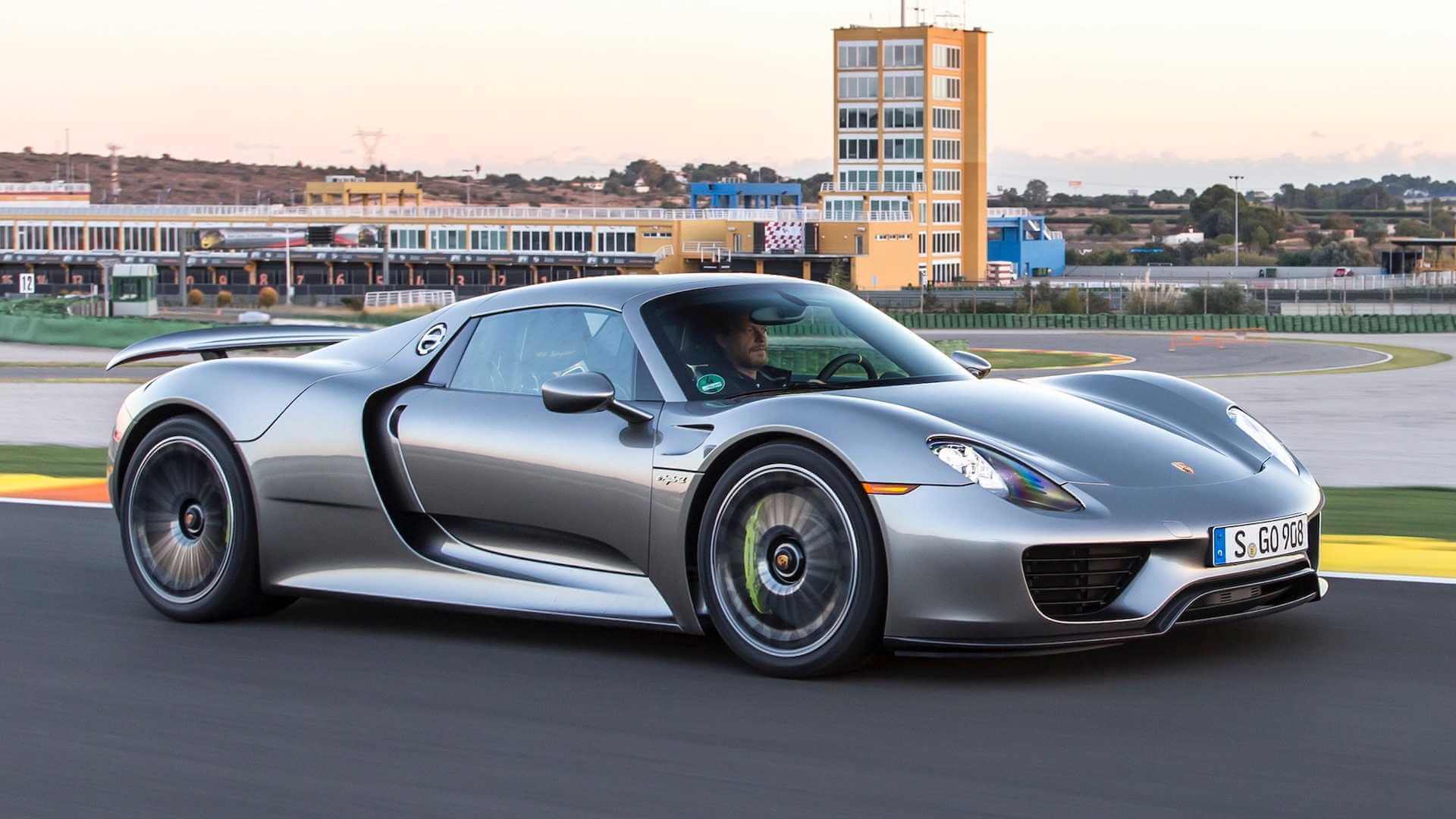
The Porsche 918 Spyder is a plug-in hybrid hypercar and one of the most remarkable Porsches ever built, combining enormous performance with low official fuel consumption. Its technology was tested on the Porsche 911 GT3 R Hybrid race car, and the concept was unveiled at the Geneva motor show in March 2010 - built from scratch in just five months. The production car made its debut at the Frankfurt motor show in September 2013, and exactly 918 were built at Zuffenhausen between September 2013 and June 2015. More than 1,000 pre-orders had been received by 2012, so not every interested buyer could get one.
In short
- 4.6-litre naturally aspirated V8 with 447 kW (608 PS) at 8,700 rpm, plus electric motors on both axles.
- Combined output 652 kW (887 PS) and 1,280 Nm; seven-speed PDK gearbox.
- 0–100 km/h in 2.6 seconds, 0–200 km/h in 7.2 seconds and a top speed of 345 km/h.
- In September 2013 it lapped the Nürburgring Nordschleife in 6:57, the first street-legal production car under seven minutes.
Porsche 918 Spyder at a glance
The 918 Spyder is a two-seat mid-engined roadster with a carbon-fibre-reinforced plastic monocoque, all-wheel drive through its front electric motor and a removable roof. More Porsche models, including the Carrera GT that preceded it as the brand's flagship supercar, are listed in our Porsche catalogue, and news about the car is collected under the Porsche 918 Spyder tag.
Exterior
The 918 Spyder is striking from every angle and instantly recognisable to enthusiasts, although few will ever see one on the road. LED headlights, a sculpted bonnet, an aerodynamic bumper with a lip and large intakes give it an aggressive face, and front aerodynamic elements add downforce. The side is dominated by large wheel arches and wheels, vents ahead of the front wheels, a deep channel along the lower door that guides air to the engine intake and a polished metal fuel-filler cap. Huge intakes at the corners of the bumper and further intakes behind the doors help keep the power on the road. The unusually designed mirrors stand out too.
The rear is spectacular. The exhaust pipes exit upwards just behind the seat headrests - an original solution that keeps them away from the heat-sensitive components below. Slim LED tail lights are linked by the spoiler with an integrated brake light. A large aerodynamic bumper with vents and an aluminium diffuser with another brake light complete the design. Where a normal car has a boot lid, the 918 has an adjustable rear wing for additional downforce.
Interior
The cabin feels nothing like a conventional interior and has much in common with the Carrera GT. The sports seats have pronounced side bolstering that holds occupants firmly in fast corners. Space is limited but not uncomfortable, and despite the low seating position visibility is good. A three-spoke sports steering wheel with many buttons and shift paddles faces three central dials for speed, engine revs and trip computer information. The compact gear selector has only P and D positions. A 7-inch infotainment and navigation screen sits at the top of the centre console, which flows down into the tunnel, where a second small display and touch-sensitive buttons control the climate and media systems. An 11-speaker audio system is available, and even more sporting seats were optional.
Hybrid drivetrain
| Component | Output |
|---|---|
| 4.6 V8, naturally aspirated | 447 kW / 608 PS at 8,700 rpm |
| Front electric motor | 95 kW / 129 PS |
| Rear electric motor | 115 kW / 156 PS |
| Combined | 652 kW / 887 PS, 1,280 Nm |
| Battery | 6.8 kWh lithium-ion |
The V8 is derived from the engine of the RS Spyder LMP2 race car. A seven-speed PDK dual-clutch gearbox drives the rear wheels, while the front motor has its own transmission and drives the front wheels, giving all-wheel drive. In pure electric mode the 918 can reach 150 km/h; its EPA-rated electric range is 19 km, and the official combined consumption quoted by Porsche is about 3 l/100 km.
Performance
| Parameter | Value |
|---|---|
| 0–100 km/h | 2.6 s |
| 0–200 km/h | 7.2 s |
| Top speed | 345 km/h |
| Electric top speed | 150 km/h |
| Kerb weight | 1,634–1,720 kg |
| Nürburgring Nordschleife | 6:57 (September 2013) |
Chassis
The carbon monocoque gives a very low centre of gravity, only slightly above the wheel centres, which helps the 918 corner exceptionally well. Race-derived rear-axle steering uses actuators in the multi-link rear suspension to steer the rear wheels by up to 3 degrees depending on speed and front steering angle, controlled by its own electronic unit.
The optional Weissach package added magnesium wheels, an extended rear diffuser, an Alcantara interior and additional carbon-fibre parts to reduce weight.
Price
At launch the 918 Spyder cost about €781,000 in Europe before options such as the Weissach package.
Strengths and weaknesses
The 918 Spyder's strengths are its extraordinary acceleration, the instant response that the electric motors add to the high-revving V8, all-wheel-drive traction, a chassis that makes huge performance usable, and the ability to drive silently on electric power in town. Its official consumption figure is remarkable for a car of this performance. Its weaknesses are the price, the tiny production run that makes it almost impossible to buy, limited luggage space and the weight of the hybrid system compared with a pure combustion supercar.
The 918 Spyder's main hybrid hypercar rivals were the Ferrari LaFerrari and McLaren P1; buyers also compared it with the Bugatti Veyron and Lamborghini Aventador.
Porsche 918 Spyder in our rankings
In production longer than 4% of ranked nameplates in the 1CARS catalog (No. 846 of 912).
FAQ
How many Porsche 918 Spyders were built?
Exactly 918, between September 2013 and June 2015.
How powerful is the Porsche 918 Spyder?
Its V8 and two electric motors together produce 652 kW (887 PS) and 1,280 Nm.
How fast is the Porsche 918 Spyder?
It reaches 100 km/h in 2.6 seconds, 200 km/h in 7.2 seconds and a top speed of 345 km/h.
What is the Porsche 918 Spyder's Nürburgring time?
6 minutes 57 seconds, set in September 2013 - the first sub-seven-minute lap for a street-legal production car.
Data sources
Data checked by an editor against the sources below.