
Fiat Doblo vs Citroen Berlingo: from rivals to twins
Updated Report an error By Sarah Whitmore

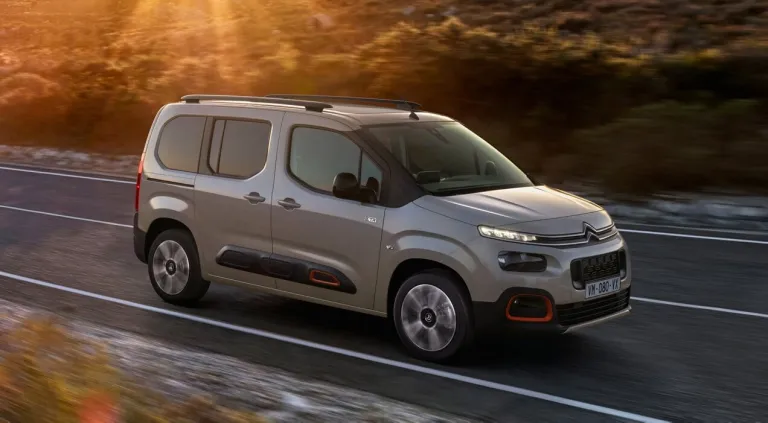
Citroen · 2008–2018
Berlingo B9
- Power
- 66 kW90 PS
- 0–100 km/h
- 15.5 s
- Top speed
- 177 km/h
- Kerb mass
- 1,395 kg

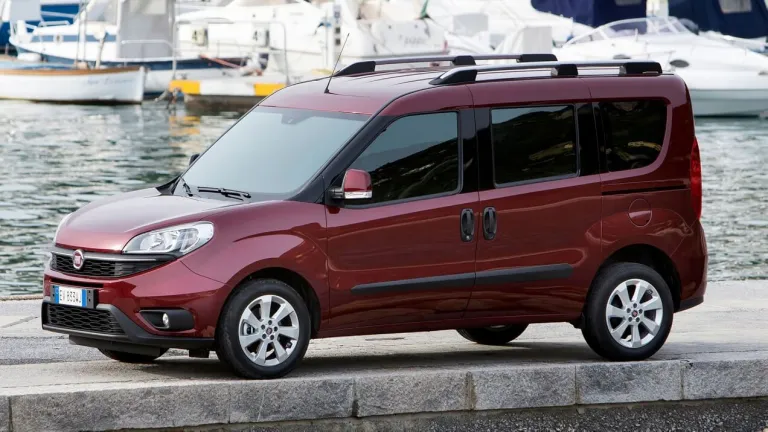
Fiat · 2010–2022
Doblo II (263)
- Power
- 70 kW95 PS
- 0–100 km/h
- 13.9 s
- Top speed
- 100 km/h
- Kerb mass
- 1,580 kg
At a glance
Who suits what, worked out from the catalog figures of the versions above.
Categories won: Berlingo B9 0 Doblo II (263) 1
- Family Doblo II (263) Boot: 790 l vs 675 l
- Performance Too close to call Power per tonne: 47 kW/t vs 44 kW/t
Verdict Opinion
Before 2022 these were genuine rivals with different engineering, and the Doblo stood out for its range of diesels, CNG versions, a factory pickup and two body lengths. Since 2022 the two are closely related products on one platform, so the choice is about brand, equipment, price and the dealer network rather than fundamental engineering.
For used buyers, the generation and the safety rating of the specific car matter more than the badge.
— Sarah Whitmore
The Fiat Doblo and the Citroen Berlingo compete in the class of high-roof, van-based family cars and light vans, and for two decades they were built by rival groups to different designs. The first Doblo, unveiled at the Paris Motor Show in October 2000, was based on the Fiat Strada and Palio and shared nothing with the Berlingo or its Peugeot Partner sibling.
That changed in 2022. The third-generation Doblo (K9) uses the EMP2 platform shared with the Citroen Berlingo III, the Peugeot Rifter and Partner, the Opel Combo E and the Toyota Proace City, and it is built in Vigo, Spain. So the right comparison depends on the year of the car you are looking at.
Engineering, design and everyday use
Engineering
The first Doblo (2000 to 2010) used a rigid rear axle on leaf springs and engines from a 1.2 petrol with 48 kW (65 PS) to a 1.9 JTD diesel with up to 88 kW (120 PS), plus a 1.6 CNG version. The second generation (2010 to 2022) moved to an independent bi-link rear suspension and offered 1.3, 1.6 and 2.0 Multijet diesels with up to 99 kW (135 PS), a 1.4 petrol, a 1.4 T-Jet CNG version and an electric conversion.
The current Doblo, as an EMP2 twin of the Berlingo, uses a 1.2 PureTech petrol with 81 kW (110 PS), 1.5 BlueHDi diesels with 74 to 96 kW (100 to 130 PS) and an electric E-Doblo with 100 kW (136 PS) and a 50 kWh battery. All Doblos are front-wheel drive.
Size and practicality
The second-generation Doblo was offered in short and long versions: the short car is 4,406 mm (173.5 in) long on a 2,755 mm (108.5 in) wheelbase with 790 L (27.9 cu ft) of luggage space, and the long Kombi is 4,756 mm (187.2 in) with up to 4,000 L. Seven seats were available. The current van version is 4,403 mm (173.3 in) long on a 2,785 mm (109.6 in) wheelbase, with 3,300 L of load volume.
Safety
Euro NCAP ratings must be read by generation. The first Doblo scored three stars in 2004 and the second three stars in 2017. In May 2025 Euro NCAP tested the electric Citroen e-Berlingo under its commercial-van protocol and stated that the result, a four-star level with a Gold medal, applies to all third-generation K9 Doblos.
Race Stats side by side
Each figure is a 0–100 score from the catalog numbers, the same as on the 1CARS Race cards. PI is the overall performance index (100–999) and its class D–S.
| Stat | Berlingo B9 | Doblo II (263) |
|---|---|---|
| PI | D · 379 | D · 322 |
| Power | 27 | 25 |
| Grip | 39 | 31 |
| Handling | 50 | 44 |
| Top speed | 30 | 1 |
| Launch | 12 | 17 |
Grip and handling are estimates from drive type, weight, height and body (hover a figure to see where it comes from). 1CARS Race
Who wins a race?
Quarter-mile (402 m) drag from a standing start, dry road, no reaction time — the 1CARS Race physics on the catalog figures of these versions.
- 1 Doblo II (263)Doblo II (263) · 1.4 FIRE (1,368 cm³) · petrol · 70 kW (95 PS) 19.31 sat 100 km/h
- 2 Berlingo B9Berlingo B9 · 66 kW (90 PS) 19.57 sat 110 km/h · +0.26 s
Size and weight
| Berlingo B9 | Doblo II (263) | |
|---|---|---|
| Wheelbase | 2,728 mm107.4 in | 3,105 mm122.2 in +377 mm +14.8 in +13.8% |
| Kerb weight | 1,395 kg3,075 lb | 1,580 kg3,483 lb +185 kg +408 lb +13.3% |
| Boot | 675 l23.8 cu ft | 790 l27.9 cu ft +115 l +4.1 cu ft +17.0% |
| Fits a standard garage? | Yes | No data |
Difference vs Berlingo B9 (±). Garage check: a standard single garage takes a car up to about 5.0 m (16 ft 5 in) long and 1.9 m (6 ft 3 in) wide (width as listed in the catalog; some makers include the mirrors). Leave about 0.6 m (2 ft) to open the doors.
Full specifications
| Citroen Berlingo | Fiat Doblo | |
|---|---|---|
| General | ||
| Version | Berlingo B9 · 66 kW (90 PS) | Doblo II (263) · 1.4 FIRE (1,368 cm³) · petrol · 70 kW (95 PS) |
| Production years | 2008–2018 | 2010–2022 |
| Body | Minivan / MPV, Van | Pickup, Minivan / MPV |
| Class | Van | MPV / minivan |
| Country | France | Italy |
| Performance | ||
| Power Why it matters: More power means stronger acceleration and easier overtaking, especially with a full load. | 66 kW (90 PS) 89 hp | 70 kW (95 PS) 94 hp Better |
| Power, all versions | 51–96 kW (69–131 PS) 68–129 hp | 48–100 kW (65–136 PS) 64–134 hp |
| Torque Why it matters: Torque is the pulling force you feel when accelerating from low revs, towing or climbing hills. | 230 Nm 170 lb-ft Better | 127 Nm 94 lb-ft |
| 0–100 km/h Why it matters: A shorter 0–100 km/h time means quicker getaways and safer merging onto fast roads. | 15.5 s | 13.9 s Better |
| Top speed Why it matters: Top speed hints at how relaxed the car is at motorway speeds, even if you never reach it. | 177 km/h 110 mph Better | 100 km/h 62 mph |
| Power per tonne | 47 kW/t 58 hp/ton calculated Better | 44 kW/t 54 hp/ton calculated |
| Engine and transmission | ||
| Fuel | No data | Petrol |
| Engine | No data | 1,400 cc 1.4 l |
| Drive | Front-wheel drive | Front-wheel drive |
| Dimensions and weight | ||
| Length | 4,380 mm 172.4 in | No data |
| Width | 1,810 mm 71.3 in | No data |
| Height | 1,801 mm 70.9 in | No data |
| Wheelbase | 2,728 mm 107.4 in | 3,105 mm 122.2 in |
| Kerb weight Why it matters: A lighter car is usually more agile and uses less energy. | 1,395 kg 3,075 lb Better | 1,580 kg 3,483 lb |
| Boot Why it matters: A bigger boot fits more luggage, shopping or a pram. | 675 l 23.8 cu ft | 790 l 27.9 cu ft Better |
| Economy and running costs | ||
| Fuel consumption Why it matters: Lower consumption cuts running costs and CO₂ emissions on every trip. | 8.4 l/100 km 28.0 mpg US | No data |
| Safety | ||
| Euro NCAP | ★★★☆☆ (2014) | ★★★☆☆ (2017) |
These cars do not differ in the data we have.
Equal rows hidden (1): Drive.
Better marks the stronger figure — only for measurable specs (power, torque, 0–100 km/h, consumption, boot, weight).
In plain words
Fiat Doblo is quicker: 0–100 km/h in 13.9 s against 15.5 s for Citroen Berlingo. Citroen Berlingo is lighter by 185 kg (1,395 kg vs 1,580 kg). Fiat Doblo has the bigger boot: 790 l against 675 l. Citroen Berlingo is the older design (from 1996); Fiat Doblo arrived in 2000. On the catalog figures, the Fiat Doblo is the pick for family.
Which one to choose
Choose the Fiat Doblo if you want a second-generation car with a long body or seven seats, a CNG version, or the current EMP2 model with Fiat styling and the electric E-Doblo option.
Choose the Citroen Berlingo if you prefer Citroen's version of the shared EMP2 design. Because the current Doblo is its twin, compare equipment, warranty terms and prices on the specific cars you find.
Frequently asked questions
Is the Fiat Doblo the same as the Citroen Berlingo?
Only from the third generation (K9, 2022), which shares the EMP2 platform with the Berlingo III. The first two Doblo generations were Fiat designs that shared nothing with the Berlingo.
How safe is the current Doblo?
Euro NCAP tested the electric Citroen e-Berlingo in 2025 under its commercial-van protocol and stated that the four-star-level Gold result applies to all third-generation Doblos.
Is there an electric Doblo?
Yes. The E-Doblo has 100 kW (136 PS) and a 50 kWh battery. Fiat also offered electric versions of the second generation.