
BYD Sealion 7 vs Tesla Model Y: electric SUVs
Updated Report an error By Felix Hartmann
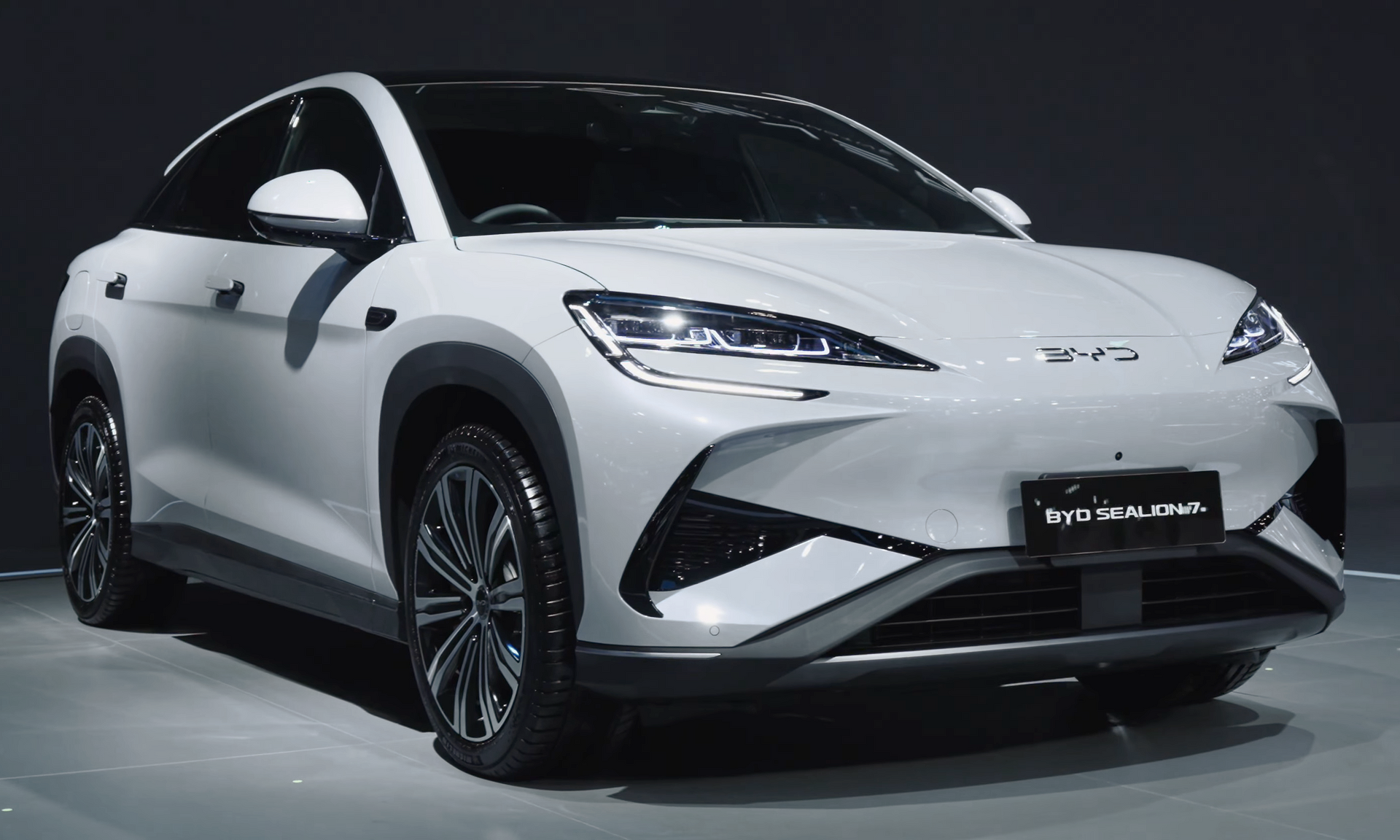
BYD · 2024–present
Sealion VII
- Power
- 390 kW530 PS
- 0–100 km/h
- 4.5 s
- Top speed
- —
- Kerb mass
- 2,496 kg
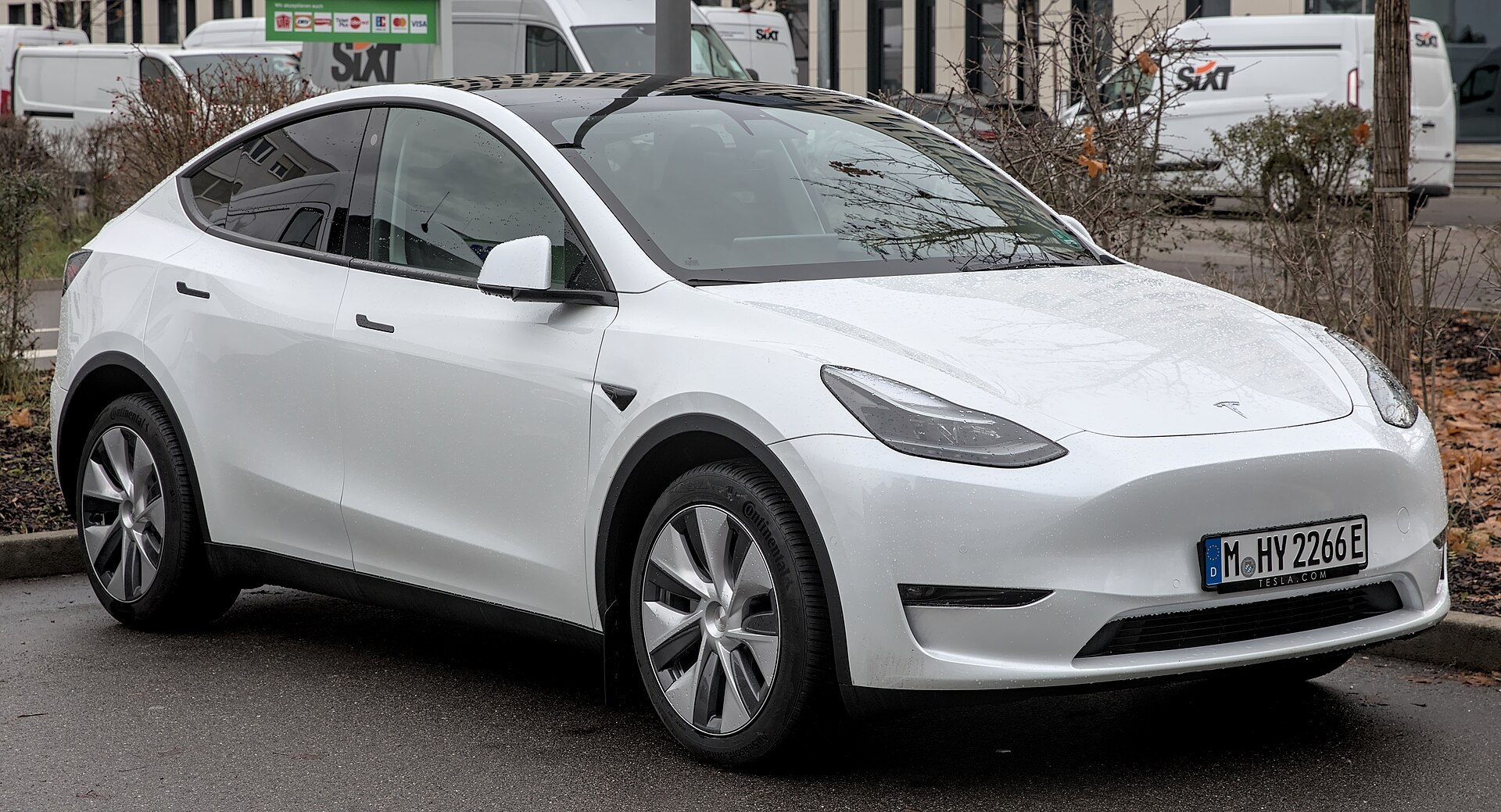
Tesla · 2020–present
Model Y I
- Power
- 324 kW441 PS
- 0–100 km/h
- —
- Top speed
- 217 km/h
- Kerb mass
- —
At a glance
Who suits what, worked out from the catalog figures of the versions above.
Categories won: Sealion VII 1 Model Y I 0
- City Too close to call Length: 4,830 mm vs 4,751 mm
- Off-road Sealion VII Drive and body: All-wheel drive · SUV vs All-wheel drive · SUV
Verdict Opinion
The Model Y remains the more efficient long-distance car. It covers about 100 km more on the WLTP cycle in Long Range form, charges at up to 250 kW and scored higher than the Sealion 7 in three of Euro NCAP's four areas in 2025.
The Sealion 7 offers more size and more power. The AWD version has 390 kW and 690 Nm and beats the Model Y Long Range to 100 km/h, the body is 40 mm longer on a 40 mm longer wheelbase, and it uses BYD's own LFP Blade battery. Child occupant protection is level at 93%.
— Felix Hartmann
The BYD Sealion 7 was launched in Europe as a direct challenger to the Tesla Model Y, the car that in 2023 became the first electric vehicle to be the world's best-selling car. BYD launched the Sealion 7 at the Beijing Auto Show in April 2024 and introduced it in Europe at the Paris Motor Show on 14 October 2024. It sits on BYD's e-Platform 3.0 with a lithium iron phosphate Blade battery built into the body structure. Tesla presented the Model Y in March 2019, builds European cars at Giga Berlin-Brandenburg since March 2022 and launched the refreshed Juniper version on 10 January 2025.
In short: the Sealion 7 is larger and more powerful in its all-wheel-drive form. The Model Y goes further on a charge and charges faster. Both are in our catalogue: BYD Sealion 7 and Tesla Model Y.
BYD Sealion 7 vs Tesla Model Y: power, range and space
Power and acceleration
The rear-wheel-drive Sealion 7 has 230 kW and 380 Nm with an 82.56 kWh battery and reaches 100 km/h in 6.7 seconds. The European all-wheel-drive version uses a 91.3 kWh battery and two motors with 390 kW and 690 Nm, and needs 4.5 seconds. The Model Y Long Range AWD needs 4.8 seconds and reaches 201 km/h; the Model Y Performance, launched in Europe in August 2025, has 340 kW, 3.5 seconds and 250 km/h.
Range and charging
On the WLTP cycle the Sealion 7 covers 482 km as the RWD and 502 km as the 91.3 kWh AWD. The Model Y Long Range AWD is rated at 600 km and the Performance at 580 km. The top European Sealion 7 charges at up to 230 kW on DC; the standard export model is limited to 150 kW. Most Model Y versions charge at up to 250 kW, and the Model Y Standard at 225 kW.
- Sealion 7 RWD: 230 kW, 82.56 kWh, 482 km WLTP
- Sealion 7 AWD: 390 kW, 91.3 kWh, 502 km WLTP, up to 230 kW DC
- Model Y Long Range AWD: 600 km WLTP, up to 250 kW DC
- Model Y Performance: 340 kW, 580 km WLTP
Battery chemistry
BYD uses its own LFP Blade cells with cell-to-body construction, in which the battery forms part of the floor structure, as in the BYD Seal. The Model Y Performance uses an LG pack with roughly 82–84 kWh usable.
Size and boot
The Sealion 7 is 4,830 mm long, 1,925 mm wide and 1,620 mm tall on a 2,930 mm wheelbase. The Model Y measures 4,790 mm since the refresh, 1,920 mm wide and 1,624 mm tall on a 2,890 mm wheelbase. The Sealion 7's boot holds 520 litres, 1,789 litres with the rear seats folded and a 58-litre front boot. Wikipedia gives the Model Y a total cargo volume of 2,158 litres.
Euro NCAP
Both were tested in 2025. The Sealion 7 Comfort scored 87% for adult occupants, 93% for children, 76% for vulnerable road users and 79% for safety assist. The refreshed Model Y scored 91%, 93%, 86% and 92% and received five stars.
Size and weight
Side view to scale, all cars from the front bumper.
| Sealion VII | Model Y I | |
|---|---|---|
| Length | 4,830 mm190.2 in | 4,751 mm187.0 in −79 mm −3.1 in −1.6% |
| Width | 1,925 mm75.8 in | 1,920 mm75.6 in −5 mm −0.2 in −0.3% |
| Height | 1,620 mm63.8 in | 1,624 mm63.9 in +4 mm +0.2 in +0.2% |
| Wheelbase | 2,930 mm115.4 in | 2,890 mm113.8 in −40 mm −1.6 in −1.4% |
| Fits a standard garage? | Too wide | Too wide |
Difference vs Sealion VII (±). Garage check: a standard single garage takes a car up to about 5.0 m (16 ft 5 in) long and 1.9 m (6 ft 3 in) wide (width as listed in the catalog; some makers include the mirrors). Leave about 0.6 m (2 ft) to open the doors.
Full specifications
| BYD Sealion | Tesla Model Y | |
|---|---|---|
| General | ||
| Version | 91.3 kWh AWD (Excellence) · electric · 390 kW (530 PS) | Long Range AWD · electric · 324 kW (441 PS) |
| Production years | 2024–present | 2020–present |
| Body | SUV | SUV |
| Class | No data | SUV / crossover |
| Country | China | United States |
| Performance | ||
| Power Why it matters: More power means stronger acceleration and easier overtaking, especially with a full load. | 390 kW (530 PS) 523 hp Better | 324 kW (441 PS) 434 hp |
| Power, all versions | 100–390 kW (136–530 PS) 134–523 hp | 324 kW (441 PS) 434 hp |
| Torque Why it matters: Torque is the pulling force you feel when accelerating from low revs, towing or climbing hills. | 690 Nm 509 lb-ft Better | 510 Nm 376 lb-ft |
| 0–100 km/h Why it matters: A shorter 0–100 km/h time means quicker getaways and safer merging onto fast roads. | 4.5 s | No data |
| Top speed Why it matters: Top speed hints at how relaxed the car is at motorway speeds, even if you never reach it. | No data | 217 km/h 135 mph |
| Power per tonne | 156 kW/t 190 hp/ton calculated | No data |
| Engine and transmission | ||
| Fuel | Electric | Electric |
| Gearbox | 1-speed single-speed | No data |
| Drive | All-wheel drive | All-wheel drive |
| Dimensions and weight | ||
| Length | 4,830 mm 190.2 in | 4,751 mm 187.0 in |
| Width | 1,925 mm 75.8 in | 1,920 mm 75.6 in |
| Height | 1,620 mm 63.8 in | 1,624 mm 63.9 in |
| Wheelbase | 2,930 mm 115.4 in | 2,890 mm 113.8 in |
| Kerb weight Why it matters: A lighter car is usually more agile and uses less energy. | 2,496 kg 5,503 lb | No data |
| Economy and running costs | ||
| Fuel cost per year | €980/year estimated | No data |
| Electric | ||
| Battery Why it matters: A bigger battery usually gives more range, but takes longer to charge fully. | 91 kWh | No data |
| Electric range Why it matters: A longer range means fewer charging stops on long journeys. | 502 km 312 mi | No data |
| Energy use | 21.8 kWh/100 km | No data |
| Safety | ||
| Euro NCAP | No data | ★★★★★ (2025) |
These cars do not differ in the data we have.
Equal rows hidden (3): Body, Fuel, Drive.
Better marks the stronger figure — only for measurable specs (power, torque, 0–100 km/h, consumption, boot, weight).
Estimated at 15,000 km a year with fuel at €0.30/kWh electricity.
In plain words
BYD Sealion has more power: 390 kW (530 PS) against 324 kW (441 PS) for Tesla Model Y. BYD Sealion is 79 mm longer than Tesla Model Y (4,830 mm vs 4,751 mm). Tesla Model Y is the older design (from 2020); BYD Sealion arrived in 2024. On the catalog figures, the BYD Sealion is the pick for off-road. Our catalog has no 0–100 km/h for the Tesla Model Y yet, so some checks above leave it out.
Which one to choose
Choose the BYD Sealion 7 if you want the most power for the class, a large wheelbase for rear-seat room or a car with an LFP battery.
Choose the Tesla Model Y if you drive long distances, want the longest WLTP range and the fastest charging, or value the higher Euro NCAP scores.
The Model Y also meets its saloon sibling in Tesla Model 3 vs Model Y, and Tesla's large saloon faces Porsche in Porsche Taycan vs Tesla Model S.
Frequently asked questions
Which has the longer range, the Sealion 7 or the Model Y?
The Model Y. The Long Range AWD is rated at 600 km (WLTP). The longest-range Sealion 7 is the 91.3 kWh AWD with 502 km.
Which is more powerful?
The Sealion 7 AWD, with 390 kW and 690 Nm. The Model Y Performance has 340 kW; the Sealion reaches 100 km/h in 4.5 seconds against 3.5 for the Model Y Performance and 4.8 for the Long Range.
What battery does the Sealion 7 use?
BYD's own lithium iron phosphate (LFP) Blade battery, 82.56 kWh in the RWD and 91.3 kWh in the European AWD, integrated with cell-to-body construction.
Which is bigger?
The Sealion 7: 4,830 mm long on a 2,930 mm wheelbase, against 4,790 mm and 2,890 mm for the refreshed Model Y.
How fast do they charge?
The top European Sealion 7 accepts up to 230 kW on DC (150 kW for the standard export model). Most Model Y versions charge at up to 250 kW.