
 Lincoln Town Car
All generations, specs and history
Published Sources (3) Report an error
By Felix Hartmann, Automotive Technology & EV Contributor
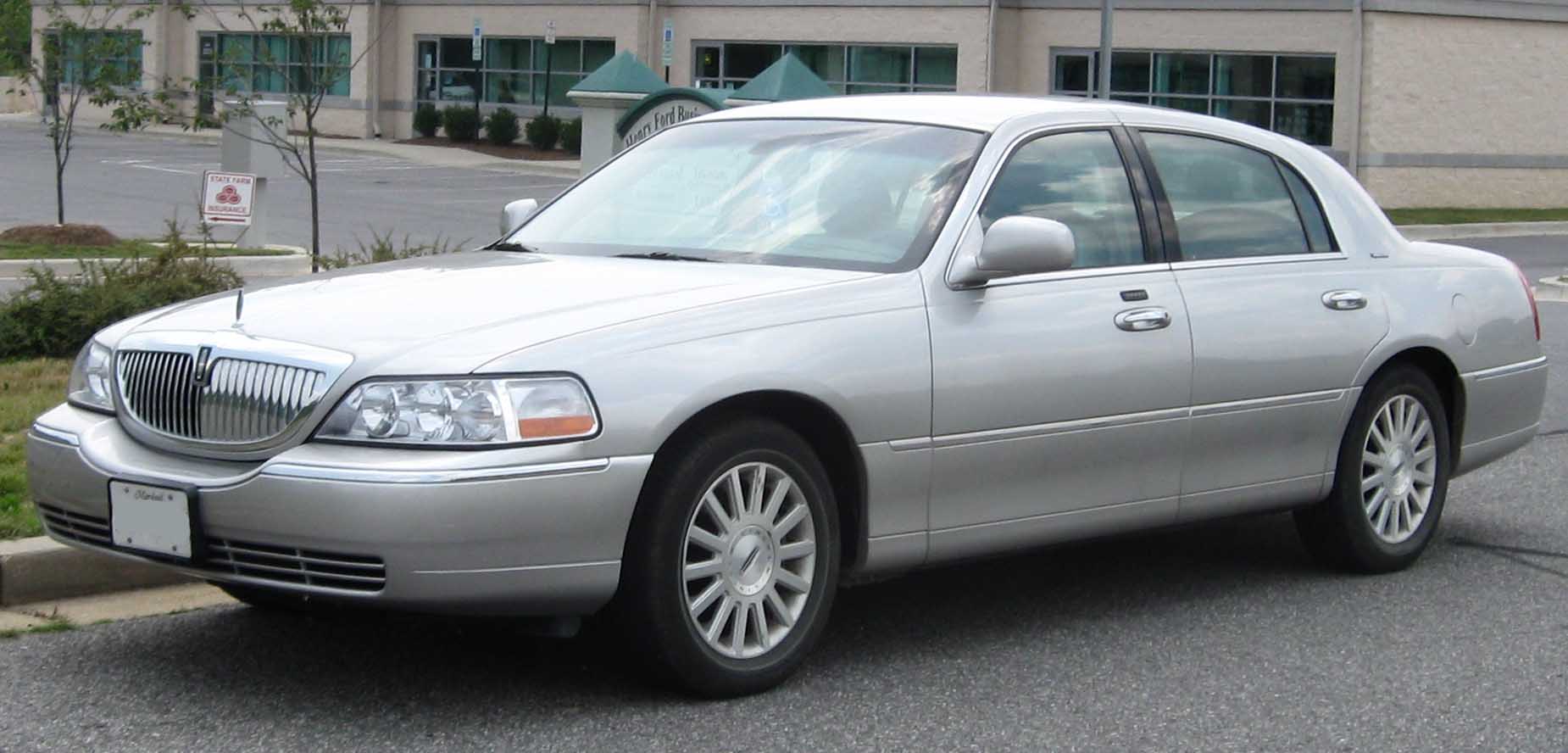
- Built
- 1981–2011
- Generations
- 3
- Top power
- 178 kW (242 PS)
Timeline
Town Car generations
Click a generation for its own page

- Town Car I 1981–1989 · Sedan · 97–119 kW (132–162 PS)
- Town Car FN36 1990–1997 · Sedan · 112–157 kW (152–213 PS)
- Town Car FN145 1998–2011 · Sedan · 153–178 kW (208–242 PS)
Newest first · 3 generations since 1981
- 1998 FN145 1998–2011 · Sedan · 153–178 kW (208–242 PS)
- 1990 FN36 1990–1997 · Sedan · 112–157 kW (152–213 PS)
-
1981
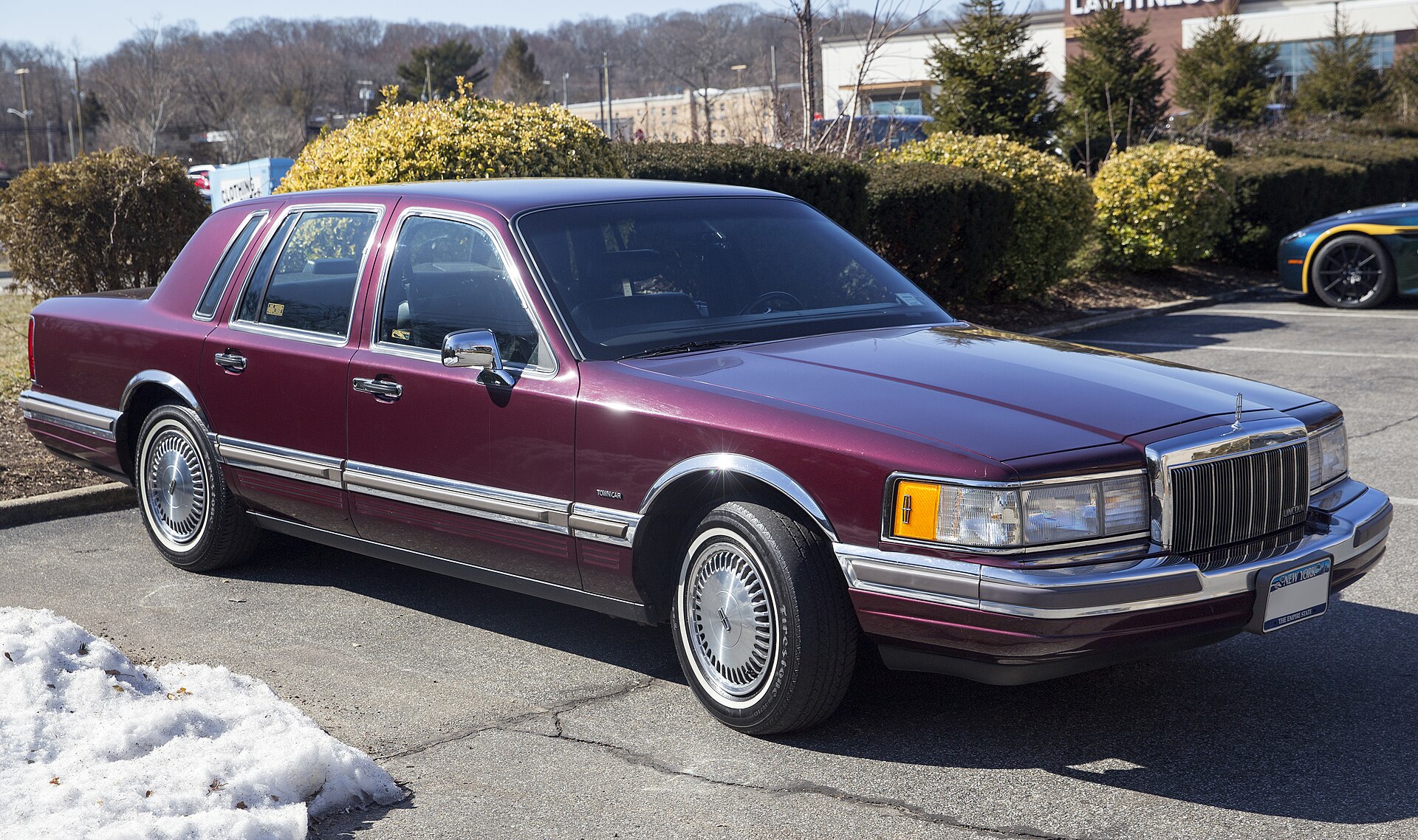
All generations by year: Town Car FN145 (1998–2011) · Town Car FN36 (1990–1997) · Town Car I (1981–1989)
Which one is mine?
Pick the year of first registration to see which generation it is.
- FN145 1998–2011
- FN36 1990–1997
- Town Car I 1981–1989
The Lincoln Town Car is the full-size, rear-wheel-drive luxury saloon that Lincoln sold for the 1981 to 2011 model years on Ford's body-on-frame Panther platform. Every one of its three generations used a V8: first the 5.0-litre (302 cu in) pushrod engine, then from 1991 the 4.6-litre Modular V8. It became the standard chauffeur and limousine car of the US and Canada.
In short
- Three generations: 1981-1989, 1990-1997 and 1998-2011; 853,825 first-generation and 904,762 second-generation cars were built.
- Built at Wixom, Michigan, until the 2007 model year, then at St. Thomas Assembly in Ontario from January 2008 to 29 August 2011.
- Final cars had a 178 kW (239 hp) 4.6 V8 with flex-fuel capability, rated by the EPA at 16 mpg city and 24 mpg highway.
- Prices new ran from USD 25,200 for a 1989 base car to USD 52,895 for a 2011 Signature L.
Size at a glance
| Dimensions | Lincoln Town Car FN36 |
|---|---|
| Length | 5,560 mm218.9 in |
| Width | 1,948 mm76.7 in |
| Height | 1,445 mm56.9 in |
| Wheelbase | 2,982 mm117.4 in |
| Boot | 631 L22.3 cu ft |
Running cost
Fuel · Town Car FN145 4.6 V8 (239 hp)
about 3,250 EUR fuel a year at 15,000 km
12.4 l/100 km · petrol at 1.75 EUR/l · change mileage, fuel price or version
Specs by version
Engines
| Version | Engine | Power | Torque | Gearbox | Drive | Production years |
|---|---|---|---|---|---|---|
| Town Car I · 5.0 V8 | 4.9 l · 8 cyl · Petrol 4,949 cc | 97 kW 132 PS130 hp | 312 Nm230 lb-ft | 4-sp Automatic | Rear-wheel drive | 1981 |
| Town Car I · 5.0 V8 SEFI | 4.9 l · 8 cyl · Petrol 4,949 cc | 119 kW 162 PS160 hp | 380 Nm280 lb-ft | 4-sp Automatic | Rear-wheel drive | 1986–1989 |
| FN36 · 1990–1997 | ||||||
| FN36 · 4.6 V8 | 4.6 l · 8 cyl · Petrol 4,605 cc | 157 kW 213 PS211 hp | 373 Nm275 lb-ft | 4-sp Automatic | Rear-wheel drive | 1991–1997 |
| FN145 · 1998–2011 | ||||||
| FN145 · 4.6 V8 (220 hp) | 4.6 l · 8 cyl · Petrol 4,605 cc | 164 kW 223 PS220 hp | 393 Nm290 lb-ft | 4-sp Automatic | Rear-wheel drive | 1998–2000 |
| FN145 · 4.6 V8 (239 hp) | 4.6 l · 8 cyl · Petrol 4,605 cc | 178 kW 242 PS239 hp | 389 Nm287 lb-ft | 4-sp Automatic | Rear-wheel drive | 2003–2011 |
| FN145 · 4.6 V8 L (long wheelbase) | 4.6 l · 8 cyl · Petrol 4,605 cc | 178 kW 242 PS239 hp | 389 Nm287 lb-ft | 4-sp Automatic | Rear-wheel drive | 2003–2011 |
Performance
Show all 2 versions
| Version | Fuel consumption |
|---|---|
| FN145 · 1998–2011 | |
| FN145 · 4.6 V8 (239 hp) | 12.4 l/100 km19.0 mpg US · 22.8 mpg UK |
| FN145 · 4.6 V8 L (long wheelbase) | 12.4 l/100 km19.0 mpg US · 22.8 mpg UK |
Dimensions and weight
Show all 4 versions
| Version | Length | Width | Wheelbase | Boot |
|---|---|---|---|---|
| Town Car I · 5.0 V8 SEFI | - | - | 2,979 mm117.3 in | - |
| FN36 · 1990–1997 | ||||
| FN36 · 4.6 V8 | 5,560 mm218.9 in | 1,948 mm76.7 in | 2,982 mm117.4 in | 631 l22.3 cu ft |
| FN145 · 1998–2011 | ||||
| FN145 · 4.6 V8 (239 hp) | 5,471 mm215.4 in | 1,994 mm78.5 in | - | 595 l21.0 cu ft |
| FN145 · 4.6 V8 L (long wheelbase) | 5,624 mm221.4 in | 1,994 mm78.5 in | - | - |
Verified Manufacturer and type-approval data from our catalog · Sources and methodology
Lincoln Town Car at a glance
| Specification | Lincoln Town Car |
|---|---|
| Model years | 1981-2011 (production 1980 to 29 August 2011) |
| Body | four-door saloon; two-door saloon in 1981 only; long-wheelbase Town Car L from 2001 |
| Platform | Ford Panther, body-on-frame, rear-wheel drive |
| Plants | Wixom Assembly, Michigan (to 2007); St. Thomas Assembly, Ontario (2008-2011) |
| Engines | 5.0 L (302 cu in) OHV V8 (1981-1990); 4.6 L SOHC Modular V8 (1991-2011) |
| Power | 97 kW (130 hp, 1981) to 178 kW (239 hp, 2003-2011) |
| Gearboxes | four-speed automatic only: AOD, AOD-E, 4R70W, 4R70E, 4R75E |
| Length | 5,560 mm (218.9 in) in 1990-1997; 5,471 mm (215.4 in), L 5,624 mm (221.4 in) in 2003-2011 |
| Seats and boot | six seats; 631 l (22.3 cu ft) in the 1990s, 595 l (21 cu ft) in 2011 |
| EPA economy | 16 mpg city, 24 mpg highway, 19 combined (2011): 14.7, 9.8 and 12.4 L/100 km |
| Price new | USD 25,200 (1989 base) to USD 52,895 (2011 Signature L) |
Lincoln Town Car generations from 1981 to 2011
Before 1981 the Town Car name sat on top versions of the Lincoln Continental. Lincoln used it for 214 formal Continental Town Cars in 1959-1960 and again as a Continental trim package through the 1970s. For 1981 it became a model of its own and took over from the Lincoln Continental as the brand's flagship, moving onto the downsized Panther chassis it shared with the Ford Crown Victoria and the Mercury Grand Marquis.
| Generation | Model years | Engines | Power | Built |
|---|---|---|---|---|
| First | 1981-1989 | 5.0 V8 (302 cu in) | 97-119 kW (130-160 hp) | 853,825 |
| Second (FN36, FN116) | 1990-1997 | 5.0 V8, then 4.6 Modular V8 | 112-157 kW (150-210 hp) | 904,762 |
| Third (FN145) | 1998-2011 | 4.6 Modular V8 | 153-178 kW (205-239 hp) | no total published |
The first generation, styled under Ed Golden and Victor Nacif, was up to 635 kg (1,400 lb) lighter than the 1970s Lincolns and had the shortest wheelbase of any full-size Lincoln to that point. Lincoln offered a two-door Town Car for 1981 only and built 4,935 of them. A facelift came for 1985, and the peak year was 1988 with 201,113 cars.
The second generation arrived on 5 October 1989 with a smoother body by Gale Halderman and Jack Telnack. Its drag coefficient fell from 0.46 to 0.36, air suspension was standard, and it was named 1990 Motor Trend Car of the Year. The 1995 update, coded FN116, brought clear-lens headlamps, a new grille and a redesigned dashboard and seats.
The third generation ran from 1998 to 2011. Its 2003 revision changed the chassis: a boxed frame about 25 percent stiffer, rack-and-pinion steering and coil-over front dampers.


Town Car engines and power by year
Every Town Car has a V8 and a four-speed automatic, and the AOD was the only gearbox in the 1980s. The 5.0 V8 gave 97 kW (130 hp) and 312 Nm (230 lb-ft) in 1981. Sequential fuel injection from 1986 raised it to 112 kW (150 hp) and 366 Nm (270 lb-ft), or 119 kW (160 hp) with dual exhausts.
For 1991 Lincoln replaced the 302 with the 4.6-litre Modular V8, which Consumer Guide describes as the first overhead-cam V8 mass-produced by a domestic US maker. It gave 142 kW (190 hp) with a single exhaust or 157 kW (210 hp) with dual exhausts; dual exhausts were standard from 1994 until the 1997 Executive and Signature lost them. Gearboxes changed from the AOD to the electronic AOD-E and then the 4R70W from the Lincoln Mark VIII.
| Model years | Engine | Power | Torque |
|---|---|---|---|
| 1981 | 5.0 V8 | 97 kW (130 hp) | 312 Nm (230 lb-ft) |
| 1986-1990 | 5.0 V8 SEFI, dual exhaust | 119 kW (160 hp) | 380 Nm (280 lb-ft) |
| 1991-1997 | 4.6 Modular V8, dual exhaust | 157 kW (210 hp) | 366-373 Nm (270-275 lb-ft) |
| 1998-2000 | 4.6 V8, dual exhaust | 164 kW (220 hp) | 393 Nm (290 lb-ft) |
| 2001-2002 | 4.6 V8, PI heads, dual exhaust | 175 kW (235 hp) | 373 Nm (275 lb-ft) |
| 2003-2011 | 4.6 V8, dual exhaust, all trims | 178 kW (239 hp) | 389 Nm (287 lb-ft) |
The third generation used the 4R70W until 2004, the 4R70E in 2005 and the 4R75E from 2006. Electronic throttle control arrived for 2005 and flex-fuel capability for 2009.
Trims: Executive, Signature, Cartier and the long Town Car L
The Town Car ladder usually had three steps. A base car (called Executive Series from the early 1990s) sat below the Signature Series, and the Cartier Designer Edition, offered from 1982, was the top trim. Lincoln added many special editions: Jack Nicklaus, Regatta, Spinnaker, Diamond Anniversary for 1996, Cypress, a 25th Anniversary and a Continental Edition.
For 2001 Lincoln introduced the Town Car L, which added about 152 mm (6 in) of rear legroom and came as Executive L for fleets, Signature L, Cartier L and a top trim. By 2008 the range was down to two models, the Signature Limited and the Signature L, and Carvana quotes up to 1,153 mm (45.4 in) of rear legroom in the 2011 car.
Fleet buyers made the Town Car the most used limousine and chauffeured car in the US and Canada, and Ford's QVM programme supplied it as the base for stretch limousines and hearses. George H. W. Bush used a 1989 Town Car as a presidential state car. In China, FAW sold a Hongqi version priced at RMB 690,000 in 1998, or RMB 1,350,000 as a limousine.
Prices, fuel economy and safety ratings
Lincoln Town Car prices rose by roughly USD 22,000 over 22 years. Conceptcarz lists the 1989 car at USD 25,200 for the base model, USD 28,200 for the Signature Series and USD 29,350 for the Cartier. Edmunds lists 2011 starting prices of USD 47,225 for the Signature Limited and USD 52,895 for the Signature L. An armoured version added nearly USD 100,000.
Fuel economy barely moved. Consumer Guide lists EPA figures of 17 mpg city and 24 mpg highway (13.8 and 9.8 L/100 km) for the 1990 5.0 V8 and 17 and 25 mpg (13.8 and 9.4 L/100 km) for the 4.6, and averaged 17 mpg in its own test. The 2011 car is rated at 16 city, 24 highway and 19 mpg combined (14.7, 9.8 and 12.4 L/100 km).
| Test | Model year | Result |
|---|---|---|
| NHTSA frontal, driver injury | 1997 | 4 of 5 |
| NHTSA frontal, passenger injury | 1997 | 5 of 5 |
| IIHS moderate overlap front | 2003 (built before June 2003) | Acceptable |
| IIHS moderate overlap front | late 2003-2011 | Good |
| IIHS head restraints and seats | 2003-2010 | Marginal |
| NHTSA rollover | 2011 | 5 stars |
End of production in 2011 and the MKT Town Car
Ford closed Wixom Assembly after the 2007 model year, and the first Canadian-built Town Car left St. Thomas Assembly on 10 January 2008. Demand was already falling: US sales went from 120,191 in 1994 and 97,547 in 1998 to 9,460 in 2011. The last Town Car was built on 29 August 2011.
There was no direct successor. Lincoln put the Town Car name on a livery version of the MKT crossover from 2012 to 2019, and the Continental revived for 2017 matched the Town Car's wheelbase and width. The wider story of the brand is in the history of Lincoln, and the current range sits in the Lincoln catalogue.
Lincoln Town Car today: what to check when buying
Autoweb calls the mechanicals proven and very easy to work on, and the Panther platform is shared with the Ford Crown Victoria and Mercury Grand Marquis. The same guide advises avoiding high-mileage former livery cars and recommends a pre-purchase inspection by a mechanic who knows Town Cars, plus a check that recall work has been done.
Consumer Guide's trouble spots for 1990-1997 cars give a concrete checklist:
- air springs that leak after rubbing on the axle or a control arm;
- an intake manifold on the 1996-1997 4.6 V8 that is prone to breakage;
- transmission shudder from the wrong fluid (Mercon only) and slipping on the 4th-gear shift;
- repeated heater core leaks and a rear-axle chatter in tight turns from the Traction-Lok differential.
Values for 1990s cars are low. Consumer Guide's page, last updated in January 2023, put a good-condition 1990-1997 Town Car at USD 1,100 to USD 3,000 in the US.
Lincoln Town Car evolution in numbers
Did you know?
- The Lincoln Town Car ran for 30 years, from 1981 to 2011, over 3 generations in our catalog.
- The longest-running generation is the Town Car FN145 (1998–2011): 13 years.
- The biggest jump in power came with the Town Car FN36: up to 157 kW (213 PS), 38 kW more than the Town Car I.
Most powerful version, kW
Figures from the 1cars catalog: power is the strongest version of each generation; generations without the figure are left out.
Lincoln Town Car: first vs latest generation
| Spec | Town Car I | Town Car FN145 | Change |
|---|---|---|---|
| Years | 1981–1989 | 1998–2011 | 17 years apart |
| Most powerful version | 119 kW (162 PS) | 178 kW (242 PS) | +59 kW (+50%) |
Oldest and newest generation in the 1cars catalog. Power is the strongest version of each; other rows are shown only when both generations have the figure.
Lincoln Town Car in our rankings
- No. 2 of 151 · Longest sedans (5,624 mm)
- No. 2 of 136 · Widest sedans (1,994 mm)
- No. 3 of 83 · Biggest boot: sedans (631 l)
- No. 7 of 757 · Longest cars (5,624 mm)
- No. 77 of 1369 · Longest-running car nameplates (30 years · top 7%)
- No. 27 of 442 · Biggest boot: cars (631 l · top 7%)
Longer than 99% of ranked cars in the 1CARS catalog (No. 7 of 757).
FAQ
When did Lincoln stop making the Town Car?
Lincoln built the last Town Car on 29 August 2011 at St. Thomas Assembly in Ontario, ending the 2011 model year. The car had no direct successor, though the Town Car name lived on for a livery version of the Lincoln MKT from 2012 to 2019.
What engine does the Lincoln Town Car have?
Town Cars from 1991 to 2011 have the 4.6-litre Modular V8; the final 2003-2011 version makes 178 kW (239 hp) and 389 Nm (287 lb-ft). Cars from 1981 to 1990 use the 5.0-litre (302 cu in) V8 with 97-119 kW.
What gas mileage does a Lincoln Town Car get?
The EPA rates the 2011 Lincoln Town Car at 16 mpg city, 24 mpg highway and 19 mpg combined, which is 14.7, 9.8 and 12.4 L/100 km. Consumer Guide averaged 17 mpg (13.8 L/100 km) in city and expressway driving with a 1990s car.
How many people does the Town Car seat?
The Lincoln Town Car seats six, thanks to a front bench seat. The long-wheelbase Town Car L, offered from 2001, adds about 152 mm (6 in) of rear legroom, and Carvana quotes up to 1,153 mm (45.4 in) behind the front seats in a 2011 car.
Is the Lincoln Town Car reliable?
The drivetrain is simple and shared with other Panther cars, so parts are easy to find. Typical faults on 1990s cars are leaking air springs, the 1996-1997 intake manifold prone to breakage and transmission shudder from incorrect fluid. Avoid tired former livery cars with very high mileage.
Data sources
Data checked by an editor against the sources below.
- Wikipedia - Lincoln Town Car
- Consumerguide - 1990 97 Lincoln Town Car
- Edmunds - Review


