 Smart Forfour
All generations, specs and history
Published Sources (2) Report an error
By Felix Hartmann, Automotive Technology & EV Contributor
- Built
- 2004–2021
- Generations
- 2 · W454 to W453
- Top power
- 130 kW (177 PS)
Timeline
Forfour generations
Click a generation for its own page
- Forfour W454 2004–2006 · Hatchback · 47–130 kW (64–177 PS)
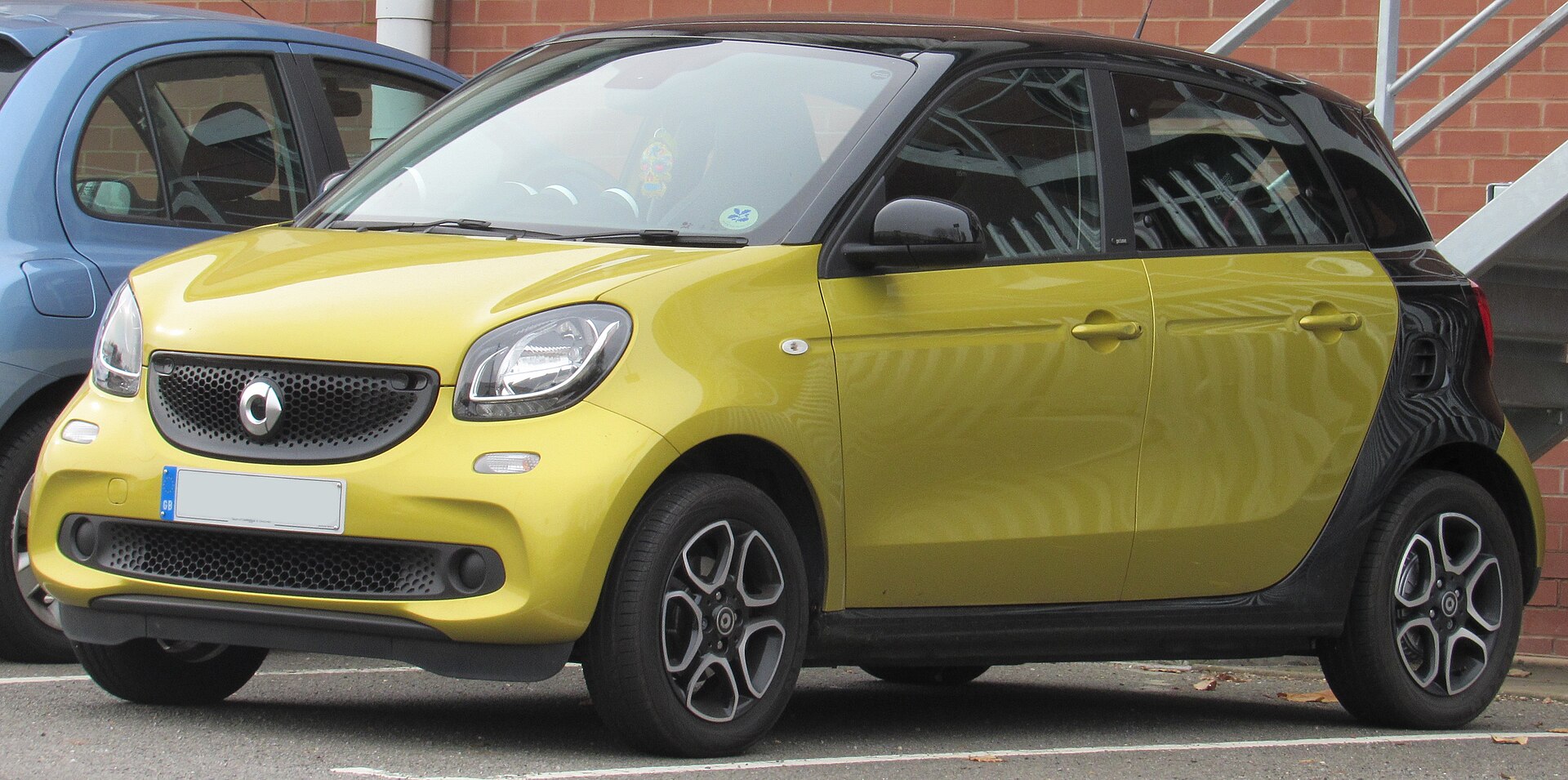
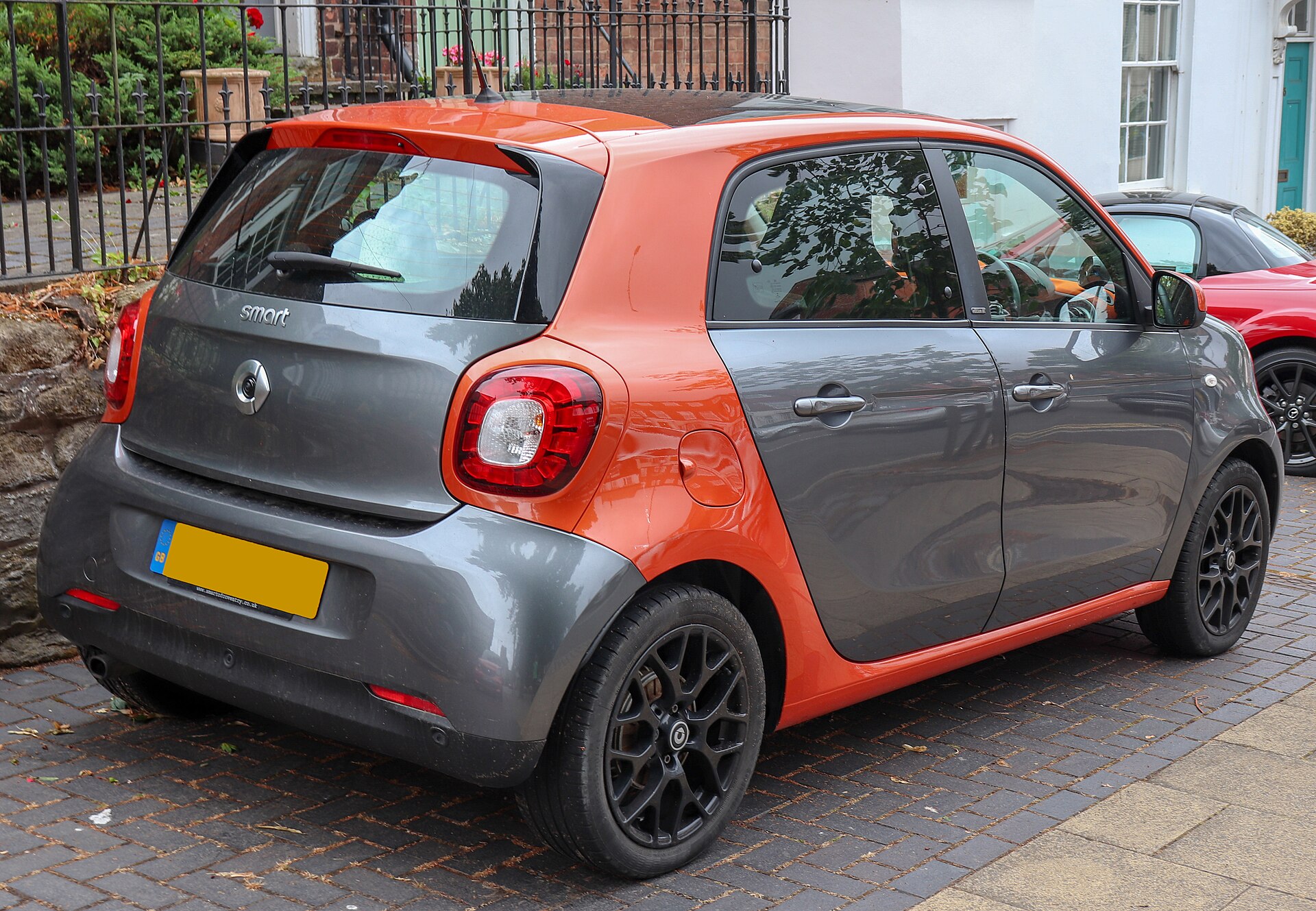
- Forfour W453 2014–2021 · Hatchback · 44–79 kW (60–107 PS)
Newest first · 2 generations since 2004
-
2014
-
2004
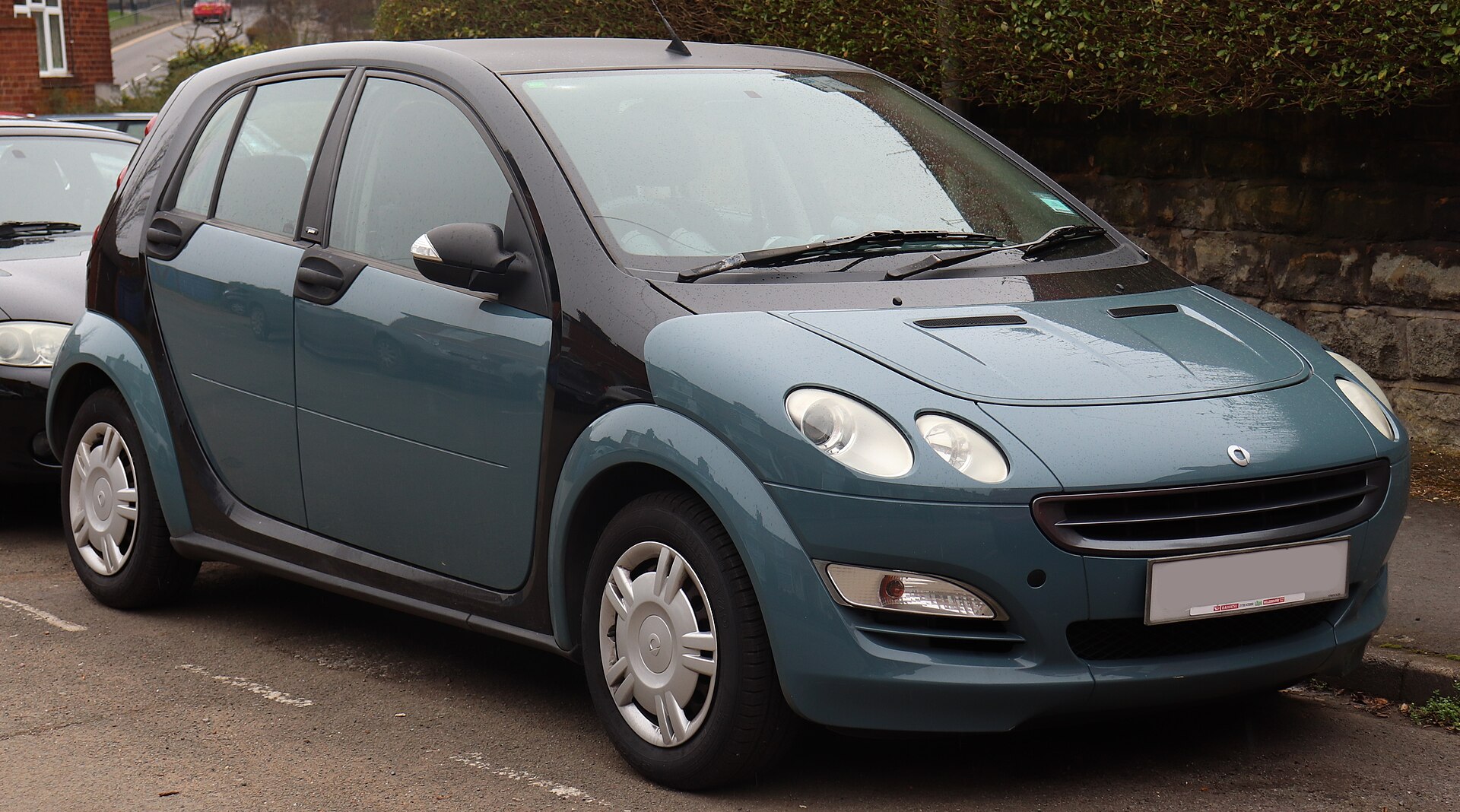


All generations by year: Forfour W453 (2014–2021) · Forfour W454 (2004–2006)
Which one is mine?
Pick the year of first registration to see which generation it is.
Check by VINWhich Forfour to buy: verdict
Our verdict · Felix Hartmann
- Most practical petrol: a W453 0.9 turbo with 66 kW (90 PS), the best balance of pace and economy; avoid the 45 kW base car if you drive outside town.
- For town driving: the EQ forfour, if 130 km of WLTP range is enough for your daily routine.
- For fun: the W454 Brabus with 130 kW (177 PS), or the W453 Brabus with 79 kW.
- Budget buy: a W454 1.1 or 1.3, which shares its chassis and engines with the Mitsubishi Colt.
The Smart Forfour is the four-seat, five-door model of Daimler's Smart brand, built in two unrelated generations: the W454 of 2004-2006, a front-engined supermini derived from the Mitsubishi Colt, and the W453 of 2014-2021, a rear-engined city car developed with Renault alongside the Twingo. The second generation was also sold as an electric car, finally as the EQ forfour, before the name ended in 2021 and the larger Smart #1 took over its role.
In short
- Two generations: W454 (2004-2006, built at NedCar in the Netherlands) and W453 (2014-2021, built with the Renault Twingo in Slovenia).
- W454: front engine, front-wheel drive, 47-80 kW petrol and 50-70 kW diesel engines, Brabus version with 130 kW (177 PS).
- W453: rear engine, rear-wheel drive, 3,495 mm long, 8.7 m turning circle, 45-79 kW petrol engines.
- Electric version from 2017: 60 kW (82 PS), 17.6 kWh battery, about 130 km WLTP range.
Size at a glance
| Dimensions | Smart Forfour W453 |
|---|---|
| Length | 3,495 mm137.6 in |
| Width | 1,665 mm65.6 in |
| Height | 1,554 mm61.2 in |
| Wheelbase | 2,492 mm98.1 in |
| Boot | 185 L6.5 cu ft |
Running cost
Fuel · Forfour W453 0.9 turbo (66 kW)
about 1,550 EUR fuel a year at 15,000 km
5.9 l/100 km · petrol at 1.75 EUR/l · change mileage, fuel price or version
Specs by version
Engines
| Version | Engine | Power | Torque | Gearbox | Drive | Production years |
|---|---|---|---|---|---|---|
| Electric · 1 version | ||||||
| W453 · EQ forfour (60 kW) | Electric | 60 kW 82 PS80 hp | 160 Nm118 lb-ft | Single-speed | Rear-wheel drive | 2017–2021 |
| Petrol · 2 versions | ||||||
| W453 · 1.0 (52 kW) | 1.0 l · 3 cyl · Petrol 999 cc | 52 kW 71 PS70 hp | 91 Nm67 lb-ft | 5-sp Manual | Rear-wheel drive | 2014–2019 |
| W453 · 0.9 turbo (66 kW) | 0.9 l · 3 cyl · Petrol 898 cc | 66 kW 90 PS89 hp | 135 Nm100 lb-ft | 5-sp Manual | Rear-wheel drive | 2014–2019 |
Performance
Show all 2 versions
| Version | 0–100 km/h | Top speed | Fuel consumption | Range | CO₂ |
|---|---|---|---|---|---|
| Electric · 1 version | |||||
| W453 · EQ forfour (60 kW) | 12.7 s 0–62 mph | 130 km/h81 mph | 17.9 kWh/100 km28.8 kWh/100 mi | 129 km80 mi | - |
| Petrol · 1 version | |||||
| W453 · 0.9 turbo (66 kW) | 11.2 s 0–62 mph | 165 km/h103 mph | 5.9 l/100 km39.9 mpg US · 47.9 mpg UK | - | 133 g/km |
Dimensions and weight
Show all 2 versions
| Version | Length | Width | Height | Wheelbase | Kerb weight | Boot | Fuel tank | Battery |
|---|---|---|---|---|---|---|---|---|
| Electric · 1 version | ||||||||
| W453 · EQ forfour (60 kW) | 3,495 mm137.6 in | 1,665 mm65.6 in | 1,554 mm61.2 in | 2,492 mm98.1 in | 1,200 kg2,646 lb | 185 l6.5 cu ft | - | 18 kWh |
| Petrol · 1 version | ||||||||
| W453 · 0.9 turbo (66 kW) | 3,495 mm137.6 in | 1,665 mm65.6 in | 1,554 mm61.2 in | 2,492 mm98.1 in | 995 kg2,194 lb | 185 l6.5 cu ft | 28 l7.4 gal US | - |
Verified Manufacturer and type-approval data from our catalog · Sources and methodology
Smart Forfour at a glance
| Specification | Smart Forfour |
|---|---|
| Segment | City car / supermini (A/B-segment) |
| Body style | Five-door hatchback, four seats |
| Production | 2004-2006 (W454); 2014-2021 (W453) |
| Built | NedCar, Born, Netherlands (W454); Novo Mesto, Slovenia (W453) |
| Platform partners | Mitsubishi Colt (W454); Renault Twingo III (W453) |
| Layout | Front engine, FWD (W454); rear engine, RWD (W453) |
| Power range | 44-130 kW (60-177 PS) |
| Electric version | 2017-2021, 60 kW, 17.6 kWh |
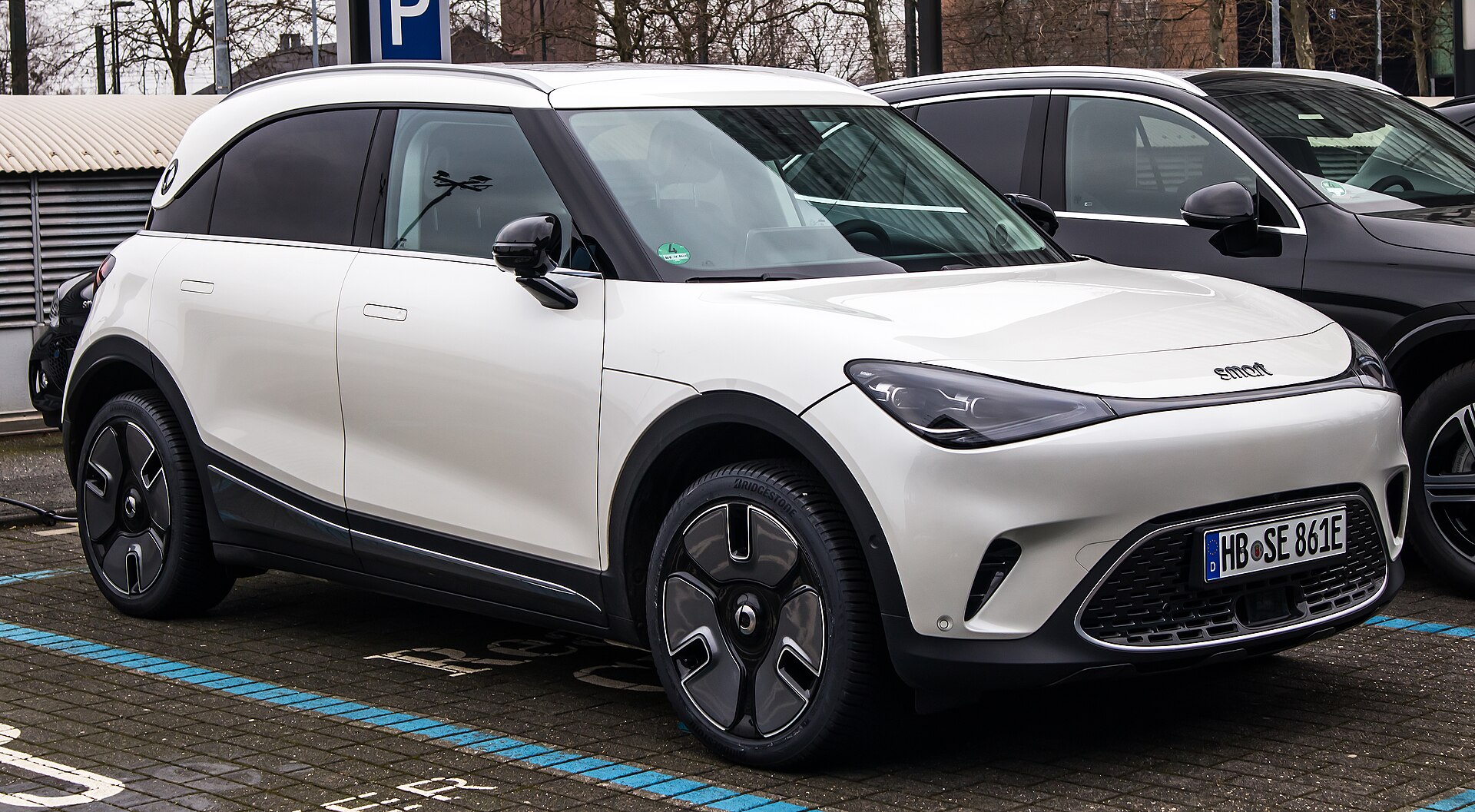
| Successor | Smart #1 |
Both generations are listed in our Smart catalogue. The Forfour always sat next to the two-seat Fortwo, and the second generation shared most of its design with it.
Generations
| Generation | Code | Years | Body styles | Engines | Power (kW / hp) |
|---|---|---|---|---|---|
| Forfour I | W454 | 2004-2006 | 5-door hatchback | 1.0, 1.1, 1.3, 1.5 petrol; 1.5 turbo (Brabus); 1.5 CDI diesel | 47-130 kW (63-174 hp) |
| Forfour II | W453 | 2014-2019 (petrol) | 5-door hatchback | 1.0 petrol, 0.9 turbo petrol | 44-79 kW (59-106 hp) |
| Forfour II electric / EQ forfour | W453 | 2017-2021 | 5-door hatchback | electric motor, 17.6 kWh | 60 kW (80 hp) |
First generation: W454 (2004-2006)
The first Forfour was built by NedCar in the Netherlands together with Mitsubishi and shared almost all of its components, including the chassis, suspension and MIVEC engines, with the 2003 Mitsubishi Colt. Customers could choose a five-speed manual or a six-speed automated manual called Softouch on most engines. ADAC's catalogue lists it from 2004 to 2007, reflecting the last cars on sale. Daimler dropped it in 2006 after slow sales, and the Forfour name was absent for eight years.
Second generation: W453 (2014-2021)
The second Forfour was co-developed with Renault and shares roughly 70 percent of its parts with the third-generation Renault Twingo. Unlike the first car, it has its engine under the boot floor and drives the rear wheels, and it keeps Smart's Tridion steel safety cell. ADAC lists the first versions from November 2014. Daimler ended petrol production in 2019 when all Smart combustion models were withdrawn, and the electric EQ forfour remained in production until 2021. After Geely became an equal partner in Smart in 2019, the larger electric Smart #1 crossover became the Forfour's successor.


Engines, transmissions and performance
W454 engines
| Engine | Power | Torque | 0-100 km/h | Top speed | CO2 |
|---|---|---|---|---|---|
| 1.0 (1,124 cc, 3 cyl) | 47 kW (64 PS) | 92 Nm | 15.3 s | 158 km/h | 128 g/km |
| 1.1 (1,124 cc, 3 cyl) | 55 kW (75 PS) | 100 Nm | 13.4 s | 165 km/h | 130 g/km |
| 1.3 (1,332 cc, 4 cyl) | 70 kW (95 PS) | 125 Nm | 10.8 s | 180 km/h | 138 g/km |
| 1.5 (1,499 cc, 4 cyl) | 80 kW (109 PS) | 145 Nm | 9.8 s | 190 km/h | 145 g/km |
| Brabus 1.5 turbo (1,468 cc) | 130 kW (177 PS) | 230 Nm | 6.9 s | 221 km/h | 159 g/km |
| 1.5 CDI (1,493 cc, 3 cyl) | 50 kW (68 PS) | 160 Nm | 13.9 s | 160 km/h | 121 g/km |
| 1.5 CDI (1,493 cc, 3 cyl) | 70 kW (95 PS) | 210 Nm | 10.5 s | 180 km/h | 121 g/km |
The 1.0 and the Brabus came with a manual gearbox only. ADAC also lists a short-lived 1.5 "edition sportstyle" with 90 kW (122 PS) in 2004-2005.
W453 engines
| Version | Engine | Power | Torque | 0-100 km/h | Top speed |
|---|---|---|---|---|---|
| 1.0 (2015-2017) | 999 cc, 3 cyl | 45 kW (60 PS) | - | - | - |
| 1.0 | 999 cc, 3 cyl | 52 kW (71 PS) | 91 Nm | - | - |
| 0.9 turbo | 898 cc, 3 cyl turbo | 66 kW (90 PS) | 135 Nm | 11.2 s | 165 km/h |
| Brabus (2016-2018) | 898 cc, 3 cyl turbo | 79 kW (108 PS) | 175 Nm | - | - |
| electric drive / EQ | synchronous electric motor | 60 kW (82 PS) | 160 Nm | 12.7 s | 130 km/h |
All W453 petrol models were available with a five-speed manual or the six-speed twinamic dual-clutch transmission. The electric car uses a single-speed reduction gear.

Electric drive and EQ forfour
Smart started series production of the forfour electric drive in 2017 at Renault's Novo Mesto plant in Slovenia. Its 60 kW (82 PS) motor sits at the rear, and the 17.6 kWh battery (16.7 kWh usable, according to ADAC) gives an official range of 160 km on the old NEDC cycle and about 130 km on WLTP. In Autocar's real-world test it managed 109 km. In 2019 the car was facelifted and renamed EQ forfour.
ADAC's data for the facelifted EQ forfour (2020-2021) show 17.9 kWh/100 km, a top speed of 130 km/h and a kerb weight of 1,200 kg, about 225 kg more than the petrol car. Charging took around 7 hours at a household socket (2.3 kW) and about one hour with the optional 22 kW three-phase charger. Of the 248,856 W453 Forfours built, 32,326 were electric. The car is also listed in our electric cars section.

Dimensions, space and boot (W453)
| Parameter | Metric | Imperial |
|---|---|---|
| Length | 3,495 mm | 137.6 in |
| Width (without mirrors) | 1,665 mm | 65.6 in |
| Height | 1,554 mm | 61.2 in |
| Wheelbase | 2,492 mm | 98.1 in |
| Turning circle | 8.7 m | 28.5 ft |
| Kerb weight (0.9 turbo / EQ) | 995 / 1,200 kg | 2,194 / 2,646 lb |
| Boot | 185 l | 6.5 cu ft |
| Boot, rear seats folded | 975 l | 34.4 cu ft |
| Fuel tank | 28 l (35 l optional) | 7.4 (9.2) US gal |
With its short body and rear engine, the W453 has an 8.7 m turning circle, tight for a five-door car. The price is a small boot: 185 litres with the rear seats in use. The size comparison tool shows how it compares with other city cars.

Fuel economy and running costs
For the W453 0.9 turbo with a manual gearbox, ADAC lists WLTP combined consumption of 5.9 l/100 km and 133 g/km CO2. The W454's official combined figures ranged from 5.8 l/100 km for the 1.5 CDI diesels to 7.8 l/100 km for the 1.5 petrol.
Trims and prices
German list prices according to ADAC:
| Generation | Version | Price |
|---|---|---|
| W454 | 1.1 pulse, 55 kW | EUR 14,270 (2004) |
| W454 | 1.5 CDI pulse, 50 kW | EUR 15,450 (2004) |
| W454 | 1.0 pure, 47 kW | EUR 11,274 (2005) |
| W453 | 1.0, 45 kW | EUR 11,205 (2014) |
| W453 | 0.9 turbo, 66 kW | EUR 12,660 (2014) |
| W453 | 0.9 turbo prime twinamic | EUR 16,235 (2015) |
| W453 | EQ forfour | EUR 22,600 (2020) |
W453 trims were named passion, prime, proxy, perfect and later BRABUS Style; W454 trims were pure, pulse and passion.
Safety
Euro NCAP tested the W453 Forfour in late 2014 and awarded four stars (ADAC records the test date as 12/2014). For the W454, the source data cover only the Australian ANCAP test of 2003, which gave 11.99 of 16 points in the frontal offset test and 12.84 of 16 in the side impact test, with poor pedestrian protection; stability control was standard.
Reliability and known issues
ADAC's breakdown statistics for the W453 range from 26.6 breakdowns per 1,000 vehicles for 2016 registrations to 20.4 for 2019 cars. The main recorded causes were the starter motor (2016), the alternator (2016-2017), the 12-volt starter battery (2016-2020) and the ignition lock (2016-2019). For 2021 cars, almost all of them electric, ADAC records 4.8 breakdowns per 1,000.
Rivals
The W453 competed with its own twin, the Renault Twingo, and with five-door city cars such as the Volkswagen up!, Hyundai i10, Kia Picanto, Fiat Panda and Toyota Aygo. The electric versions met the Volkswagen e-up! and Renault Twingo Electric. The comparison tool lines up their specifications.
Smart Forfour: first vs latest generation
| Spec | Forfour W454 | Forfour W453 | Change |
|---|---|---|---|
| Years | 2004–2006 | 2014–2021 | 10 years apart |
| Most powerful version | 130 kW (177 PS) | 79 kW (107 PS) | −51 kW (−39%) |
Oldest and newest generation in the 1cars catalog. Power is the strongest version of each; other rows are shown only when both generations have the figure.
Smart Forfour in our rankings
- No. 7 of 93 · Smallest hatchbacks (3,495 mm)
- No. 9 of 531 · Smallest cars (3,495 mm)
- No. 28 of 391 · Lightest cars (995 kg · top 8%)
- No. 11 of 76 · Lightest hatchbacks (995 kg · top 15%)
- No. 108 of 297 · Most economical cars (5.9 l/100 km · top 37%)
- No. 55 of 141 · Most powerful hatchbacks (130 kW · top 40%)
Shorter than 98% of ranked cars in the 1CARS catalog (No. 9 of 531).
FAQ
How many generations of the Smart Forfour are there?
Two: the front-engined W454 (2004-2006) and the rear-engined W453 (2014-2021), including the electric EQ forfour.
What is the range of the electric Smart EQ forfour?
About 130 km on the WLTP cycle and 160 km on the old NEDC cycle, from a 17.6 kWh battery.
Is the Smart Forfour the same as the Renault Twingo?
The W453 shares about 70 percent of its parts with the third-generation Twingo and was built in the same Slovenian plant, but it has its own body, interior and Smart's Tridion safety cell.
What is the turning circle of the Smart Forfour?
8.7 metres for the W453, according to ADAC.
What replaced the Smart Forfour?
The Smart #1, a larger electric crossover developed with Geely, took over as the brand's five-door model.
Data sources
Data checked by an editor against the sources below.