 Smart #1
Specs, engines and history
Published Sources (2) Report an error
By Felix Hartmann, Automotive Technology & EV Contributor
- Built
- 2022–present
- Top power
- 315 kW (428 PS)
Which smart #1 to buy
Our verdict · Felix Hartmann
- Best value: the Pro, which has the 49 kWh battery but most of the equipment that matters, including the 360-degree camera and heated seats, for EUR 39,490.
- Best for longer trips: the Pro+ or Premium with the 66 kWh battery, 420-440 km WLTP range and 150 kW DC charging.
- For performance: the Brabus, with 315 kW and 0-100 km/h in 3.9 seconds, though the range drops to 400 km and the boot shrinks slightly.
The Pure makes sense mainly for drivers who rarely leave town, because its 7.2 kW single-phase AC charging is slow at public posts.
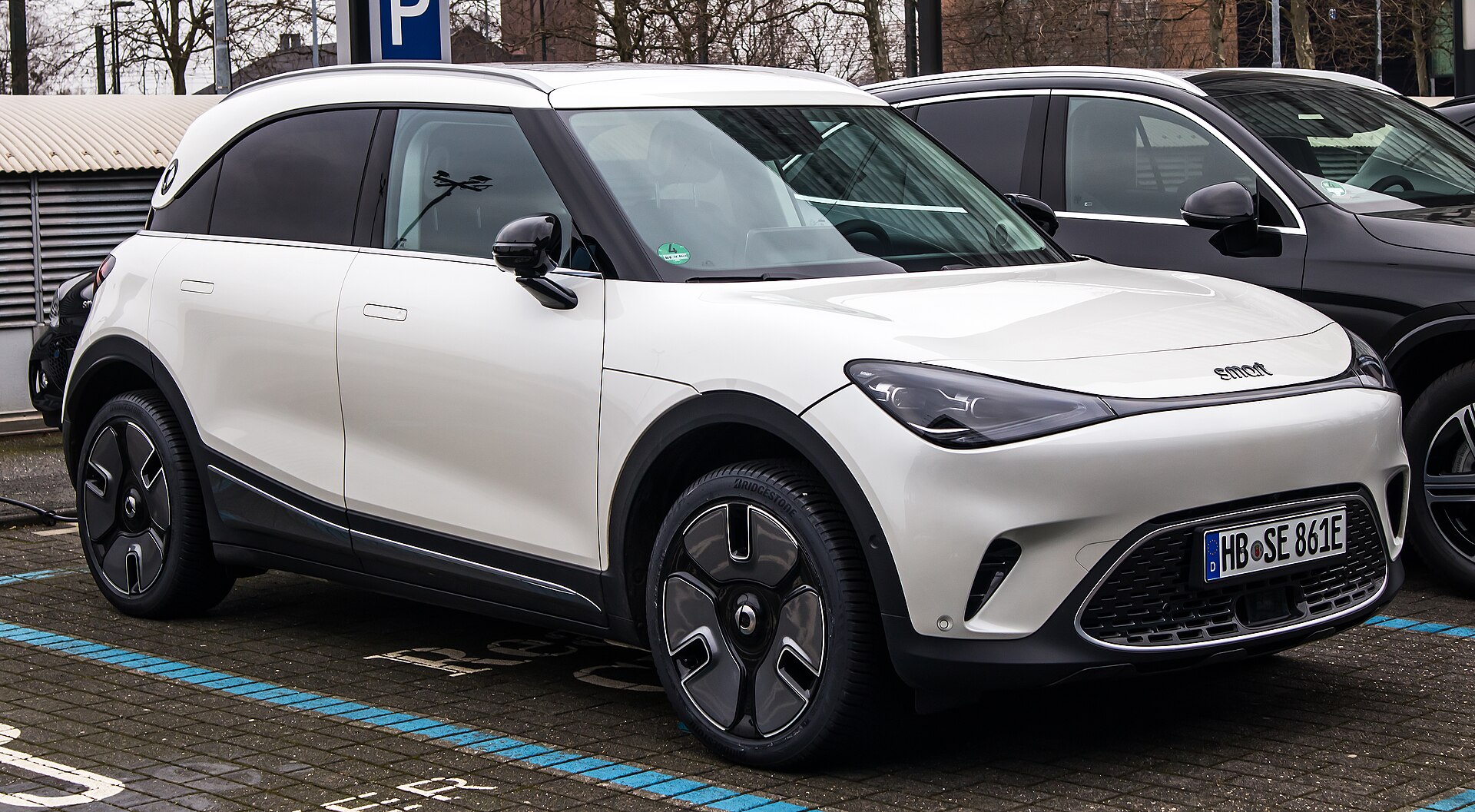
The smart #1 is a five-door electric compact SUV, the first car of the new Smart Automobile company owned by Mercedes-Benz Group and Geely. Mercedes-Benz styled it, Geely engineered it on its SEA2 electric platform, and every car is built in Xi'an, China. In Europe it has been on sale since January 2023 with a 49 or 66 kWh battery, rear- or all-wheel drive and up to 315 kW (428 PS) in the Brabus version.
In short
- One generation so far (internal code HX11), in production since 2022; the first European versions started in January 2023.
- Rear-wheel-drive versions have 200 kW (272 PS) and 343 Nm; all-wheel-drive versions 271 kW (368 PS) or 315 kW (428 PS).
- WLTP range from 310 km (49 kWh LFP battery) to 440 km (66 kWh, Premium).
- German list prices (ADAC, 2026) run from EUR 36,990 for the Pure to EUR 53,490 for the Brabus.
Size at a glance
| Dimensions | Smart #1 HX11 |
|---|---|
| Length | 4,270 mm168.1 in |
| Width | 1,822 mm71.7 in |
| Height | 1,636 mm64.4 in |
| Wheelbase | 2,750 mm108.3 in |
| Boot | 323 L11.4 cu ft |
Specs by version
Engines
| Version | Engine | Power | Torque | Gearbox | Drive | Production years |
|---|---|---|---|---|---|---|
| Pure (49 kWh) | Electric | 200 kW 272 PS268 hp | 343 Nm253 lb-ft | 1-sp Single-speed | Rear-wheel drive | 2024 |
| Pro+ (66 kWh) | Electric | 200 kW 272 PS268 hp | 343 Nm253 lb-ft | 1-sp Single-speed | Rear-wheel drive | 2023 |
| Brabus AWD | Electric | 315 kW 428 PS422 hp | 584 Nm431 lb-ft | 1-sp Single-speed | All-wheel drive | 2023 |
Performance
Show all 3 versions
| Version | 0–100 km/h | Top speed | Fuel consumption | Range |
|---|---|---|---|---|
| Pure (49 kWh) | 6.7 s 0–62 mph | 180 km/h112 mph | 18.1 kWh/100 km29.1 kWh/100 mi | 310 km193 mi |
| Pro+ (66 kWh) | 6.7 s 0–62 mph | 180 km/h112 mph | 17.4 kWh/100 km28.0 kWh/100 mi | 420 km261 mi |
| Brabus AWD | 3.9 s 0–62 mph | 180 km/h112 mph | 18.2 kWh/100 km29.3 kWh/100 mi | 400 km249 mi |
Dimensions and weight
Show all 3 versions
| Version | Length | Width | Height | Wheelbase | Kerb weight | Boot | Battery |
|---|---|---|---|---|---|---|---|
| Pure (49 kWh) | 4,270 mm168.1 in | 1,822 mm71.7 in | 1,636 mm64.4 in | 2,750 mm108.3 in | 1,780 kg3,924 lb | 323 l11.4 cu ft | 49 kWh |
| Pro+ (66 kWh) | 4,270 mm168.1 in | 1,822 mm71.7 in | 1,636 mm64.4 in | 2,750 mm108.3 in | 1,788 kg3,942 lb | 323 l11.4 cu ft | 66 kWh |
| Brabus AWD | 4,270 mm168.1 in | 1,822 mm71.7 in | 1,636 mm64.4 in | 2,750 mm108.3 in | 1,900 kg4,189 lb | 313 l11.1 cu ft | 66 kWh |
Verified Manufacturer and type-approval data from our catalog · Sources and methodology
smart #1 at a glance
| Specification | smart #1 |
|---|---|
| Segment | Compact electric SUV (B/C size) |
| Body | five-door SUV, five seats |
| Built | Xi'an, Shaanxi province, China |
| Platform | Geely SEA2 (Sustainable Experience Architecture) |
| Drive | rear motor, or dual motor all-wheel drive |
| Power range | 200-315 kW (272-428 PS) |
| Battery | 49 kWh LFP or 66 kWh NCM (gross) |
| Sister models | smart #3, Zeekr X, Volvo EX30 |
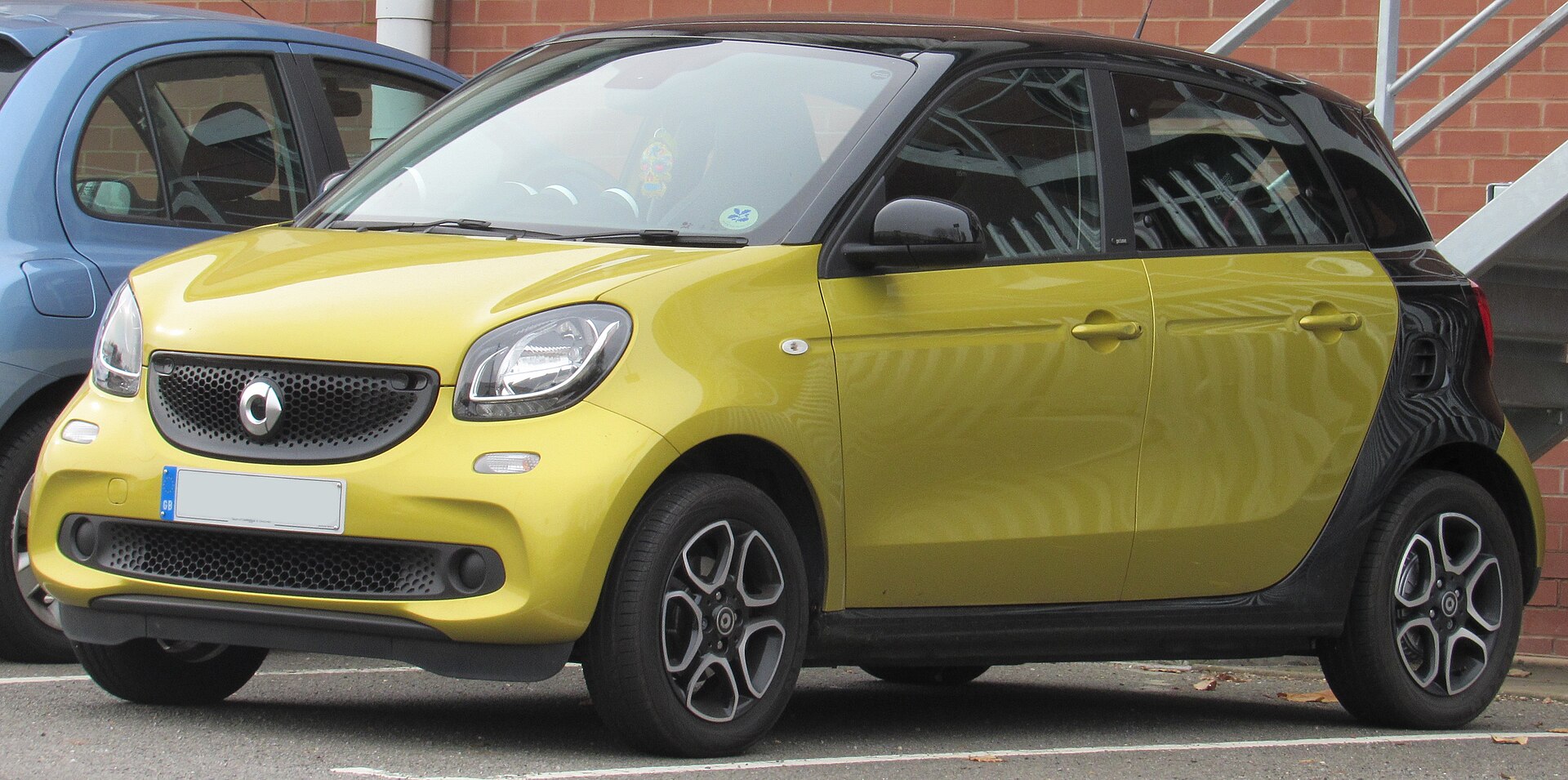
| Predecessor | smart EQ forfour |
The #1 marks a clean break with the two-seat fortwo that made the brand famous. It is 4,270 mm long, so it belongs in the same size class as many superminis and small crossovers, and it has five seats. Compare it with other small electric cars in our electric cars section.
Generations and model history
Smart previewed the car as the Concept #1 at the IAA in Munich on 5 September 2021. Design came from Mercedes-Benz, with Yi Gao and Mohammad Aminiyekta credited on the production car; Geely was responsible for engineering and production. The series model was revealed on 7 April 2022 and went on sale in China the same month, where it is called the Jingling #1. The Brabus version followed in August 2022, and European prices were published in September 2022. ADAC lists the first German versions from January 2023.
| Generation | Code | Years | Body styles | Engines | Power (kW / hp) |
|---|---|---|---|---|---|
| smart #1 | HX11 | 2022-present | 5-door SUV | 1 or 2 electric motors, 49 or 66 kWh | 200-315 kW (272-428 PS) |
There has been no facelift so far. Smart has instead reshuffled the range: the Pure and Pure+ arrived in July 2024, the Pulse AWD was detuned from 315 kW to 271 kW in November 2024, and a Pro+ Black Collection was added in August 2026. The #1 shares its SEA platform and much of its hardware with the larger smart #3, the Zeekr X and the Volvo EX30.

Motors, batteries and performance
Every #1 uses a permanent magnet synchronous motor at the rear and a single-speed transmission. The all-wheel-drive Pulse and Brabus add a 115 kW motor on the front axle.
| Version (Germany) | Battery (gross / net) | Power | Torque | 0-100 km/h | WLTP range |
|---|---|---|---|---|---|
| Pure, Pro | 49 / 47 kWh LFP | 200 kW (272 PS) | 343 Nm | 6.7 s | 310 km |
| Pure+, Pro+ | 66 / 62 kWh NCM | 200 kW (272 PS) | 343 Nm | 6.7 s | 420 km |
| Premium | 66 / 62 kWh NCM | 200 kW (272 PS) | 343 Nm | 6.7 s | 440 km |
| Pulse AWD (to 11/2024) | 66 / 62 kWh NCM | 315 kW (428 PS) | - | 4.5 s | 400 km |
| Pulse AWD (from 11/2024) | 66 / 62 kWh NCM | 271 kW (368 PS) | - | - | - |
| Brabus AWD | 66 / 62 kWh NCM | 315 kW (428 PS) | 584 Nm | 3.9 s | 400 km |
All versions are limited to 180 km/h. The cheaper 49 kWh cars use a lithium iron phosphate battery from Rept Battero; the 66 kWh pack uses nickel-cobalt-manganese cells from Sunwoda.

Charging
Charging hardware depends on the battery. ADAC lists 7.2 kW single-phase AC and up to 130 kW DC for the Pure, against 22 kW three-phase AC and 150 kW DC for the 66 kWh cars. ADAC quotes about 30 minutes for a DC charge to 80% on both batteries, and about three hours for a full AC charge of the 66 kWh pack at 22 kW. All versions can tow 1,600 kg braked (750 kg unbraked), an unusually high figure for a car of this size.
Dimensions, space and boot
| Parameter | Metric | Imperial |
|---|---|---|
| Length | 4,270 mm | 168.1 in |
| Width (without / with mirrors) | 1,822 / 2,025 mm | 71.7 / 79.7 in |
| Height | 1,636 mm | 64.4 in |
| Wheelbase | 2,750 mm | 108.3 in |
| Kerb weight (EU) | 1,780-1,900 kg | 3,924-4,189 lb |
| Boot (seats up / folded) | 323 / 986 l | 11.4 / 34.8 cu ft |
| Front boot | 15 l | 0.5 cu ft |
| Towing capacity (braked) | 1,600 kg | 3,527 lb |
The long 2,750 mm wheelbase gives generous rear legroom, but the boot is modest: 323 litres behind the rear seats, or 313 litres in the Brabus, plus a 15-litre compartment under the bonnet that fits little more than a charging cable. Check how it fits your parking space with our garage fit tool.

Energy consumption and running costs
WLTP consumption is 17.4 kWh/100 km for the Pro+, 18.1 kWh/100 km for the Pure and 18.2 kWh/100 km for the Brabus. In ADAC's own Ecotest the Pro+ used 20.5 kWh/100 km. ADAC lists a two-year vehicle warranty (plus one year of connection warranty with the service package) and an eight-year or 200,000 km warranty on the high-voltage battery, guaranteed to keep 70% of its capacity.
Trims and equipment
The range is built on clear steps. The Pure has fabric seats and four rear parking sensors. The Pro adds man-made leather, electrically adjustable heated front seats, a 360-degree camera, a panoramic "Halo" glass roof and a wireless phone charger. The Premium has heated and ventilated front seats and the longest range. The Pulse brings all-wheel drive, duo-leather seats, automatic parking and logo projection lights, while the Brabus gets microfibre suede seats and the full 315 kW. Every version has a 12.8-inch central touchscreen with navigation.
| Version (Germany, ADAC) | List price |
|---|---|
| Pure (from 07/2024) | EUR 36,990 |
| Pro (from 10/2023) | EUR 39,490 |
| Pro+ (from 04/2023) | EUR 44,490 |
| Pro+ Black Collection (from 08/2026) | EUR 45,090 |
| Premium (from 01/2023) | EUR 47,990 |
| Brabus AWD (from 01/2023) | EUR 53,490 |
Safety: Euro NCAP
Euro NCAP tested the #1 in 2022 and awarded five stars. It scored 96% for adult occupant protection, 89% for child occupants, 71% for vulnerable road users and 88% for safety assist systems. ANCAP adopted the result for Australia and New Zealand. Compare it with other recent results on our safety ratings page.
Reliability and known issues
The #1 has been on sale for under four years and there is no large-scale reliability data such as the ADAC breakdown statistics for it yet. What is measurable is the gap between official and real consumption: ADAC's Ecotest figure for the Pro+ was about 18% above the WLTP value, which matters for long motorway trips. With only two years of basic vehicle warranty, it is worth pricing an extended warranty before buying a used car.
Sales
The #1 is also sold in China, where registrations were 33,256 in 2023, 22,565 in 2024 and 20,762 in 2025.
Rivals
| Model | Engines | Power (hp) | Boot (l) | Price from (EUR) |
|---|---|---|---|---|
| smart #1 | electric, RWD or AWD | 272-428 | 323 | 36,990 (Germany, 2026) |
| Volvo EX30 | electric, RWD or AWD | 272-428 | 318 | - |
| smart #3 | electric, RWD or AWD | 272-428 | - | - |
| Zeekr X | electric, RWD or AWD | - | - | - |
The Volvo EX30 is the closest relative: same platform family, same motor outputs, but a shorter body. Our comparison tool lines up the #1 with any other model in the catalogue.

Photo gallery

Smart #1 in our rankings
- No. 13 of 142 · Power-to-weight: SUVs and crossovers (166 kW/t · top 10%)
- No. 12 of 126 · Quickest SUVs and crossovers, 0–100 (3.9 s · top 11%)
- No. 34 of 198 · Smallest SUVs and crossovers (4,270 mm · top 18%)
- No. 30 of 163 · Quickest cars of the 2020s, 0–100 (3.9 s · top 20%)
- No. 67 of 343 · Quickest cars, 0–100 (3.9 s · top 20%)
- No. 15 of 77 · Quickest electric cars, 0–100 (3.9 s · top 21%)
Better power-to-weight than 90% of ranked SUVs and crossovers in the 1CARS catalog (No. 13 of 142).
FAQ
Where is the smart #1 built?
In Xi'an, Shaanxi province, China, by Smart Automobile, the joint venture of Mercedes-Benz Group and Geely.
What is the range of the smart #1?
Between 310 km (49 kWh battery) and 440 km (66 kWh Premium) on the WLTP cycle. The all-wheel-drive versions reach 400 km.
How fast does the smart #1 charge?
The 66 kWh versions accept 150 kW DC and 22 kW AC; the 49 kWh Pure takes up to 130 kW DC. ADAC lists about 30 minutes to 80% at a fast charger.
Is the smart #1 safe?
Yes. Euro NCAP gave it five stars in 2022, with 96% for adult occupant protection.
Is the smart #1 related to the Volvo EX30?
Yes. Both use Geely's SEA electric architecture and the same 200 kW and 315 kW motor outputs; the smart #3 and Zeekr X are also related.
Data sources
Data checked by an editor against the sources below.
- Wikipedia - Smart 1
- ADAC