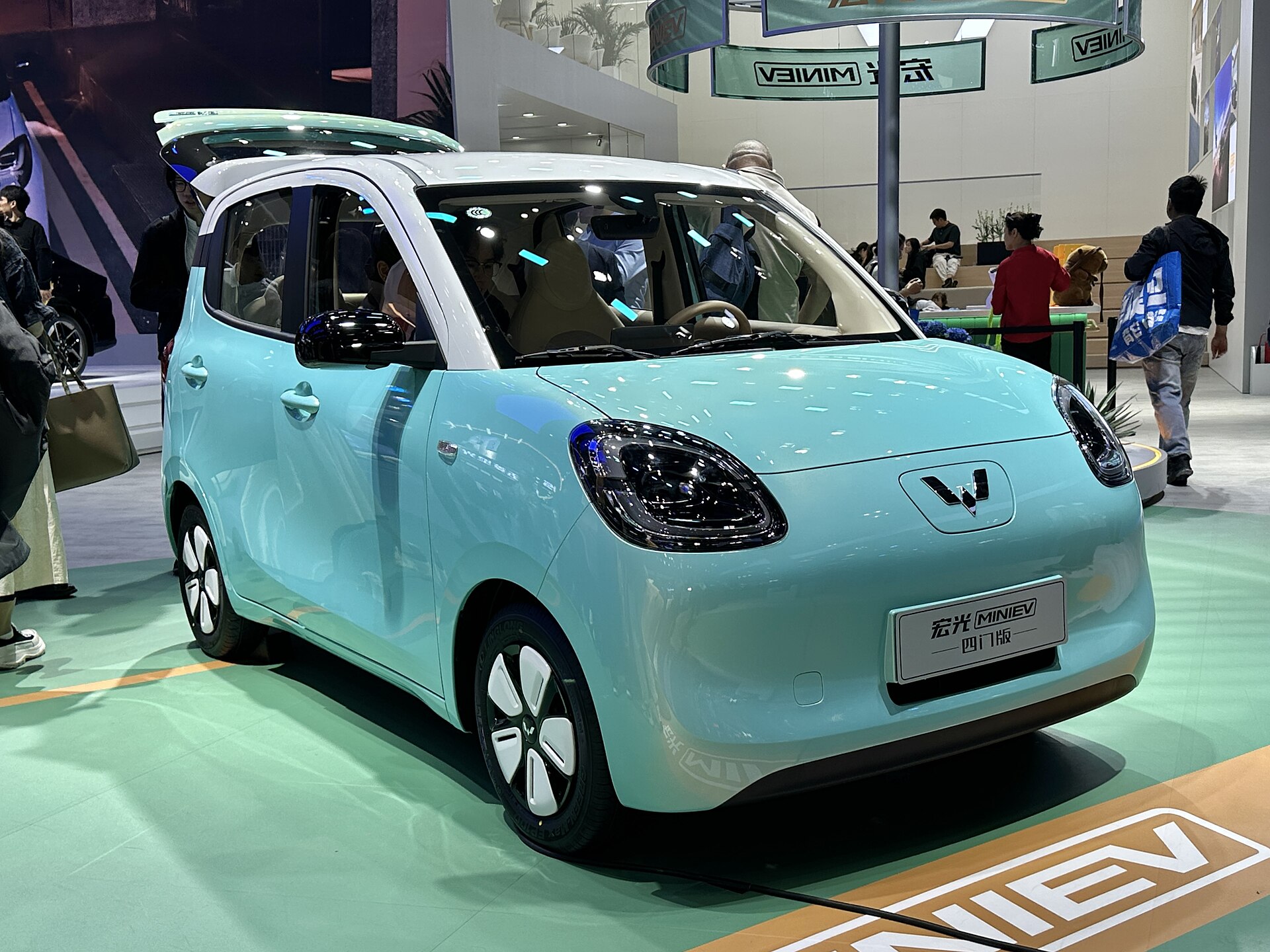
Wuling — The Liuzhou Brand of Microvans and Small Electric Cars
Wuling is a Chinese vehicle brand from Liuzhou in the Guangxi region, known for small vans and very small electric cars. It began in 1982 with a microvan built under licence from Mitsubishi. Since 2002 its cars have been made by SAIC-GM-Wuling, a joint venture of SAIC Motor, General Motors and the Wuling group. The Wuling Sunshine microvan was the best-selling vehicle in China from 2010 to 2013, and the Hongguang MPV led in early 2014. The tiny Hongguang Mini EV of 2020 passed 1.1 million global sales by February 2023.
Key takeaways
- The Wuling brand was established in 1982; full production of the first model, the Mitsubishi-licensed LZ110, began in 1984.
- SAIC-GM-Wuling was founded on 18 November 2002; SAIC holds 50.1%, GM raised its share to 44% by 2011.
- The Sunshine microvan sold 943,000 units in 2011, the third best-selling vehicle in the world that year.
- The Hongguang Mini EV has a 20 kW motor and cost from US$4,162 in China in 2020; it sold 424,983 units in China in 2025.
Wuling at a glance
| Fact | Value |
|---|---|
| Brand established | 1982, Liuzhou, Guangxi |
| First model | LZ110 microvan (1984), licensed from Mitsubishi |
| Manufacturer since 2002 | SAIC-GM-Wuling (SAIC 50.1%, GM 44%, Wuling 5.9%) |
| Best-known models | Sunshine, Hongguang, Hongguang Mini EV |
| Sister brand | Baojun (from 2010) |
| Peak joint-venture sales | 2,150,018 vehicles (2017) |
| Overseas plant | Cikarang, Indonesia (2017) |
| Parent of the Wuling group | Guangxi Automobile Group |
Origins: the LZ110 microvan
Liuzhou Wuling Automobile established the Wuling brand in 1982 to meet the demand for small delivery vehicles in China and completed a trial series that year. Full production of its first model, the LZ110, began in 1984. It was built under a licence from Mitsubishi and was a twin of the third-generation Mitsubishi Minicab.
More licensed designs followed. The Dragon of 1990, a thoroughly updated LZ110, was built as the Xingwang until 2009. From 1991 to 1994 Wuling made the LZW7100, a rebadged Citroën Visa, and in 1998 it launched the LZW6370, based on the Daihatsu Zebra under a licence from Daihatsu.


SAIC-GM-Wuling and the Sunshine
On 18 November 2002 Wuling joined SAIC Motor and General Motors in a joint venture, SAIC-GM-Wuling (SGMW), based in Liuzhou. SAIC took 50.1%, GM 34% and the Wuling group 15.9%; by 2011 GM had raised its share to 44% and Wuling's fell to 5.9%. The joint venture became responsible for all later Wuling-brand models, while the Wuling group kept trucks and special vehicles. In 2015 the group was reorganised as Guangxi Automobile Group.
The first big success of the joint venture was the Wuling Sunshine microvan, launched in 2002. It had five to eight seats, and its first-generation engines of 1.0 to 1.2 litres gave 34.7 to 63 kW. The Sunshine was the best-selling vehicle in China in 2010, 2011, 2012 and 2013. In 2011, 943,000 were made, which placed it third among the world's best-selling vehicles that year.
SGMW sold 1,065,050 vehicles in 2009, and sales reached a peak of 2,150,018 in 2017. Part of that came from Baojun, a sister brand launched in 2010 for buyers in smaller cities, whose 510 SUV was China's best-selling crossover in 2018. A passenger-car plant with capacity for 400,000 Baojun cars a year opened in Liuzhou in late 2012.

The Hongguang MPV
The Wuling Hongguang compact MPV entered production in September 2010. It was reported to be China's best-selling vehicle in the first four months of 2014. Its Hongguang S version used 1.2- and 1.5-litre engines with five-speed manual gearboxes, and the Hongguang S3 crossover and the larger Hongguang Plus of 2019 extended the family. From 2017 the upmarket Hongguang S1 was built in Indonesia as the Wuling Confero and Formo.
The third generation, with pre-orders from 6 September 2024, is electric or range-extended. The electric version has a 75 kW rear motor and a 32.6 kWh battery for 300 km on the CLTC cycle. The range-extender version, launched on 8 April 2025, combines a 1.5-litre engine of 73 kW with a 75 kW motor and costs from 68,800 yuan in China in 2025.
The Hongguang Mini EV
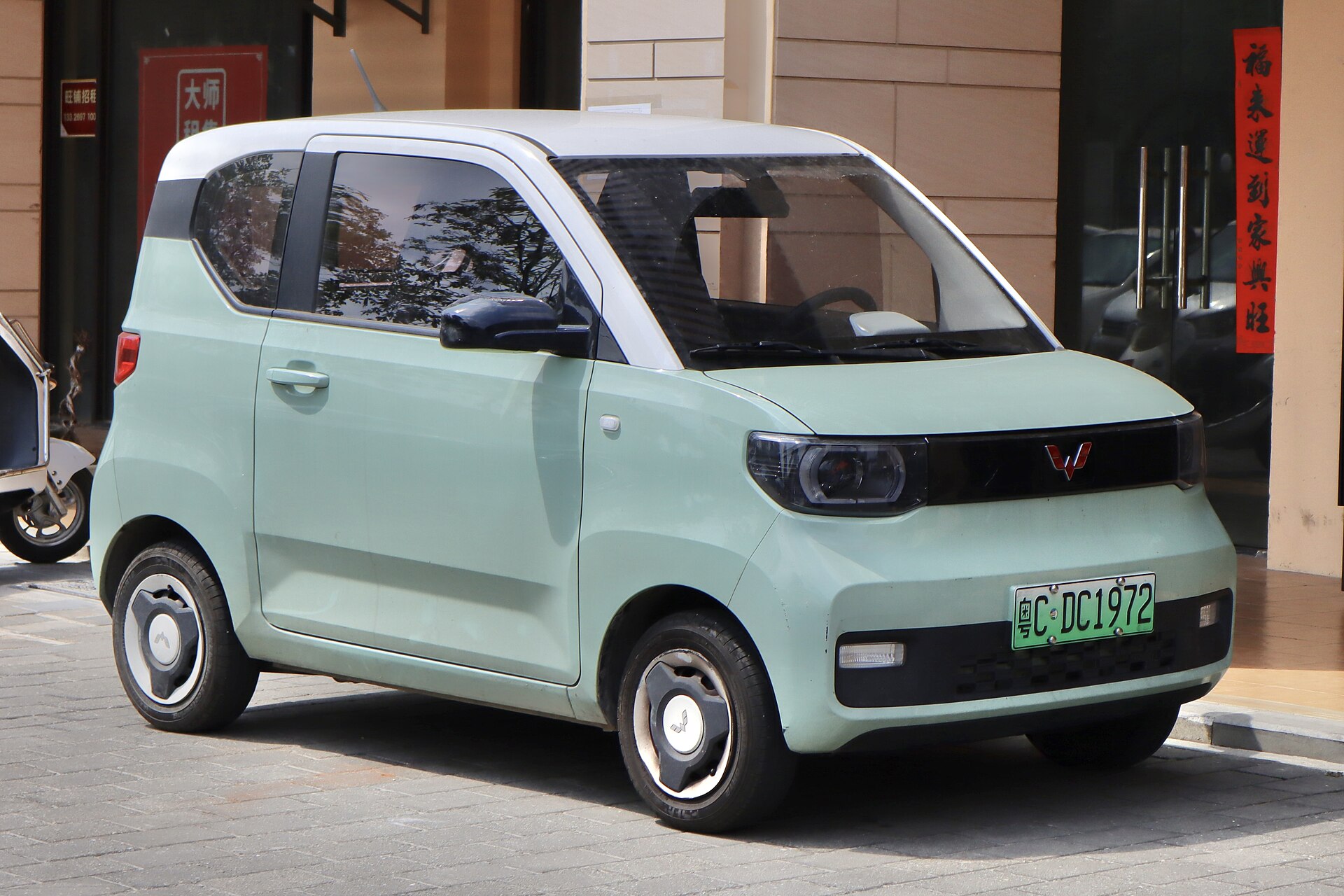
The Hongguang Mini EV went on sale in China in July 2020. The small car is 2,917 mm long and weighs 665 to 700 kg in its first form. Its rear motor produces 20 kW and 85 Nm for a top speed of 100 km/h. Batteries of 9.2 or 13.8 kWh give about 120 or 170 km on the NEDC cycle. The starting price was US$4,162 in China in 2020, and the fully equipped version cost US$5,607.
With 13.8 kWh for about 170 km the first version covers roughly 12 km per kWh. That is more than twice the 5 km or so of a large electric SUV such as the VinFast VF 8, and other examples are in the EV range and battery data. In 2020 it sold 119,255 units in about six months, second only to the Tesla Model 3 among plug-in cars worldwide. In January 2021 it was the world's best-selling plug-in car with 36,762 units. Chinese sales rose from 127,651 in 2020 to 395,451 in 2021 and 424,983 in 2025.
Variants followed quickly. The Macaron of April 2021 added equipment and a driver airbag, and the larger GameBoy Edition of March 2022 offered up to 30 kW. The Cabrio arrived in September 2022, and a 26.5 kWh version gave about 280 km on the CLTC cycle. A new generation with three and five doors was launched on 22 February 2025. Rebadged versions have been built in Lithuania, Turkey and Vietnam. The Wuling Hongguang Mini EV article covers the versions and sales in detail.

Wuling today
On 11 July 2017 SGMW began mass production at a plant in Cikarang, West Java, Indonesia. It was built with an investment of about US$700 million in 2017 and can make up to 150,000 vehicles a year. The joint venture sold 1,635,066 vehicles in 2025. The Wuling group itself is 56.54% owned by Guangxi Automobile Group. It builds commercial vehicles such as the EV50 electric van of 2020, the Dianka light truck and the EV80 van of 2022 and a plug-in light truck of 2023. The Sunshine continues as well: its third generation is the Zhiguang EV, on sale since February 2025. Wuling models are listed in the Wuling catalogue, and small electric cars for town use are compared in the best small city cars guide.

Wuling timeline
| Year | Event |
|---|---|
| 1982 | Wuling brand established in Liuzhou |
| 1984 | LZ110 microvan in full production |
| 1990 | Dragon (Xingwang) |
| 1998 | LZW6370 based on the Daihatsu Zebra |
| 2002 | SAIC-GM-Wuling founded (18 November); Sunshine launched |
| 2010 | Hongguang MPV; Baojun brand; Sunshine China's best-seller |
| 2011 | Sunshine output 943,000 |
| 2015 | Wuling group becomes Guangxi Automobile Group |
| 2017 | Indonesia plant (11 July); record 2,150,018 SGMW sales |
| 2020 | Hongguang Mini EV on sale (July) |
| 2023 | Mini EV passes 1.1 million global sales |
| 2025 | New Mini EV generation (22 February); electric Hongguang |
Landmark Wuling models
| Model | Years | Why it matters |
|---|---|---|
| LZ110 | 1984 onwards | First Wuling, licensed Mitsubishi Minicab |
| Sunshine | 2002 onwards | China's best-selling vehicle 2010–2013 |
| Hongguang | 2010 onwards | Compact MPV, China's top seller in early 2014 |
| Baojun 510 (sister brand) | 2010s | China's best-selling crossover in 2018 |
| Hongguang Mini EV | 2020 onwards | Small electric car, over 1.1 million sold by 2023 |
| EV50 | 2020 onwards | Electric light van from the Wuling group |
Photo gallery

FAQ
Who makes Wuling cars?
Since 2002 Wuling-brand cars have been built by SAIC-GM-Wuling, a joint venture of SAIC Motor (50.1%), General Motors (44%) and the Wuling group (5.9%).
What is the Wuling Hongguang Mini EV?
A small electric car launched in China in July 2020 with a 20 kW motor and up to 170 km of NEDC range at first. It sold more than 1.1 million units by February 2023.
Is Wuling part of General Motors?
Not entirely. GM owns 44% of SAIC-GM-Wuling, the company that builds Wuling cars; SAIC holds the majority.
What was the first Wuling?
The LZ110 microvan, built under licence from Mitsubishi, in full production from 1984.
Where are Wuling cars built?
Mainly in Liuzhou, Guangxi, and also in Indonesia, where a plant in Cikarang opened in 2017.
Sources
- Wikipedia — Wuling Motors (accessed 24 Oct 2026)
- Wikipedia — SAIC-GM-Wuling (accessed 24 Oct 2026)
- Wikipedia — Wuling Sunshine (accessed 24 Oct 2026)
- Wikipedia — Wuling Hongguang (accessed 24 Oct 2026)
- Wikipedia — Wuling Hongguang Mini EV (accessed 24 Oct 2026)
Found a mistake? Report an error