Willys — The Toledo Car Maker That Built the Wartime Jeep
Willys was an American car maker from Toledo, Ohio, built by John North Willys from the Overland company he bought in 1908. From 1912 to 1918 Willys-Overland was the second-largest car maker in the United States after Ford. It sold Willys-Knight cars with sleeve-valve engines and the low-priced Whippet, came through receivership in the 1930s and in the Second World War built more than 360,000 military Jeeps. After the war Willys turned the Jeep into the civilian CJ and the all-steel Jeep Station Wagon. Kaiser bought the company in 1953, and the Willys name ended in the US in 1963, when the business became Kaiser-Jeep.
Key takeaways
- John North Willys bought the Overland car business of the Standard Wheel Company in 1908 and renamed it Willys-Overland in 1912.
- From 1912 to 1918 Willys-Overland ranked second in the US behind Ford.
- In the Second World War Willys built 362,841 of the 647,870 military Jeeps counted by Wikipedia; Ford built most of the rest to the Willys design.
- Kaiser bought Willys-Overland in 1953; the company became Kaiser-Jeep in 1963, ending the Willys name in the US.
Willys at a glance
| Fact | Value |
|---|---|
| Founder | John North Willys (1873–1935) |
| Home | Toledo, Ohio |
| Company names | Willys-Overland Motor Company (1912), Willys-Overland Motors (1936), Willys Motor Company (1953), Kaiser-Jeep (1963) |
| Brands | Overland, Willys, Willys-Knight, Whippet, Jeep (trademark) |
| Best-known models | Willys-Knight, Whippet, Willys 77, Willys MB, CJ-2A, Jeep Station Wagon, Jeepster, Aero |
| Later owners of the business | Kaiser (1953), AMC (1970), Chrysler (1987) |
| Abroad | Willys-Overland do Brasil from 1953 (Ford from 1967) |
John North Willys and Overland
John North Willys was born on 25 October 1873 in Canandaigua, New York. He sold bicycles in his home town and then made his own. After seeing a car for the first time on a trip to Cleveland in 1899, he decided that cars would replace bicycles. He opened a dealership in Elmira, New York, selling Overland cars. In 1908 Willys bought the Overland Automotive Division of the Standard Wheel Company outright.
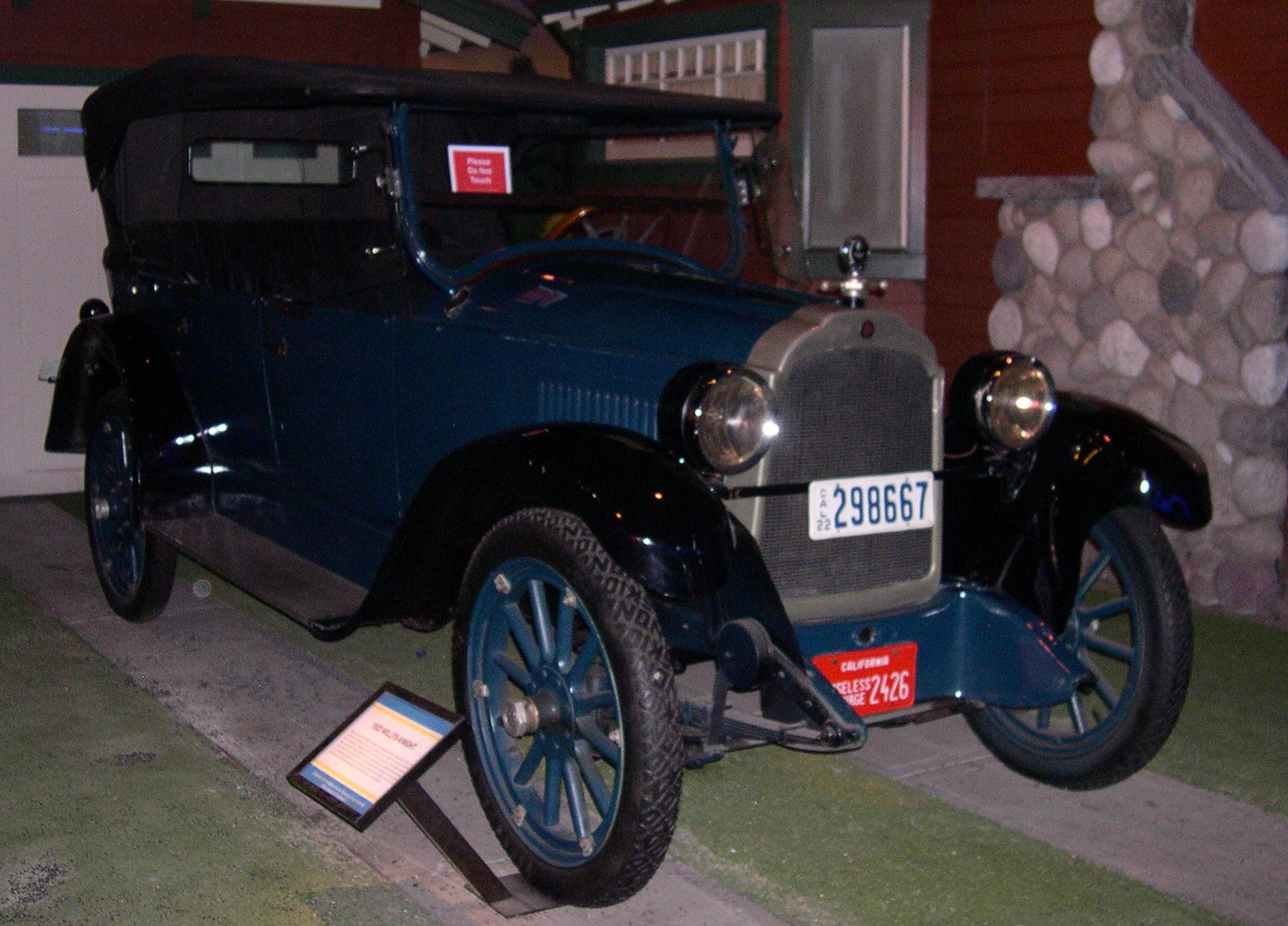
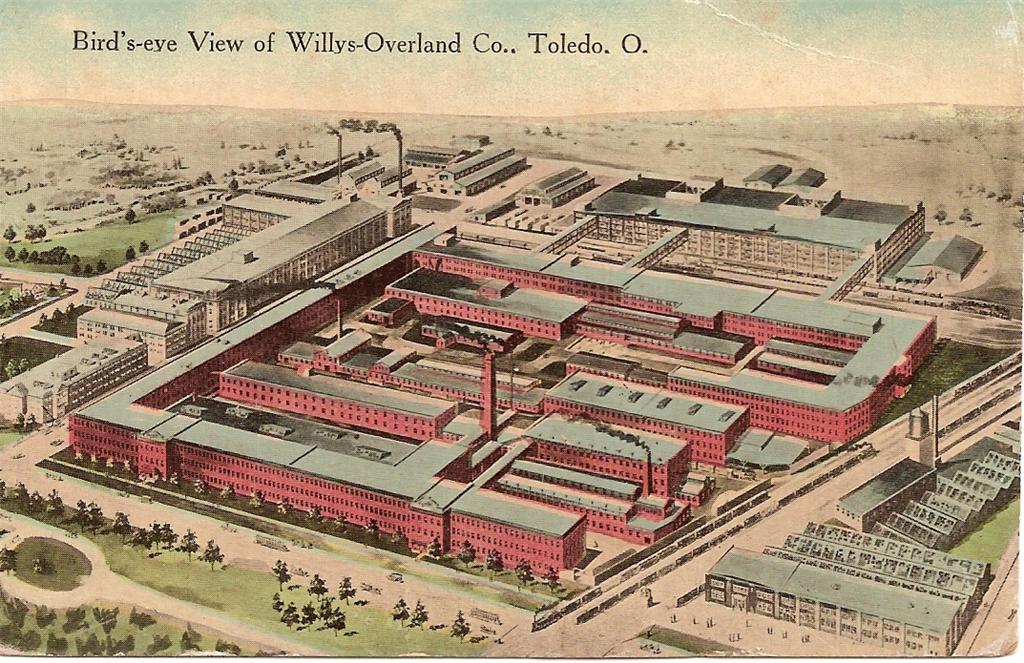
In 1912 he renamed the business Willys-Overland Motor Company. From 1912 to 1918 it was the second-largest car maker in the United States after Ford, and in 1915 its founder built a seven-storey headquarters in Toledo. In 1913 the company licensed Charles Yale Knight's sleeve-valve engine for a line of Willys-Knight cars. Through a holding company formed in 1917, John Willys built a group. It included Electric Auto-Lite (1914), the Russell Motor Car Company of Toronto, Curtiss Aeroplane and Motor of Buffalo, New Process Gear and the Moline Plow Company. In 1919 the group took control of Duesenberg and its plant in Elizabeth, New Jersey.
Walter Chrysler, debt and the Whippet
Expansion left the group heavily in debt. Strikes in 1919 closed the Toledo plant for months, and the post-war depression of 1920–1921 brought the Willys Corporation close to collapse. The banks hired Walter Chrysler to rescue it. He cancelled the planned Willys Six, attempted a takeover that failed and left in 1921; his engineers' later work led to the Chrysler Six of January 1924. The bankers forced a consolidation that included selling plants.
The company recovered in the mid-1920s. In 1925 its founder bought the F.J. Stearns company, and in 1926 the company introduced the Whippet, a small, low-priced car built until 1931. From May 1930 to May 1932 John Willys served as the first United States Ambassador to Poland under President Herbert Hoover.

Receivership and the Willys 77
The Depression hit the company hard. Ward M. Canaday became chairman in 1932 and led the company through receivership; the group entered bankruptcy reorganisation in 1933, the year Willys-Knight production ended. The company's answer was the small four-cylinder Willys 77 of 1933, which sold 12,800 that year, 13,234 in 1934 and 10,644 in 1935. In 1936 the company was renamed Willys-Overland Motors. The founder died on 26 August 1935 in New York and was later inducted into the Automotive Hall of Fame in 2008.
In 1938 Joseph W. Frazer became chief executive, and the engineer Barney Roos improved the four-cylinder engine for military use. It became the "Go Devil", the engine of the wartime Jeep.

The Willys MB Jeep
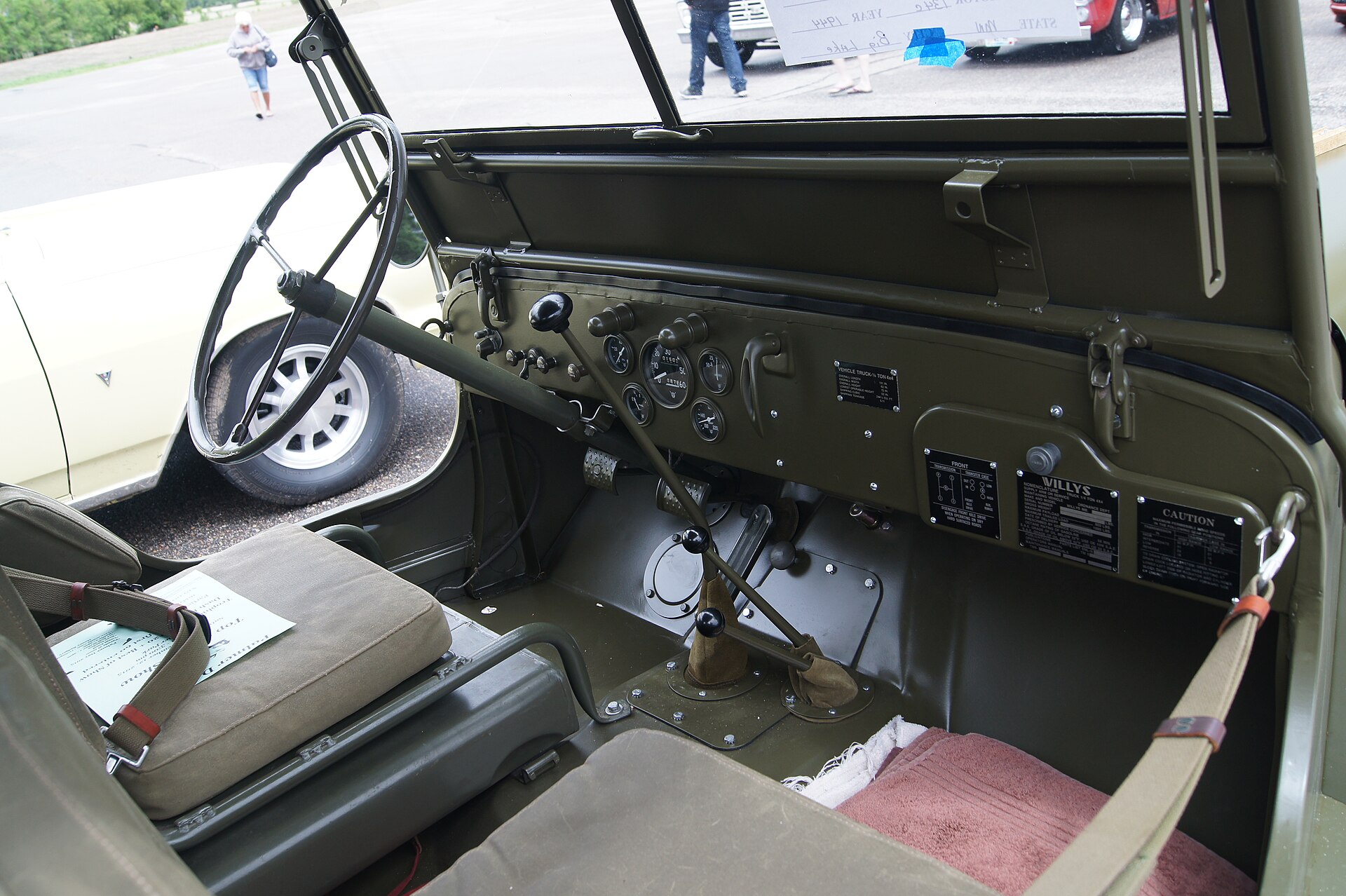
In 1940 three makers built prototypes of a quarter-ton four-wheel-drive car for the US Army: American Bantam (the BRC), Willys (the "Quad", later MA) and Ford (the "Pygmy", later GP). Wikipedia credits Bantam with inventing the quarter-ton Jeep, while describing the design as a team effort. In July 1941 the War Department chose the Toledo company for an order of 16,000 vehicles. In October 1941 Ford received contracts for 30,000 more, built to the same design as the Ford GPW. MB production began in November 1941.
The MB had a 2.2-litre "Go Devil" four with 45 kW (60 hp) gross, weighed about 1,060 kg dry and was 3.35 metres long. Figures for wartime production vary. The Willys-Overland article gives 647,870 Jeeps in total, 362,841 by Willys, 280,448 by Ford and 2,675 by Bantam. The Willys MB article gives about 363,000 MBs and about 280,000 GPWs. About 50,000 were exported under Lend-Lease, and General George Marshall called the Jeep "America's greatest contribution to modern warfare". The full story is in the Willys MB history.
The company applied to register "Jeep" as a trademark in February 1943. The Federal Trade Commission opened a case in May 1943 and in 1948 ordered it to stop claiming that it alone had created the Jeep.
Civilian Jeeps, the Station Wagon and the Aero
In 1945 the company turned the MB into the civilian CJ-2A, described as the world's first mass-produced civilian four-wheel-drive vehicle. In July 1946 it added the Willys Jeep Station Wagon. Brooks Stevens designed it so that outside sheet-metal suppliers could build the body, because the company could not afford to stamp its own. It is described as the first mass-market all-steel station wagon designed and built as a passenger vehicle. Four-wheel drive was offered from 1949, and the four-wheel-drive version is often considered the first production sport utility vehicle. More than 300,000 wagons and variants were built in the US up to 1964. The Jeepster open car of 1948–1951 sold 19,132, and the CJ-3B of 1952 passed 155,000 by 1968.
In 1952 the company returned to passenger cars with the compact Aero. A year later, in 1953, Kaiser Motors bought Willys-Overland and renamed it the Willys Motor Company, and the same year Willys-Overland do Brasil was founded. Kaiser closed its Willow Run operations in Michigan or moved them to Toledo in 1953–1954. Willys passenger-car production in the US ended in 1955, while Jeep production in Toledo continued. The Aero went into production in Brazil in 1960, and the Station Wagon was built there as the Willys Rural from 1958.

Kaiser-Jeep and the end of the Willys name
In 1963 the company was renamed Kaiser-Jeep Corporation, which ended the Willys name in the United States. The Jeep Wagoneer replaced the Station Wagon for the 1963 model year. Ford took control of Willys-Overland do Brasil in 1967 and renamed the Rural the Ford Rural. Kaiser-Jeep was sold to American Motors in 1970. Renault took a large stake in AMC in 1979, and Chrysler bought AMC in 1987, which is how the Jeep brand reached today's Stellantis. Its later story is told in the history of Jeep.
The Willys name itself has had two afterlives. In 2014 the Italian coachbuilder Carrozzeria Viotti acquired the Willys trademark, and in the early 2020s Stellantis revived the name as a trim level of the Jeep Gladiator. Willys models on 1cars are listed in the Willys catalogue.

Willys timeline
| Year | Event |
|---|---|
| 1873 | Founder born in Canandaigua, New York (25 October) |
| 1908 | Overland car business bought |
| 1912 | Willys-Overland Motor Company; second in the US behind Ford until 1918 |
| 1913 | Knight sleeve-valve engine licensed |
| 1917 | Holding company formed |
| 1919 | Duesenberg plant acquired; Toledo strikes |
| 1921 | Walter Chrysler leaves after the rescue attempt |
| 1926 | Whippet introduced |
| 1933 | Bankruptcy reorganisation; Willys 77; end of Willys-Knight |
| 1935 | Founder dies (26 August) |
| 1941 | Army contract (July); MB production begins (November) |
| 1945 | Civilian CJ-2A |
| 1946 | Jeep Station Wagon (July) |
| 1953 | Kaiser takes over; Brazilian company founded |
| 1963 | Renamed Kaiser-Jeep; name ends in the US |
Landmark Willys models
| Model | Years | Why it matters |
|---|---|---|
| Willys-Knight | 1913–1933 | Cars with Knight sleeve-valve engines |
| Whippet | 1926–1931 | Low-priced small car |
| Willys 77 | 1933–1935 | Car of the receivership years |
| MB | 1941–1945 | The wartime Jeep |
| CJ-2A | 1945 onwards | First mass-produced civilian 4x4 |
| Jeep Station Wagon | 1946–1964 | All-steel wagon, often called the first SUV |
| Aero | 1952 onwards | Compact car, later built in Brazil |
FAQ
Who founded Willys?
John North Willys, a car dealer from New York state. He bought the Overland car business in 1908 and gave it his name in 1912.
Did Willys invent the Jeep?
American Bantam built the first prototype, and Wikipedia describes the design as a team effort. The Toledo company won the main army contract in July 1941, and Ford built the same design as the GPW.
How many Jeeps did Willys build in the Second World War?
The Willys-Overland article gives 362,841 out of 647,870 military Jeeps; the Willys MB article gives about 363,000.
What happened to Willys?
Kaiser bought it in 1953, and in 1963 it became Kaiser-Jeep, ending the name in the US. The Jeep brand passed to AMC, Chrysler and Stellantis.
Sources
- Wikipedia — Willys-Overland (accessed 24 Oct 2026)
- Wikipedia — John Willys (accessed 24 Oct 2026)
- Wikipedia — Willys MB (accessed 24 Oct 2026)
- Wikipedia — Willys Jeep Station Wagon (accessed 24 Oct 2026)
- Wikipedia — Kaiser Motors (accessed 24 Oct 2026)
Found a mistake? Report an error