Messerschmitt — Fritz Fend's Kabinenroller bubble cars, 1953 to 1964
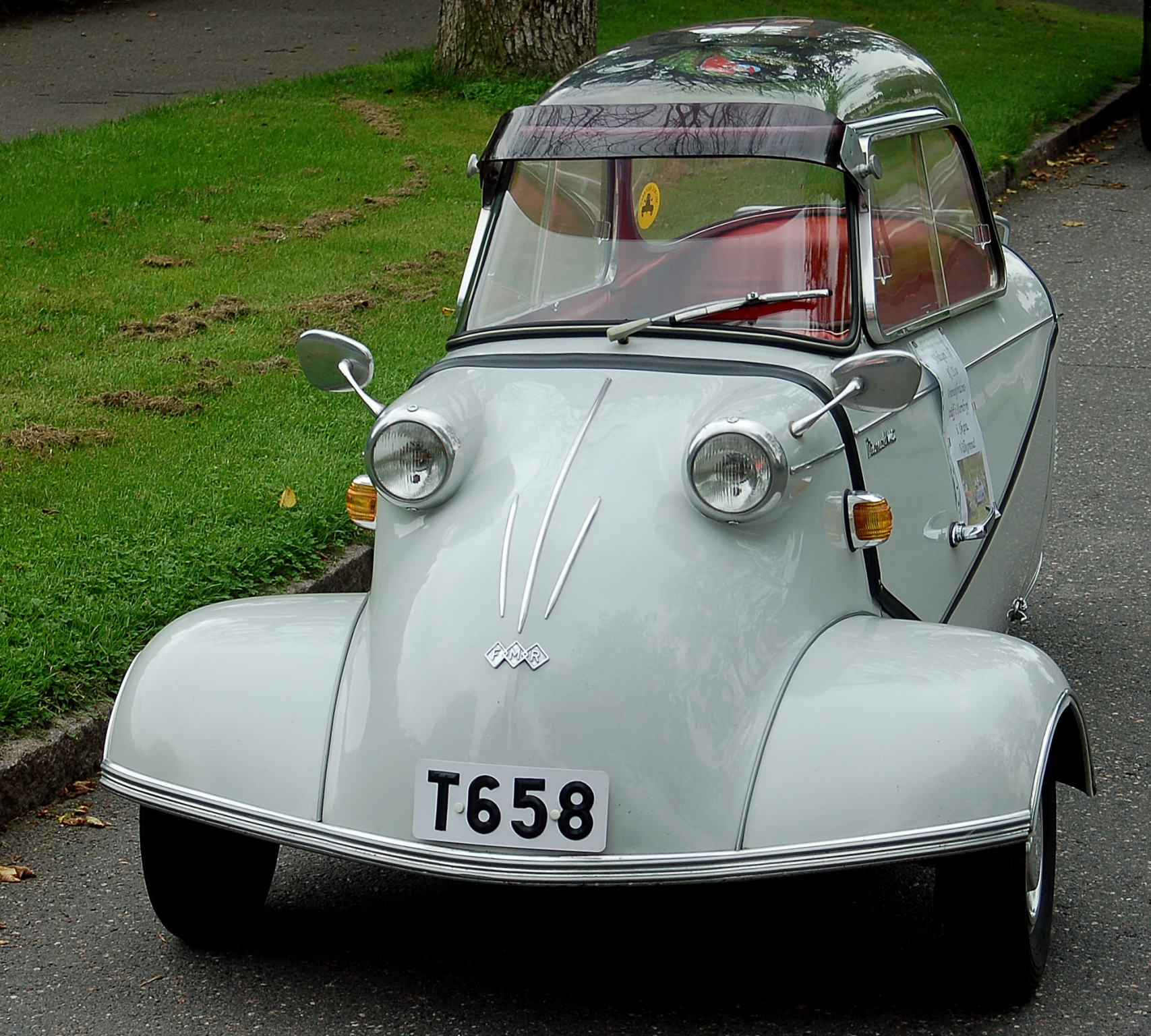
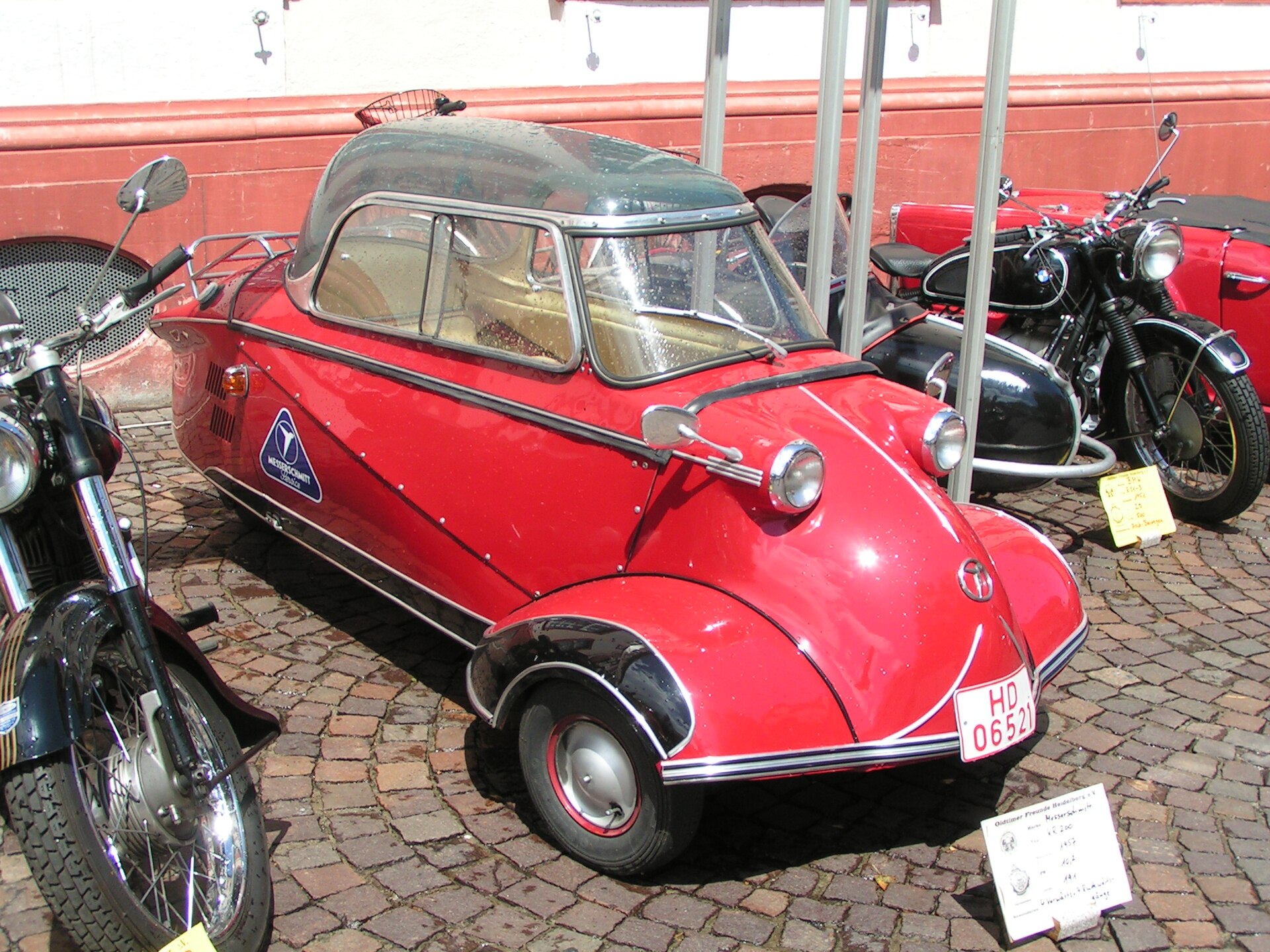
Messerschmitt is best known as an aircraft maker, but from 1953 to 1964 its name was also on one of the most famous bubble cars: the Kabinenroller ("cabin scooter"). The small three-wheelers KR175 and KR200 had two seats in tandem under a hinged canopy and handlebar-style steering. They were designed by the engineer Fritz Fend and built in the Messerschmitt works at Regensburg while the company was not allowed to make aircraft. From 1956 production continued under Fend's own company, FMR, which also built the four-wheeled Tg500 sports car.
Key takeaways
- Fritz Fend proposed the idea to Messerschmitt in 1952, based on his Fend Flitzer invalid carriage; KR175 production began in February 1953.
- The KR200 of 1955 had a 191 cc Fichtel & Sachs two-stroke with 7.4 kW (10 PS) and reached more than 90 km/h.
- On 29–30 August 1955 a modified KR200 set a 24-hour record of 103 km/h at Hockenheim and broke 22 international class records.
- Production ended in 1964; the KR200 article gives 30,286 KR200s, and the total for all Kabinenroller is about 41,190.
Messerschmitt cars at a glance
| Fact | Value |
|---|---|
| Years | 1953–1964 |
| Designer | Fritz Fend (1920–2000) |
| Plant | Messerschmitt works, Regensburg |
| Maker | Messerschmitt (1953–1956); FMR, Fahrzeug- und Maschinenbau GmbH Regensburg (from 1956) |
| Models | KR175, KR200, KR201 Roadster, FMR Tg500 |
| Layout | Three wheels (four on the Tg500), two seats in tandem |
| Engines | Fichtel & Sachs single-cylinder two-strokes; twin-cylinder in the Tg500 |
| Built | About 41,190 Kabinenroller in total |
Fritz Fend and the Flitzer
Fritz Fend was born in Rosenheim on 14 April 1920. During the war Fend served as a technical officer with the Luftwaffe, and afterwards opened a workshop in Rosenheim. In 1948 Fend designed a three-wheeled invalid carriage, and an engine-powered version, the Fend Flitzer, followed. About 250 Flitzers were built between 1948 and 1951.
After the Second World War Messerschmitt was not allowed to produce aircraft for ten years. Among other things, the company made prefabricated houses. In 1952 Fend approached Willy Messerschmitt with a plan to build a developed version of his small vehicle, and Messerschmitt accepted. The cars were actually made by Fend's own company in the Messerschmitt works at Regensburg. Willy Messerschmitt's role was mainly to lend his name.
The KR175, 1953–1955
Production of the KR175 began in February 1953. It was a narrow three-wheeler. The driver and passenger sat one behind the other under a large Plexiglas dome, which opened upwards and to the right.
| KR175 | Value |
|---|---|
| Engine | 173 cc Fichtel & Sachs single-cylinder two-stroke, air-cooled |
| Power | 6.7 kW (9 hp) at 5,250 rpm |
| Top speed | 80 km/h |
| Price | DM 2,100 (1953–1955) |
| Built | About 15,000; another source gives 19,668 |

The KR200, 1955–1964
In 1955 the KR200 replaced the KR175. It was 23 kg heavier but had a larger engine, a 191 cc Fichtel & Sachs two-stroke single with 7.4 kW (10 PS), and its top speed was 10 km/h higher, at more than 90 km/h. The canopy door was hinged on the right. Steering was by a bar that swivelled from its horizontal straight-ahead position, and there was no reverse gear as such. To reverse, the driver restarted the engine so that it ran backwards, by pushing the ignition key further in.
The KR200 sold well from the start. About 12,000 were built in its first year, the highest annual output of any Kabinenroller model, and the price was around DM 2,500 (1955).
The car also proved its endurance. On 29 and 30 August 1955 a modified KR200 ran for 24 hours at the Hockenheimring. It set a 24-hour record of 103 km/h and broke 22 international class records in total.

FMR: Fend's own company takes over
In 1956, about a year after West Germany joined NATO, Messerschmitt was allowed to build aircraft again. It sold the Regensburg works to Fend, who formed Fahrzeug- und Maschinenbau GmbH Regensburg (FMR) with Valentin Knott to continue production.
FMR widened the range. The KR201 Roadster arrived in 1957 and stayed in very small numbers until 1964. In February 1958 the KR200 Kabrio Limousine was released. About 12 "Service Cars" were also built.
The most ambitious model was the FMR Tg500, made from 1958 to 1961. It had four wheels and a 494 cc air-cooled two-cylinder two-stroke engine with 15 kW (20 hp), and reached 126 km/h. It cost DM 3,650 (1958–1961), about 46 per cent of the price of an Austin-Healey Sprite. About 320 were made.

The end of the bubble car
KR200 production was heavily reduced in 1962 and ended in 1964. The KR200 article gives 30,286 KR200s, while its infobox gives about 41,190 for the whole Kabinenroller run.
Messerschmitt itself went on in aviation. On 6 June 1968 Messerschmitt AG merged with Bölkow, and in May 1969, after taking over Hamburger Flugzeugbau, it became Messerschmitt-Bölkow-Blohm (MBB). DASA took over MBB in 1989, and the business is now part of Airbus. Fritz Fend died on 22 November 2000. In the 1990s Fend had worked on a new small vehicle, the F2000, which reached the prototype stage.
The Messerschmitt models on 1cars are listed in the Messerschmitt catalogue, and the best-known car has its own page on the Messerschmitt KR200 bubble car. More small post-war cars are in the classic cars section.
Messerschmitt timeline
| Year | Event |
|---|---|
| 1948 | Fend Flitzer invalid carriage |
| 1952 | Fend proposes the small car to Messerschmitt |
| 1953 | KR175 production begins (February) |
| 1955 | KR200 replaces the KR175; 24-hour record at Hockenheim (29–30 August) |
| 1956 | Regensburg works sold to Fend; FMR founded |
| 1957 | KR201 Roadster |
| 1958 | KR200 Kabrio Limousine (February); Tg500 |
| 1961 | Last Tg500 |
| 1962 | KR200 production heavily reduced |
| 1964 | Production ends |
Landmark Messerschmitt models
| Model | Years | Why it matters |
|---|---|---|
| KR175 | 1953–1955 | First Messerschmitt Kabinenroller |
| KR200 | 1955–1964 | Best-selling model; 24-hour record in 1955 |
| KR201 Roadster | 1957–1964 | Open version, very limited numbers |
| FMR Tg500 | 1958–1961 | Four-wheeled sports model with 15 kW (20 hp) |
Photo gallery


FAQ
Did Messerschmitt really make cars?
Yes. From 1953 the Messerschmitt works in Regensburg built Fritz Fend's KR175 and KR200 three-wheelers. From 1956 Fend's company FMR continued production.
Who designed the Messerschmitt KR200?
The engineer Fritz Fend, who developed it from his Fend Flitzer invalid carriage.
How do you reverse a Messerschmitt KR200?
There is no reverse gear. The driver restarts the two-stroke engine so that it runs backwards, by pushing the ignition key further in.
How fast is a Messerschmitt KR200?
More than 90 km/h in standard form. A modified KR200 averaged 103 km/h for 24 hours at Hockenheim in 1955.
When did production end?
In 1964. The four-wheeled Tg500 had ended in 1961.
Sources
- Wikipedia — Messerschmitt KR200 (accessed 24 Oct 2026)
- Wikipedia — Messerschmitt KR175 (accessed 24 Oct 2026)
- Wikipedia — FMR Tg500 (accessed 24 Oct 2026)
- Wikipedia — Fritz Fend (accessed 24 Oct 2026)
- Wikipedia — Messerschmitt (accessed 24 Oct 2026)
Found a mistake? Report an error