 Holden HJ Monaro GTS
Specs, engines and history
Published Sources (2) Report an error
By Sarah Whitmore, Senior Automotive Writer
- Built
- 1974–1976
- Top power
- 179 kW (243 PS)
Holden was Australia's own car maker for most of the 20th century. It began in 1856 as J. A. Holden & Co., a saddlery in Adelaide, registered Holden's Motor Body Builders in 1919 and merged with General Motors' Australian arm in 1931 to form General Motors-Holden's. In 1948 it launched the 48-215, the first Australian-designed mass-produced car, and the Commodore of 1978 became its most popular model. Holden was the country's best-selling vehicle brand until 2002. Local manufacturing ended on 20 October 2017, and GM retired the brand at the end of 2020.
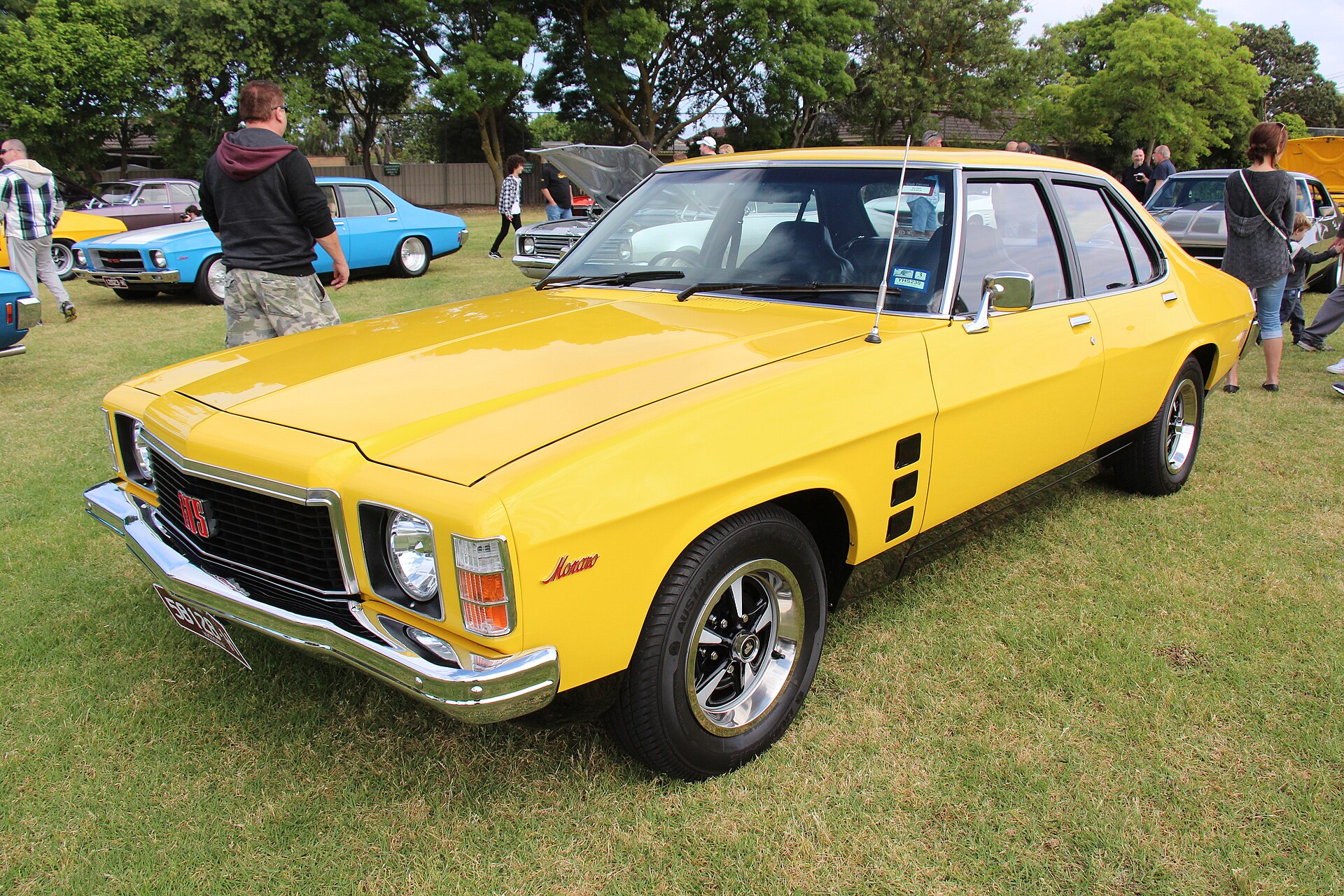
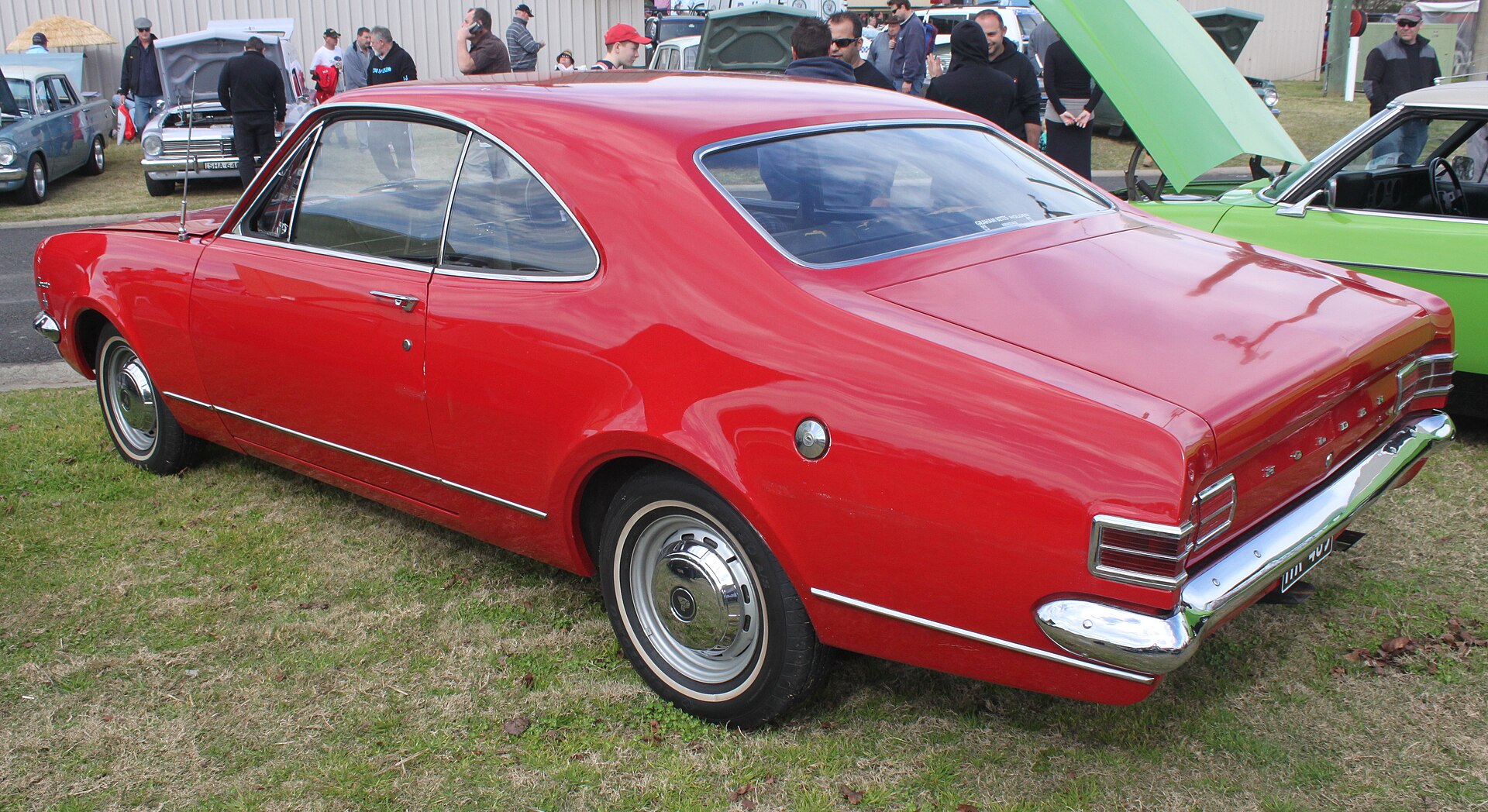
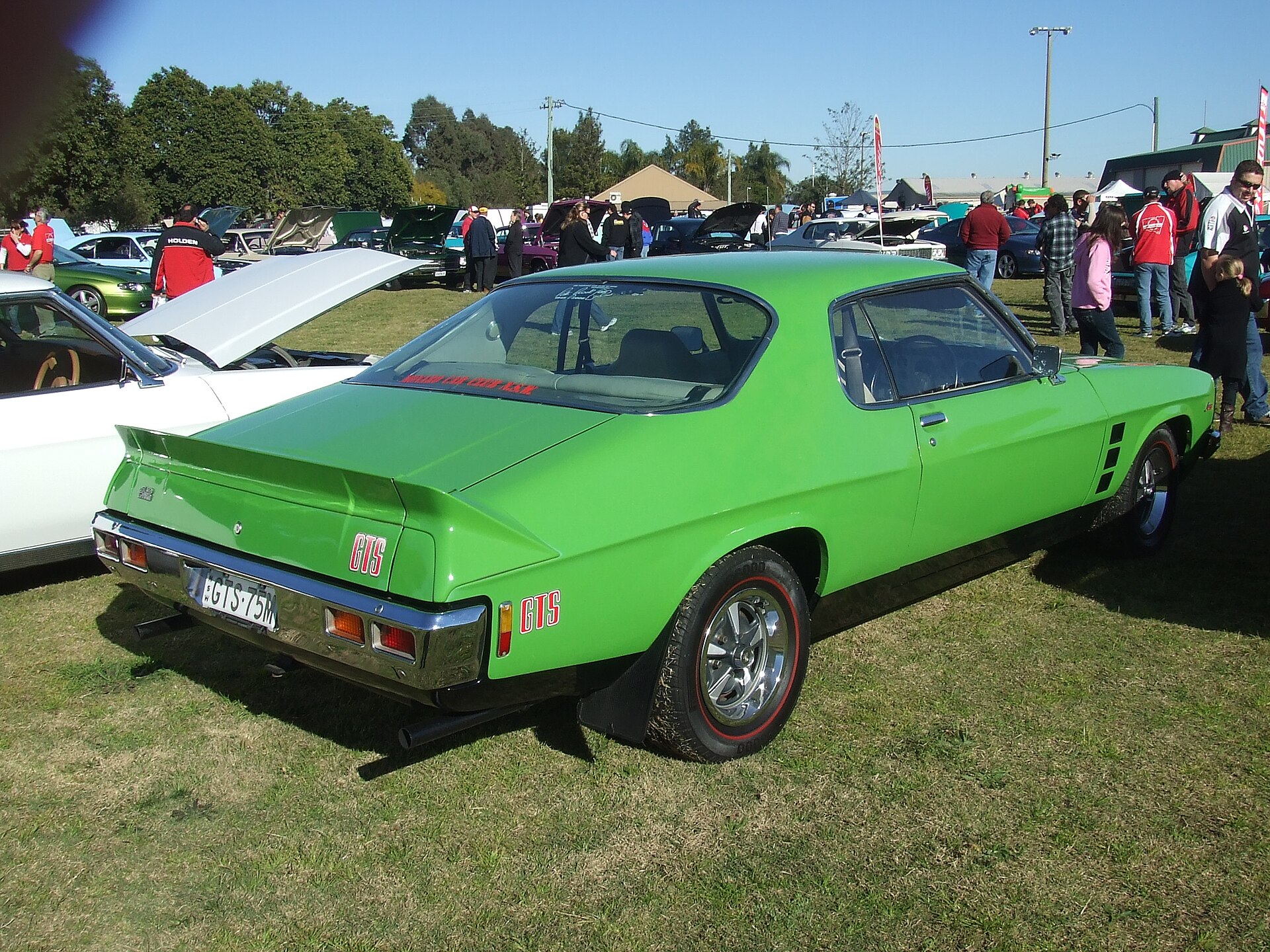
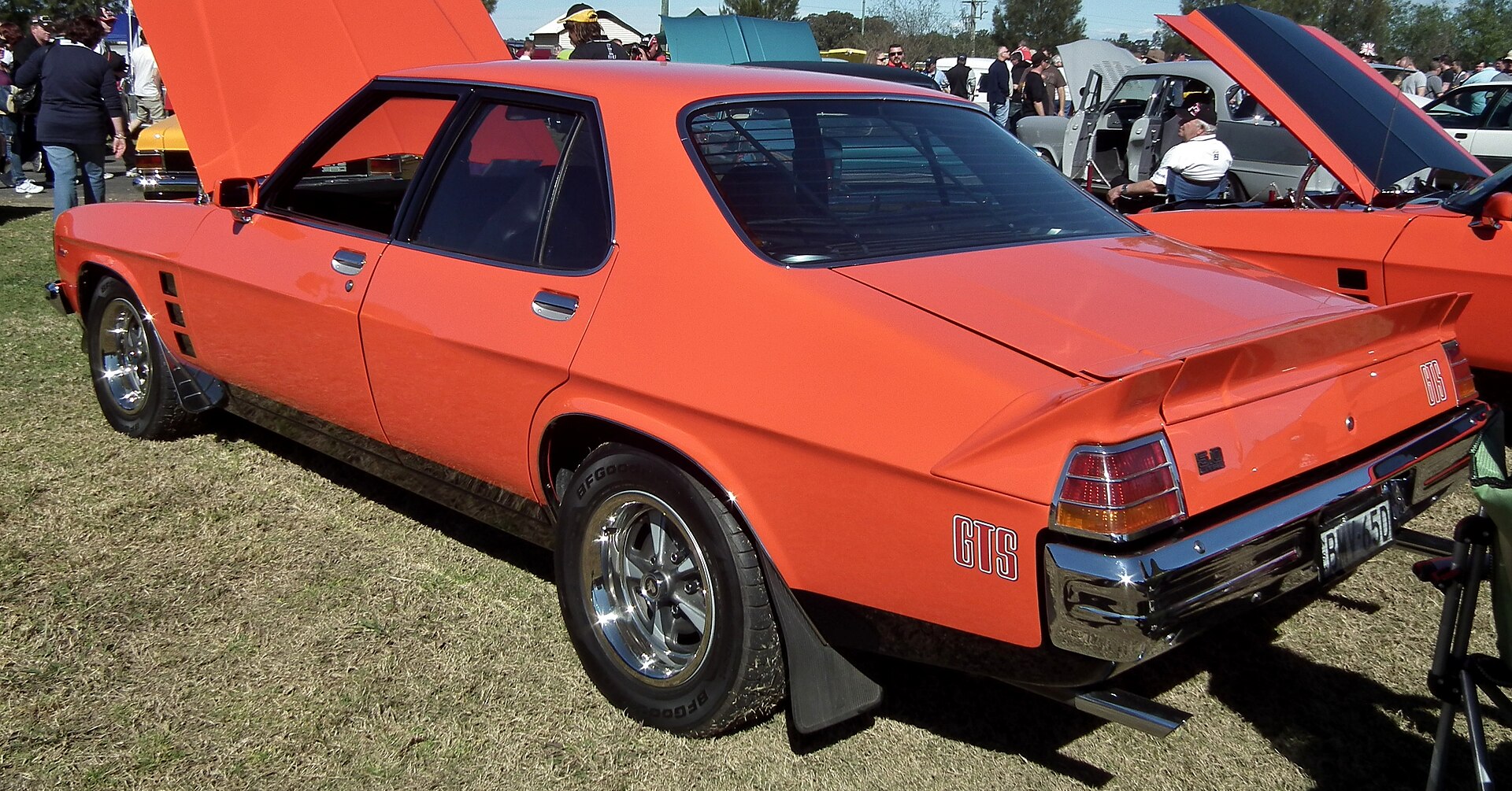
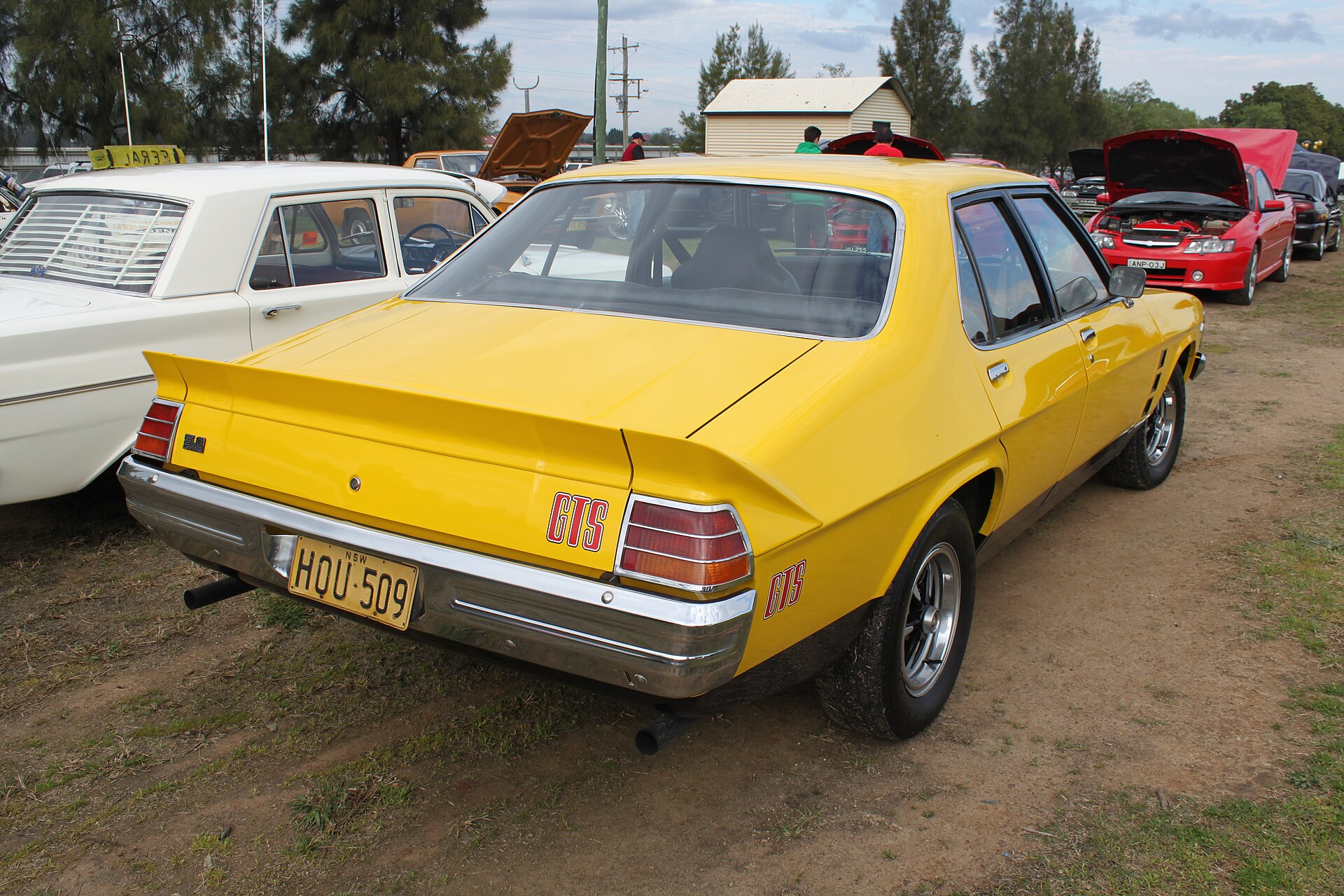
The HJ Monaro GTS was the V8 sports version of Holden's HJ family car, sold from October 1974 to July 1976. It was offered as a two-door coupé and as a four-door sedan, with a 4.2-litre V8 as standard and a 5.0-litre V8 as an option. It came between the HQ Monaro of the early 1970s and the HX, the last of the original Monaro line.
Size at a glance
| Dimensions | Holden Monaro HJ |
|---|---|
| Length | 4,839 mm190.5 in |
| Width | 1,875 mm73.8 in |
| Height | 1,367 mm53.8 in |
| Wheelbase | 2,819 mm111.0 in |
Specs by version
Engines
| Version | Engine | Power | Torque | Gearbox | Drive | Production years |
|---|---|---|---|---|---|---|
| GTS 4.2 V8 (253) | 4.1 l · 8 cyl · Petrol 4,146 cc | 138 kW 188 PS185 hp | 355 Nm262 lb-ft | 4-sp Manual | Rear-wheel drive | 1974–1976 |
| GTS 5.0 V8 (308) | 5.0 l · 8 cyl · Petrol 5,044 cc | 179 kW 243 PS240 hp | 427 Nm315 lb-ft | 4-sp Manual | Rear-wheel drive | 1974–1976 |
Dimensions and weight
Verified Manufacturer and type-approval data from our catalog · Sources and methodology
In short
- HJ series released on 4 October 1974 and replaced by the HX in July 1976; 176,202 HJ cars of all types were built.
- Monaro GTS coupé and sedan with V8 engines only: 4.2-litre (253) with 138 kW (185 hp) or 5.0-litre (308) with 179 kW (240 hp).
- The GTS 350 with the 5.7-litre V8 was dropped for the HJ.
- The Monaro name, taken from a region of New South Wales, was used from 1968 to 1977 and again from 2001.
Holden HJ Monaro GTS at a glance
| Parameter | Value |
|---|---|
| Maker | General Motors-Holden's, Australia |
| Production | October 1974 – July 1976 |
| Series | Holden HJ (Belmont, Kingswood, Premier, Monaro, Statesman) |
| Bodies | two-door coupé, four-door sedan |
| Engines | Holden 253 V8 (4,143 cc), Holden 308 V8 (5,044 cc) |
| Power | 138 kW (185 hp) or 179 kW (240 hp) |
| Torque | 355 Nm or 427 Nm |
| Drive | rear-wheel drive |
| Plants | Elizabeth (Adelaide), Dandenong (Melbourne), Pagewood (Sydney), Trenham (New Zealand) |
| Designers | Leo Pruneau and Peter Nankervis, under Joe Schemansky |
| Predecessor / successor | HQ Monaro GTS / HX Monaro GTS |
The Monaro line from HK to HX
Holden named the Monaro after the Monaro region of New South Wales. The first car, the HK of 1968, was a pillarless two-door hardtop in base, GTS and GTS 327 forms, with Holden six-cylinder engines and V8s of up to 5.4 litres. It made its name quickly: an HK Monaro GTS 327 driven by Bruce McPhee and Barry Mulholland won the 1968 Hardie-Ferodo 500 at Bathurst, Holden's first win in the race. In 1969 Colin Bond and Tony Roberts won again for the Holden Dealer Team in an HT Monaro GTS 350.
| Series | Years | Key change |
|---|---|---|
| HK | 1968–1969 | first Monaro, pillarless hardtop, GTS 327 |
| HT | 1969–1970 | GTS 350 with 5.7-litre V8; first Holden-built 4.2 and 5.0 V8s |
| HG | 1970–1971 | last version of the original body, "sidewinder" stripes |
| HQ | 1971–1974 | new body with four headlights; four-door GTS sedan from 1973 |
| HJ | 1974–1976 | facelift, GTS with Holden V8 only |
| HX | 1976–1977 | facelift for new emission rules; Limited Edition coupé |
The HQ of 1971 changed the formula. It brought an all-new body, and in 1973 Holden added a four-door GTS sedan with paint-outs on the bonnet and boot lid. The HJ carried both bodies over into 1974.

Development and production history
Holden released the HJ series on 4 October 1974 as a facelift of the HQ, which had been in production since 1971. Leo Pruneau and Peter Nankervis styled it under the direction of Joe Schemansky. The front became square, with wraparound indicators, and the sedans gained a new rear bumper and triangular wraparound tail-lights.
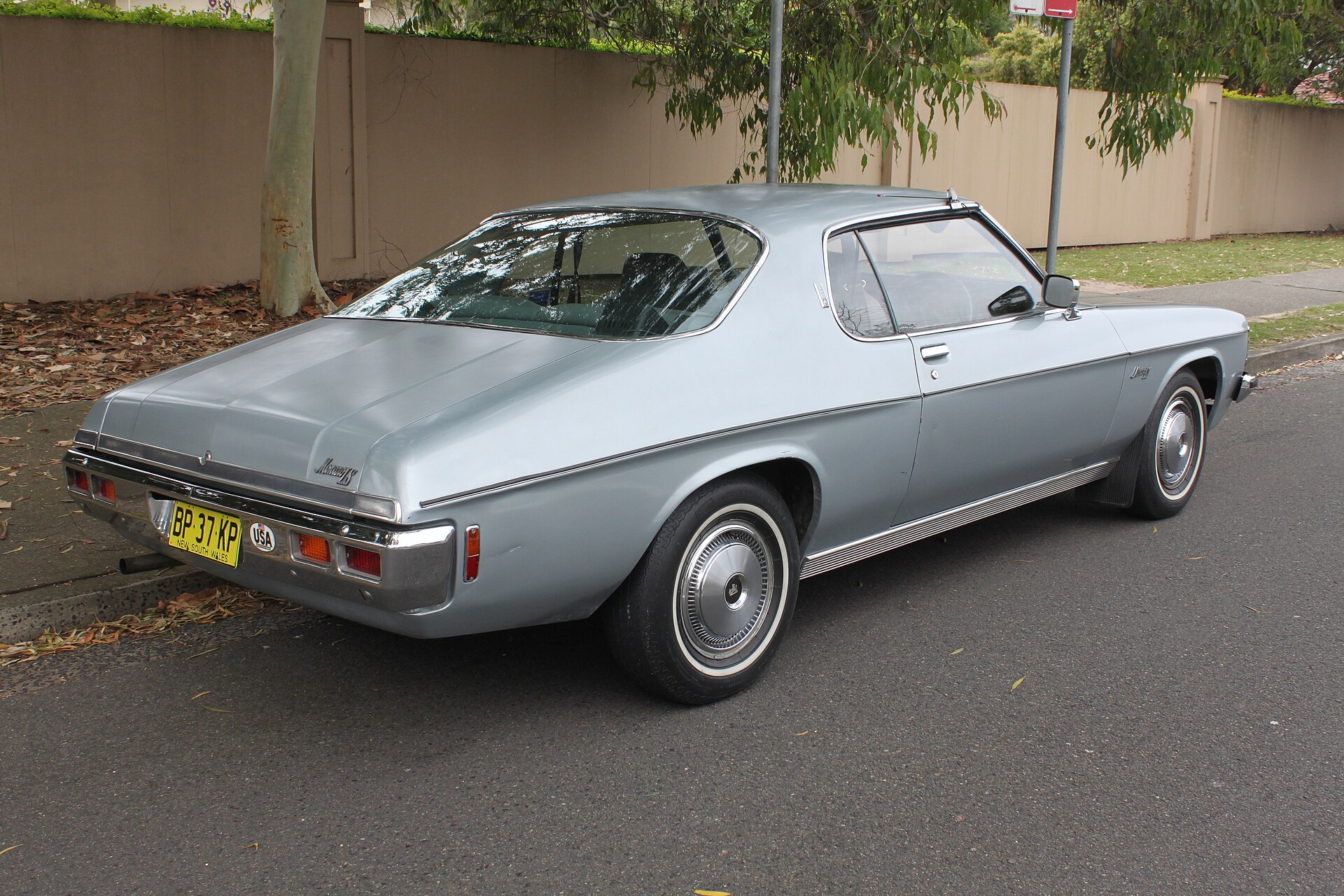
The Monaro range was cut back for the HJ. The base Monaro coupé of the HQ was not carried over, and the GTS 350 coupé and sedan with the 5.7-litre V8 were dropped. What remained was the Monaro LS coupé, the GTS coupé and the GTS sedan. The cars were assembled in Elizabeth near Adelaide, Dandenong near Melbourne, Pagewood in Sydney and Trenham in New Zealand. Production of all HJ models ended in July 1976 at 176,202 cars, when the HX took over.
| Year | Event |
|---|---|
| 1968 | HK Monaro launched; GTS 327 wins at Bathurst |
| 1969 | HT series brings Holden's own V8 engines |
| 1971 | HQ series with an all-new body |
| 1973 | four-door Monaro GTS sedan added |
| 4 October 1974 | HJ series released, Monaro GTS with V8 engines only |
| July 1976 | HJ replaced by the HX, with engines for the ADR27A emission rules |
| 27 September 1976 | HX Limited Edition coupé released, 580 built |
Design and engineering
The Monaro GTS shared its body with the mainstream HJ Kingswood and Premier sedans and with the Monaro coupé. Two changes set the GTS apart from the HQ version. The body paint-outs were dropped, and front and rear spoilers became optional for the first time.
The HJ range also included the long-wheelbase Statesman de Ville and Caprice, marketed as Statesmans rather than Holdens. The Sandman utility and panel van used styling features from the Monaro GTS.


Engine and drivetrain
Both GTS engines were Holden's own V8, nicknamed the "Iron Lion", which had been introduced in the HT series in 1969. The 253 displaced 4,143 cc and the 308 5,044 cc, with a larger bore in the 308.
| Engine | Displacement | Power | Torque |
|---|---|---|---|
| 253 V8 (4.2) | 4,143 cc | 138 kW (185 hp) at 4,400 rpm | 355 Nm at 2,400 rpm |
| 308 V8 (5.0) | 5,044 cc | 179 kW (240 hp) at 4,800 rpm | 427 Nm at 3,000 rpm |
The six-cylinder engines of 2.8 and 3.3 litres were offered in other HJ models and in the Monaro LS coupé, but not in the GTS. The 308 gives the GTS 41 kW and 72 Nm more than the standard 253.
Holden HJ Monaro GTS specifications
| Parameter | Metric | Imperial |
|---|---|---|
| Displacement, 253 V8 | 4,143 cc | 253 cu in |
| Displacement, 308 V8 | 5,044 cc | 308 cu in |
| Power, 253 V8 | 138 kW | 185 hp |
| Power, 308 V8 | 179 kW | 240 hp |
| Torque, 253 V8 | 355 Nm | 262 lb-ft |
| Torque, 308 V8 | 427 Nm | 315 lb-ft |
| Wagon wheelbase over sedan | +76.2 mm | +3 in |
Variants and derivatives
| Variant | Years | Body / purpose | Engine | Notes |
|---|---|---|---|---|
| Monaro GTS sedan | 1974–1976 | four-door sports sedan | 253 or 308 V8 | the catalogue model |
| Monaro GTS coupé | 1974–1976 | two-door coupé | 253 or 308 V8 | continued until 1976 |
| Monaro LS coupé | 1974–1976 | two-door coupé | 3.3 six as standard | 337 built |
| Statesman de Ville / Caprice | 1974–1976 | long-wheelbase luxury sedan | six and V8 | sold as Statesman |
| Sandman | 1974–1976 | utility and panel van | - | used GTS styling features |
English Wikipedia's Monaro article gives 606 GTS cars in total for the HJ series, without splitting the figure between coupé and sedan.

In service: emissions and the end of the first Monaro
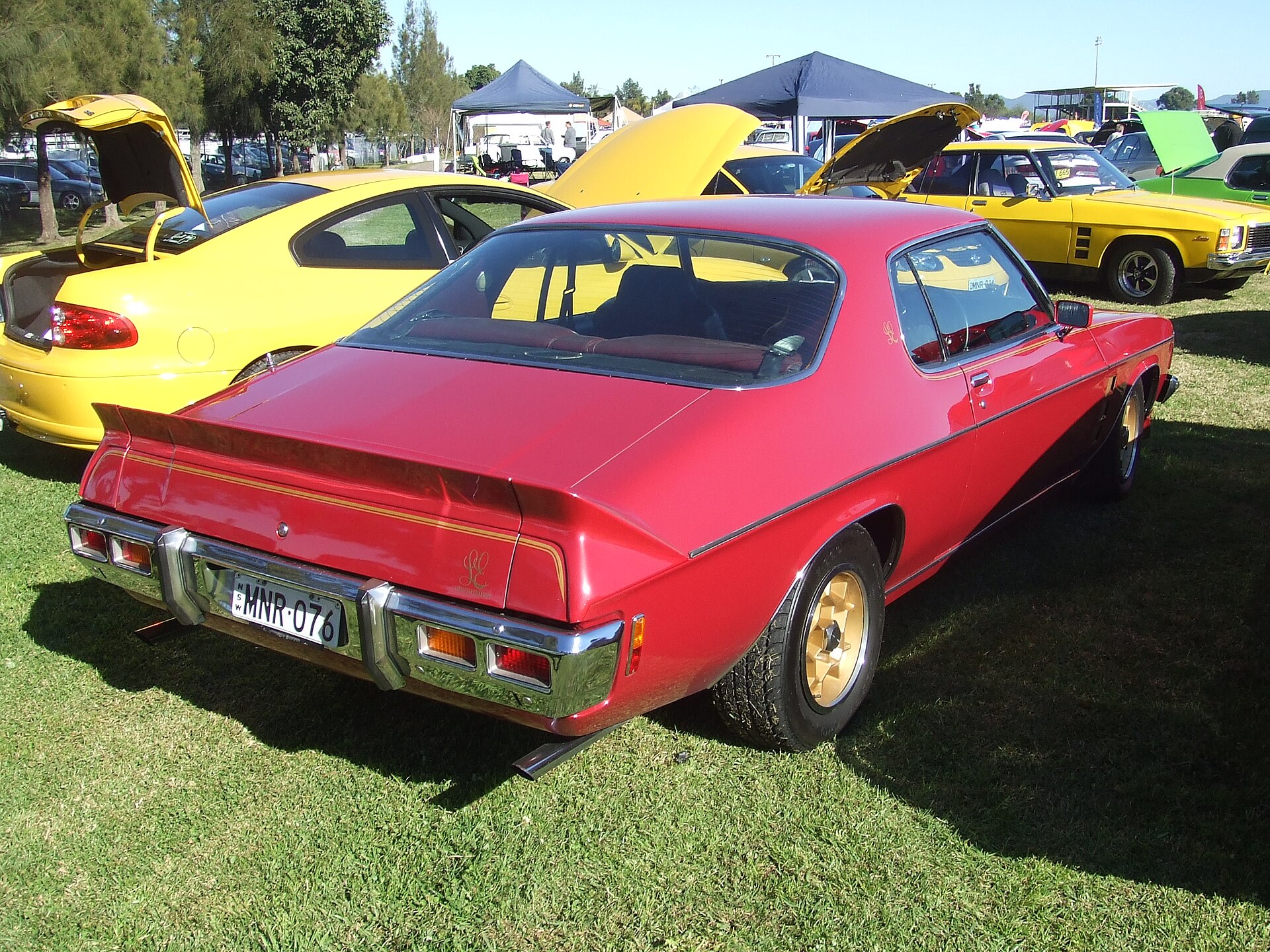
The HJ was the last Monaro before stricter emission rules. In July 1976 the HX series introduced engines that met the Australian Design Rule 27A on fuel and exhaust emissions. The 253 dropped to 120 kW (160 hp) and 325 Nm, and the 308 to 161 kW (216 hp) and 400 Nm. On 27 September 1976 Holden released the HX Limited Edition, a coupé in LE Red with honeycomb wheels that mixed GTS and Statesman Caprice parts. Only 580 were built, at Pagewood, and Holden did not sell it under the Monaro name.
The name returned in November 2001 on a coupé based on the VX Commodore, with a supercharged 3.8-litre V6 or a 5.7-litre V8, and stayed in production until 2006. Holden's V8 engine itself stayed in production until 2000. The wider story of Holden's parent is told in our history of General Motors.

Preservation and collecting today
Holden no longer exists, so the HJ Monaro GTS belongs to a closed chapter of Australian car making; other defunct makers are collected in our lost car brands section. Within the GTS range, the main distinctions are the engine (253 or 308), the body (coupé or sedan) and the optional front and rear spoilers. With only 606 GTS cars recorded by English Wikipedia and 337 LS coupés, the HJ Monaro is far rarer than the 176,202 HJ cars built in total. American V8 cars of the same era are covered in our Chevrolet Chevelle guide and in the muscle cars section.
Photo gallery


Holden HJ Monaro GTS in our rankings
- No. 26 of 131 · Biggest engines: sedans (5,044 cc · top 20%)
- No. 93 of 420 · Longest cars (4,839 mm · top 23%)
- No. 132 of 557 · Biggest engines: cars (5,044 cc · top 24%)
- No. 25 of 80 · Widest sedans (1,875 mm · top 32%)
- No. 35 of 86 · Longest sedans (4,839 mm · top 41%)
- No. 168 of 403 · Widest cars (1,875 mm · top 42%)
Bigger engine than 80% of ranked sedans in the 1CARS catalog (No. 26 of 131).
Holden HJ Monaro GTS photos 6
FAQ
What engines did the HJ Monaro GTS have?
Only V8s: the 4.2-litre 253 with 138 kW (185 hp) as standard and the 5.0-litre 308 with 179 kW (240 hp) as an option.
Was there a four-door Monaro?
Yes. Holden added a four-door GTS sedan in the HQ series in 1973 and kept it for the HJ series.
When was the HJ Monaro GTS built?
From October 1974 until July 1976, when the HX series replaced it.
Why is it called Monaro?
It is named after the Monaro region in New South Wales.
Is Holden still making cars?
No. Australian production ended in October 2017, and General Motors retired the Holden brand at the end of 2020.
Data sources
Data checked by an editor against the sources below.
- Wikipedia - Holden Monaro
- Com - Holden HJ technical specifications