 Hispano-Suiza H6
Specs, engines and history
Published Sources (1) Report an error
By Felix Hartmann, Automotive Technology & EV Contributor
- Built
- 1919–1933
- Top power
- 145 kW (197 PS)
Hispano-Suiza, Spanish for "Spanish-Swiss", was founded in Barcelona on 14 June 1904 by the Swiss engineer Marc Birkigt and the Spanish businessman Damián Mateu. Birkigt had come to Barcelona to work for Emilio de la Cuadra, who had started making electric cars there in 1898. Its Alfonso XIII of 1912 had a 3,620 cc four-cylinder engine with 48 kW (64 hp) and a top speed of 121 km/h. A French branch began assembly near Paris in 1911 and moved to Bois-Colombes in 1914. In the First World War Birkigt's Hispano-Suiza 8 V8 aero engine powered more than half of all Allied fighter aircraft. Its French company stopped making cars in 1938 to build aero engines; the Spanish car business went to the state-owned ENASA in 1946.
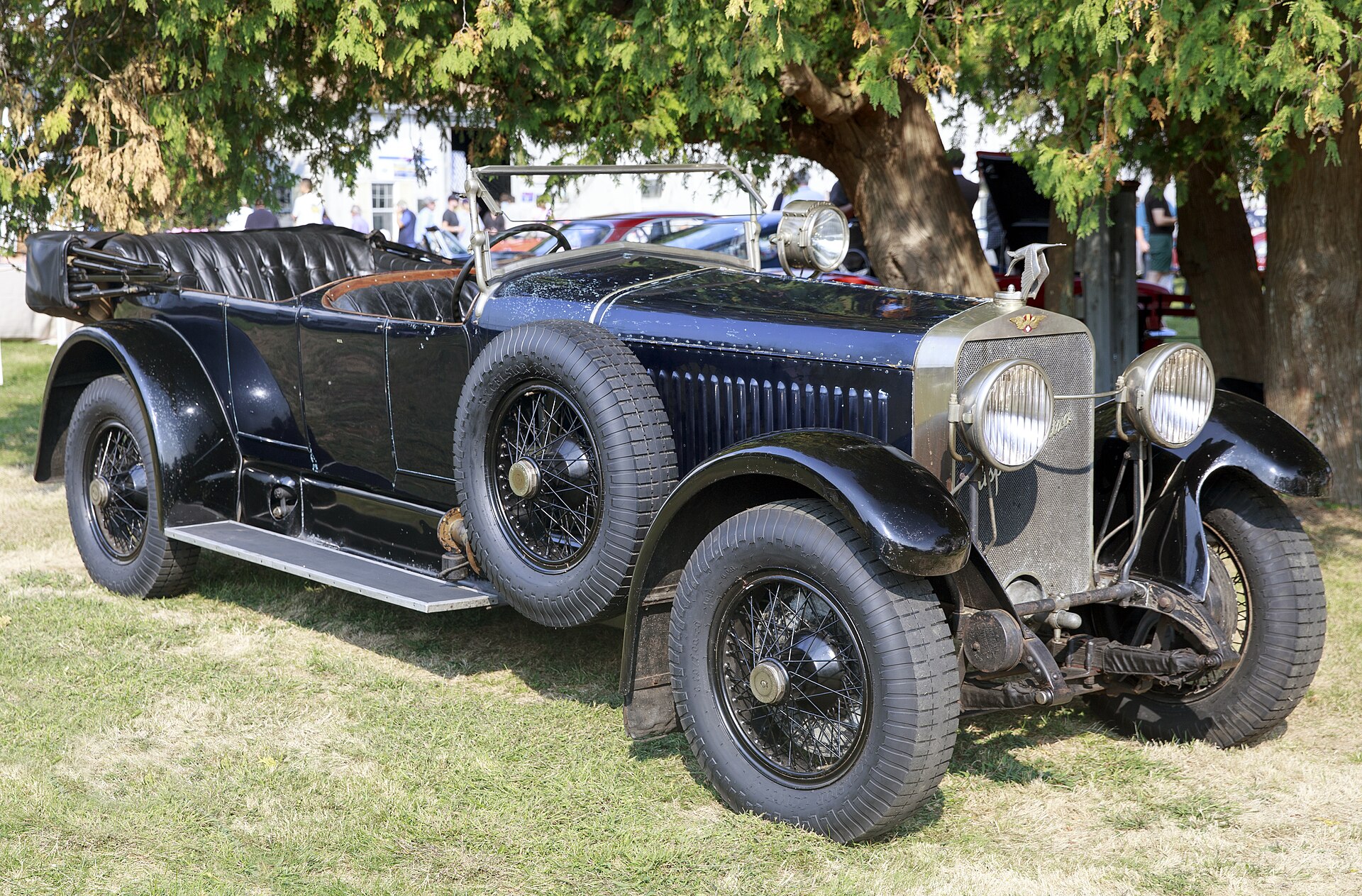
The H6 was Hispano-Suiza's main car of the 1920s. Shown at the Paris Motor Show in 1919, it had a 6.6-litre overhead-camshaft straight-six derived from Birkigt's aero engines. Its servo-assisted brakes on all four wheels were licensed to Rolls-Royce. About 2,350 H6, H6B and H6C cars were made up to 1933, almost all at Bois-Colombes, and racing versions won at Boulogne and set records at Brooklands.
Specs by version
Verified Manufacturer and type-approval data from our catalog · Sources and methodology
In short
- Built from 1919 to 1933, mainly at Bois-Colombes near Paris; about 2,350 cars (a figure English Wikipedia marks as needing a citation).
- 6,597 cc straight-six with an aluminium block and overhead camshaft; the 1924 H6C had 7,983 cc and an estimated 145 kW (195 hp).
- Four-wheel brakes with a mechanical servo driven from the gearbox, licensed to Rolls-Royce.
- Successor: the J12 with a 9.5-litre V12, from 1933.
Hispano-Suiza H6 at a glance
| Parameter | Metric | Imperial |
|---|---|---|
| Maker | Hispano-Suiza; Bois-Colombes (France), early cars at La Sagrera, Barcelona | - |
| Production | 1919–1933 | - |
| Built | about 2,350 (H6, H6B, H6C) | - |
| Designer | Marc Birkigt | - |
| Engine | straight-six, aluminium block, overhead camshaft: 6,597 cc (H6, H6B); 7,983 cc (H6C) | 403 cu in; 487 cu in |
| Bore × stroke (H6C) | 110 × 140 mm | - |
| Power | not published; H6C Boulogne estimated at 145 kW (195 hp) at 3,000 rpm | - |
| Gearbox | three-speed manual | - |
| Suspension | front beam axle; rear live axle on semi-elliptic springs | - |
| Brakes | aluminium-alloy drums on all four wheels, servo-assisted | - |
| Wheels | 20-inch, centre-lock | - |
| Wheelbase | 3,378 mm | 133.0 in |
| Length × width | 5,537 × 1,791 mm | 218.0 × 70.5 in |
| Weight | 1,583 kg | 3,490 lb |
| Successor | Hispano-Suiza J12 (1933) | - |
From aero engines to a luxury car
Marc Birkigt's wartime aero engines had cast aluminium blocks and overhead camshafts, and the H6 took the same ideas to the road. Its straight-six was, in effect, half of his aviation V12. The crankshaft was machined from a 272 kg (600 lb) steel billet down to just 16 kg (35 lb). French Wikipedia gives the first car a top speed of 137 km/h.
The car was presented at the 1919 Paris Motor Show. The earliest H6A cars and the T49 were built at La Sagrera in Barcelona, but most production was at Bois-Colombes. In 1923 Hispano-Suiza's French business became the Société Française Hispano-Suiza, with the Spanish parent keeping 71 % of the share capital.
Engine and brakes
The H6 and H6B engine had 6,597 cc; the H6C of 1924 grew to 7,983 cc, with a bore of 110 mm and a stroke of 140 mm. Hispano-Suiza never published power figures. For the H6C Boulogne, English Wikipedia gives an estimate of 145 kW (195 hp) at 3,000 rpm. Drive went through a three-speed manual gearbox to a live rear axle.
The brakes were the other headline. The H6 had aluminium-alloy drums on all four wheels with power assistance, driven by a shaft from the transmission. English Wikipedia calls this an industry first, with a note that the claim needs a citation. The design was licensed to Rolls-Royce; the history of Rolls-Royce covers that company's side.
| Version | Year | Engine | Notes |
|---|---|---|---|
| H6 / H6A | 1919 | 6,597 cc | early H6A cars built in Barcelona |
| H6B | 1922 | 6,597 cc | dry plate clutch instead of a cone clutch, other minor changes |
| Boulogne | 1922 | 6,597 cc | five short-wheelbase racing H6Bs |
| H6C | 1924 | 7,983 cc | larger engine, about 145 kW (195 hp) estimated for the Boulogne |
| Monza | later | 7,983 cc | short-wheelbase H6C |
| Škoda licence | 1926–1929 | - | about 100 cars, 4.5:1 compression, 75 kW (100 hp) at 1,800 rpm |
| T49 | - | - | built in Barcelona |
The Škoda licence cars
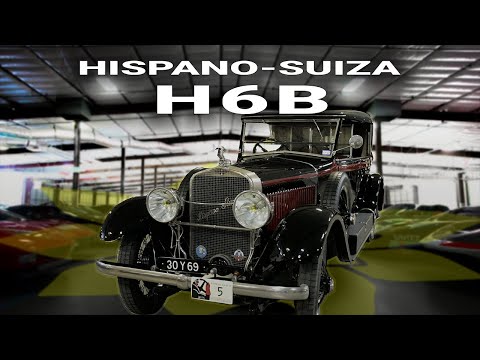
From 1926 to 1929 Škoda built about 100 cars under licence in Czechoslovakia. To run on the poorer fuel available there, the compression ratio was limited to 4.5:1, and output was 75 kW (100 hp) at 1,800 rpm.
Racing: Boulogne, the Targa Florio and Brooklands
In 1922 Hispano-Suiza built five short-wheelbase H6Bs for racing, known as the Boulogne. In the 1923 Boulogne sports car race, the cars of Dubonnet, Garnier and Boyriven finished first, second and third.
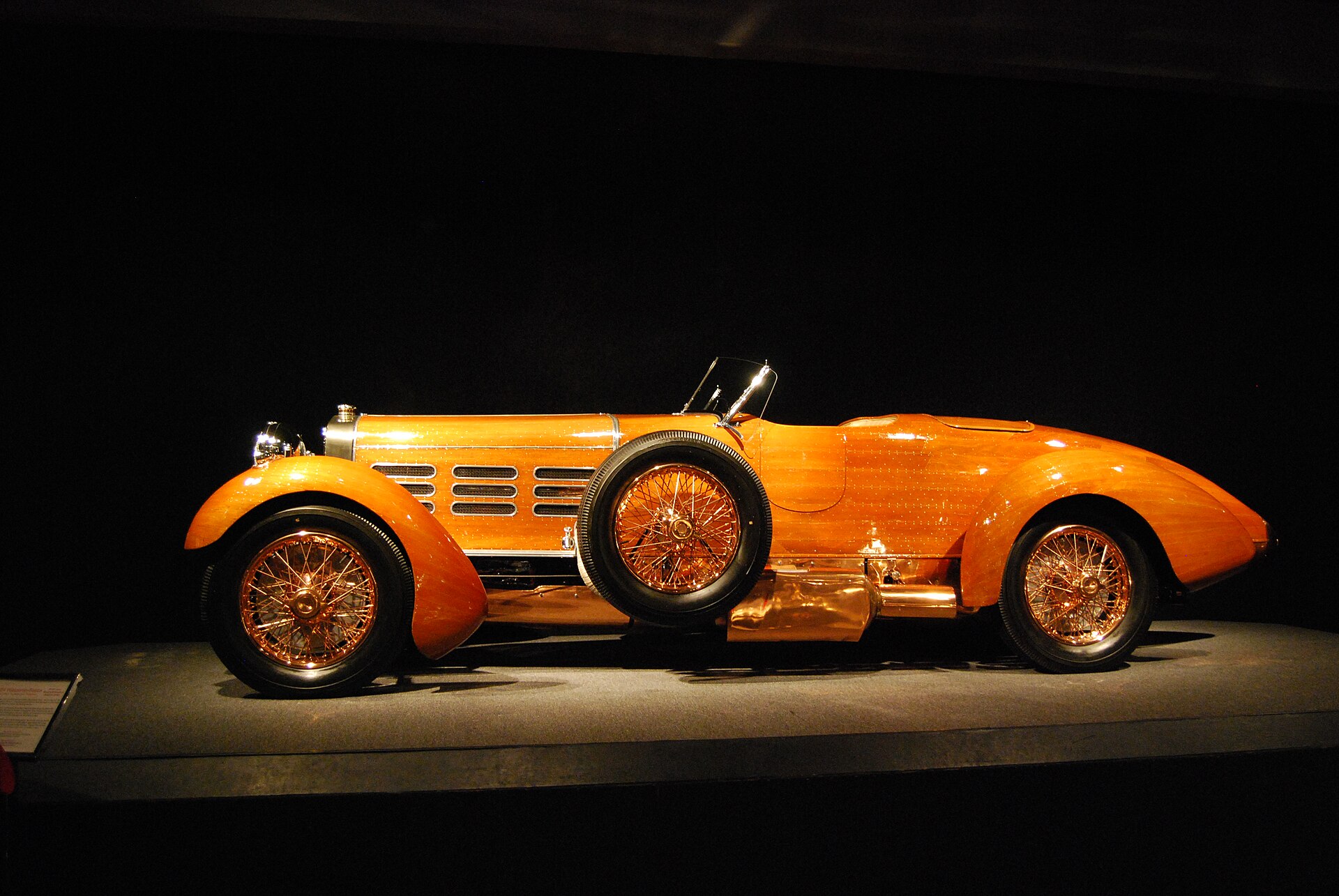
The most famous racing H6 is André Dubonnet's H6C Boulogne for the 1924 Targa Florio. Its wooden body came from the aircraft maker Nieuport-Astra and was limited to about 45 kg (100 lb). Long thought to be tulipwood, the wood was later found to be mahogany, but the car is still known as the "Tulipwood" Hispano. Dubonnet finished the race with the body intact and drove the car home to Naples. It is now in the Blackhawk Museum.
The same year, Woolf Barnato took a Boulogne to Brooklands and set eight international records, including an average of 92 mph (148 km/h) over 300 miles (480 km).

Coachbuilders and the Dubonnet Xenia
The H6 was offered with many body styles, and many cars carry bodies by independent coachbuilders. French Wikipedia names Million-Guiet, which built an open tourer body on an H6B in 1923, and Jacques Saoutchik, who bodied a landaulette in 1925.
The best-known body came last. André Dubonnet, inventor, industrialist, First World War fighter pilot and racing driver, bought an H6C chassis at the 1932 Paris Motor Show. In 1938 Saoutchik built a body on it, designed by Jean Andreau and named Xenia after Dubonnet's late wife. The collector Peter Mullin bought it in 2003, and it is now at the Petersen Automotive Museum.
H6, H6C and J12 compared
| Model | Years | Engine | Valve gear | Notes |
|---|---|---|---|---|
| H6 / H6B | 1919–1933 | straight-six, 6,597 cc | overhead camshaft | aluminium block, servo brakes |
| H6C | from 1924 | straight-six, 7,983 cc | overhead camshaft | 110 × 140 mm, about 145 kW (195 hp) estimated |
| J12 | from 1933 | V12, 9.5 l | pushrods | replaced the H6 |
The H6 also has a place in popular culture: in the television series Miss Fisher's Murder Mysteries, the detective Phryne Fisher drives a red 1923 H6. Two of the most famous cars are on public display. The "Tulipwood" Boulogne is at the Blackhawk Museum, and the Dubonnet Xenia is at the Petersen Automotive Museum.
The end of the H6 and the Hispano-Suiza name today
The J12 replaced the H6 in 1933, with a 9.5-litre pushrod V12. In 1937 the French government took 51 % of the French company for war production, and car making in France ended in 1938. After the Second World War the Spanish automotive assets were sold to ENASA, the maker of Pegaso vehicles, in 1946. In France, the aviation side passed to Snecma in 1968, which merged with Sagem to form Safran in 2005.
| Year | Event |
|---|---|
| 1904 | Hispano-Suiza founded in Barcelona |
| 1911 | French assembly plant opens near Paris |
| 1914 | production moves to Bois-Colombes |
| 1919 | H6 shown at the Paris Motor Show |
| 1922 | H6B and the Boulogne racing cars |
| 1924 | H6C with 7,983 cc; Targa Florio "Tulipwood" car; Brooklands records |
| 1926–1929 | Škoda licence production |
| 1933 | J12 replaces the H6 |
| 1938 | end of car production in France; Dubonnet Xenia built |
| 2019 | brand revived with the electric Carmen |
In 2019 the name returned at the Geneva Motor Show on the Carmen, an electric car linked to the Peralada Group and the Suqué Mateu family. French Wikipedia says it was inspired by the H6. More cars of the period are in the 1930s classics section.

Which Hispano-Suiza H6 to look for
- For the original design: an early H6 or H6B with the 6,597 cc engine.
- For performance: an H6C with the 7,983 cc engine, or one of the short-wheelbase Boulogne or Monza cars.
- For coachwork: a car with a documented body by a named coachbuilder such as Million-Guiet or Saoutchik.
- For rarity: one of the roughly 100 Škoda licence cars, or a Barcelona-built H6A or T49.
Photo gallery

Hispano-Suiza H6 in our rankings
- No. 10 of 557 · Biggest engines: cars (7,983 cc)
- No. 255 of 912 · Longest-running car nameplates (14 years · top 30%)
- No. 593 of 859 · Most powerful cars (145 kW · top 70%)
Bigger engine than 98% of ranked cars in the 1CARS catalog (No. 10 of 557).
FAQ
How many Hispano-Suiza H6 were built?
About 2,350 H6, H6B and H6C cars between 1919 and 1933, according to English Wikipedia, which flags the figure as needing a source.
What engine does the Hispano-Suiza H6 have?
An overhead-camshaft straight-six with an aluminium block, of 6,597 cc in the H6 and H6B and 7,983 cc in the H6C, derived from Marc Birkigt's aero engines.
Why are the H6 brakes famous?
The car had servo-assisted brakes on all four wheels, driven from the transmission, and Rolls-Royce built the system under licence.
What is the Tulipwood Hispano-Suiza?
André Dubonnet's 1924 H6C Boulogne for the Targa Florio, with a wooden body by Nieuport-Astra; the wood was later identified as mahogany.
What replaced the Hispano-Suiza H6?
The J12, introduced in 1933 with a 9.5-litre V12.
Data sources
Data checked by an editor against the sources below.