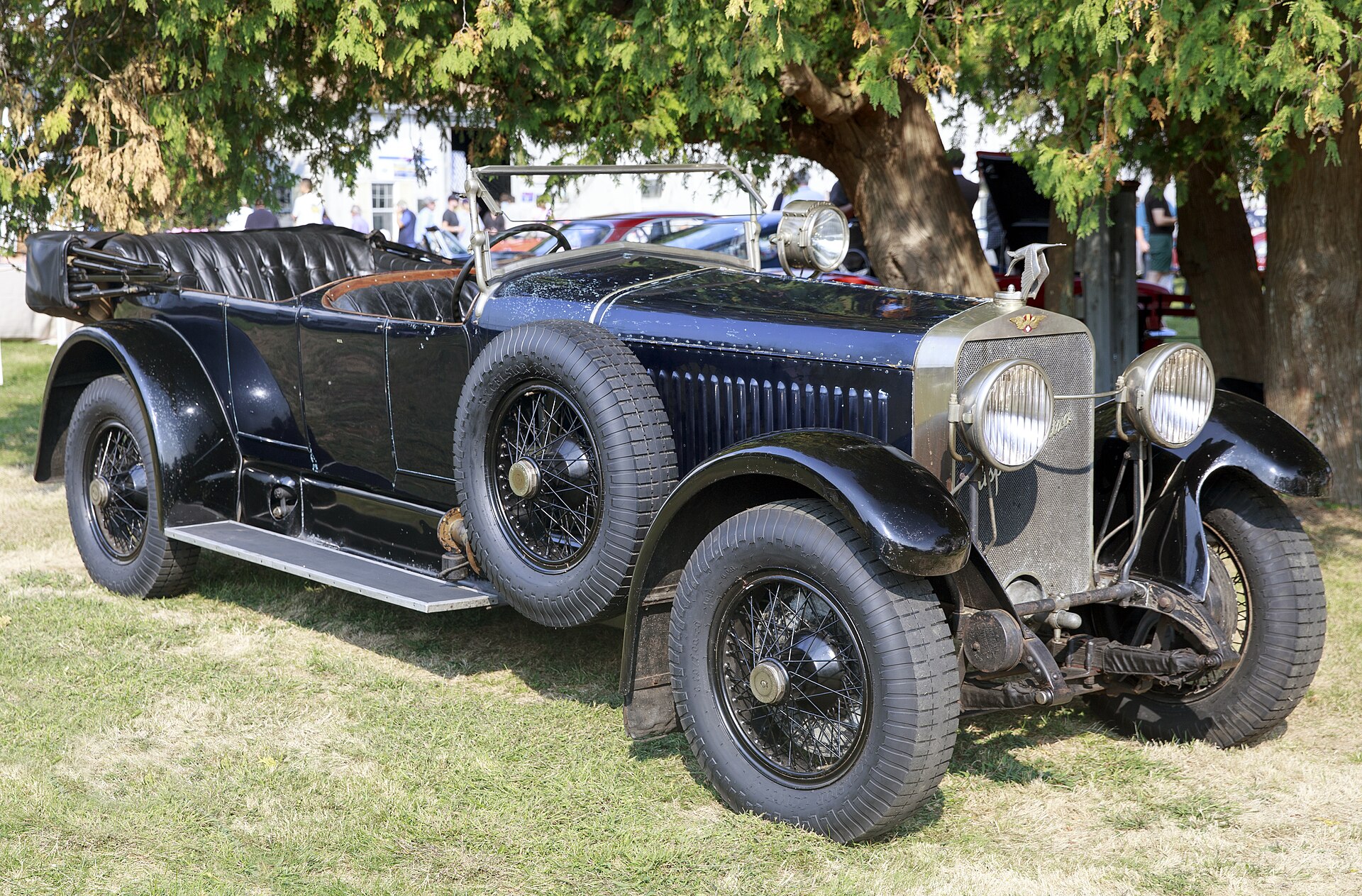
Hispano-Suiza — Barcelona's luxury cars and aero engines since 1904
Hispano-Suiza is a Spanish luxury car and engine maker founded in Barcelona in 1904 by Damián Mateu, Francisco Seix and the Swiss engineer Marc Birkigt. Its French branch near Paris built the H6 of 1919, one of the finest cars of the 1920s, and the V12 J12, while Birkigt's aluminium V8 aero engine powered many Allied fighters in the First World War. Car production in France ended in 1938, the Spanish works were sold in 1946, and the aero-engine business became part of SNECMA and later Safran. In 2019 the Suqué Mateu family revived the name with the Carmen electric hypercar.
Key takeaways
- La Hispano-Suiza Fábrica de Automóviles was founded in Barcelona on 14 June 1904; Marc Birkigt was its chief engineer.
- The Hispano-Suiza 8 V8 aero engine with aluminium cylinder blocks powered the SPAD VII and SPAD XIII fighters.
- The H6 of 1919 had a 6,597 cc overhead-camshaft six and servo-assisted brakes later licensed to Rolls-Royce; roughly 2,350 H6-family cars were built.
- The revived company's Carmen, shown at the 2019 Geneva Motor Show, has 749.5 kW (1,019 PS); the Carmen Boulogne has 819.3 kW (1,114 PS).
Hispano-Suiza at a glance
| Fact | Value |
|---|---|
| Founded | 14 June 1904, Barcelona |
| Founders | Damián Mateu, Marc Birkigt, Francisco Seix |
| French branch | Levallois-Perret (1911), Bois-Colombes (from 1914) |
| Chief engineer | Marc Birkigt (1878–1953) |
| Best-known cars | Alfonso XIII, H6, H6C, J12, Carmen |
| Aero engines | Hispano-Suiza 8 V8, 12X and 12Y V12 |
| Later owners | ENASA (Spanish car works, 1946); SNECMA (French branch, 1968), now Safran |
| Revival | Hispano Suiza Cars, Peralada Group of the Suqué Mateu family (2019) |
La Cuadra, Castro and the founding in 1904
The story begins in 1898, when Captain Emilio de la Cuadra started building electric cars in Barcelona under the La Cuadra name. The firm hired a young Swiss engineer, Marc Birkigt. Born in Geneva on 8 March 1878, Birkigt had trained at the Geneva Mechanical School and arrived in Barcelona in 1899. In 1900 La Cuadra built its first petrol cars to a Birkigt design, but only two complete vehicles were finished.
In 1902 José María Castro Fernández took over and renamed the business Fábrica Hispano-Suiza de Automóviles. It went bankrupt in December 1903. A restructuring on 14 June 1904 created La Hispano-Suiza Fábrica de Automóviles, with Birkigt, Damián Mateu and Francisco Seix named as founders.
The Alfonso XIII sports model, named after the Spanish king, appears in the model list for 1912. In 1911 the company opened an assembly plant, Hispano France, at Levallois-Perret near Paris. In 1914 the works in France moved to larger premises at Bois-Colombes.
War work: the Hispano-Suiza V8 aero engine
When the First World War began in 1914, the branch in France turned to aero engines under Birkigt. His Hispano-Suiza 8 was a 90-degree V8 with cast aluminium cylinder blocks, a new idea at the time. According to the company article, Hispano engines powered more than half of the Allied fighters, among them the SPAD VII and SPAD XIII. Later aero engines of the 12X and 12Y families were derived from the V8, and Birkigt also designed the HS.404 20 mm cannon, the main fighter gun of the RAF from 1941.
The H6 and the golden 1920s
The H6 was introduced at the 1919 Paris Motor Show. It had an all-aluminium 6,597 cc straight-six with an overhead camshaft, rated at 99 kW (135 PS) in the company's model table. It also had power-assisted brakes on all four wheels. That system was later licensed to other makers, including Hispano's great rival Rolls-Royce. Birkigt was nominated for the "Car Engineer of the Century" prize for this car.
The range grew in the 1920s:
| Model | Years | Engine | Output |
|---|---|---|---|
| H6 | From 1919 | 6,597 cc straight-six | 99 kW (135 PS) |
| H6B | From 1922 | 6,597 cc straight-six | Minor changes, dry-plate clutch |
| H6C | 1924–1929 | 7,983 cc straight-six | 118 kW (160 PS); 145 kW (195 hp) estimated |
| J12 | 1931–1938 | 9,425 cc 60° V12 | 162 kW (220 PS) at 3,000 rpm |
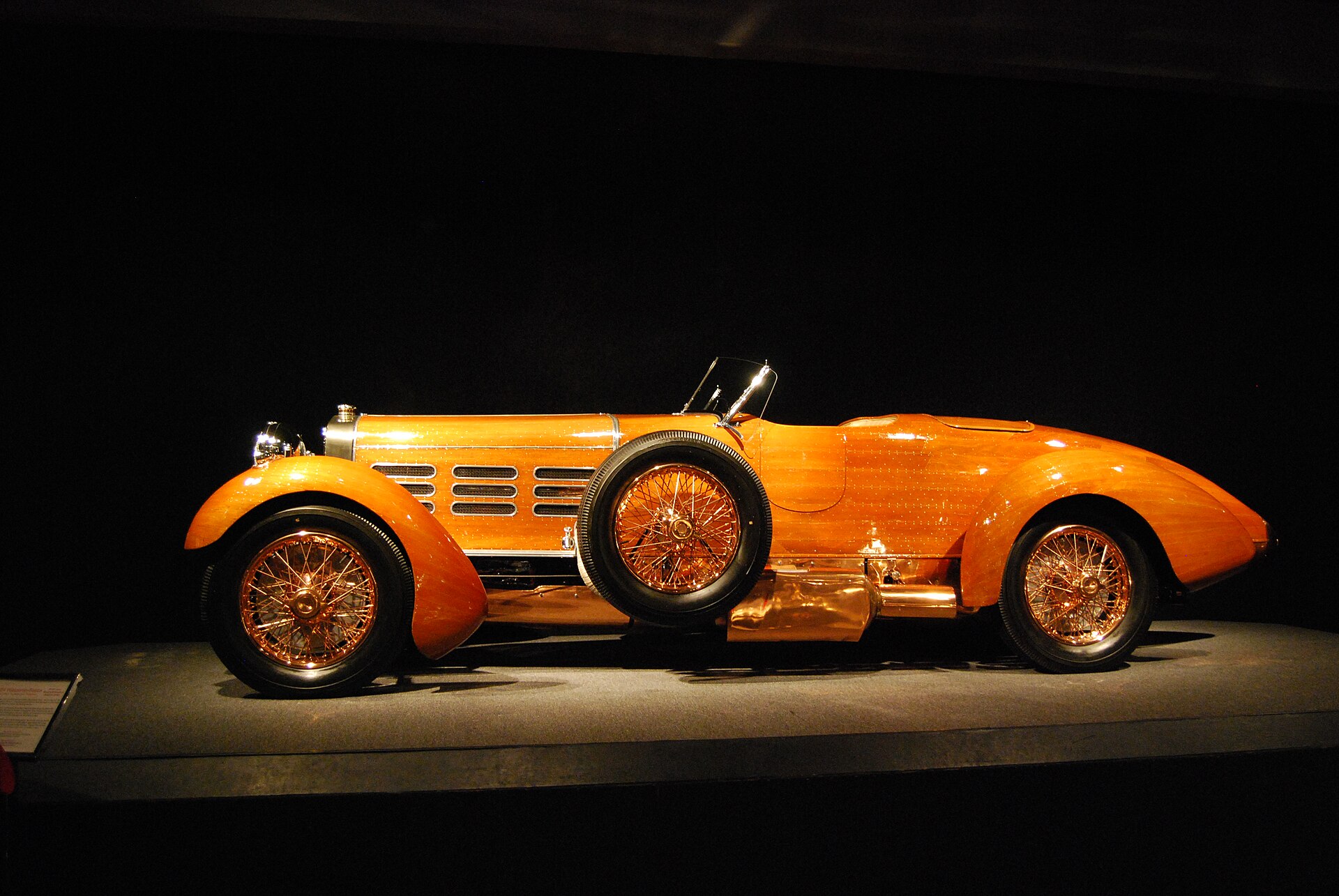
In 1922 Hispano built five short-wheelbase H6B racers, named "Boulogne" after the H6's triple win in the 1923 Boulogne sports car race. André Dubonnet entered an H6C Boulogne in the 1924 Targa Florio with a body by Nieuport-Astra made of thin wooden strips. The Czech firm Škoda built the H6 under licence, rated at 75 kW (100 hp). Roughly 2,350 H6, H6B and H6C cars were built from 1919 to 1933, a figure the H6 article marks as unconfirmed.
In 1923 the branch in France became Société Française Hispano-Suiza, with the Spanish parent holding 71 per cent of the shares. Its last great car was the J12 of 1931, with a 9.4-litre V12 of 162 kW (220 PS). One was ordered in 1935 as the ceremonial car of the President of the Spanish Republic.

Civil war, nationalisation and the end of car production
The 1930s ended the car business on both sides of the Pyrenees. When the Spanish Civil War began in 1936, the government of Catalonia collectivised the Spanish factories. In 1937 the French government took 51 per cent of the subsidiary in France, and in 1938 the French company stopped making cars to concentrate on aero engines.
In 1940 Hispano-Suiza, Banco Urquijo and other Spanish companies founded S.I.A.T., the project that led to SEAT. In 1946 Hispano-Suiza sold its Spanish car assets to ENASA, the state-owned maker of Pegaso trucks and cars. The business in France continued in aviation. SNECMA took it over in 1968, and SNECMA merged with SAGEM in 2005 to form Safran.
Birkigt, the engineer behind every great Hispano, died in Versoix, Switzerland, on 15 March 1953.
The Carmen: an electric revival
In 2019 the name returned at the Geneva Motor Show. The new company, Hispano Suiza Cars, is linked to the Peralada Group, owned by the Suqué Mateu family. Its first car, the Carmen, is an all-electric two-door coupé named in tribute to Carmen Mateu.
| Carmen | Value |
|---|---|
| Power | 749.5 kW (1,019 PS) |
| Battery | 80 kWh, 750 V lithium-polymer |
| Kerb weight | 1,690 kg |
| Top speed | 250 km/h |
| Carmen Boulogne | 819.3 kW (1,114 PS), 0–100 km/h in 2.7 s |
| Built | 19 Carmen (2019–2021); five Boulogne planned |
| Price | Under €2 million (2019 launch) |
The Carmen Boulogne followed in 2021 and shares its name with the Boulogne racers of the 1920s. With 19 Carmens and five planned Boulognes, the revived company builds in very small numbers.
The Hispano-Suiza models listed on 1cars are in the Hispano-Suiza catalogue, and the most famous car has its own page on the Hispano-Suiza H6, from Boulogne to the Xenia. The rival that licensed its brakes is covered in the history of Rolls-Royce, and the Spanish car company that grew from S.I.A.T. in the history of SEAT. More cars of the period are in the classic cars section.

Hispano-Suiza timeline
| Year | Event |
|---|---|
| 1898 | La Cuadra starts building electric cars in Barcelona |
| 1899 | Marc Birkigt arrives in Barcelona |
| 1902 | Castro renames the firm Hispano-Suiza |
| 1904 | La Hispano-Suiza Fábrica de Automóviles founded (14 June) |
| 1911 | Assembly plant at Levallois-Perret |
| 1914 | Move to Bois-Colombes; V8 aero engines for the war |
| 1919 | H6 shown at the Paris Motor Show |
| 1923 | Société Française Hispano-Suiza formed |
| 1931 | J12 V12 launched |
| 1936 | Spanish factories collectivised in the civil war |
| 1938 | French car production ends |
| 1946 | Spanish car assets sold to ENASA |
| 1968 | French branch taken over by SNECMA |
| 2019 | Revival with the Carmen at Geneva |
Landmark Hispano-Suiza models
| Model | Years | Why it matters |
|---|---|---|
| Alfonso XIII | From 1912 | Sports car named after the Spanish king |
| Hispano-Suiza 8 (aero engine) | From 1914 | Light-alloy V8 for the SPAD fighters |
| H6 | 1919–1933 | Overhead-cam six, servo brakes licensed to Rolls-Royce |
| J12 | 1931–1938 | 9.4-litre V12 flagship |
| Carmen | From 2019 | Electric revival with 749.5 kW |
Photo gallery

FAQ
Is Hispano-Suiza Spanish or French?
Both. The company was founded in Barcelona in 1904. Its French branch near Paris, controlled by the Spanish parent, built the H6 and J12 and the aero engines.
Who was Marc Birkigt?
The Swiss engineer who co-founded Hispano-Suiza and designed its cars, the Hispano-Suiza 8 V8 aero engine and the HS.404 cannon. Birkigt lived from 1878 to 1953.
When did Hispano-Suiza stop making cars?
The French company stopped in 1938, and the Spanish car assets were sold to ENASA in 1946. The name returned in 2019 with the Carmen.
What happened to the Hispano-Suiza aero-engine business?
SNECMA took over the business in France in 1968. SNECMA merged with SAGEM in 2005 to form Safran.
How powerful is the Hispano Suiza Carmen?
The Carmen has 749.5 kW (1,019 PS). The Carmen Boulogne has 819.3 kW (1,114 PS) and reaches 100 km/h in 2.7 seconds.
Sources
- Wikipedia — Hispano-Suiza (accessed 24 Oct 2026)
- Wikipedia — Marc Birkigt (accessed 24 Oct 2026)
- Wikipedia — Hispano-Suiza H6 (accessed 24 Oct 2026)
- Wikipedia — Hispano-Suiza J12 (accessed 24 Oct 2026)
- Wikipedia — Hispano-Suiza Carmen (accessed 24 Oct 2026)
Found a mistake? Report an error