 Hillman Imp
Specs, engines and history
Published Sources (1) Report an error
By Felix Hartmann, Automotive Technology & EV Contributor
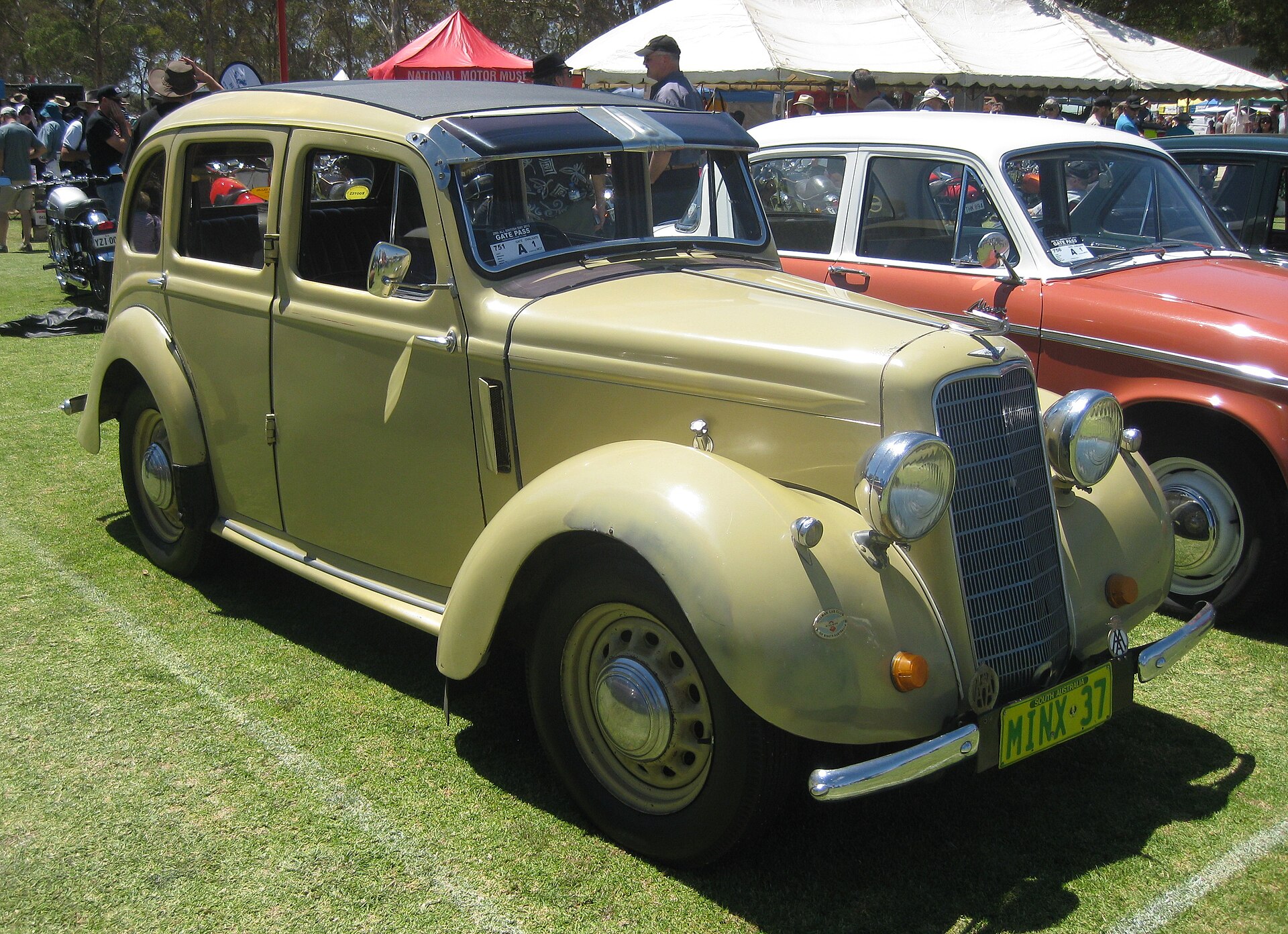
Hillman was one of the Coventry car makers that grew out of the Edwardian motor trade. William Hillman founded it in 1907 as the Hillman-Coatalen Company, with Louis Coatalen as designer, and renamed it the Hillman Motor Car Company in 1910. The Rootes brothers took control in 1928 and merged it with Humber, and the Minx, made from 1932 to 1970, became the family car most people link with the name. Chrysler bought Rootes in 1967, and the last Hillman-badged cars left the range in 1976.
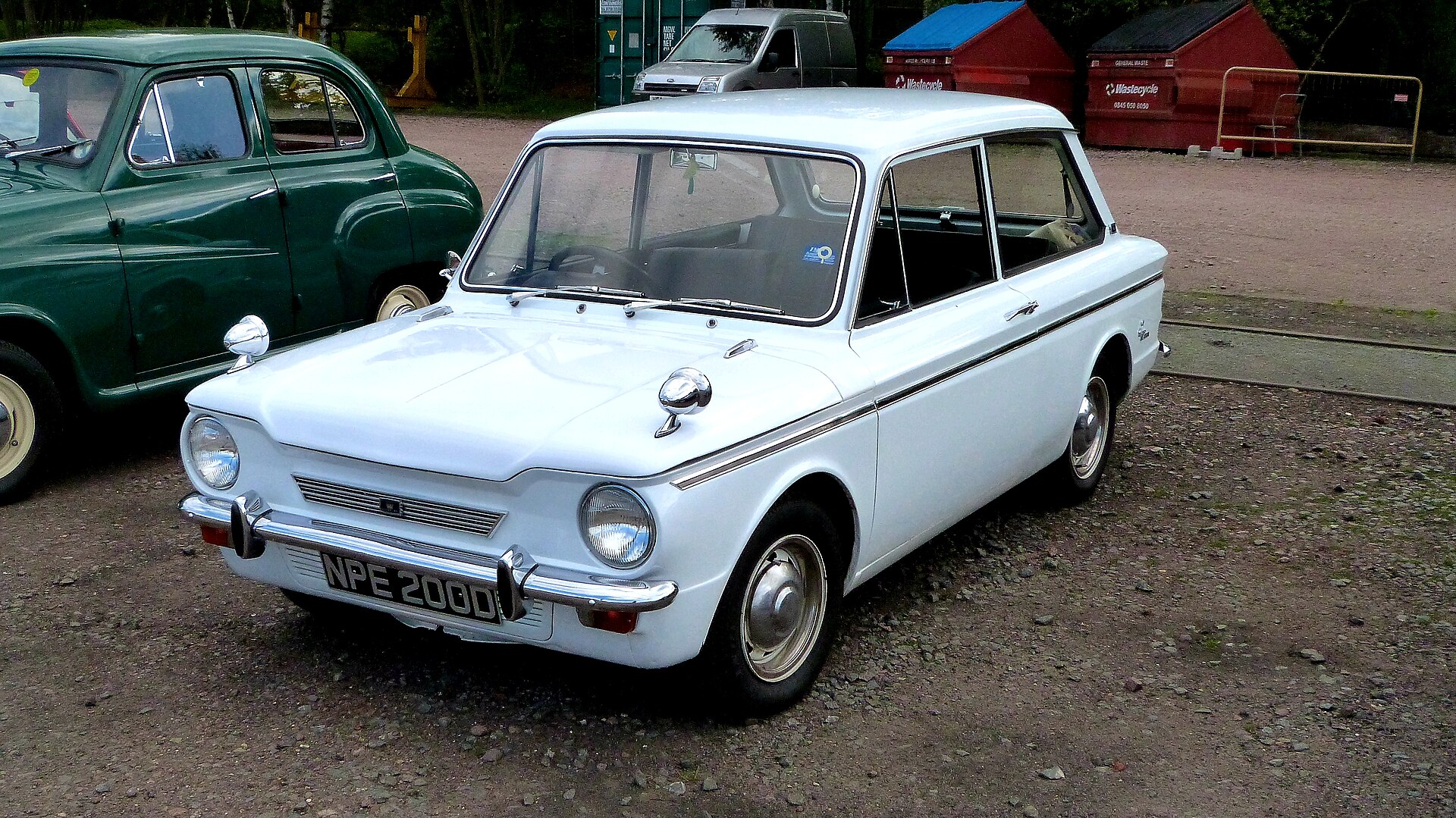
The Imp is the rear-engined small car that Rootes built at a new factory in Linwood, Scotland, from 1963 to 1976. It was the first mass-produced British car with an aluminium engine block and cylinder head, and it was aimed squarely at the Mini. A total of 440,032 were built, but quality problems and a poor reputation kept it far behind its rival.
Specs by version
Verified Manufacturer and type-approval data from our catalog · Sources and methodology
In short
- Built from May 1963 to March 1976, mainly at Linwood near Glasgow; 440,032 made.
- 875 cc all-aluminium overhead-camshaft four (998 cc in Rallye versions), mounted at the rear and tilted at 45°.
- Hatchback-style opening rear window, folding rear seat and all-synchromesh four-speed transaxle.
- Bill McGovern won the British Saloon Car Championship in an Imp in 1970, 1971 and 1972.
Hillman Imp at a glance
| Parameter | Metric | Imperial |
|---|---|---|
| Maker | Rootes Group, from 1967 Chrysler Europe | - |
| Production | May 1963 – March 1976 | - |
| Built | 440,032 | - |
| Factory | Linwood, Scotland; engines machined at Ryton | - |
| Designers | Mike Parkes and Tim Fry | - |
| Layout | rear engine, rear-wheel drive | - |
| Engine | 875 cc OHC inline four, aluminium block and head | - |
| Gearbox | four-speed manual transaxle, all-synchromesh | - |
| Wheelbase | 2,082 mm | 82.0 in |
| Length × width | 3,581 × 1,524 mm | 141.0 × 60.0 in |
| Height | 1,330 mm (saloon) | 52.4 in |
| Kerb weight | 725 kg | 1,598 lb |
From the Slug to the Apex project
Rootes started work on a small car in 1955, internally called the Apex project, and the 1956 Suez Crisis fuel shortage made the need more urgent. Mike Parkes, who later raced in Formula One, and Tim Fry drew the design and offered it to director of engineering B. B. Winter. Their first prototype, nicknamed "The Slug", looked like a bubble car, so Rootes asked for a more practical follow-up.
The company had tried the idea before: the Little Jim of 1938–39 and the Little Jimmy of 1949, built by Craig Miller, never reached production. For the Imp, Ken Sharpe led the testing in Norway in winter, in East Africa in summer and in Arctic conditions in Canada. Engines of 800, 875 and 998 cc were planned, but only the 875 cc unit went ahead for the standard car.
| Year | Event |
|---|---|
| 1955 | Apex project starts |
| 2 May 1963 | Duke of Edinburgh opens Linwood; Imp announced |
| 1964 | Singer Chamois and Rallye Imp |
| 1965 | Commer Imp van; Rosemary Smith wins the Tulip Rally |
| 1966 | Sunbeam Imp Sport with twin carburettors |
| 1967 | Californian coupé, Husky estate, Sunbeam Stiletto; Chrysler takes over Rootes |
| 1970–1972 | three British Saloon Car Championship titles |
| March 1976 | production ends |
| 1981 | Linwood closes |
Linwood: a factory built for one car
The Duke of Edinburgh opened the Linwood plant on 2 May 1963, the day the car was announced; The Times reported it the next morning. UK government regional assistance helped pay for the factory, which supported about 6,000 jobs. Rootes targeted 100,000 cars a year.
The location created a long supply chain. Engine castings made in Scotland went more than 300 miles south to Ryton for machining and came back as finished engines, a round trip of about 600 miles. Much of the workforce came from shipbuilding, and strikes were frequent. Half of all Imps were built in the first three years: about 33,000 in 1963, 50,142 in 1964 and 42,663 in 1965.

Engineering: aluminium, an angled engine and a glass hatch
The engine was derived from the Coventry Climax FWMA racing unit. It was a water-cooled all-aluminium straight-four with an overhead camshaft, mounted at the rear and tilted at 45° to lower the centre of gravity. The gearbox was a four-speed transaxle with baulk-ring synchromesh on all forward gears, and the Imp was the first mass-produced British car with a diaphragm-spring clutch.
The Mk I had two unusual controls: a pneumatic throttle linkage and an automatic choke. Both were replaced by conventional parts on the Mk II, which also received a water pump and a cylinder head with larger ports and valves.
At the rear, semi-trailing arms gave independent suspension; Rootes chose them after testing a swing-axle Chevrolet Corvair. The front used swing-axle geometry, which at first produced too much understeer, so the pivot points were lowered to reduce camber.
The body was a two-door saloon, but the rear window opened, which made it a hatchback in practice, and the rear bench folded flat. The dashboard had gauges for temperature, voltage and oil pressure, unusual for a small car of the time.
Imp variants and badge-engineered relatives
Rootes sold the Imp under four of its brands:
| Variant | Years | Body / purpose | Notes |
|---|---|---|---|
| Hillman Imp (Basic, De Luxe) | 1963–1976 | two-door saloon | the core model |
| Rallye Imp | 1964 | homologation special | 998 cc engine |
| Singer Chamois | from October 1964 | luxury saloon | Chamois Rallye also listed |
| Commer Imp van | 1965–1968 | van | then sold as Imp Van, 1968–1970 |
| Sunbeam Imp Sport | from October 1966 | saloon | twin-carburettor engine |
| Hillman Imp Californian | 1967 | coupé | lower, sloping roof |
| Hillman Husky | 1967–1970 | estate | built from the van pressings |
| Sunbeam Stiletto | 1967–1972 | coupé | shown at the October 1967 Paris Motor Show |
| Hillman GT | from 1967 | Australian version | - |
| Imp Caledonian | 1975–1976 | run-out edition | about 2,000, all Cherry Red |
Imps were also assembled in Australia, Costa Rica, Ireland, Malaysia, Malta, New Zealand, the Philippines, Portugal, South Africa, Uruguay and Venezuela.

Price at launch
The standard Imp cost £508 1s 3d in 1963 and the De Luxe £532 4s 7d. Ahead of the 1968 London Motor Show, Rootes cut UK prices on most models by more than four per cent. The Mini, built in about 1,190,000 examples during the 1960s, stayed far ahead; the story of the original Mini shows the car the Imp was built to fight.
Rallies, races and records
Rosemary Smith won the 1965 Tulip Rally in an Imp, with "Tiny" Lewis second overall in another. In 1966 she was disqualified over the headlamp rules. On the circuits, Bill McGovern took the British Saloon Car Championship in 1970, 1971 and 1972.
In 1964, an Imp ran from New York to Los Angeles, 3,011 miles, in 48 hours, 9 minutes and 54 seconds, an average of 63.7 mph. The engine also worked away from the road: Andy Chesman won the 1972 World Hydroplane Championship with Imp power, set an 89 mph R1-class water speed record that year, and his modified 998 cc unit reached 93 kW (125 bhp).

Reliability problems and the end of the Imp
The engine was advanced, and many garages had little experience of alloy engines. Cooling at the rear was poor, and giubo rubber couplings in the drive often failed. These faults gave the car a bad name that later improvements could not remove.
Rootes' finances weakened at the same time. Lord Rootes began a link with Chrysler in 1964 and died that October, and Chrysler took over the group in 1967. The Imp stayed in production until March 1976, 13 years in all, and its place in the range went to the Chrysler Sunbeam, built on Avenger parts. Linwood closed in 1981, and Ryton ended car assembly in December 2006.
Collecting an Imp today
Imps are now valued for the ideas Rootes put into them: the alloy engine, the opening rear window and the light weight. When looking at one, check:
- Cooling: the rear radiator and the condition of the coolant, since overheating was the main weakness.
- Drive couplings: the rubber giubos on the drive shafts.
- Throttle and choke: whether a Mk I still has its original pneumatic linkage and automatic choke, or has been converted.
- Variant: a Sunbeam Sport or Stiletto with the twin-carburettor engine, or a Husky estate, adds rarity to the same mechanicals.
Other British small cars of the decade are listed in the best classic cars of the 1960s and in the 1960s classics section.
Photo gallery


FAQ
How many Hillman Imps were built?
440,032 between 1963 and 1976, according to English Wikipedia; it also describes the total as just under half a million.
Where was the Hillman Imp made?
At Linwood near Glasgow, with engines machined at Ryton near Coventry, and in kit form in about a dozen other countries.
What engine does the Hillman Imp have?
An 875 cc water-cooled four with an aluminium block and head and an overhead camshaft, derived from the Coventry Climax FWMA; Rallye versions used 998 cc.
Who designed the Hillman Imp?
Mike Parkes and Tim Fry, working on the Rootes Apex project.
Why did the Imp fail against the Mini?
Cooling problems, drive coupling failures and labour trouble at Linwood damaged its reputation, and it was overshadowed by the Mini.
Data sources
Data checked by an editor against the sources below.