 DeLorean DMC-12
Specs, engines and history
Published Sources (1) Report an error
By Sarah Whitmore, Senior Automotive Writer
- Built
- 1981–1983
- Top power
- 115 kW (156 PS)
Which DeLorean to choose
Our verdict · Sarah Whitmore
- For a first classic with a famous story: any DMC-12. All cars share the same engine and body, so condition and history matter more than the year.
- For originality: an early 1981 car, from the largest batch of about 6,700.
- For rarity: a 1983 model-year car, of which only about 276 were built, or one of the few right-hand-drive conversions.
- For outright speed: none of them. The DeLorean is a grand tourer with about 75 kW per tonne, not a sports car in the modern sense. The hp to kW converter helps compare its US and European ratings.
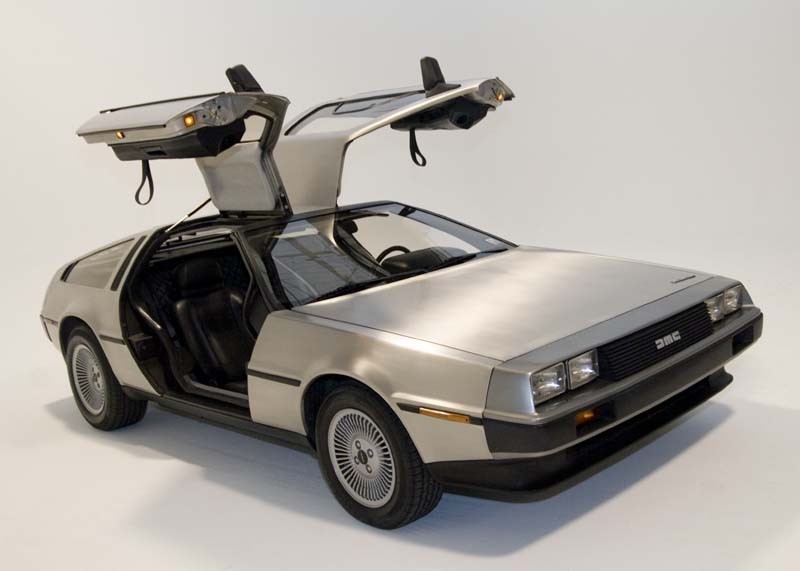
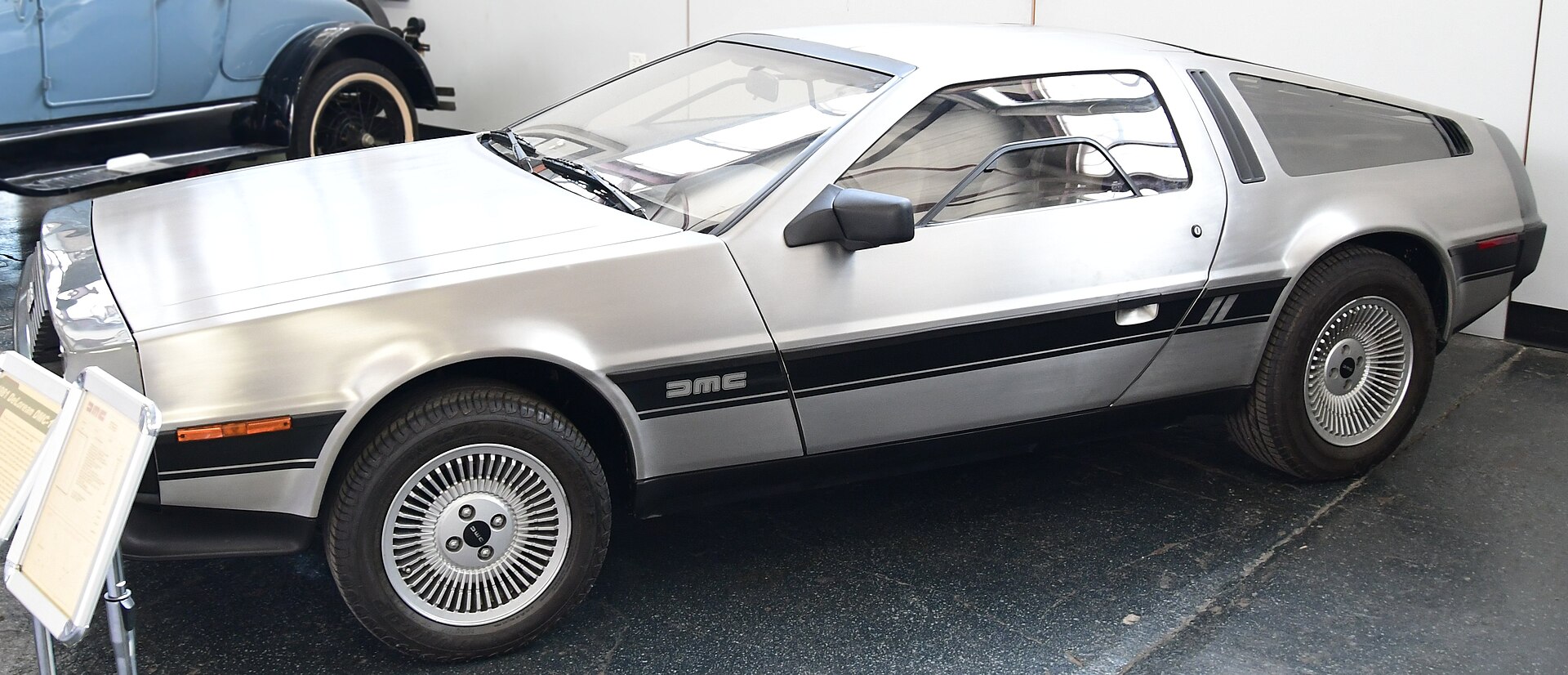
The DeLorean Motor Company (DMC) was founded in Detroit, Michigan, on 24 October 1975 by the automotive executive John DeLorean. It set out to build a safe, long-lasting sports car for the American market. The factory went to Northern Ireland, and the company made only one model before it went bankrupt in October 1982. That model, the DMC-12, is better known simply as "the DeLorean". It is a rear-engined two-seater with gull-wing doors and unpainted stainless-steel panels, built at Dunmurry near Belfast from early 1981 to December 1982.
The car sold far below plan, its performance disappointed the magazines of the day, and the company's collapse came days after its founder's arrest. The Back to the Future films later turned it into one of the most recognisable cars in the world.
Specs by version
Engines
Performance
Show all 1 versions
| Version | Top speed |
|---|---|
| 2.85 V6 manual | 209 km/h130 mph |
Verified Manufacturer and type-approval data from our catalog · Sources and methodology
In short
- Built in Dunmurry, Northern Ireland, from 1981 to 24 December 1982; the last cars were finished as 1983 models.
- About 8,975 cars, by a count reconstructed from chassis numbers (VINs) rather than factory records.
- 2.85-litre PRV V6 with 97 kW (130 hp) in US trim and about 115 kW (154 hp) in the few European cars.
- Body by Giorgetto Giugiaro of Italdesign, chassis re-engineered by Lotus, panels in brushed SAE 304 stainless steel.
DeLorean DMC-12 at a glance
| Parameter | Value |
|---|---|
| Maker | DeLorean Motor Company, plant at Dunmurry near Belfast |
| Production | early 1981 – 24 December 1982 (model years 1981–1983) |
| Built | about 8,975 (reconstructed from VINs) |
| Designer | Giorgetto Giugiaro, Italdesign |
| Layout | rear engine, rear-wheel drive, two seats |
| Chassis | steel backbone with Y-frames, derived from Lotus Esprit practice |
| Body | brushed stainless-steel panels on a glass-fibre underbody |
| Engine | PRV V6, 2.85 litres, SOHC, Bosch K-Jetronic injection |
| Power | 97 kW (130 hp) at 5,500 rpm, US; about 115 kW (154 hp), Europe |
| Torque | 207 Nm (153 lb-ft) at 2,750 rpm, US |
| Gearbox | five-speed manual or three-speed automatic |
| Weight | about 1.3 tonnes (German Wikipedia) |
| Weight distribution | about 35 % front, 65 % rear |
| List price | US$25,000 in 1981, US$29,825 in 1982, US$34,000 in 1983 (US market) |
From the DSV-1 safety car to the DMC-12
The first prototype was finished in October 1976 by William T. Collins, a former Pontiac chief engineer. It was first called the DSV-1, for DeLorean Safety Vehicle, then the DSV-12 and finally the DMC-12. The "12" stood for a target price of US$12,000, while the real list price in 1981 was US$25,000.
The early plans were far more radical than the finished car. DeLorean wanted a Wankel rotary engine, a chassis made by elastic reservoir moulding (ERM) and a mid-engined layout. None of these reached production. The Ford Cologne V6 was looked at first, then the drivetrain of the Citroën CX, which was dropped because its 2.0-litre four-cylinder lacked power and Citroën objected to turbocharging it. The fuel-injected PRV V6 was chosen in the end, and its size pushed the engine behind the rear axle.
The engineering was then handed to Colin Chapman and Lotus. Lotus replaced most of the unproven materials and methods with its own practice, including a steel backbone chassis of the kind it used on the Esprit. The changes, the schedule pressure and cost overruns pushed back the start of production: it was planned for 1979 and began only in early 1981.
Northern Ireland, money and the Dunmurry plant
The British government wanted the plant to bring jobs to Northern Ireland and put up most of the money. According to The Times, it provided about three-fifths of the company's start-up costs. Work on a six-building factory of about 61,000 m² began at Dunmurry, a suburb of Belfast, in October 1978. The contractors Farrans and McLaughlin & Harvey built it in 16 months, with a test track alongside.
Many of the workers had never built cars before, and the early cars showed it. Some needed up to 200 hours of rework at DMC's quality centres before they could be delivered. Four recalls were issued, for a sticking throttle, the front suspension and an inertia switch among other things. Doors that did not fit well and leaking weather seals were common complaints on the first cars.
Design and engineering: stainless steel and gull-wing doors
Giorgetto Giugiaro's wedge drew on his 1970 Porsche Tapiro concept. The outer panels are brushed SAE 304 stainless steel fixed to a glass-fibre underbody, and the factory never painted a car. The heavy gull-wing doors are held up by cryogenically treated torsion bars and gas struts developed by Grumman.
Under the skin, the steel backbone chassis has a Y-shaped frame at each end. Steering is by rack and pinion with a ratio of 14.9:1 and 2.65 turns from lock to lock, and the turning circle is about 11 m. The power-assisted disc brakes measure 254 mm at the front and 267 mm at the rear. The wheels are staggered, 14 × 6 in at the front and 15 × 8 in at the rear, and about 65 % of the weight sits on the rear axle.
Engine and performance
The PRV unit is a 90-degree V6 with an aluminium block, cast-iron liners and aluminium heads, a single overhead camshaft, a compression ratio of 8.8:1 and Bosch K-Jetronic fuel injection. In US form it gave 97 kW (130 hp) at 5,500 rpm and 207 Nm (153 lb-ft) at 2,750 rpm. The small number of European cars had about 115 kW (154 hp). German Wikipedia gives 97 kW (132 PS) for the version with a catalytic converter. Drive went through a five-speed manual gearbox or an optional three-speed automatic, with a final drive ratio of 3.44:1.
| Figure | DMC claim | Independent test |
|---|---|---|
| 0–60 mph, manual | 8.8 s | 10.5 s (Road & Track) |
| Top speed | 130 mph (209 km/h) | about 110 mph (177 km/h) |
Magazine group tests found the DeLorean slower than its rivals, which reached 60 mph in 7.5 to 8.5 seconds. Legend Industries built turbocharged test cars, and one twin-turbo car ran 0–60 mph in 5.8 seconds and the quarter mile in 14.7 seconds. DMC planned a US$7,500 turbo option for 1984 and ordered 5,000 engines, but the bankruptcy ended the plan. With 97 kW and about 1.3 tonnes, the US car has about 75 kW per tonne; the power-to-weight calculator compares that with other cars.

Production, sales and the collapse of DMC
| Model year | Built (estimate) | Chassis numbers |
|---|---|---|
| 1981 | about 6,700 | VIN 500–7199 |
| 1982 | about 1,999 | VIN 10001–11999 |
| 1983 | about 276 | VIN 17000–17170 and 20001–20105 |
| Total | about 8,975 | - |
The figures above were rebuilt from chassis numbers because factory records were never checked, and the company's own history page gives "about 9,000". Demand peaked in October 1981 with 720 cars sold. By the end of that year about 7,500 had been built but only about 3,000 sold, and in January 1982 sales fell to 350. The break-even point was estimated at 10,000 to 12,000 cars a year.
Cash ran short from late 1981. In January 1982 questions from the US Securities and Exchange Commission stopped a share issue meant to raise about US$27 million. DMC went into receivership in February 1982, and in March Bank of America sued over unpaid loans and claimed 1,979 cars. Hours before John DeLorean was arrested in October 1982, the British government announced that the plant would close. He was charged with plotting to smuggle cocaine and later acquitted on the grounds of entrapment. The company filed for bankruptcy on 26 October 1982, about 2,500 jobs were lost, and Consolidated International bought the unsold and part-built cars and finished about 100 more.
Variants, prototypes and special cars
- Right-hand drive: about 13 cars converted by Wooler-Hodec, three factory-registered "AXI" cars and eight later conversions.
- Gold-plated cars: American Express offered 100 through its catalogue; two were sold, and a third was assembled later from spare parts.
- Prototypes and pilot cars: about 28 pilot cars were built. Prototype 1 was sold at auction in 1984 for US$37,000; Prototype 2 went to Lotus and is reported destroyed.
- Turbo: test cars only, by Legend Industries (see above).
Back to the Future and the car's legacy
Back to the Future made a DMC-12 its time machine, and the car appeared in all three films. Six cars and one glass-fibre replica were used in production. Three of the cars survive, two of them owned by Universal, and a restored car from Part III sold at auction for US$541,200 in December 2011.
Opinions of the car itself have always been mixed. Contemporary magazines liked its comfort, ease of getting in and out, luggage space and fuel economy, but judged it a grand tourer rather than a sports car. Later critics were harsher, and in 2017 Time put it on its list of the 50 worst cars of all time. The Dunmurry site found a new use: Montupet began making aluminium cylinder heads there in 1989, and the plant, owned by Linamar since 2015, employed more than 600 people. In June 2024 owners brought 62 DeLoreans to the former test tracks. The car shares its Lotus backbone-chassis thinking with the Lotus Esprit, and more cars of the period are in the 1980s classics section.


The DeLorean today
About 6,500 cars were thought to be still on the road in 2015. In 1995 Stephen Wynne founded a separate business, DeLorean Motor Company (Texas), in Humble, Texas. Points worth checking on any car come straight from its history: door struts and weather seals, panel fit on early cars, and whether the recall work was done. The model year is easy to confirm from the VIN ranges in the table above.
Photo gallery


DeLorean DMC-12 in our rankings
- No. 294 of 557 · Biggest engines: cars (2,850 cc · top 53%)
- No. 153 of 281 · Fastest cars (209 km/h · top 55%)
- No. 23 of 36 · Fastest American cars (209 km/h · top 64%)
- No. 41 of 59 · Most powerful cars of the 1980s (115 kW · top 72%)
- No. 12 of 16 · Fastest cars of the 1980s (209 km/h · top 75%)
- No. 658 of 859 · Most powerful cars (115 kW · top 78%)
Bigger engine than 47% of ranked cars in the 1CARS catalog (No. 294 of 557).
FAQ
How many DeLorean DMC-12 were made?
About 8,975, according to a count rebuilt from chassis numbers; the company history gives about 9,000. No verified factory figure exists.
Where was the DeLorean built?
At Dunmurry, a suburb of Belfast in Northern Ireland, from early 1981 to 24 December 1982.
What engine does the DeLorean have?
A 2.85-litre PRV V6 mounted behind the rear axle, with 97 kW (130 hp) in US trim and about 115 kW (154 hp) in European trim.
How fast is a DeLorean?
DMC claimed 130 mph (209 km/h) and 0–60 mph in 8.8 seconds. Road & Track measured 10.5 seconds to 60 mph, and tests showed a top speed of about 110 mph (177 km/h).
Why did the DeLorean Motor Company fail?
Production started two years late, early cars needed rework, sales stayed far below the break-even level of 10,000 to 12,000 cars, and the company ran out of money in 1982.
Data sources
Data checked by an editor against the sources below.