 Delage D8
Specs, engines and history
Published Sources (1) Report an error
By Oleksandr Hnatiuk, Automotive Editor & Used Car Specialist
- Built
- 1929–1940
- Top power
- 89 kW (121 PS)
Delage was one of the great French luxury and racing marques between the wars. Louis Delâge founded it in 1905 in Levallois-Perret, near Paris, with 35,000 borrowed francs; the first model, the Type A voiturette of 1906, had a single-cylinder De Dion-Bouton engine. In 1910 the works moved to Courbevoie, where 350 workers were building more than 1,000 cars a year by 1912. Racing made the name: René Thomas won the 1914 Indianapolis 500 in a Delage Type Y, and in 1927 the 1.5-litre 15 S 8 won four European Grands Prix. The independent company built almost 40,000 cars before it collapsed in 1935; under Delahaye the marque lasted until 1953.
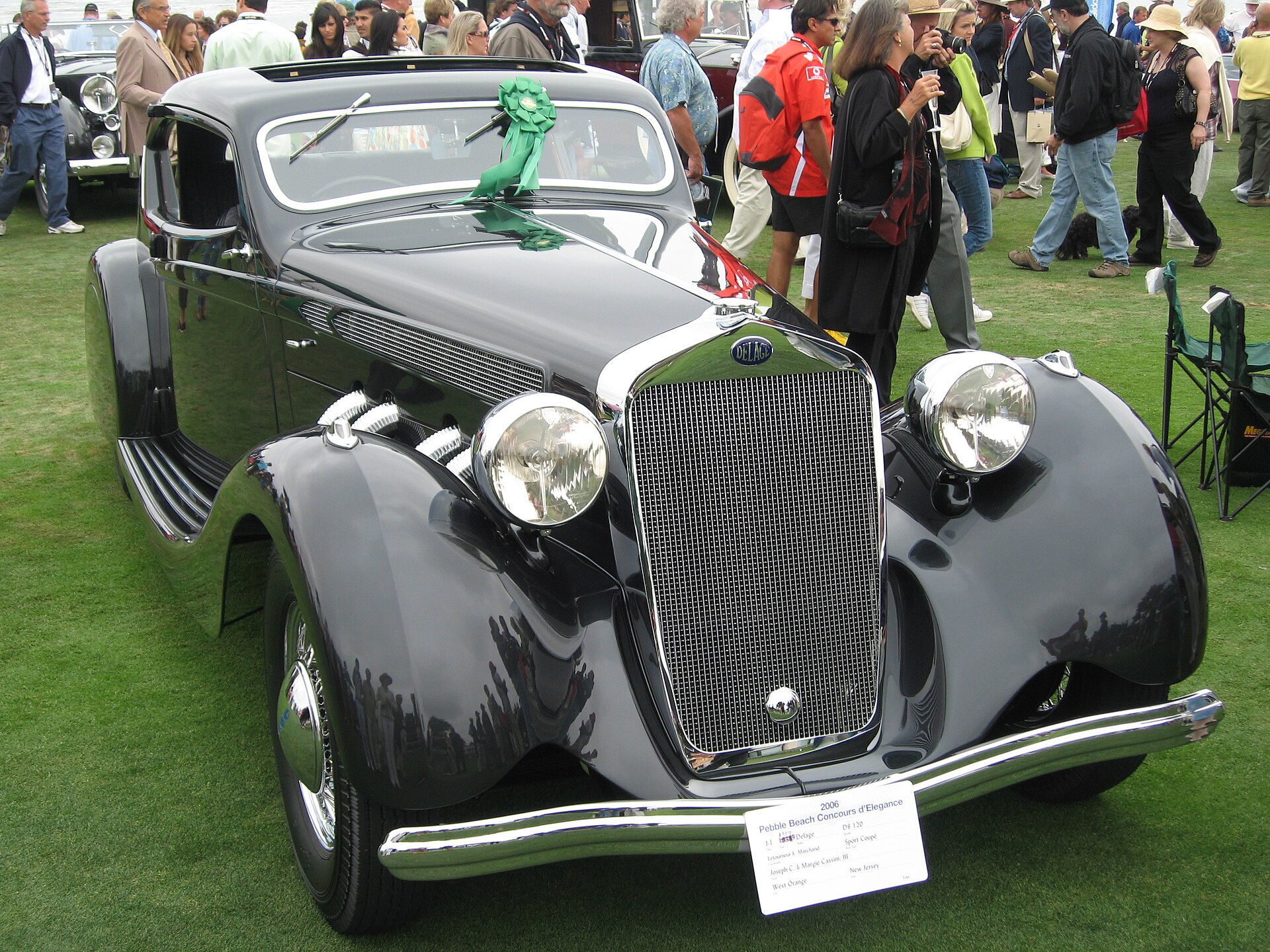
The D8 is Delage's eight-cylinder luxury car, built from late 1929 to 1940 as the successor of the GLS. It had a 4,061 cc straight-eight and a choice of three wheelbases, and many later versions followed. Its bodies came from coachbuilders such as Letourneur et Marchand, Chapron, Figoni et Falaschi and Saoutchik. A long-wheelbase D8-120 appears prominently in the film An American in Paris.
Specs by version
| Version | Engine | Power | Gearbox | Drive | Production years |
|---|---|---|---|---|---|
| D8 4.1 | 4.1 l · 8 cyl · Petrol 4,061 cc | 76 kW 103 PS102 hp | 4-sp Manual | Rear-wheel drive | 1929–1933 |
| D8-100 4.3 | 4.3 l · 8 cyl · Petrol 4,302 cc | 78 kW 106 PS105 hp | - | Rear-wheel drive | 1936–1940 |
Verified Manufacturer and type-approval data from our catalog · Sources and methodology
In short
- Produced 1929–1940; the original D8 and D8 S ran to 1933, later versions were built partly in the Delahaye works in Paris.
- 4,061 cc overhead-camshaft straight-eight with 76 kW (102 hp) in the D8 and 89 kW (120 hp) in the D8 S; later engines from 2,668 to about 4.3 litres.
- Four-speed manual gearbox with synchromesh on the top two gears; Cotal pre-selector gearbox optional, standard by 1937.
- Bodies by Letourneur et Marchand, Chapron, Figoni et Falaschi, Saoutchik, Pourtout and others.
Delage D8 at a glance
| Parameter | Metric | Imperial |
|---|---|---|
| Maker | Delage, Courbevoie; from 1935 within Delahaye, Paris | - |
| Production | 1929–1940 | - |
| Predecessor | Delage GLS | - |
| Engine (D8) | straight-eight, 4,061 cc, bore × stroke 77 × 109 mm, 23 CV tax class | 247.8 cu in |
| Power | 76 kW (102 hp) at 3,500 rpm (D8); 89 kW (120 hp) (D8 S) | - |
| Valve gear | overhead, centrally positioned camshaft | - |
| Gearbox | four-speed manual; Cotal pre-selector optional | - |
| Brakes | drums on all four wheels | - |
| Suspension | rigid axles, semi-elliptic leaf springs, friction dampers | - |
| Wheelbases (D8 Normale) | 3,167 / 3,467 / 4,066 mm | 124.7 / 136.5 / 160.1 in |
| Top speed | 120 km/h (D8 Normale); 130 km/h (D8 S) | 75 / 82 mph |
Delage before the D8: racing and luxury
Delage's early reputation came from competition. Albert Guyot won the 1908 Grand Prix des Voiturettes at Dieppe at an average of 80.1 km/h (49.8 mph). The Type Y that won at Indianapolis in 1914 had set the fastest lap at the 1913 French Grand Prix. In 1924 and 1925 the 2 LCV, a two-litre V12, won the European Grand Prix at Lyon and the Montlhéry Grand Prix. The 15 S 8 of 1927 earned Delage the title "World Champion of Car Builders", a manufacturers' honour.
On the road, the six-cylinder CO of 1918 had 4,524 cc, and the CO2 of 1921 was its overhead-valve successor. The D6 six-cylinder family, introduced around 1930, stayed the mainstay of the range until the end.
| Year | Event |
|---|---|
| 1905 | Louis Delâge founds the company in Levallois-Perret |
| 1910 | move to Courbevoie |
| 1914 | Indianapolis 500 win, René Thomas |
| 1927 | 15 S 8 wins four Grands Prix |
| late 1929 | D8 replaces the GLS |
| 1933 | D8 Normale and D8 S end; D8-15 |
| 1934 | D8-85 and D8-105 |
| 20 April 1935 | Courbevoie in voluntary liquidation |
| 1936 | D8 engines in Delahaye chassis; first D8-100 built at Delahaye's Paris plant |
| October 1937 | D8-120 at the Paris Motor Show |
| 1940 | car production stops under German occupation |
| 1953 | last Delage cars |
The D8 engine and chassis
The D8 arrived late in 1929, just as the economy was reeling from the stock market crashes of that year. Its engine was a 4,061 cc straight-eight with a 77 mm bore and a 109 mm stroke, which placed it in the French 23 CV tax class. A single camshaft placed centrally above the cylinders operated the valves. In D8 Normale form it produced 76 kW (102 hp) at 3,500 rpm and gave a top speed of 120 km/h; the short-wheelbase D8 S had 89 kW (120 hp) and reached 130 km/h.
The chassis was conventional for a luxury car of the time: rigid axles front and rear on semi-elliptic leaf springs, friction dampers and drum brakes on all four wheels. The four-speed gearbox had synchromesh on the top two ratios. The Cotal pre-selector gearbox was an option at first and was included in the price by 1937. Three wheelbases, 3,167, 3,467 and 4,066 mm, gave coachbuilders room for anything from a sporting coupé to a formal limousine.
D8 versions from the Normale to the D8-120
| Version | Years | Engine | Power | Wheelbase | Notes |
|---|---|---|---|---|---|
| D8 Normale | 1929–1933 | 4,061 cc | 76 kW (102 hp) at 3,500 rpm | 3,167 / 3,467 / 4,066 mm | 120 km/h |
| D8 S | 1929–1933 | 4,061 cc | 89 kW (120 hp) | short | 130 km/h |
| D8-15 | 1933–1934 | 2,668 cc, 15 CV | - | - | withdrawn by the end of 1934 |
| D8-85 | 1934–1935 | 3,570 cc | 63 kW (85 hp) at 4,000 rpm | 3,378 / 3,578 mm | ended in April 1935 |
| D8-105 | 1934–1935 | 3,570 cc | 78 kW (105 hp) | 3,296 mm | ended in April 1935 |
| D8-100 | from 1936 | 4,302 cc, 25 CV | 67 kW (90 hp), later 78 kW (105 hp) at 3,500 rpm | 3,630 / 3,350 mm | first built at Delahaye |
| D8-120 | 1937–1940 | 4,302 cc, bore +4 mm | 89 kW (120 hp) at 4,500 rpm | - | shown in October 1937 |
The smaller D8-15 of 1933 was a response to hard times, with the engine cut to 2,668 cc to fall into the cheaper 15 CV tax band; it was gone by the end of 1934. The D8-85 and D8-105 shared a 3,570 cc engine in two states of tune. The D8-100 enlarged the engine to 4,302 cc, and its shorter wheelbase was reportedly dropped in 1937. In 1939 the D8-120 engine was also fitted to the D8-100.


Crisis, Walter Watney and Delahaye
The depression hit luxury car sales hard. In spring 1932 Louis Delage took out a loan of 25 million francs (1932) to pay for the tooling of the D6. On 20 April 1935 the Courbevoie factory went into voluntary liquidation, which ended the D8-85 and D8-105.
Walter Watney, a British-born businessman, set up the sales company SAFAD in 1935 to sell Delage cars built from Delahaye parts, and he stayed with it until 1940. By 1936 D8 engines were being installed in Delahaye chassis, and the first D8-100 was built at the Delahaye plant in Paris. By 1938 Delage was in effect a Delahaye subsidiary, and in December 1940 control of SAFAD passed to Delahaye. Under Delahaye about 2,000 Delages were built from 1935 to 1940. The eight-cylinder car did not return after the war: from 1946 only six-cylinder Delages were made, 330 of them by 1953.
Coachwork: Chapron, Letourneur et Marchand, Figoni and Pourtout
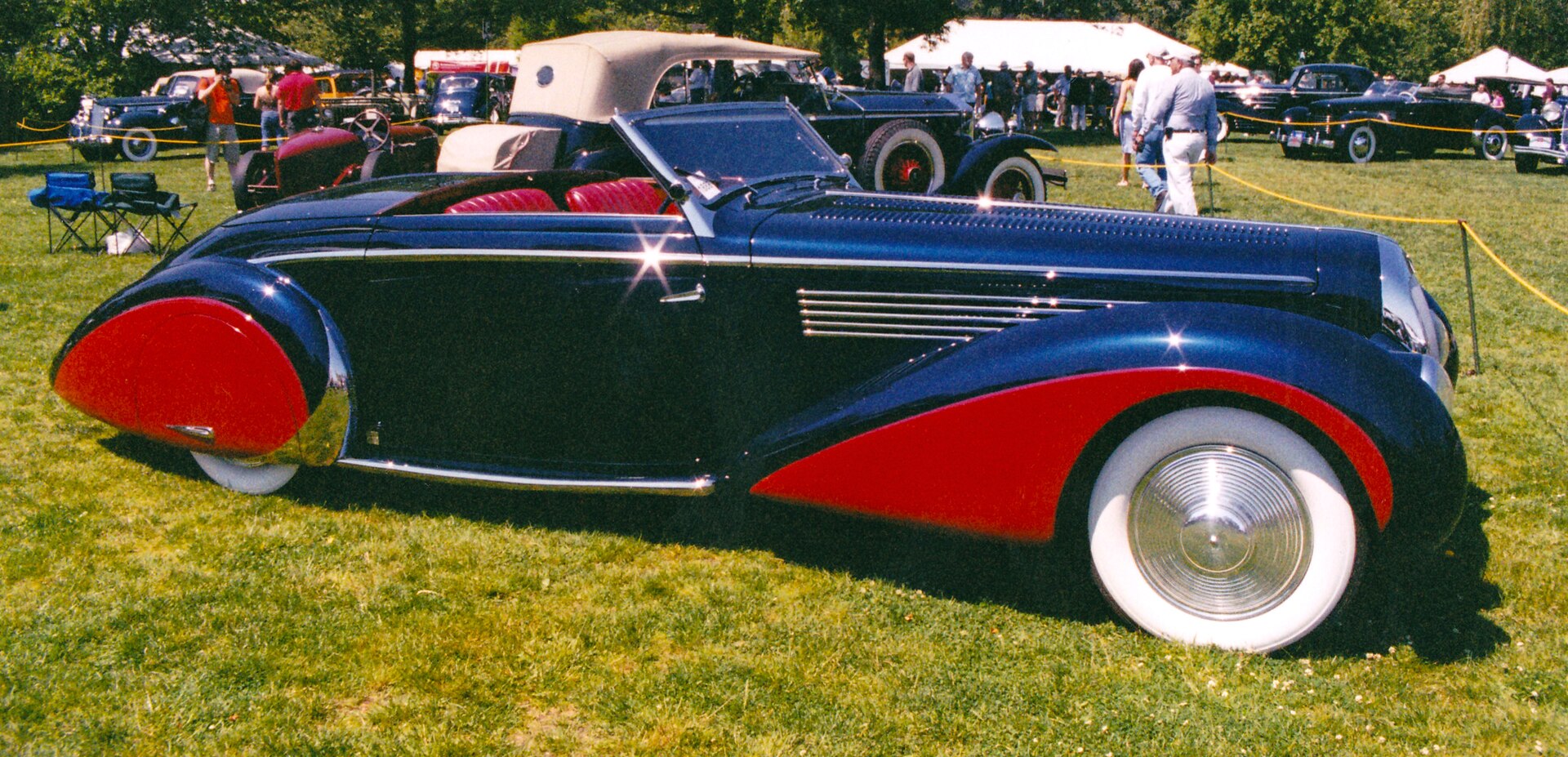
The D8 was bodied by many of the leading French coachbuilders. Those named for the model include Letourneur et Marchand and its subsidiary Autobineau, Henri Chapron, Figoni et Falaschi and Saoutchik, and surviving cars also wear bodies by Pourtout, Vanvooren, D'Ieteren and Auto Classique Touraine. One body type stands out: the Aerosport Coupé had a pillarless hardtop roof about ten years before General Motors introduced hardtops on Buick and Cadillac models.
The photographs of surviving cars show how far the bodies range, from Chapron's formal Grand Luxe saloons to the streamlined Aero Coupé that Pourtout built on a D8-120 S chassis in the late 1930s.


The D8 today and the Delage revival
Louis Delâge died in December 1947, and car production ended in 1953. In 1954 Delage and Delahaye were absorbed into Hotchkiss. The name returned on 7 November 2019, when Les Amis de Delage and Laurent Tapie signed an agreement at the Lyon Époqu'auto show to relaunch the brand. The new Delage D12 is a hybrid hypercar with a V12 and an electric motor; 30 are planned, each at more than €2 million (2026).
For anyone studying or buying a D8, three points matter most:
- Version and engine: the 4,061 cc cars of 1929–1933 differ from the 3,570 cc D8-85/105 and the 4,302 cc D8-100/120, and engines were changed between models in 1939.
- Gearbox: a Cotal pre-selector was optional until it became standard by 1937.
- Coachwork history: the body maker and the chassis number identify the car, since many coachbuilders worked on the D8.
The power converter turns the D8's horsepower ratings into kW and PS for comparison with other cars. Other luxury cars of the decade are listed in the 1930s classics section and across the classic cars hub.
Photo gallery

Delage D8 in our rankings
- No. 175 of 557 · Biggest engines: cars (4,302 cc · top 32%)
- No. 319 of 912 · Longest-running car nameplates (11 years · top 39%)
- No. 44 of 56 · Most powerful French cars (89 kW · top 79%)
- No. 748 of 859 · Most powerful cars (89 kW · top 88%)
- No. 153 of 154 · Most powerful V8 cars (78 kW)
Bigger engine than 68% of ranked cars in the 1CARS catalog (No. 175 of 557).
FAQ
When was the Delage D8 built?
From late 1929 to 1940; the original D8 and D8 S ended in 1933, and the later D8-100 and D8-120 were built with Delahaye.
What engine does the Delage D8 have?
A straight-eight with an overhead camshaft: 4,061 cc in the original car, with later versions of 2,668, 3,570 and 4,302 cc.
How powerful is the Delage D8?
The D8 Normale had 76 kW (102 hp); the D8 S and the D8-120 had 89 kW (120 hp).
Who built bodies for the Delage D8?
Letourneur et Marchand, Chapron, Figoni et Falaschi, Saoutchik, Pourtout, Vanvooren and others.
Why did Delage end up under Delahaye?
The depression cut luxury car sales; Courbevoie was liquidated in April 1935, and the cars were then built from Delahaye parts and sold through SAFAD.
Data sources
Data checked by an editor against the sources below.