 Auto Union 1000
Specs, engines and history
Published Sources (1) Report an error
By Felix Hartmann, Automotive Technology & EV Contributor
- Built
- 1958–1963
- Top power
- 40 kW (54 PS)
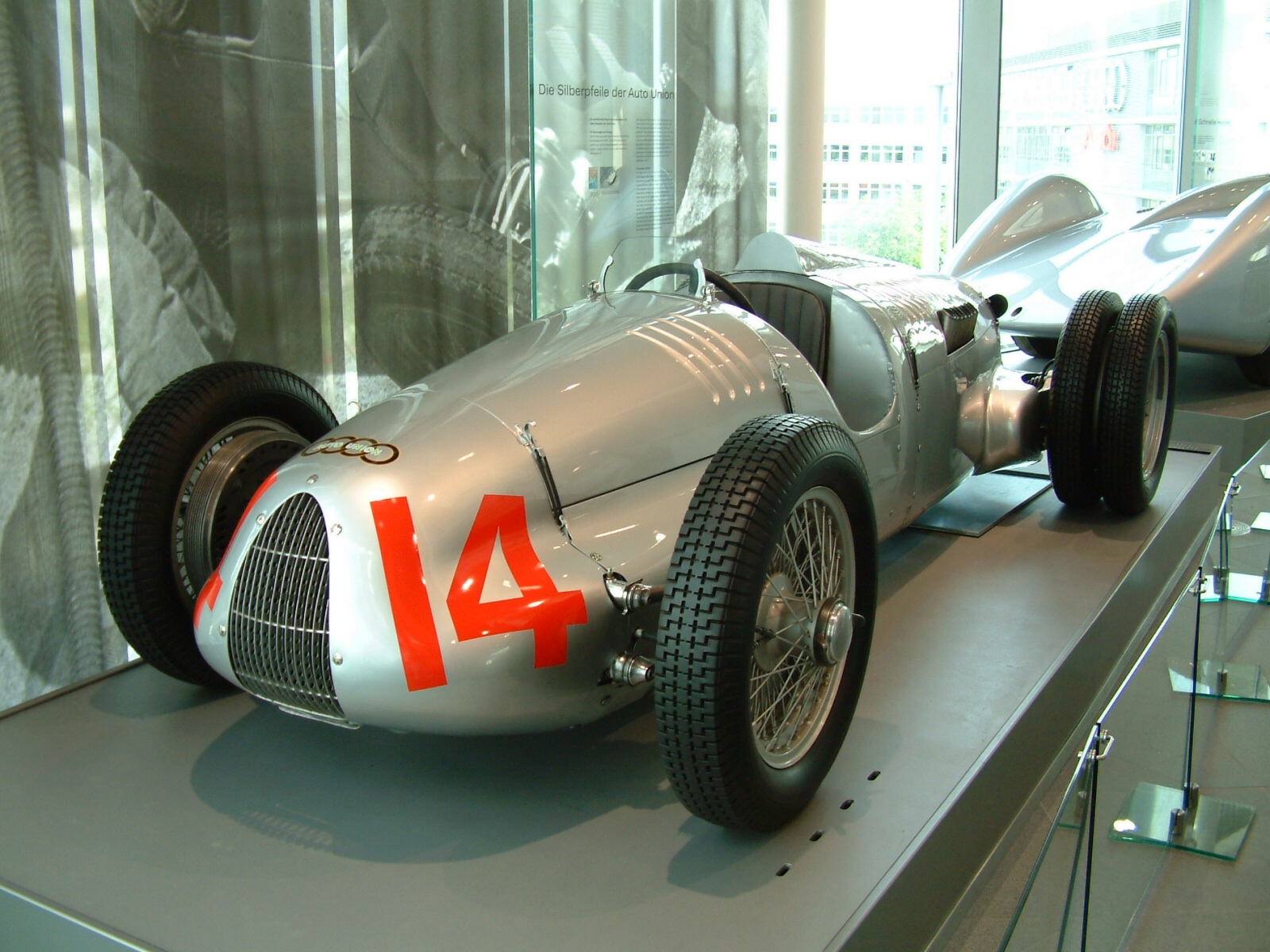
Auto Union was founded on 29 June 1932 in Chemnitz, Saxony, when four makes joined forces: Audi, DKW, Horch and the car division of Wanderer. The four overlapping rings of its badge stand for those four makes and survive today as the Audi logo. In the 1930s Auto Union's Grand Prix cars, Types A to D, based on Ferdinand Porsche's P-Wagen design, won 25 races between 1935 and 1937, and Bernd Rosemeyer became European Champion in 1936. After the war the company was re-founded in Ingolstadt on 3 September 1949. Daimler-Benz took control in 1958–1959 and Volkswagen in 1964, and in 1969 Auto Union merged with NSU into Audi NSU Auto Union AG, which became Audi AG in 1985.
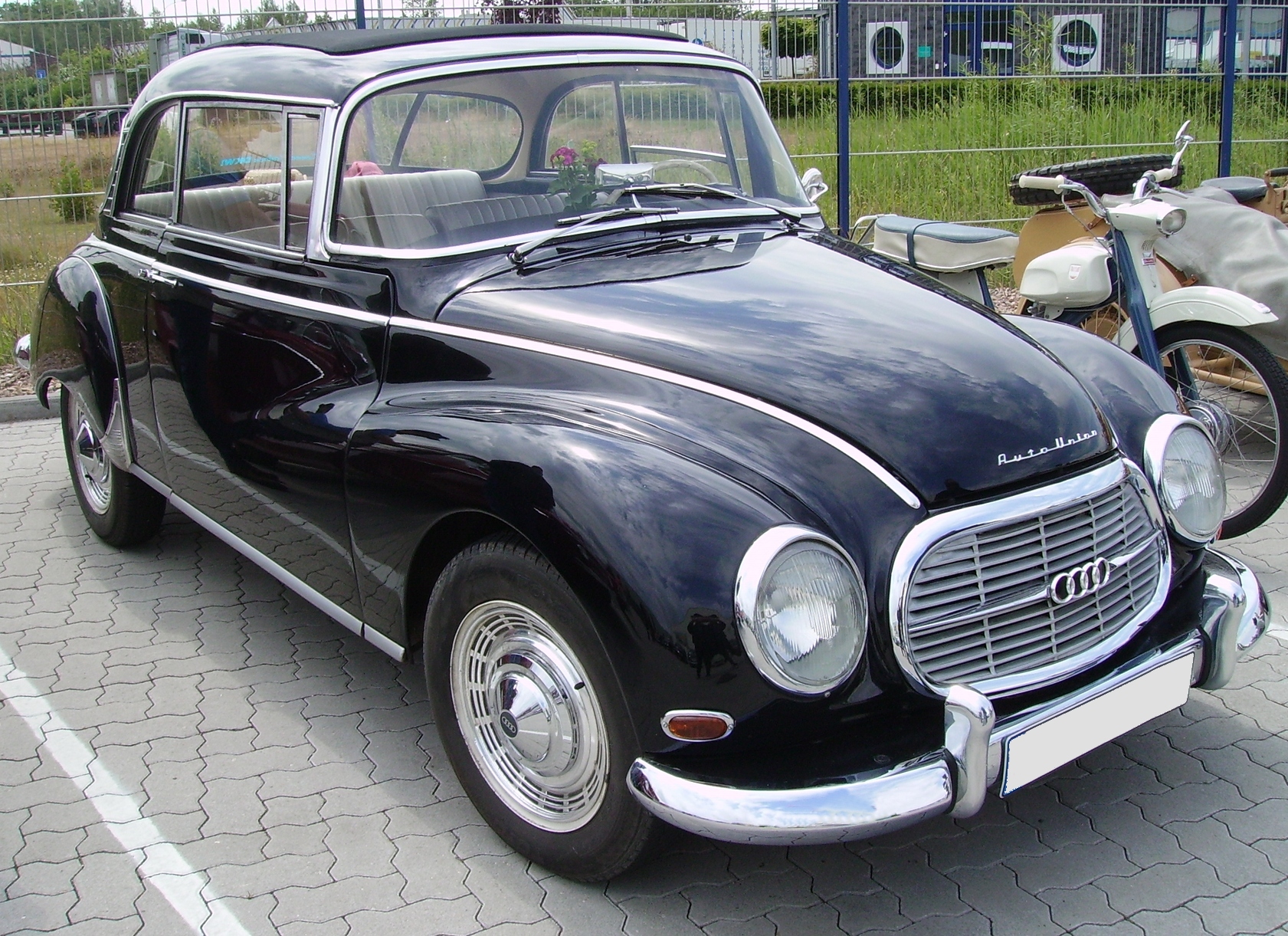
In 1958 Auto Union 1000 saloons brought the brand name back to production cars. Released in late 1957 and built until the early 1960s, it was a development of the DKW 3=6 with a 981 cc three-cylinder two-stroke and front-wheel drive. Saloons, a pillarless coupé, the Universal estate and the low 1000 Sp sports car were built, 171,008 in all, most of them in Düsseldorf. The 1000 S of 1959 brought a panoramic windscreen and 37 kW (50 PS).
Specs by version
Verified Manufacturer and type-approval data from our catalog · Sources and methodology
In short
- Built 1957–1963 (1000 Sp to 1965), mainly in Düsseldorf; 171,008 cars, plus about 6,640 Auto Union 1000 Sp sports cars.
- 981 cc three-cylinder two-stroke, water-cooled: 32 kW (44 PS), 37 kW (50 PS) in the 1000 S, 40 kW (55 PS) in the 1000 Sp.
- Front-wheel drive, four-speed column gearbox, Saxomat automatic clutch as an option.
- Price in Britain in 1960: £1,259 for a 1000 S Coupé.
Auto Union 1000 at a glance: maker, production years (1957–1965), purpose
| Parameter | Value |
|---|---|
| Maker | Auto Union GmbH (Daimler-Benz group from 1958), Düsseldorf and Ingolstadt, West Germany |
| Production | late 1957 – 1963 (saloons, coupé, Universal); 1000 Sp to 1965 |
| Built | 171,008; 1000 Sp about 6,640 (5,000 coupés, 1,640 cabriolets) |
| Purpose | middle-class family car; 1000 Sp sports car |
| Body | two- and four-door saloon, two-door pillarless coupé, three-door Universal estate, Sp coupé and cabriolet |
| Layout | front engine, front-wheel drive |
| Engine | three-cylinder two-stroke, 981 cc, water-cooled |
| Power | 32 kW (44 PS) to 40 kW (55 PS) at 4,500 rpm |
| Torque | 78.5 Nm at 3,000 rpm (1000); 88.3 Nm at 3,500 rpm (1000 Sp) |
| Gearbox | four-speed manual, column change; Saxomat optional |
| Wheelbase | 2,350 mm (two-door), 2,450 mm (four-door) |
| Length | 4,225 mm (two-door), 4,325 mm (four-door), 4,170 mm (Sp) |
| Dry weight | 930–970 kg |
| Predecessor / successor | DKW 3=6 / DKW F102 |
Development and production history
The 1000 evolved from the DKW F93, F94 and F94U of the 3=6 series, whose design went back to the DKW F9 prototype developed in Zwickau in 1938. The new car was released in late 1957, and the 3=6 stayed in production alongside it until the end of 1959. In April 1958 Daimler-Benz bought 87% of Auto Union, and in the same year the 1000 revived Auto Union as a brand name on a production car.
Most of the 171,008 cars were built in Düsseldorf, in the former Rheinmetall-Borsig factory. In August 1959 the two-door "model 60" received a panoramic wrap-around windscreen and a vertical strip speedometer. The 1000 S followed with more power. The last Universal left the plant in Ingolstadt on 31 October 1962, and the last 1000 S four-door on 13 November 1962. The DKW F102 replaced the 1000 in Europe in 1963. The wider story of the company is in the history of Audi.

Design and engineering
The body sits on a box-section frame and is fixed to it at eight points. Front suspension uses lower wishbones beneath a transverse leaf spring, and the rear has a dead axle located by trailing arms, also with a transverse leaf spring. Steering is rack and pinion. Most versions had drum brakes; English Wikipedia mentions front discs on the coupé and on the 1962 "model 62". The track is 1,290 mm at the front and 1,350 mm at the rear.
The 1000 Sp is the eye-catcher of the family. Built by Baur in Stuttgart as a low two-seater, first as a fixed-head coupé from 1958 and as a cabriolet from 1961, its tail fins earned it the nickname "baby Thunderbird". It is 4,170 mm long and 1,325 mm high.

Engine and drivetrain: the 981 cc two-stroke
The engine is a water-cooled three-cylinder two-stroke of 981 cc, with a bore and stroke of 74 × 76 mm, a single Solex carburettor and 6-volt electrics. In the 1000 it gives 32 kW (44 PS) at 4,500 rpm and 78.5 Nm at 3,000 rpm. The 1000 S has 37 kW (50 PS), and the 1000 Sp, with a compression ratio of 8.2:1 instead of 7.25:1, 40 kW (55 PS) and 88.3 Nm at 3,500 rpm.
Like all two-strokes, the 1000 burned oil with its fuel. For the 1962 models Auto Union introduced Lubrimat, a separate oil tank and pump that injected oil at a ratio of 1:40 to cut the blue smoke. The system had a weak point: in the cold winter of 1962–63 the thick oil flowed badly through the feed pipe, and crankshafts were damaged. Drive went to the front wheels through a four-speed gearbox with a column-mounted lever; the Saxomat automatic clutch was an option. With 37 kW and 930 kg, the 1000 S two-door has about 40 kW per tonne, as the power-to-weight calculator shows.
Auto Union 1000 specifications
| Version | Years | Power | Top speed (factory) | Dry weight |
|---|---|---|---|---|
| 1000 two-door | 1957–1960 | 32 kW (44 PS) | 130 km/h | 930 kg |
| 1000 four-door | 1959–1963 | 32 kW (44 PS) | 120 km/h | 970 kg |
| 1000 Universal | 1959–1962 | 32 kW (44 PS) | 120 km/h | 950 kg |
| 1000 S two-door | 1960–1963 | 37 kW (50 PS) | 135 km/h | — |
| 1000 S four-door | — | 37 kW (50 PS) | 125 km/h | — |
| 1000 Sp | 1958–1965 | 40 kW (55 PS) | 140 km/h | 960 kg |
The years follow the technical table in English Wikipedia, which differs slightly from its infobox. Fuel use was 10.0–10.5 l/100 km according to the factory. The Motor measured 130.2 km/h and 9.0 l/100 km on a 1000 S Coupé in 1960, and CAR magazine 132 km/h in August 1960.
Variants and derivatives: saloon, coupé, Universal, Sp and Argentina
The range covered two- and four-door saloons, the pillarless two-door coupé, the three-door Universal estate of 1959–1962 and the Sp. The car was also built under licence in Argentina. Industrias Automotriz de Santa Fe (IASF) built the 1000 at Sauce Viejo from 1960 to 1970: 21,797 1000 S saloons and 6,396 Universal S estates until 1969, plus small numbers of Fissore-styled coupés and spiders.


In service: rallies and everyday use
The two-stroke was successful in rallying. Wolfgang Levy and Hans Wenscher won the 1959 Acropolis Rally outright, and the car won its class at the 1960 Monte Carlo Rally. In South Africa Reinhard and Pieter Muhl won the national rally championship in 1961, 1962 and 1963, the last time with Jan Hettema.
In 1960 a 1000 S Coupé cost £1,259 in Britain, more than the £1,148 of an Austin Westminster that year. In September 1965, after Volkswagen's takeover, the Audi name returned on a new four-stroke car built in Ingolstadt. More on the later cars from Ingolstadt is in the Audi 100 generations article.

Preservation and collecting today
Of the versions with known totals, the 1000 Sp, with about 6,640 built, is the smallest series, and the Argentine Fissore coupés and spiders were made in limited numbers. No reliable public price data in euros was found for this article, so no market values are given.
Which Auto Union 1000 to choose:
- For style: a 1000 Sp coupé or one of the 1,640 cabriolets.
- For the classic look: a 1000 S with the panoramic windscreen.
- For practicality: a Universal estate (1959–1962).
- For simplicity: an early two-door 1000 without Lubrimat.
More German cars of the time are in the 1950s classics, the 1960s classics and the classic cars section; every model of the brand is in the Auto Union catalogue.
Photo gallery

Auto Union 1000 in our rankings
- No. 630 of 912 · Longest-running car nameplates (5 years · top 77%)
- No. 120 of 124 · Most powerful German cars (40 kW · top 97%)
- No. 838 of 859 · Most powerful cars (40 kW · top 98%)
- No. 553 of 557 · Biggest engines: cars (981 cc)
In production longer than 23% of ranked nameplates in the 1CARS catalog (No. 630 of 912).
FAQ
Which engine powers Auto Union 1000 cars?
A water-cooled three-cylinder two-stroke of 981 cc with 32 kW (44 PS), 37 kW (50 PS) in the 1000 S and 40 kW (55 PS) in the 1000 Sp.
How many Auto Union 1000s were built?
171,008, most of them in Düsseldorf, plus about 6,640 1000 Sp sports cars built by Baur.
What is Auto Union's 1000 Sp?
A two-seat sports version built by Baur in Stuttgart from 1958 to 1965, as a coupé and from 1961 as a cabriolet; its tail fins earned it the nickname "baby Thunderbird".
What was Lubrimat?
A separate oil tank and pump that injected two-stroke oil at 1:40, introduced for the 1962 models to reduce smoke.
What replaced Auto Union's 1000?
The DKW F102 in 1963, followed in 1965 by the four-stroke Audi.
Data sources
Data checked by an editor against the sources below.