 AC Cars AC Ace
Specs, engines and history
Published Sources (1) Report an error
By Felix Hartmann, Automotive Technology & EV Contributor
- Built
- 1953–1963
- Top power
- 127 kW (173 PS)
Which AC Ace to choose
Our verdict · Felix Hartmann
- For the original car: an AC-engined Ace with the company's own 2.0-litre six.
- For balance: an Ace-Bristol, the most numerous version, with up to 95 kW (128 bhp) in Type 100D form.
- For performance and rarity: an Ace 2.6 Ruddspeed; only 37 were built, some with up to 127 kW (170 bhp).
- For a closed car: the Aceca coupé on the same chassis.
AC Cars traces its story to 1903, when the Weller brothers showed a 15 kW (20 hp) touring car at the Crystal Palace. Their backer, the butcher John Portwine, pushed them towards a cheaper three-wheeler. Autocars and Accessories was founded in 1904 to build Auto-Carrier three-wheelers. The company moved to Ferry Works in Thames Ditton in 1911 and adopted the "AC" roundel, and John Weller's overhead-camshaft six-cylinder engine, first running in 1919, stayed in production until 1963. The Hurlock family owned the firm from 1930 to 1986, and after the Second World War it built invalid carriages for the government alongside its sports cars. The full story is told in the history of AC Cars.
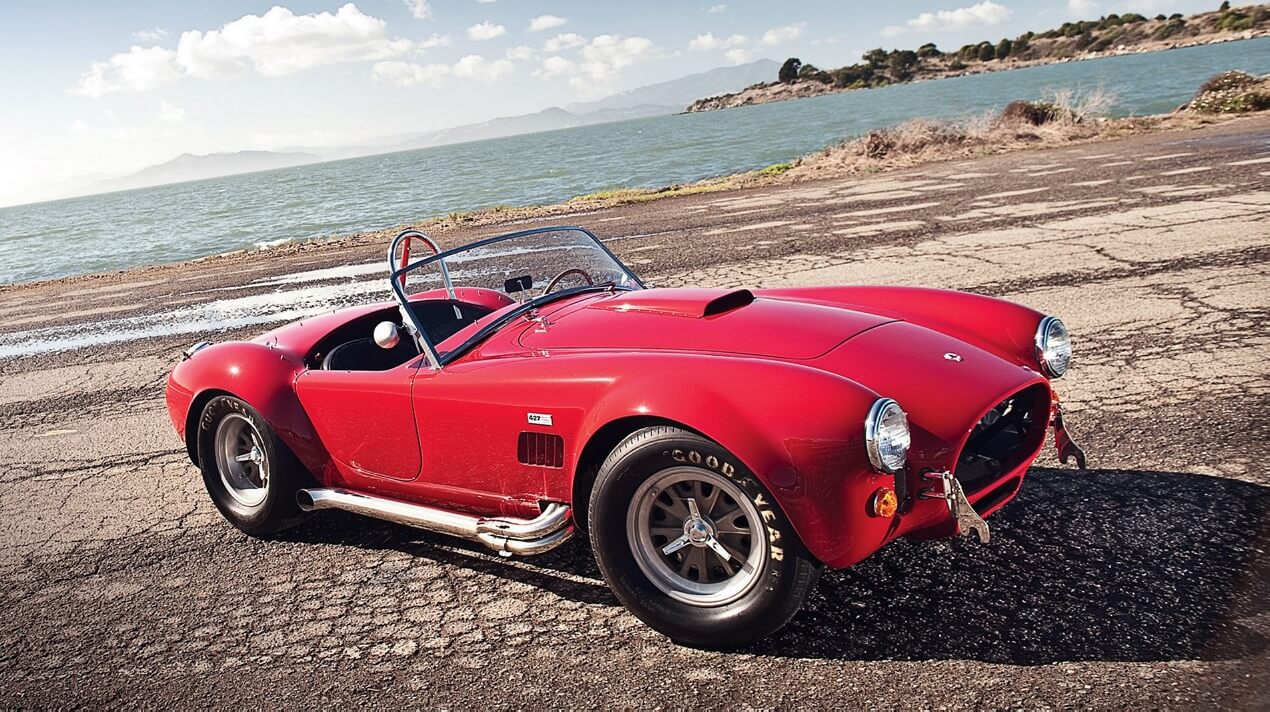
The Ace is AC's post-war sports car and the car from which the Cobra was born. Built at Thames Ditton from 1953 to 1963, it was a light aluminium two-seater on a tubular chassis designed by John Tojeiro, with independent suspension at all four corners. It was offered with three six-cylinder engines, AC's own, Bristol's and a tuned Ford Zephyr unit, and an Ace Bristol won the 2-litre GT class at Le Mans in 1959. In 1961 Carroll Shelby proposed putting a Ford V8 into it; the result was the Cobra.
Size at a glance
| Dimensions | AC Cars Ace |
|---|---|
| Length | 3,861 mm152.0 in |
| Width | 1,511 mm59.5 in |
| Height | 1,245 mm49.0 in |
| Wheelbase | 2,286 mm90.0 in |
Specs by version
Engines
| Version | Engine | Power | Drive | Production years |
|---|---|---|---|---|
| 2.0 AC six | 6 cyl · Petrol | 75 kW 102 PS101 hp | Rear-wheel drive | 1953–1963 |
| 2.0 Bristol six | 6 cyl · Petrol | 89 kW 121 PS119 hp | Rear-wheel drive | - |
| 2.6 Ruddspeed (Ford Zephyr six) | 6 cyl · Petrol | 127 kW 173 PS170 hp | Rear-wheel drive | - |
Performance
Show all 3 versions
| Version | Top speed |
|---|---|
| 2.0 AC six | 166 km/h103 mph |
| 2.0 Bristol six | 187 km/h116 mph |
| 2.6 Ruddspeed (Ford Zephyr six) | 209 km/h130 mph |
Dimensions and weight
Show all 3 versions
Verified Manufacturer and type-approval data from our catalog · Sources and methodology
In short
- Built at Thames Ditton, Surrey, from 1953 to 1963; about 220 AC-engined cars, 466 Ace-Bristols and 37 Ace 2.6s.
- Chassis by John Tojeiro: large-diameter steel tubes, all-independent suspension with transverse leaf springs, hand-formed aluminium body.
- Engines: AC 2.0-litre six with about 75 kW (100 bhp), Bristol 2.0-litre six with 78–95 kW (105–128 bhp), Ford Zephyr 2.6 "Ruddspeed" with 67–127 kW (90–170 bhp).
- An Ace Bristol finished 7th overall and won its class at Le Mans in 1959.
AC Ace at a glance
| Parameter | Metric | Imperial |
|---|---|---|
| Maker | AC Cars, Thames Ditton, Surrey | - |
| Production | 1953–1963 | - |
| Built | about 220 AC-engined, 466 Ace-Bristol, 37 Ace 2.6 | - |
| Designer | John Tojeiro | - |
| Body | aluminium two-seat roadster on a tubular steel frame | - |
| Chassis | ladder frame of large-diameter round steel tube | - |
| Suspension | independent all round, transverse leaf springs | - |
| Engines | AC 2.0 l six; Bristol 2.0 l six; Ford Zephyr 2.6 l six | - |
| Power | 75 kW (100 bhp) AC; 78–95 kW (105–128 bhp) Bristol; 67–127 kW (90–170 bhp) Ruddspeed | - |
| Wheelbase | 2,286 mm | 90 in |
| Length × width × height | 3,861 × 1,511 × 1,245 mm | 152 × 59.5 × 49 in |
| Weight | 871 kg (infobox); 762–780 kg unladen (spec table) | 1,920 lb; 1,680–1,720 lb |
| Successor | AC Cobra | - |
AC between the wars
Auto-Carrier production was followed in 1907 by a passenger version, the A.C. Sociable, and in 1913 by the first four-wheeled AC, of which only a few were made before the First World War. Selwyn Edge bought shares in 1921 and became governing director, Weller and Portwine left within a year, and in 1922 the firm became AC Cars Ltd. Edge bought it outright for £135,000 in 1927, but sales kept falling, and the company went into voluntary liquidation in 1929.
The Hurlock family, who ran a haulage business, bought AC in 1930. Limited production restarted, and a new range with Standard chassis and a four-speed gearbox arrived in 1932. The last pre-war car was delivered in June 1940. After the war a government contract for glass-fibre Invacar Type 57 invalid carriages with Villiers engines became an important source of revenue, and they were built until 1976. The 2-Litre was built from 1947 to 1958. Its six-cylinder engine went straight into the new sports car.
John Tojeiro's chassis
Production began in 1953 with a chassis designed by John Tojeiro and AC's 2-Litre engine. English Wikipedia says its shape was possibly inspired by the Ferrari 166 MM barchetta. The frame is a light ladder of large-diameter round steel tubes with a tubular steel hoop at the scuttle, and all four wheels are independently sprung with transverse leaf springs. The two-seat body was hand-formed and welded from aluminium over a tubular steel support frame.
AC built more models on the same base. The Aceca, unveiled at the Earls Court show in 1954, was a fixed-head coupé with a timber-framed alloy body and an early form of hatchback rear door. The four-seat Greyhound of 1959 used a stretched version of the chassis.

Three engines: AC, Bristol and Ruddspeed
| Engine | Power | Top speed | 0–60 mph | Built |
|---|---|---|---|---|
| AC 2.0 l OHC six | 75 kW (100 bhp); 63–76 kW (85–102 bhp) in the spec table | 103 mph (166 km/h) | 11.4 s (The Motor, 1954) | about 220 |
| Bristol 2.0 l six | 89 kW (120 bhp); Type 100B 78 kW (105 bhp), Type 100D 95 kW (128 bhp) | 116–117 mph (187–188 km/h) | about 9 s; 9.1 s for the Type 100D | 466 |
| Ford Zephyr 2.6 l "Ruddspeed" | 67–127 kW (90–170 bhp), in four stages | 130–135 mph (209–217 km/h) | 8.1 s in the text; 6.0 s in the spec table | 37 |
The first engine was AC's own overhead-camshaft straight-six, a design whose first versions were running in 1919. In The Motor's 1954 road test it gave 103 mph (166 km/h), 0–60 mph in 11.4 seconds and 25.2 miles per imperial gallon (11.2 litres per 100 km). The Bristol six raised power, and the Ace-Bristol became the most numerous version.
The last engine was the 2.6-litre six from the Ford Zephyr, tuned by Ken Rudd and sold as the "Ruddspeed". It was offered in four stages from 67 kW (90 bhp) to 127 kW (170 bhp). Only 37 were built, because the Cobra soon drew buyers away. With 75 kW and about 780 kg, an AC-engined car has about 96 kW per tonne; the power-to-weight calculator compares that with modern roadsters.


Racing at Le Mans
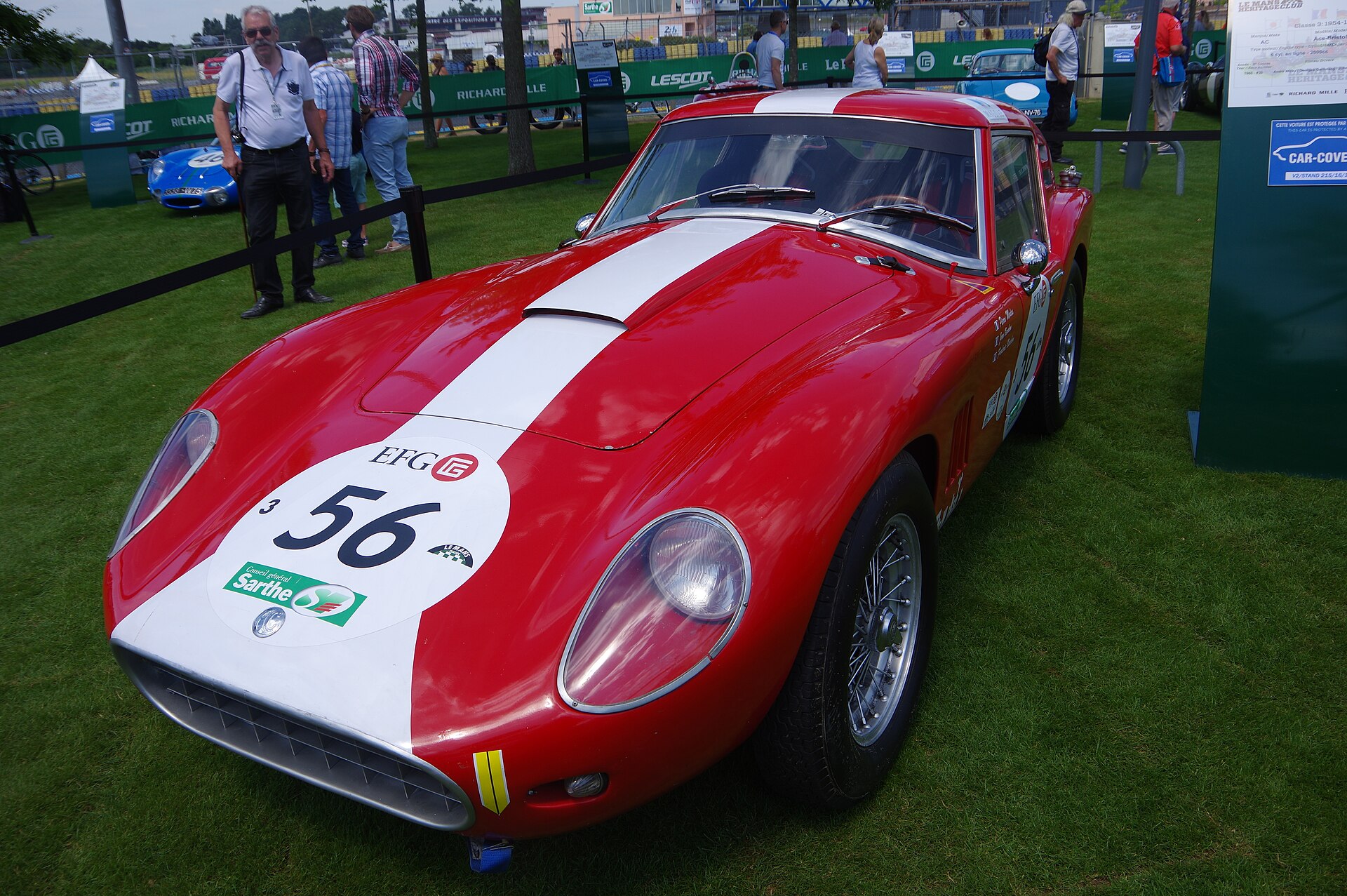
The car raced at the 24 Hours of Le Mans in 1957 and 1958; for 1958 AC built an Ace LM prototype and tested it at Brooklands. The best result came in 1959. Ted Whiteaway and John Turner drove the Ace Bristol registered 650 BPK to 7th place overall and a win in the 2,000 cc GT class, beaten only by six 3-litre cars. In 1960 the Ace-Aigle was not classified because it had not covered enough distance. In 1962 the car registered BEX 1192 became the last Ace at Le Mans before the Cobra took over.
The road to the Cobra
In September 1961 Carroll Shelby approached AC with the idea of fitting a Ford V8 into the Ace. AC built the Ace 3.6 prototype, chassis CSX2000, and in the United States it received a 4.3-litre (260 cu in) Ford V8. English Wikipedia regards this car as the first Cobra. The Cobra appeared in 1962, first with the 260 V8 and then with the 289, and production of the six-cylinder car ended about a year later.
The lower bonnet and smaller grille of the Ace 2.6 are often credited to Shelby, but English Wikipedia says AC made those changes itself. The Cobra's own story is told in the Shelby Cobra article, and its creator has a page among the people of the car industry.
AC after 1963
| Year | Event |
|---|---|
| 1953 | Ace enters production |
| 1954 | Aceca coupé shown at Earls Court |
| 1959 | Greyhound on a stretched Ace chassis; Le Mans class win |
| 1962 | AC Cobra introduced |
| 1963 | Ace production and the AC six-cylinder engine end |
| 1967–1973 | AC 428 with a Frua body, about 80 built |
| 1979 | first 3000ME mid-engined cars delivered |
| 1986 | Hurlock family sells its holdings |
| 1996 | Alan Lubinsky buys the business |
| 2022 | new structure begins building 663 new AC Cobras |
Brian Angliss and his company Autokraft built Cobra Mk IV and Ace-based models from 1982 until receivership in March 1996. AC Automotive in Straubenhardt, Germany, built AC cars from 2010 until its liquidation on 24 July 2023. Replicas exist, such as the Hawk Ace, but they are rare. AC models are listed in the AC Cars catalogue, and more cars of the period are in the 1950s classics section.
Photo gallery

AC Cars AC Ace in our rankings
- No. 4 of 30 · Smallest convertibles and roadsters (3,861 mm)
- No. 24 of 420 · Smallest cars (3,861 mm · top 6%)
- No. 352 of 912 · Longest-running car nameplates (10 years · top 43%)
- No. 152 of 281 · Fastest cars (209 km/h · top 55%)
- No. 55 of 79 · Most powerful convertibles and roadsters (127 kW · top 70%)
- No. 15 of 21 · Fastest convertibles and roadsters (209 km/h · top 72%)
Shorter than 94% of ranked cars in the 1CARS catalog (No. 24 of 420).
FAQ
How many AC Aces were built?
English Wikipedia gives about 220 AC-engined cars, 466 Ace-Bristols and 37 Ace 2.6s; it is not clear whether the first figure includes the 2.6s.
Who designed the AC Ace?
John Tojeiro designed the chassis; English Wikipedia says the shape was possibly inspired by the Ferrari 166 MM barchetta.
What engines did the AC Ace have?
AC's own 2.0-litre overhead-camshaft six, the Bristol 2.0-litre six and the Ford Zephyr 2.6-litre six tuned by Ken Rudd.
Is the AC Cobra based on the Ace?
Yes. In 1961 Carroll Shelby proposed fitting a Ford V8 to the Ace, and the Ace 3.6 prototype CSX2000 with a 4.3-litre Ford V8 became the first Cobra.
Did the AC Ace race at Le Mans?
Yes. In 1959 an Ace Bristol driven by Ted Whiteaway and John Turner finished 7th overall and won the 2,000 cc GT class.
Data sources
Data checked by an editor against the sources below.