 Maserati Ghibli II
Specs, engines and history
Published Sources (1) Report an error
By Felix Hartmann, Automotive Technology & EV Contributor
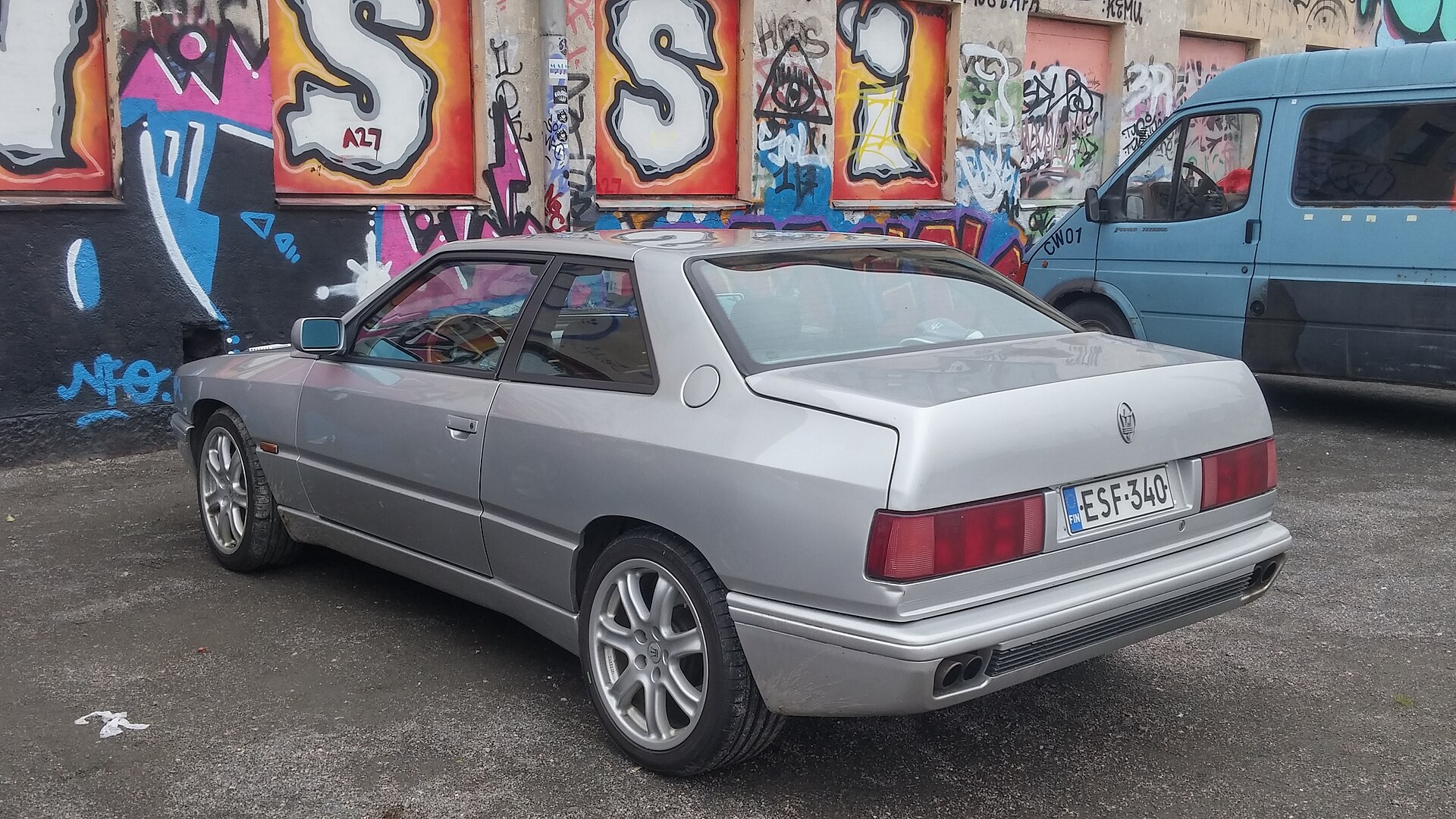
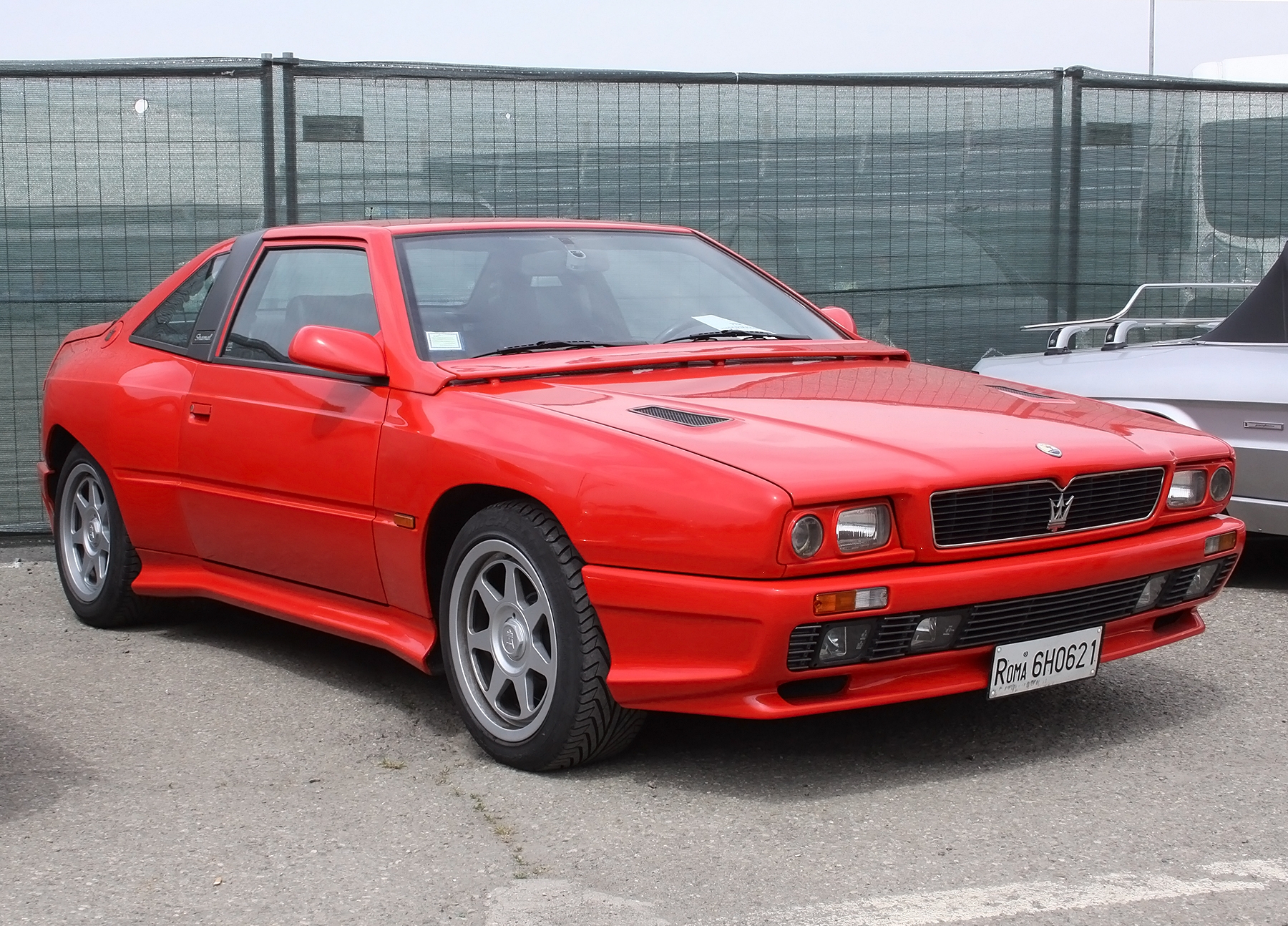
The Maserati Ghibli II is a compact four-seat coupé that Maserati built in Modena from 1992 to 1998. Launched at the Turin motor show in April 1992, it revived the name of the Ghibli of the 1960s, but technically it was the last and most developed evolution of the Biturbo coupés. It used twin-turbo V6 engines of 2.0 and 2.8 litres and was offered in the sharper Ghibli Cup version, which Maserati called the world's most powerful 2.0-litre production car. In total 2,337 were built.
In short
- Presented at the 62nd Turin motor show in April 1992; production ended in the summer of 1998.
- Twin-turbo 90° V6 with 24 valves: 2.0 litres with 225 kW (306 PS) for Italy and Europe, 2.8 litres with 209 kW (284 PS) for export.
- Ghibli Cup from December 1995 with 243 kW (330 PS) and 270 km/h; 60 Primatist cars celebrated a speed record on water.
- 2,337 cars according to Wikipedia; the 3200 GT of 1998 succeeded it.
Maserati Ghibli II at a glance
| Specification | Maserati Ghibli II (AM336) |
|---|---|
| Production | 1992–1998, Modena (Italy) |
| Cars built | 2,337 (Wikipedia) |
| Body | two-door coupé with four seats, steel monocoque |
| Design | Marcello Gandini (Maserati) |
| Engines | 1,996 cc and 2,790 cc 90° V6, two turbochargers, 24 valves |
| Power | 225 kW (306 PS) for the 2.0; 209 kW (284 PS) for the 2.8 |
| Torque | 373 Nm (2.0); 413 Nm (2.8) |
| Gearbox | six-speed Getrag manual (five-speed ZF on early 2.8s); four-speed automatic optional |
| Dry weight | 1,365–1,406 kg (Maserati) |
| Top speed | 250–255 km/h (Wikipedia); Cup 270 km/h |
| Predecessor / successor | Biturbo coupés / 3200 GT |
The Ghibli name later returned on the saloon described in our Maserati Ghibli article. The brand's full model list is in the Maserati catalogue.
A famous name on a familiar base
When Maserati showed the new coupé in Turin in April 1992, it revived a name from the brand's past, first used in the 1960s. Technically the new car had little in common with that earlier Ghibli. Wikipedia calls it an evolution of the Biturbo coupés, and it kept their interior structure and basic bodyshell.
Maserati's classic-car archive credits Marcello Gandini with the body, which is wider and more modern than that of the Biturbo. The car is a three-box coupé with two doors; Maserati lists it as a five-seater, while it is usually described as a four-seat coupé.
Engines and performance
All Ghibli II engines are 90° V6 units with two turbochargers and four valves per cylinder. As with the Biturbo, two sizes were offered. The 2.0-litre engine served Italy and Europe, and the 2.8-litre version was built for export markets.
| Version | Displacement | Power | Torque | 0–100 km/h | Top speed |
|---|---|---|---|---|---|
| Ghibli 2.0 | 1,996 cc | 225 kW (306 PS) at 6,250 rpm | 373 Nm at 4,250 rpm | 5.7 s | 255 km/h |
| Ghibli 2.8 | 2,790 cc | 209 kW (284 PS) at 6,000 rpm | 413 Nm at 3,500 rpm | 6.0 s | 250 km/h |
| Ghibli Cup | 1,996 cc | 243 kW (330 PS) at 6,500 rpm | 373 Nm at 4,000 rpm | 5.6 s | 270 km/h |
The figures come from Wikipedia. Maserati's own page gives a top speed of more than 260 km/h. Its data for power are less clear, because the same rating of 225 kW (306 hp) appears for different engines on the page.
The 2.0-litre car used the six-speed Getrag gearbox that Maserati had introduced in the Shamal. The 2.8 started with a five-speed ZF manual and received the six-speed Getrag from 1995. A four-speed automatic was available as an option.
Chassis and the 1994 update
Front suspension uses MacPherson struts, coil springs and an anti-roll bar. The rear has semi-trailing arms, again with coil springs and an anti-roll bar. All four wheels have ventilated discs, and steering is by power-assisted rack and pinion. Maserati gives dry weights of 1,365 kg and 1,406 kg for its two type codes.
At the Geneva motor show in 1994 the Ghibli was updated. It received a refreshed interior, new door mirrors and wider 17-inch alloy wheels of a new design. ABS and a fully adjustable electronic suspension were added at the same time.
A further round of changes followed with the Ghibli GT. Maserati dates it to 1995, Wikipedia to 1996. It brought seven-spoke 17-inch wheels, black headlamp housings, modified suspension and transmission, and, according to Maserati, a new rear differential. For drivers who wanted a firmer setup, the Kit Sportivo of 1995 added wider tyres on OZ split-rim wheels, specific springs, dampers and anti-roll bars.
Ghibli Cup and Primatist
The Ghibli Cup was shown at the Bologna motor show in December 1995. Maserati says it was derived from the racing car of the Open Cup series and adapted for public roads. Its 2.0-litre engine produced 243 kW (330 PS) at 6,500 rpm. Wikipedia notes that this gave it the highest specific output of any road-legal car at the time. The Cup has revised suspension, Brembo brakes, five-spoke Speedline wheels and an aluminium racing-style fuel cap. It was offered only in red, white, yellow or French blue.
Production figures differ. Wikipedia gives 57 Ghibli Cups. Maserati counts 60, plus 15 more built on request with the 2.8-litre engine.
The Ghibli Primatist was a special edition of 60 cars. It celebrated a world speed record set on 4 November 1996, when Guido Cappellini drove a boat powered by a Ghibli Cup engine at 216.703 km/h on Lake Lugano. The Primatist was painted in ultramarine blue and had two-tone blue and turquoise leather with polished burr walnut.
| Version | Cars built (Wikipedia) |
|---|---|
| Ghibli 2.0 | 1,157 |
| Ghibli 2.8 | 1,063 |
| Ghibli Cup | 57 |
| Primatist | 60 |
| Total | 2,337 |


The Ghibli Open Cup
Maserati also ran a one-make racing series, the Ghibli Open Cup, in 1995 and 1996. The race cars were based on the 2.0-litre model and used tipo AM 577 engines tuned to 235 kW (320 PS). They had a roll cage, Sparco seats and 17-inch Speedline wheels. Eight races were held in the first season of 1995.

Legacy
The Ghibli II ended a line of compact twin-turbo Maseratis that had begun with the Biturbo of 1981. Production stopped in the summer of 1998, and the 3200 GT took its place. The Ghibli Cup's specific output of about 122 kW per litre shows how far the twin-turbo V6 had been developed in those 17 years.
Maserati Ghibli II in our rankings
In production longer than 31% of ranked nameplates in the 1CARS catalog (No. 560 of 912).
FAQ
What engine does the Maserati Ghibli II have?
A twin-turbo 90° V6, either 2.0 litres with 225 kW (306 PS) for Italy and Europe or 2.8 litres with 209 kW (284 PS) for export.
What is the Ghibli Cup?
A road version derived from the Open Cup race car, with 243 kW (330 PS) from its 2.0-litre engine and a top speed of 270 km/h.
How many Ghibli IIs were built?
Wikipedia gives 2,337 cars: 1,157 with the 2.0, 1,063 with the 2.8, 57 Ghibli Cups and 60 Primatists.
What replaced the Ghibli II?
The 3200 GT, which arrived in 1998 when production of the Ghibli ended in the summer of that year.
Data sources
Data checked by an editor against the sources below.