 Maserati Sebring
Specs, engines and history
Published Sources (1) Report an error
By Felix Hartmann, Automotive Technology & EV Contributor
- Built
- 1962–1969
- Top power
- 195 kW (265 PS)
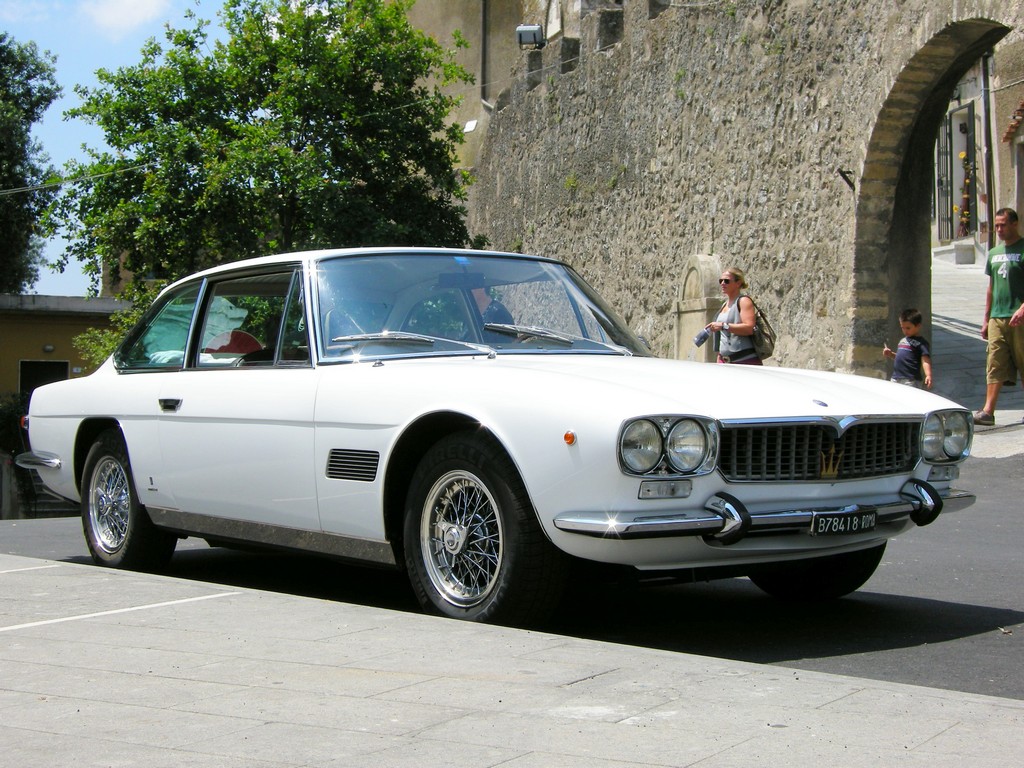
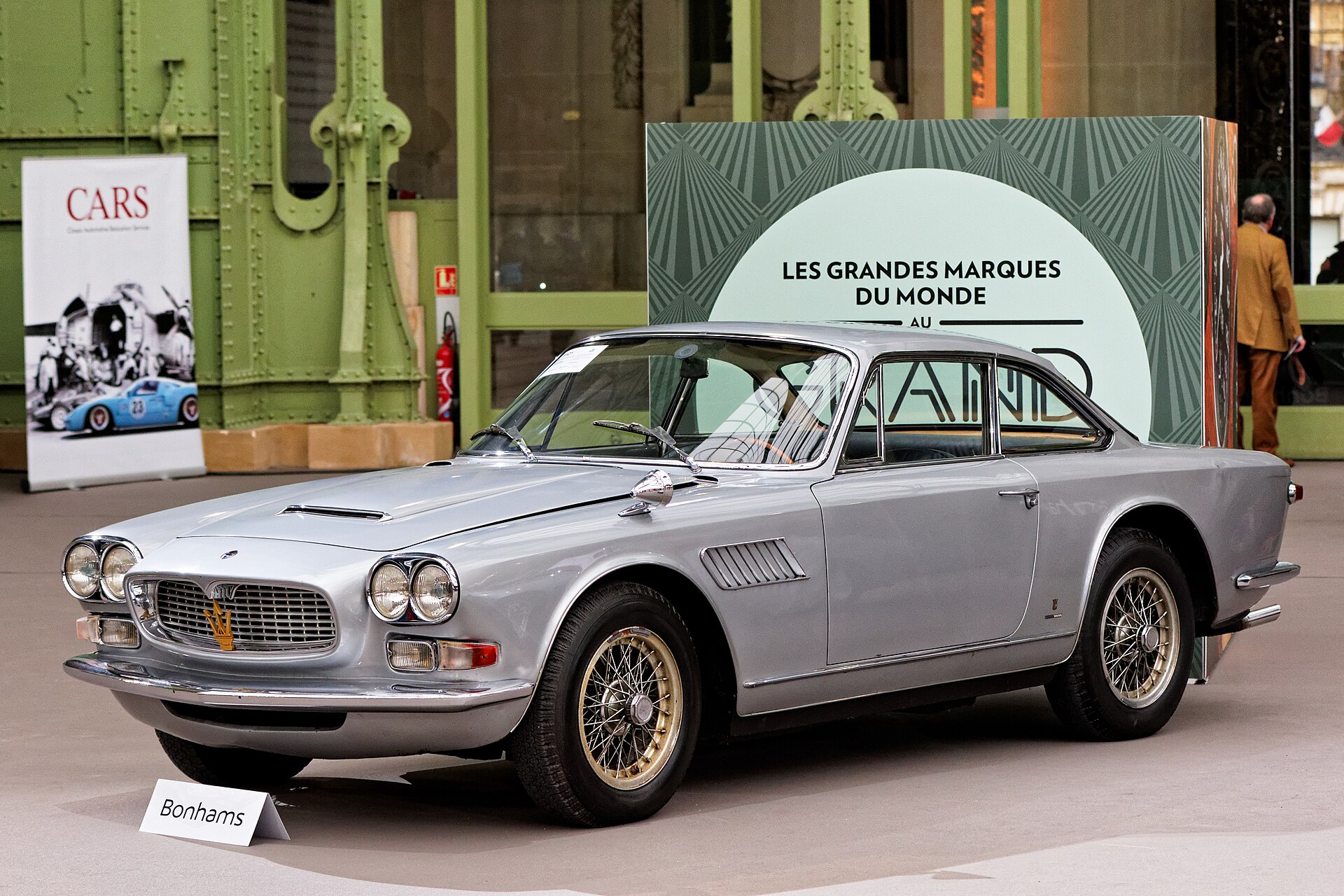
The Maserati Sebring is a 2+2 grand tourer that Maserati built from 1962 to the end of the 1960s on the mechanical basis of the 3500 GT. Designed by Giovanni Michelotti at Vignale, it carried the name of the 1957 12 Hours of Sebring, which Maserati won with Juan Manuel Fangio and Jean Behra. Over two series it used straight-six engines of 3.5, 3.7 and 4.0 litres with up to 195 kW (265 PS). Production estimates range from about 446 to 593 cars.
In short
- Built 1962–1968 (some sources: 1969); shown at the Paris motor show in 1962; designed by Michelotti at Vignale.
- Straight-six engines: 3,485 cc with 173 kW (235 PS) from 1963, 3,694 cc from 1964, and 4,012 cc with 188 kW (255 PS), later 195 kW (265 PS).
- Five-speed ZF manual gearbox, three-speed Borg-Warner automatic optional.
- Series I: 348 cars, 220 km/h; Series II from 1965 with new lights and bumpers.
Maserati Sebring at a glance
| Specification | Maserati Sebring |
|---|---|
| Production | 1962–1968 (1969 per Wikipedia's infobox) |
| Cars built | about 446 (text estimate) or 593 (infobox) |
| Body | 2+2 coupé by Vignale (design Giovanni Michelotti); front engine, rear-wheel drive |
| Engines | straight-six, 3,485 cc, 3,694 cc or 4,012 cc |
| Power | 173 kW (235 PS) to 195 kW (265 PS) |
| Gearbox | five-speed ZF manual; three-speed Borg-Warner automatic optional |
| Dimensions | 4,470 × 1,665 × 1,300 mm, wheelbase 2,500 mm |
| Dry weight | 1,520 kg |
| Predecessor / successor | 3500 GT / Indy |
The Sebring is the four-seat derivative of the Maserati 3500 GT. All models are listed in the Maserati catalogue, and the brand's story is in our history of Maserati.
The name: Sebring 1957 race victory
The car was named after one of Maserati's best racing results. On 23 March 1957 a Maserati 450S driven by Juan Manuel Fangio and Jean Behra won the 12 Hours of Sebring after 197 laps, and a Maserati 300S driven by Stirling Moss and Harry Schell finished second, two laps behind.
The base: Maserati 3500 GT
The Sebring was built on the mechanical parts of the 3500 GT, Maserati's successful grand tourer. Two 3500 GT prototypes were shown at the Geneva motor show in March 1957, and production started at the end of that year. The 3500 GT had a 3,485 cc twin-cam straight-six derived from the 350S racing car, producing 162 kW (220 PS) with Weber carburettors and 173 kW (235 PS) with Lucas mechanical fuel injection. According to Wikipedia, the injected 3500 GTi of 1960 was the first Italian production car with fuel injection. In total, 2,226 coupés and convertibles of the 3500 GT were built, with sales peaking in 1961 at about 500 cars.
The Sebring, which went into production in 1962, shared these mechanicals but received a new 2+2 coupé body.

Design by Vignale
Giovanni Michelotti designed the Sebring at Vignale. The body is a 2+2 coupé with a 2,500 mm wheelbase; the car is 4,470 mm long, 1,665 mm wide and 1,300 mm high and weighs 1,520 kg dry. In 1963 Vignale also built a single two-seat Sebring spyder, which did not enter production.
Engines and gearboxes
The first Sebrings used the 3,485 cc straight-six (type AM101). An update in 1963 added 11 kW (15 PS), for 173 kW (235 PS). From 1964 a few Series I cars received a larger 3,694 cc engine, and later a 4,012 cc version followed as the 4000 GTiS with 188 kW (255 PS) at 5,200 rpm. Late in production the 4.0-litre was raised slightly to 195 kW (265 PS).
| Engine | Capacity | Power |
|---|---|---|
| 3.5 (from 1963) | 3,485 cc | 173 kW (235 PS) |
| 3.7 (from 1964) | 3,694 cc | — |
| 4.0 (4000 GTiS) | 4,012 cc | 188 kW (255 PS) at 5,200 rpm |
| 4.0 (late) | 4,012 cc | 195 kW (265 PS) |
The standard gearbox was a five-speed manual from ZF. A three-speed automatic from Borg-Warner was also offered. The Series I reached a top speed of 220 km/h.


Series I and Series II
Series I (type AM 101/S). Shown at the Paris motor show in 1962 and at the Turin motor show in 1963. 348 were built between 1962 and 1965.
Series II (type AM 101/10). Introduced in 1965, it had redesigned headlamps, more modern bumpers, new front indicators and side grilles, horizontally mounted tail lights and a slightly narrower boot opening. The cars ran on 205x15 Pirelli Cinturato tyres. Wikipedia gives 247 Series II cars, but a parts marking reading "69 di 96" suggests that only 96 may have been made, which would make it very rare.
| Year | Event |
|---|---|
| 1957 | Maserati wins the 12 Hours of Sebring; 3500 GT shown at Geneva |
| 1962 | Sebring Series I shown at the Paris motor show |
| 1963 | Power raised to 173 kW (235 PS); Vignale builds a one-off spyder |
| 1964 | First 3.7-litre engines |
| 1965 | Series II introduced |
| 1968–1969 | End of production; the Indy follows |

Legacy
The Sebring gave Maserati a comfortable four-seat grand tourer in the 1960s and kept the memory of its 1957 racing success alive. Jeremy Clarkson later placed it 77th in his list of the 100 greatest cars. Its successor was the Maserati Indy.
Maserati Sebring in our rankings
- No. 493 of 859 · Most powerful cars (195 kW · top 58%)
- No. 484 of 912 · Longest-running car nameplates (7 years · top 60%)
- No. 58 of 94 · Most powerful cars of the 1960s (195 kW · top 62%)
- No. 92 of 127 · Most powerful Italian cars (195 kW · top 73%)
- No. 251 of 313 · Most powerful coupes (195 kW · top 81%)
More powerful than 42% of ranked cars in the 1CARS catalog (No. 493 of 859).
FAQ
Why is it called Sebring?
After Maserati's victory at the 1957 12 Hours of Sebring, won by Juan Manuel Fangio and Jean Behra in a 450S.
How many Maserati Sebrings were built?
Estimates range from about 446 to 593 cars; 348 of them were Series I.
What engines does the Sebring have?
Straight-six engines of 3.5, 3.7 and 4.0 litres with 173 kW (235 PS) to 195 kW (265 PS).
Who designed the Sebring?
Giovanni Michelotti at Vignale, on the mechanical basis of the 3500 GT.
What is the difference between Sebring Series I and Series II?
The Series II of 1965 has redesigned headlamps, modern bumpers, new indicators and side grilles, horizontal tail lights and a slightly narrower boot opening.
Data sources
Data checked by an editor against the sources below.