 Spyker C8
Specs, engines and history
Published Sources (2) Report an error
By Felix Hartmann, Automotive Technology & EV Contributor
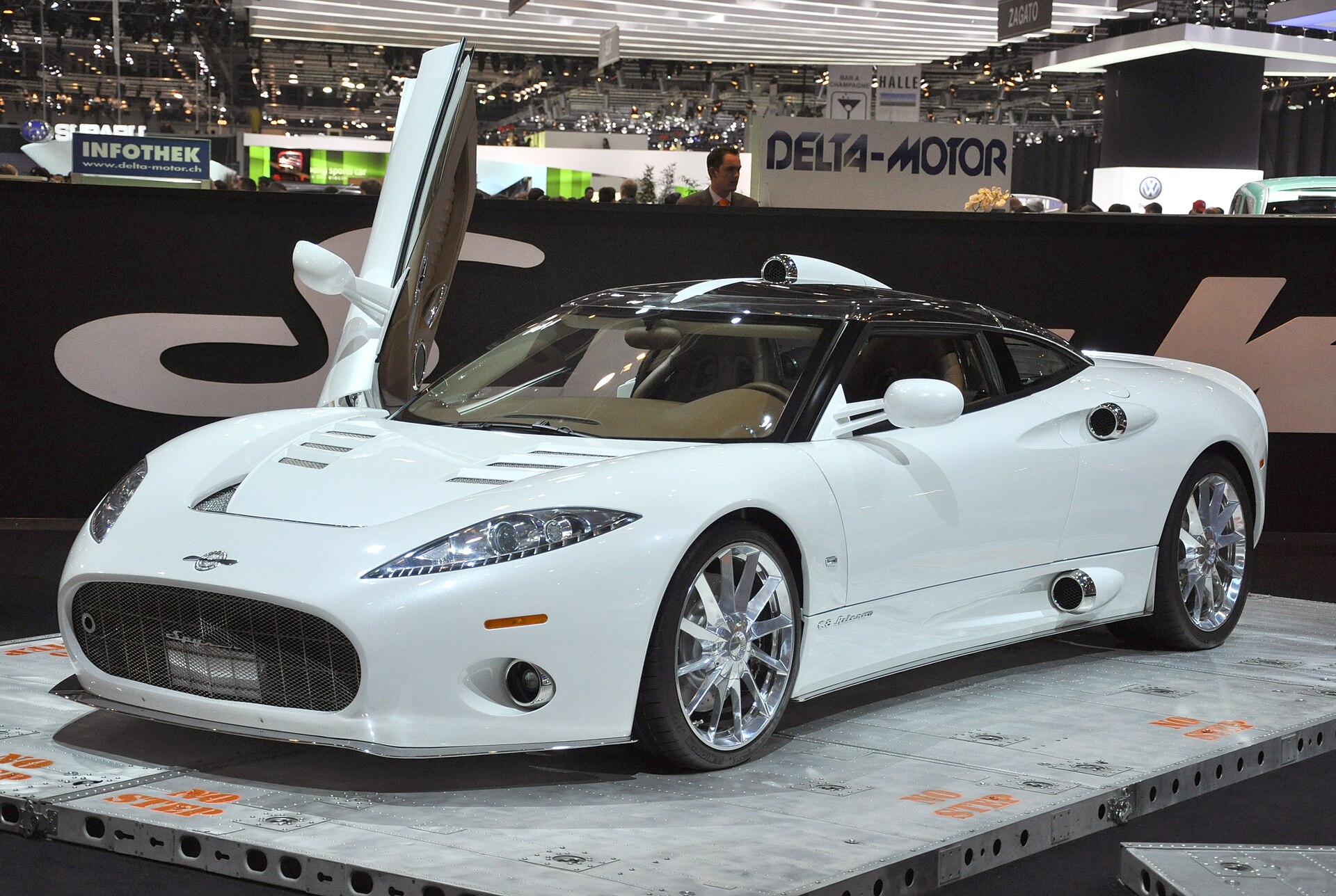
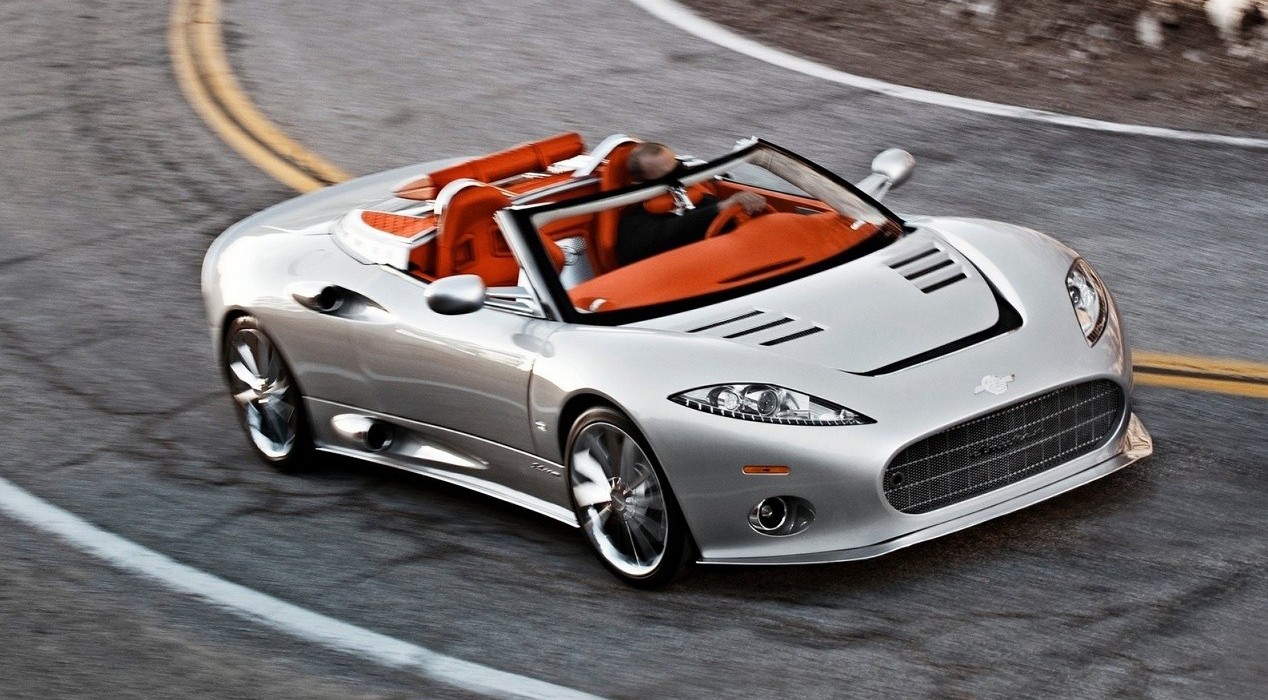
The Spyker C8 is the sports car that the Dutch company Spyker Cars has produced since 2000. Built in Zeewolde in the Netherlands, it combines an aluminium spaceframe with an Audi V8 engine and an interior full of aircraft-style details. The C8 has appeared in three generations: the first-generation Spyder and Laviolette, the second-generation Aileron of 2009 and the Preliator of 2016. There were also racing versions that started at Sebring and Le Mans.
In short
- First shown as the C8 Spyder at the 2000 Birmingham Motor Show; built in Zeewolde, Netherlands; designed by Maarten de Bruijn.
- Aluminium spaceframe in all generations; aluminium body on the first two, mostly carbon fibre on the Preliator.
- Audi 4.2-litre V8: 294 kW (400 PS) and 480 Nm in most versions, 386 kW (525 PS) with twin turbochargers or a supercharger.
- Generations: Spyder and Laviolette (from 2000/2001), Aileron (2009), Preliator (2016).
Specs by version
Engines
| Version | Engine | Gearbox | Drive | Production years |
|---|---|---|---|---|
| 4.2 L 8 cyl Manual 6-spd · 2009 (EPA) | 4.2 l · 8 cyl 4,200 cc | 6-sp Manual | Rear-wheel drive | 2009 |
Performance
Show all 1 versions
| Version | Fuel consumption |
|---|---|
| 4.2 L 8 cyl Manual 6-spd · 2009 (EPA) | 15.7 l/100 km15.0 mpg US · 18.0 mpg UK |
Verified Manufacturer and type-approval data from our catalog · Sources and methodology
Spyker C8 at a glance
| Specification | Spyker C8 |
|---|---|
| Production | from 2000, Zeewolde (Netherlands) |
| Designers | Maarten de Bruijn; Simon Koop (Aileron, Preliator) |
| Bodies | Spyder (open), Laviolette and Aileron (coupé), Aileron Spyder, Preliator and Preliator Spyder |
| Chassis | aluminium spaceframe |
| Engine | Audi 4.2-litre V8 (most versions) |
| Power | 294 kW (400 PS) to 386 kW (525 PS) |
| Torque | 480–600 Nm |
| Gearbox | Getrag six-speed manual; ZF six-speed automatic from the Aileron |
| Kerb weight | 1,250–1,425 kg |
Our separate article covers the Spyker C8 Aileron. All Spyker models are in the Spyker catalogue.
History and origins
The C8 grew out of a prototype: the Spyker Silvestris V8 of 1999. A year later the production car was shown as the C8 Spyder at the Birmingham Motor Show in 2000. It was designed by Maarten de Bruijn. The second and third generations were styled by Simon Koop.
In March 2002 Spyker unveiled the Double 12S to mark the opening of a new factory. All C8s are assembled in Zeewolde. New versions were still presented in 2017, and in January 2026 an enthusiast-led project revived the Aileron LM85.
Design and interior
The C8 is built around an aluminium spaceframe. The first two generations have aluminium body panels, while the Preliator has a body of carbon fibre, except for the bonnet and the rear deck. Dimensions vary by version: the wheelbase ranges from 2,575 to 2,725 mm and the length from 4,185 to 4,628 mm.
The interior is a large part of the car's character. The first cars had a steering wheel with a propeller design. It was later replaced by a wheel from Lotus or from the Lamborghini Gallardo for safety reasons. The Aileron took the aviation theme further, with wheels inspired by jet turbine blades and aluminium details in its construction and cabin.

First generation: Spyder, Laviolette and Double 12
The first C8 was the open Spyder, later called the Spyder SWB. Its Audi 4.2-litre V8 produced 294 kW (400 PS) and 480 Nm, and the car weighed 1,250 kg. The Laviolette, unveiled at the AutoRAI show in 2001, was the first C8 coupé; 55 were built. A Laviolette LWB with a 2,675 mm wheelbase followed in 2008.
| Version | Introduced | Engine | Power | Torque | Weight |
|---|---|---|---|---|---|
| Spyder | 2000 | Audi 4.2 V8 | 294 kW (400 PS) | 480 Nm | 1,250 kg |
| Laviolette | 2001 | Audi 4.2 V8 | 294 kW (400 PS) | 480 Nm | 1,275 kg |
| Double 12S | 2002 | Mader-BMW 4.0 V8 | 294–462 kW (400–620 PS) | 480 Nm | 1,350 kg |
| Spyder T | 2003 | Audi 4.2 V8, twin-turbo | 386 kW (525 PS) | 560 Nm | 1,315 kg |
| Laviolette LWB | 2008 | Audi 4.2 V8 | 294 kW (400 PS) | 480 Nm | 1,350 kg |
The Spyder T, announced at the Amsterdam Motor Show in February 2003, used a twin-turbocharged Audi V8. Wikipedia gives these top speeds for the first-generation cars:
| Version | Top speed |
|---|---|
| Spyder | 300 km/h |
| Spyder T | 320 km/h |
| Double 12S | 300–345 km/h, depending on the engine |
Second generation: C8 Aileron (2009)
The C8 Aileron was presented at the Geneva Motor Show in 2009, and the open Aileron Spyder followed at the Pebble Beach Concours the same year. Both use the Audi 4.2-litre V8 with 294 kW (400 PS) and 480 Nm. They weigh 1,425 kg. The Aileron was the first C8 offered with a ZF six-speed automatic gearbox as well as the Getrag manual.
The Aileron LM85 was a supercharged version with 386 kW (525 PS) and 600 Nm. Only three were built.

Third generation: Preliator (2016)
The Preliator was revealed at the Geneva Motor Show in 2016, and the Preliator Spyder at the same show in 2017. Both have a supercharged Audi 4.2-litre V8 with 386 kW (525 PS) and 600 Nm, and both can be ordered with a manual or an automatic gearbox. Wikipedia quotes 0–100 km/h in 3.7 seconds and a top speed of 322 km/h (its data table gives 324 km/h). The Preliator weighs 1,390 kg.
Spyker planned a 5.0-litre Koenigsegg V8 for the Preliator, and the 2017 Preliator Spyder was shown with a 447 kW (608 PS) Koenigsegg engine. The deal with Koenigsegg was called off in 2018, so this engine was not used.
| Version | Introduced | Power | Torque | Weight |
|---|---|---|---|---|
| Aileron | 2009 | 294 kW (400 PS) | 480 Nm | 1,425 kg |
| Aileron LM85 | — | 386 kW (525 PS) | 600 Nm | — |
| Preliator | 2016 | 386 kW (525 PS) | 600 Nm | 1,390 kg |
Racing
Spyker took the C8 racing early. The Double 12R, with a Mader-BMW V8 of 358 kW (487 PS), was shown at the Frankfurt motor show in 2001. It started the Sebring 12 Hours in 2002, where it did not finish, and the Le Mans 24 Hours in 2003. The Spyder GT2-R followed in 2005 with a 3.8-litre V8 of 335 kW (456 PS), and the Laviolette GT2-R made its Le Mans debut in 2008 with a 4.0-litre V8.
Road-legal versions linked to racing were also built: 24 Laviolette LM85 cars and three Aileron LM85 cars. The LM85 name and the racing programme connect the road cars with the GT2 racing class in which the C8 competed. The Spyder GT2-R and the Laviolette GT2-R used different V8 engines from the road cars: a 3.8-litre and a 4.0-litre unit.

Legacy
The C8 has been built since 2000. It kept the same basic recipe — aluminium spaceframe, Audi V8 and an aviation-themed cabin — through three generations. More about the company is in our history of Spyker.
Photo gallery


Spyker C8 in our rankings
- No. 181 of 557 · Biggest engines: cars (4,200 cc · top 33%)
- No. 406 of 912 · Longest-running car nameplates (9 years · top 49%)
- No. 103 of 173 · Biggest engines: coupes (4,200 cc · top 61%)
- No. 32 of 51 · Most economical coupes (15.7 l/100 km · top 63%)
- No. 230 of 256 · Most economical cars (15.7 l/100 km · top 90%)
Bigger engine than 67% of ranked cars in the 1CARS catalog (No. 181 of 557).
FAQ
What engine does the Spyker C8 use?
Most versions use an Audi 4.2-litre V8 with 294 kW (400 PS) and 480 Nm. The Spyder T, Aileron LM85 and Preliator have 386 kW (525 PS) with forced induction.
Where is the Spyker C8 built?
In Zeewolde, in the Netherlands.
What is the difference between the Laviolette and the Aileron?
The Laviolette (2001) is the first-generation C8 coupé. The Aileron (2009) is the second generation, with new styling by Simon Koop and an optional ZF automatic gearbox.
How fast is the Spyker C8 Preliator?
Wikipedia gives 0–100 km/h in 3.7 seconds and a top speed of 322 km/h.
How many Spyker C8 Laviolettes were built?
Wikipedia gives 55 Laviolette coupés, plus 24 road-legal Laviolette LM85 cars linked to the racing programme.
Data sources
Data checked by an editor against the sources below.
- Wikipedia — Spyker C8
- US EPA fueleconomy.gov — 25797.shtml