 Nissan Leaf
All generations, specs and history
Published Sources (5) Report an error
By Felix Hartmann, Automotive Technology & EV Contributor
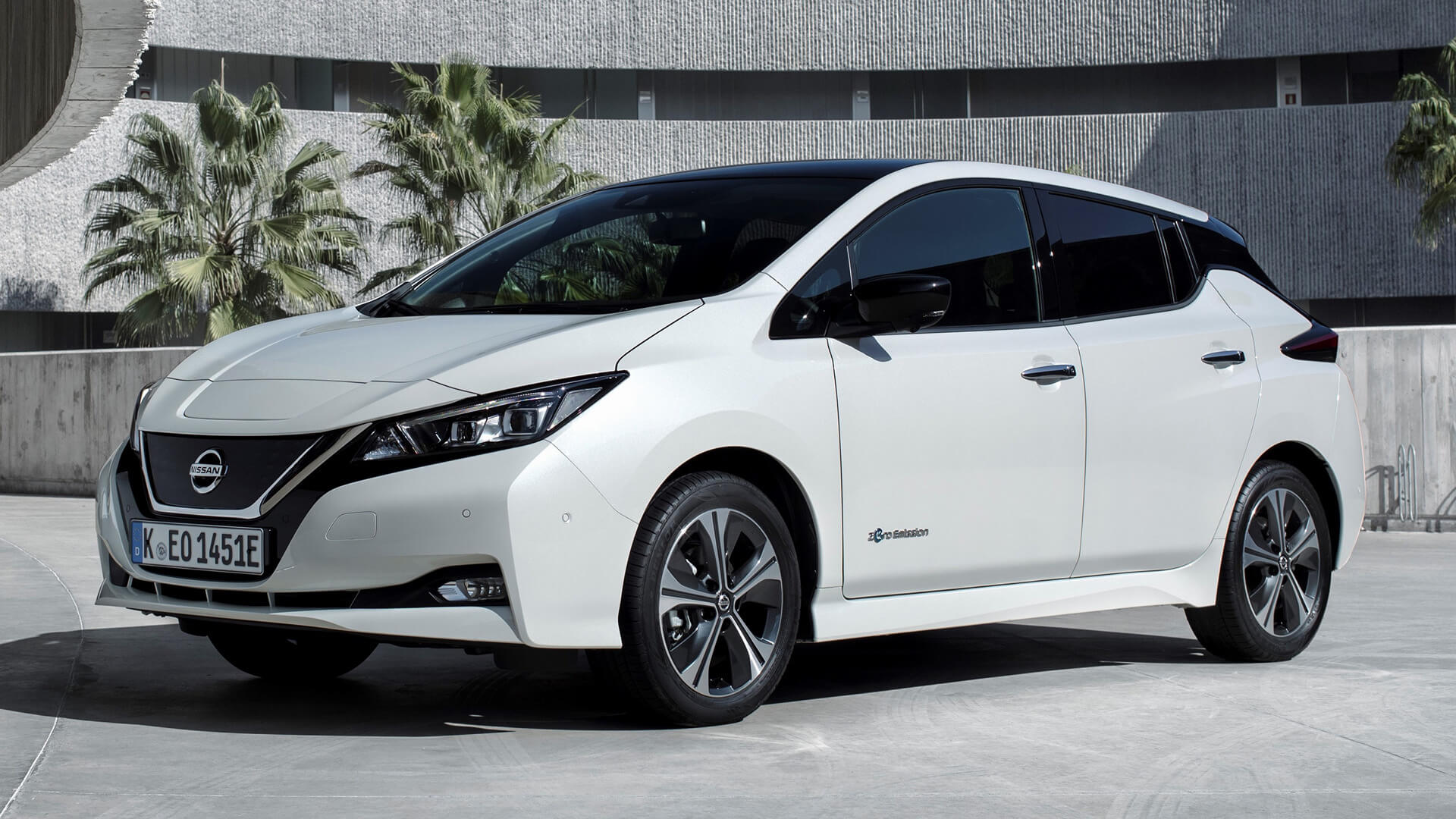
- Built
- 2010–present
- Generations
- 3
Timeline
Leaf generations
Click a generation for its own page
Newest first · 3 generations since 2010
-
2025
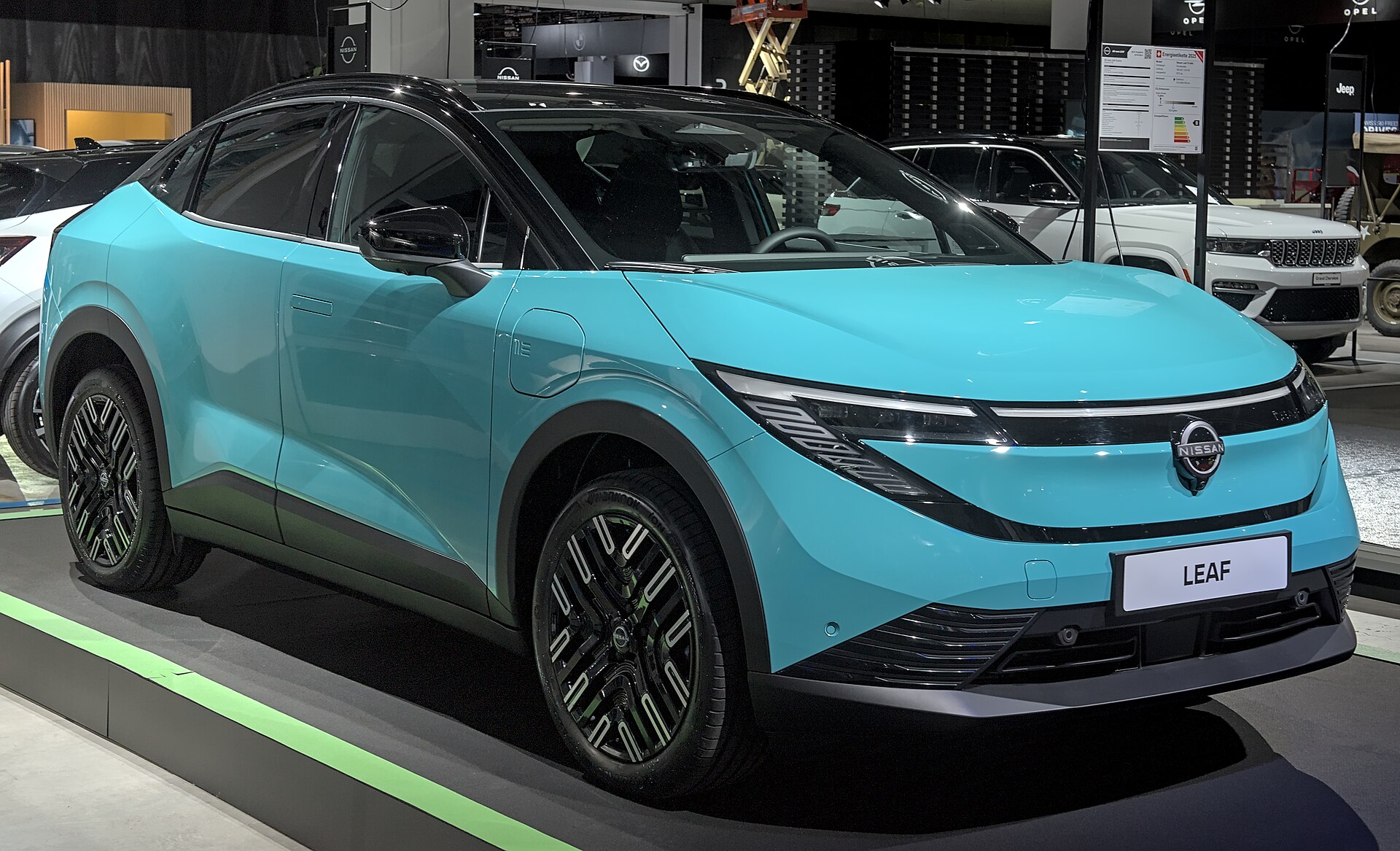
-
2017
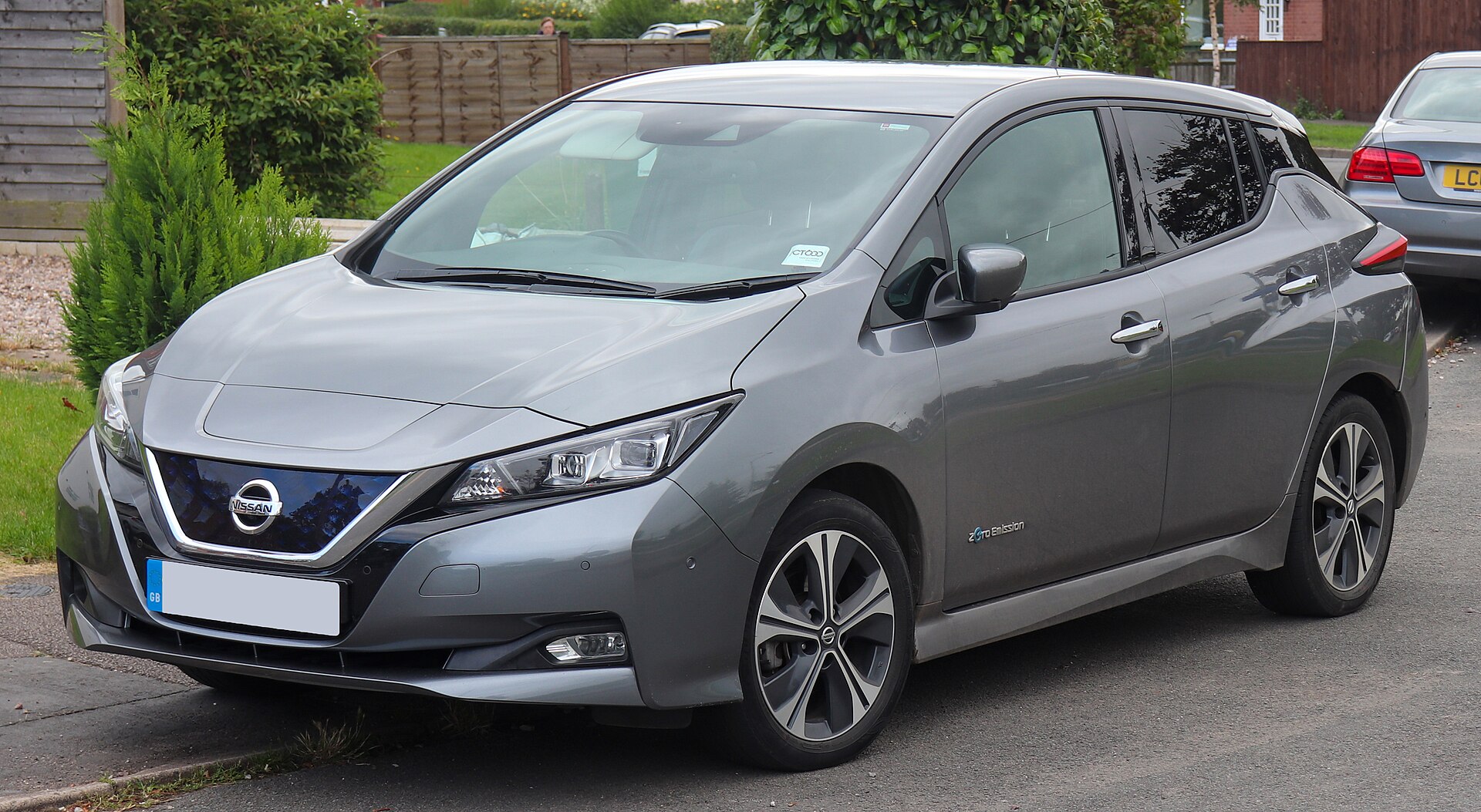
-
2010
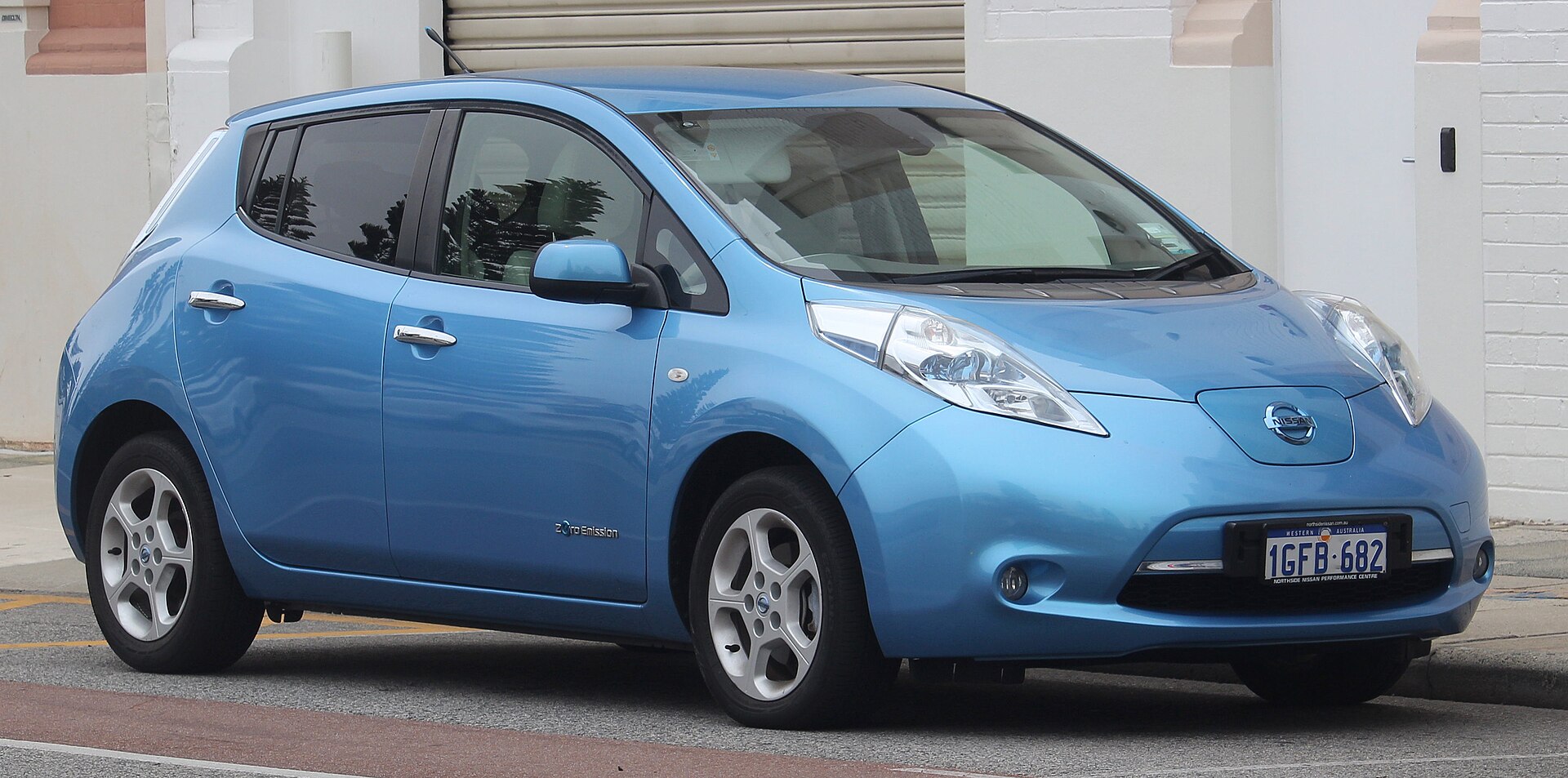


All generations by year: Leaf III (2025–now) · Leaf ZE1 (2017–2025) · Leaf ZE0 (2010–2017)
Which one is mine?
Pick the year of first registration to see which generation it is.
Check by VINThe Nissan Leaf is a compact electric car and one of the pioneers of mass-market electric driving. The name refers to a leaf, signalling the car's respect for nature. The first Leaf was unveiled on 1 August 2009 and went into production in October 2010; the second generation was unveiled on 6 September 2017; and a third generation, now a crossover, was unveiled on 17 June 2025. The Leaf was 2011 European Car of the Year and 2011 World Car of the Year, and Nissan built its 500,000th Leaf on 9 September 2020.
In short
- Three generations: 2010–2017, 2017–2025 and from 2025.
- Second generation: 110 kW (150 PS) and 320 Nm with a 40 kWh battery; Leaf e+ with 160 kW (218 PS) and a 62 kWh battery.
- e-Pedal one-pedal driving and ProPilot driver assistance.
- Third generation: crossover body on the CMF-EV (AmpR Medium) platform, 52 or 75 kWh batteries and up to 604 km WLTP.
Specs by version
Engines
| Version | Engine | Gearbox | Drive | Production years |
|---|---|---|---|---|
| ZE1 · 2017–2025 | ||||
| ZE1 · Automatic (A1) · 2024 (EPA) | Electric | 1-sp Automatic | Front-wheel drive | 2024 |
| ZE1 · Automatic (A1) · 2023 (EPA) | Electric | 1-sp Automatic | Front-wheel drive | 2023 |
| Leaf III · Automatic (A1) · 2025 (EPA) | Electric | 1-sp Automatic | Front-wheel drive | 2025 |
Performance
Show all 3 versions
| Version | Fuel consumption | Range |
|---|---|---|
| ZE1 · 2017–2025 | ||
| ZE1 · Automatic (A1) · 2024 (EPA) | 18.9 kWh/100 km30.4 kWh/100 mi | 240 km149 mi |
| ZE1 · Automatic (A1) · 2023 (EPA) | 18.9 kWh/100 km30.4 kWh/100 mi | 240 km149 mi |
| Leaf III · Automatic (A1) · 2025 (EPA) | 18.9 kWh/100 km30.4 kWh/100 mi | 240 km149 mi |
Verified Manufacturer and type-approval data from our catalog · Sources and methodology
Safety
-
ZE1 · NHTSA 2021
US NCAP (NHTSA)
-
ZE0 · NHTSA 2016
US NCAP (NHTSA)
Stars from different years and organisations are not directly comparable: test protocols change every few years.
Nissan Leaf at a glance
The first two generations are five-door C-segment hatchbacks with a front-mounted electric motor driving the front wheels and the battery under the floor. More Nissan models are listed in our Nissan catalogue.
First generation (2010–2017)
The first Leaf was built from October 2010 at Oppama, Japan, and later also at Smyrna, Tennessee (from January 2013) and Sunderland, UK (from March 2013). Its 80 kW motor was fed by a 192-cell lithium-ion battery developed with NEC, giving about 160 km of range at launch. A full charge took about 8 hours at 230 V, while a fast charger restored 80% in about 30 minutes. It was the world's best-selling electric car from 2011 to 2014 and again in 2016.
Second generation (2017–2025)
Exterior
The second Leaf, presented on 6 September 2017 and launched in Japan in October 2017, looks much more attractive than its predecessor, with revised headlights, a new intake shape and more surface detail. The front sits high and slopes for good visibility, with a large bonnet with a recessed centre and prominent ridges, near-rectangular full-LED headlights and Nissan's trapezoidal V-motion panel with chrome and gloss-black inserts. Small fog lamps sit in recesses at the corners. The drag coefficient is 0.29.
At first glance it is hard to tell from the side that the Leaf is electric. The upper body and roof are always black, the mirrors carry indicators, door handles are chrome or gloss black, and a rising window line with black rear pillars creates a "floating roof" effect. Ground clearance is an average 150 mm, and wheels are 16 or 17 inches. At the rear, a black roof spoiler with a brake light frames a large, slightly sloping tailgate window, flanked by unusually shaped LED tail lights joined by a gloss-black panel; the lower bumper has a black diffuser and fog lamps. There is, of course, no exhaust.
Interior
The cabin became more conventional and modern. The seats are very comfortable, especially in the front, with light side support, but the steering wheel does not adjust for reach. The instruments combine an analogue speedometer on the right with a display on the left, behind a flat-bottomed three-spoke multifunction wheel. A 7-inch touchscreen with Apple CarPlay and Android Auto sits in the centre, below slim air vents and the hazard switch. Lower down are seat-heating buttons, USB and AUX ports and a socket — the only ones in the cabin. Materials range up to leatherette with Alcantara, and the dashboard is trimmed in leather. A small joystick with blue lighting selects the drive mode, next to buttons for automatic parking and e-Pedal. The rear bench is simple and not especially roomy. The boot grew to 400 litres, or 1,176 litres with the rear seat folded.
Electric drivetrain
| Version | Motor power (kW / PS) | Torque | Battery (gross / usable) | Range |
|---|---|---|---|---|
| Leaf (40 kWh) | 110 kW / 150 PS | 320 Nm | 40 / 39 kWh | 270 km WLTP; about 240 km EPA |
| Leaf e+ (62 kWh, from 2019) | 160 kW / 218 PS | 340 Nm | 62 / 59 kWh | 341 km EPA |
The synchronous AC motor drives the front wheels through a single-speed reduction gear. The 40 kWh version reaches 100 km/h in 7.9 seconds and 144 km/h. Nissan gives an eight-year or 160,000 km battery warranty. The e-Pedal button activates strong regenerative braking of up to 0.2 g, allowing the car to be driven almost without the brake pedal. Charging takes 8–16 hours from a household socket depending on the supply; the on-board AC charger is rated at 6.6 kW, and CHAdeMO fast charging (50 kW, up to 100 kW on the e+) reaches 80% in about 40 minutes. The charging ports sit under a flap at the front. The Leaf also supports vehicle-to-grid.
Chassis and safety
The second Leaf uses Nissan's front-wheel-drive EV platform with plenty of high-strength steel, MacPherson struts at the front, a torsion beam at the rear and anti-roll bars at both ends; body rigidity increased by 40%. Steering has electric assistance, and all four brakes are ventilated discs with ABS and EBD. Safety equipment includes ESP, LED lights, a 360-degree camera system, automatic parking, intelligent cruise control, ProPilot — which handles acceleration, steering and braking within a single lane on higher trims — six airbags plus curtain airbags, tyre-pressure monitoring, blind-spot monitoring and driver attention monitoring. The battery's position helps stiffen the structure.
The second-generation Leaf was built at Oppama, Smyrna and Sunderland; UK production ended in March 2024 after about 270,000 cars.
Third generation (2025 onwards)
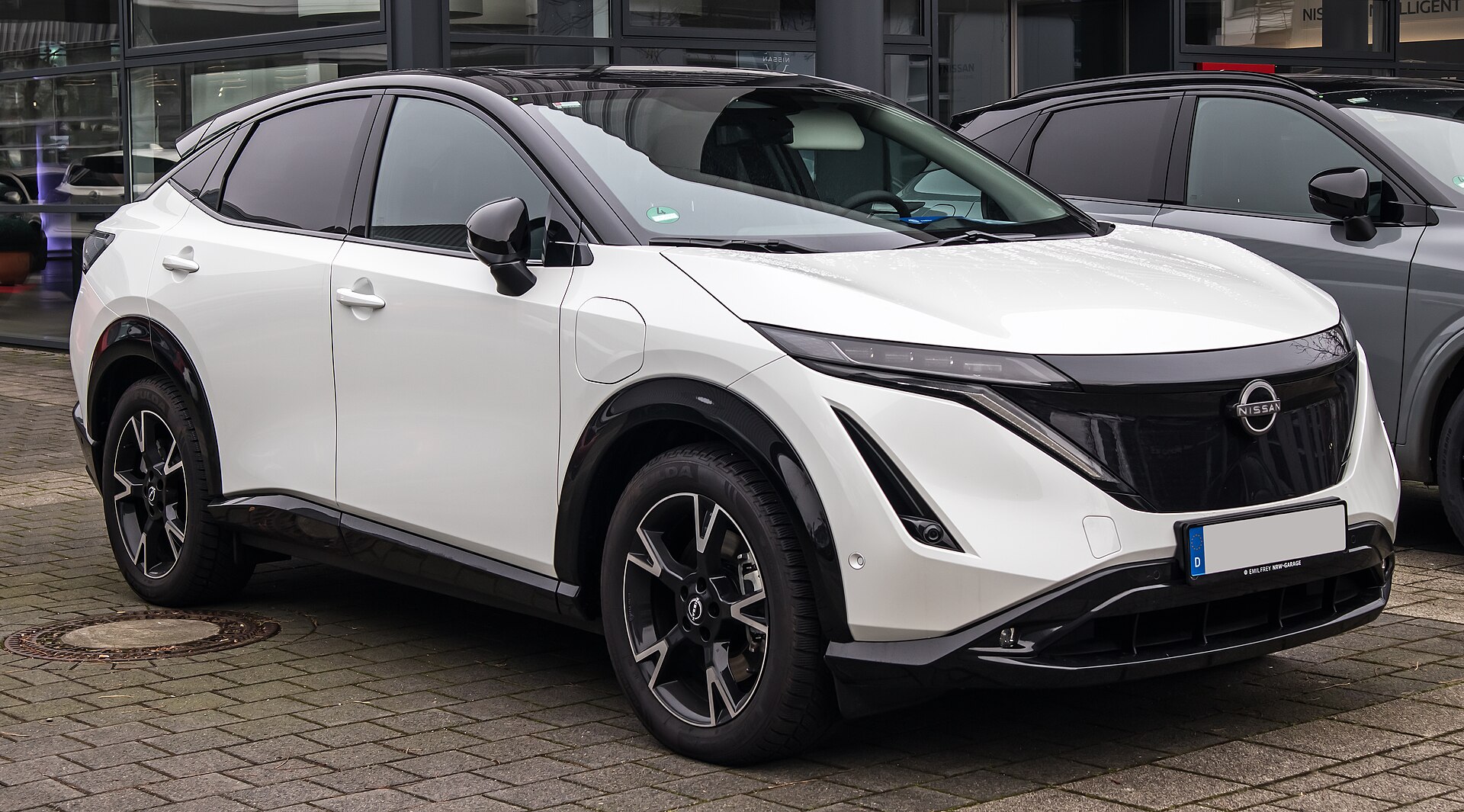
Previewed by the Chill-Out concept in November 2021 and unveiled on 17 June 2025, the third Leaf is a subcompact crossover built on the AmpR Medium (formerly CMF-EV) platform shared with the Nissan Ariya, in Tochigi, Japan, and Sunderland, UK. It offers a 52 kWh battery with a 130 kW motor (344 Nm) or a 75 kWh battery with a 160 kW motor (354 Nm), with ranges of 436–604 km WLTP. It charges at up to 150 kW DC, is Nissan's first model with the NACS connector in North America, and has a drag coefficient of 0.25.
Key specifications by generation
| Parameter | 1st generation | 2nd generation | 3rd generation |
|---|---|---|---|
| Years | 2010–2017 | 2017–2025 | 2025 onwards |
| Body | Hatchback | Hatchback | Crossover |
| Motor (kW) | 80 kW | 110–160 kW | 130–160 kW |
| Battery | 192-cell pack | 40 or 62 kWh | 52 or 75 kWh |
| Drag coefficient | — | 0.29 | 0.25 |
Strengths and weaknesses
Owners like the updated styling, acceleration, reliability, low running costs, easy handling, comfort, attractive interior and many electronic aids and safety systems; it is ideal for city driving. On the other hand, its range is shorter than some rivals', it can feel underpowered on the motorway, charging takes a long time and specialised service centres are scarce in some regions. Rivals include the Renault Zoe, Hyundai Ioniq, Volkswagen e-Golf, BMW i3, Kia Soul EV, Tesla Model 3, Chevrolet Volt and Toyota Prius.
Nissan Leaf evolution in numbers
Did you know?
- The Nissan Leaf has been around for 16 years: 3 generations in our catalog since 2010.
- The longest-running generation is the Leaf ZE1 (2017–2025): 8 years.
Image credits · Photos from Wikimedia Commons under free licences
- Nissan Leaf ZE0 · Photo: EurovisionNim / Wikimedia Commons, CC BY-SA 4.0
- Nissan Leaf ZE1 · Photo: Vauxford / Wikimedia Commons, CC BY-SA 4.0
- Nissan Leaf III · Photo: Alexander Migl / Wikimedia Commons, CC BY-SA 4.0
Nissan Leaf in our rankings
- No. 237 of 912 · Longest-running car nameplates (16 years · top 27%)
- No. 129 of 305 · Oldest car models still on sale (16 years · top 43%)
- No. 223 of 345 · Cars with the most generations (3 generations · top 68%)
- No. 59 of 59 · Longest-range electric cars (240 km)
In production longer than 73% of ranked nameplates in the 1CARS catalog (No. 237 of 912).
FAQ
When was the first Nissan Leaf launched?
It was unveiled on 1 August 2009, and production began in October 2010.
What is the range of the Nissan Leaf?
The second-generation 40 kWh Leaf offers about 270 km WLTP; the 62 kWh Leaf e+ reaches 341 km EPA; the 2025 Leaf up to 604 km WLTP.
What is Nissan e-Pedal?
A one-pedal driving mode with strong regenerative braking of up to 0.2 g that lets the driver accelerate and slow down mostly with the accelerator.
Did the Nissan Leaf win any awards?
Yes, it was 2011 European Car of the Year and 2011 World Car of the Year.
Data sources
Data checked by an editor against the sources below.
- Wikipedia — Nissan Leaf
- US EPA fueleconomy.gov — 46973.shtml
- US EPA fueleconomy.gov — 46016.shtml
- US EPA fueleconomy.gov — 48400.shtml
- NHTSA 5-Star Safety Ratings (US NCAP) — U.S. Government work, public domain