 Koenigsegg CCXR
Specs, engines and history
Published Sources (1) Report an error
By Felix Hartmann, Automotive Technology & EV Contributor
Verdict
Our verdict · Felix Hartmann
The CCXR shows how far a small Swedish company could push performance in the late 2000s — and that a hypercar can run on renewable ethanol while producing more than 735 kW (1,000 PS). The Trevita adds a unique body finish that turns it into a rolling work of art. Koenigsegg cars have always been expensive, but this one stands out even among them for its extraordinary body.
The Koenigsegg CCXR is a hypercar built by the Swedish company Koenigsegg. It is the "green" version of the CCX: its modified twin-supercharged V8 can run on E85 or E100 bioethanol as well as on 98-octane petrol, and on ethanol it produces more power than the petrol-only CCX. Koenigsegg developed it as one of the fastest series-production cars in the world. Later the company created an extremely limited version, the CCXR Trevita.
In short
- Based on the CCX, which debuted at the Geneva motor show in 2006; the CCXR runs on E85, E100 or 98-octane petrol.
- 4.7-litre twin-supercharged V8 with 749 kW (1,018 PS) and 1,060 Nm on ethanol.
- Six-speed manual or six-speed sequential gearbox, rear-wheel drive, carbon-fibre body and targa roof.
- The CCXR Trevita of 2009 has a white carbon-fibre body with a diamond-weave finish; three were planned and only two were built.
Koenigsegg CCXR at a glance
More Koenigsegg models are listed in our Koenigsegg catalogue, and a later model of the brand is covered in our Koenigsegg Agera R article.
| Item | CCX | CCXR |
|---|---|---|
| Debut | Geneva 2006 | 2007 |
| Engine | 4.7 V8, twin supercharged | 4.7 V8, twin supercharged, flex-fuel |
| Fuel | Petrol | E85, E100 or 98-octane petrol |
| Power | 593 kW (806 PS) | 749 kW (1,018 PS) on ethanol |
| Torque | 920 Nm | 1,060 Nm on ethanol |
| Kerb weight | About 1,456 kg | Similar |
The CCXR Trevita
Koenigsegg planned to build three CCXR Trevitas — Trevita is Swedish for "three whites" — but because the diamond finish was so difficult to produce, only two were made. That makes it one of the rarest cars the company has built.
At first glance it may seem to be an ordinary car painted white, but there is no paint on the body. What looks white is the world's first white carbon fibre, made with a technology Koenigsegg developed itself. The company not only wove the super-strong material but also coated it with fine diamond particles, calling the process Koenigsegg Proprietary Diamond Weave. The result is a white carbon-fibre body that sparkles in sunlight — best appreciated in person.
Exterior
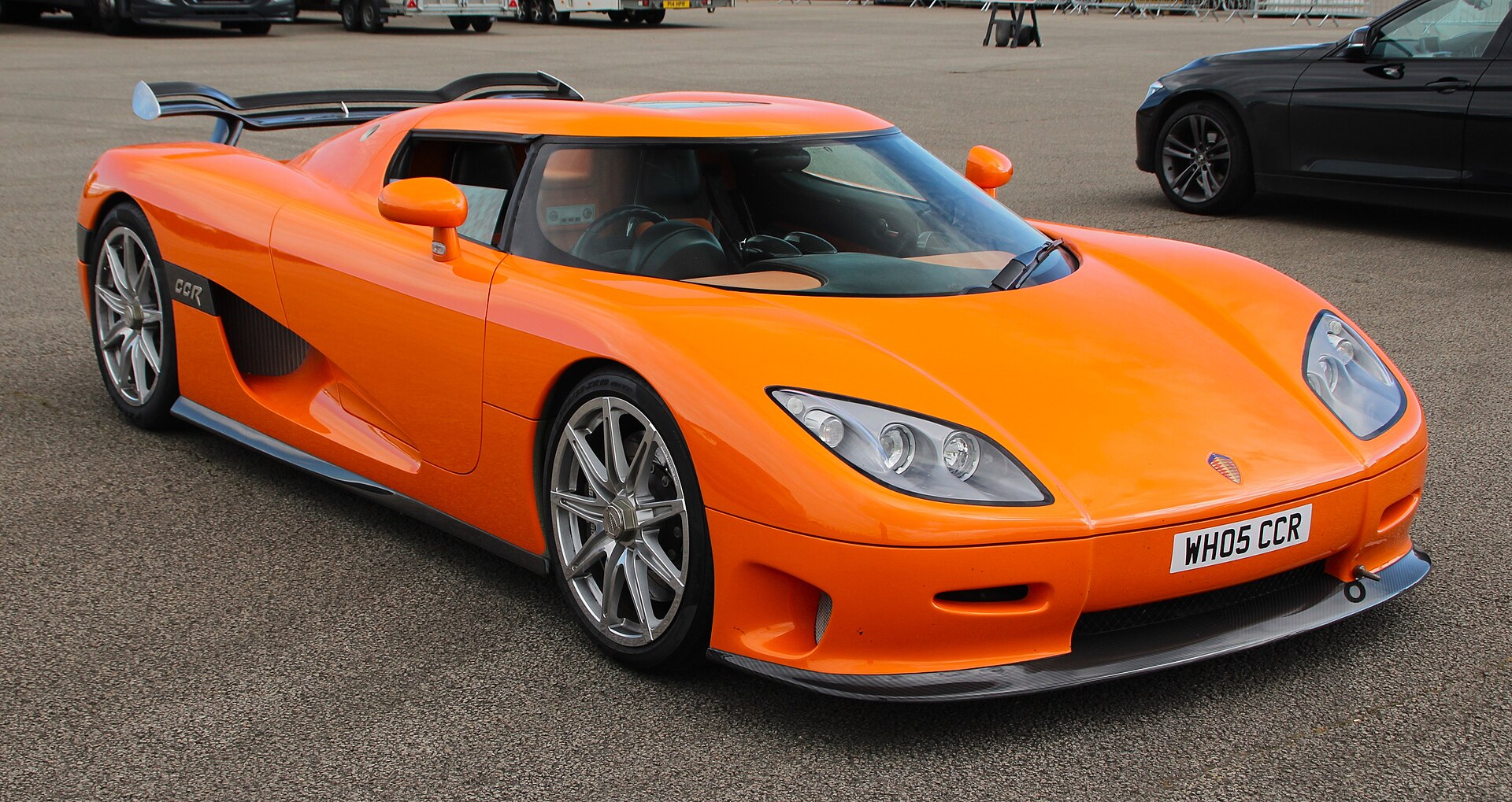
Compared with the standard CCX, the Trevita can be recognised by its two-tier carbon-fibre rear wing. At the front are large petal-shaped light units with three lamps each, a strongly sculpted bonnet with a compact air intake in the middle, and a massive bumper with a stylish lip, a rectangular intake, neatly integrated fog lamps and ducts that feed cooling air to the front brakes.
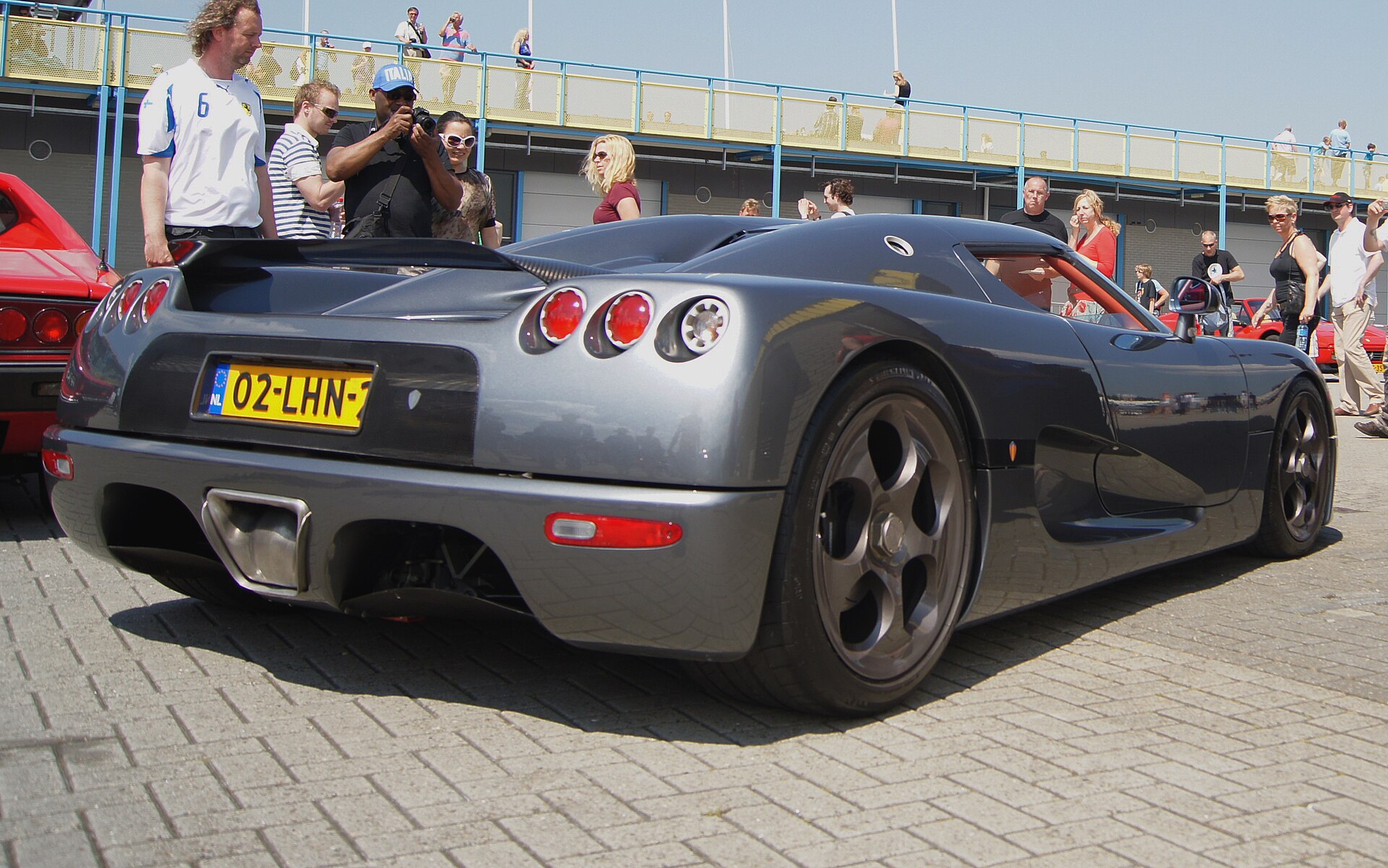
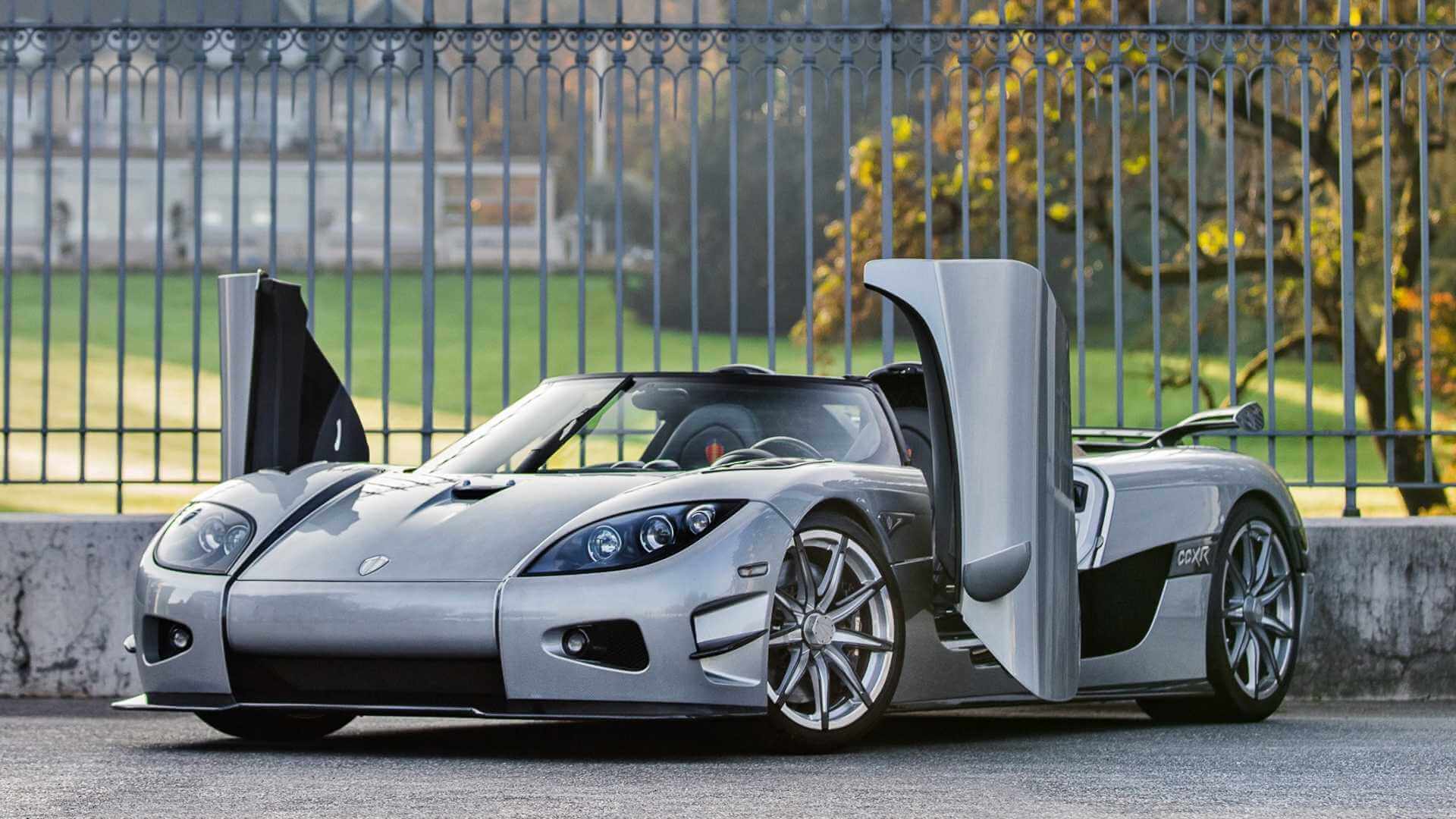
Koenigsegg's dihedral synchro-helix doors swing forwards and upwards at the same time, making it easier to get in. The shape of the body makes it obvious that this is a sports car: the doors have deep scoops that guide cooling air to the rear brakes, and the mirrors sit on stalks. The car rides on forged wheels — 19 inches at the front and 20 inches at the rear, with tyres of different widths — and carbon-ceramic brakes with eight-piston calipers at the front and six-piston calipers at the rear. At the rear there are three round lights on each side, the large rear wing, a massive rectangular exhaust outlet and a big diffuser below it. The exhaust is made of Inconel, a light, strong and heat-resistant alloy.
The rear wing has its own story. When Top Gear tested the CCX in 2007, The Stig spun the car off the track, and Koenigsegg later added an optional rear wing; the improved car set the show's fastest power-lap time of 1:17.6. Forbes magazine also named the CCX one of the ten most beautiful cars.
Interior
The cabin is full of carbon fibre and differs little from the standard CCX. The driver has a stiff three-spoke sports steering wheel that takes some getting used to, and an instrument panel with many gauges and a display that shows all the information collected by the car's sensors. The centre console carries the audio system and many buttons for various functions. Despite the car's focus, it is comfortable to sit in: the seats were developed by Sparco and offer strong side support without being harsh.
Engine and transmission
The heart of the CCXR is Koenigsegg's own 4.7-litre twin-supercharged V8. The aluminium engine weighs just 178 kg. Running on E85 bioethanol, it produces 749 kW (1,018 PS) and 1,060 Nm; on 98-octane petrol its output is lower, comparable to the petrol-only CCX with 593 kW (806 PS) and 920 Nm.
Power goes to the rear wheels through a six-speed manual gearbox or a six-speed sequential manual operated by paddles, with a torque-sensitive limited-slip differential. Koenigsegg claims 0–100 km/h in 2.9 seconds, 0–200 km/h in 8.75 seconds and a top speed of about 400 km/h.
Chassis
The suspension uses double wishbones with adjustable racing-type gas-hydraulic dampers, and ride height can be adjusted. The carbon-ceramic brakes, with 380 mm front and 362 mm rear discs, give very strong stopping power.
Rarity and production
The CCX family was built in very small numbers — a few dozen cars across the CCX, CCXR, Edition and Special Edition versions — and the two Trevitas are among the rarest of all. Both have the Shimmering Diamond Weave body, the two-tier carbon-fibre rear wing, the Inconel exhaust, carbon-ceramic brakes with ABS and airbags.
Rivals
The CCXR has few rivals, but they are serious ones: above all the Bugatti Veyron and the Lamborghini Murciélago.
Koenigsegg CCXR in our rankings
In production longer than 11% of ranked nameplates in the 1CARS catalog (No. 778 of 912).
FAQ
What is the difference between the Koenigsegg CCX and CCXR?
The CCXR is a flex-fuel version that runs on E85, E100 or petrol; on ethanol it produces 749 kW (1,018 PS) instead of the CCX's 593 kW (806 PS).
How many Koenigsegg CCXR Trevitas were built?
Two. Three were planned, but the diamond-weave body proved too difficult to produce.
What does Trevita mean?
It is Swedish for "three whites", referring to the planned production of three white cars.
How fast is the Koenigsegg CCXR?
Koenigsegg claims 0–100 km/h in 2.9 seconds and a top speed of about 400 km/h.
Data sources
Data checked by an editor against the sources below.