 Renault Kadjar
Specs, engines and history
Published Sources (1) Report an error
By Oleksandr Hnatiuk, Automotive Editor & Used Car Specialist
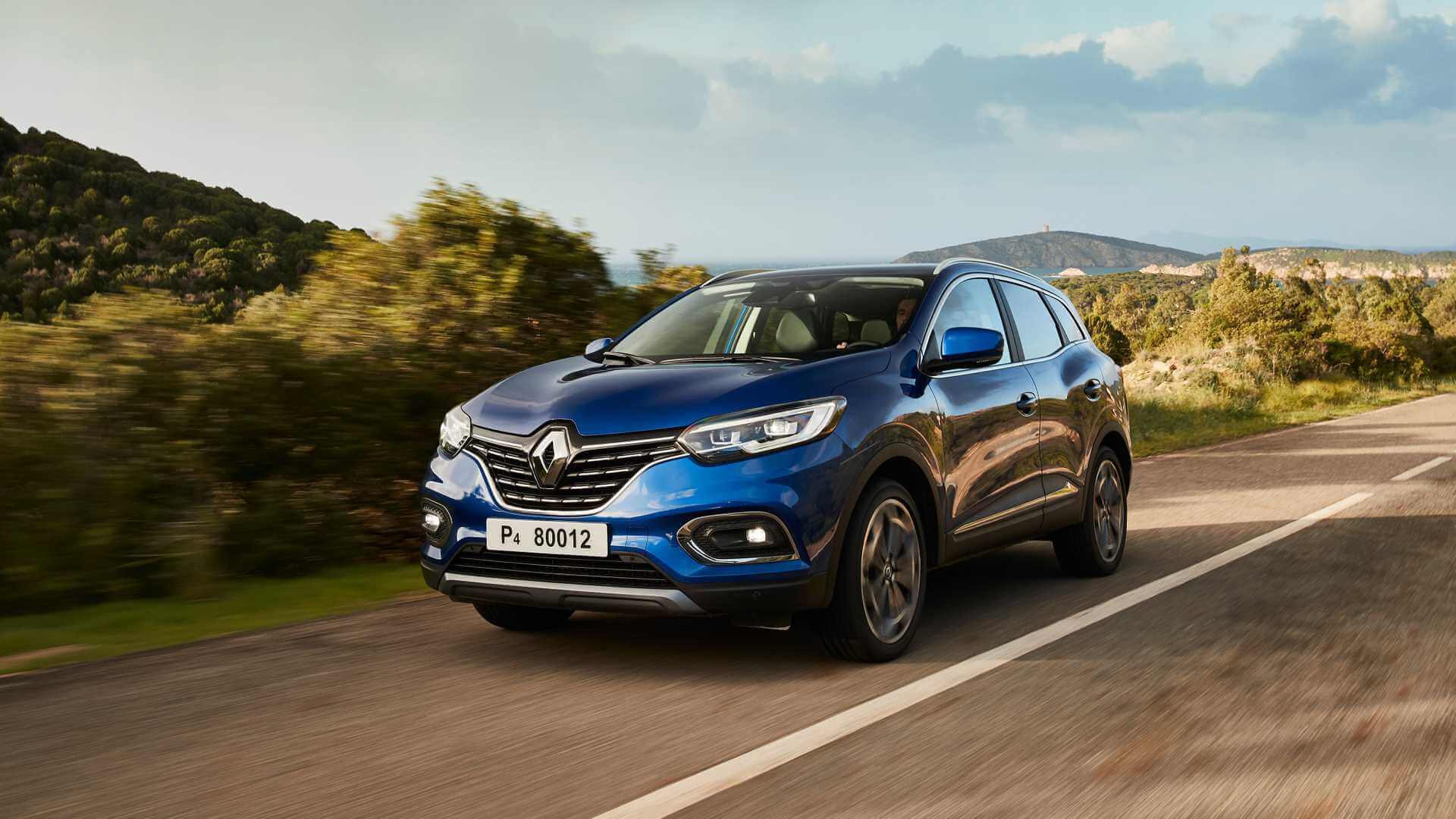
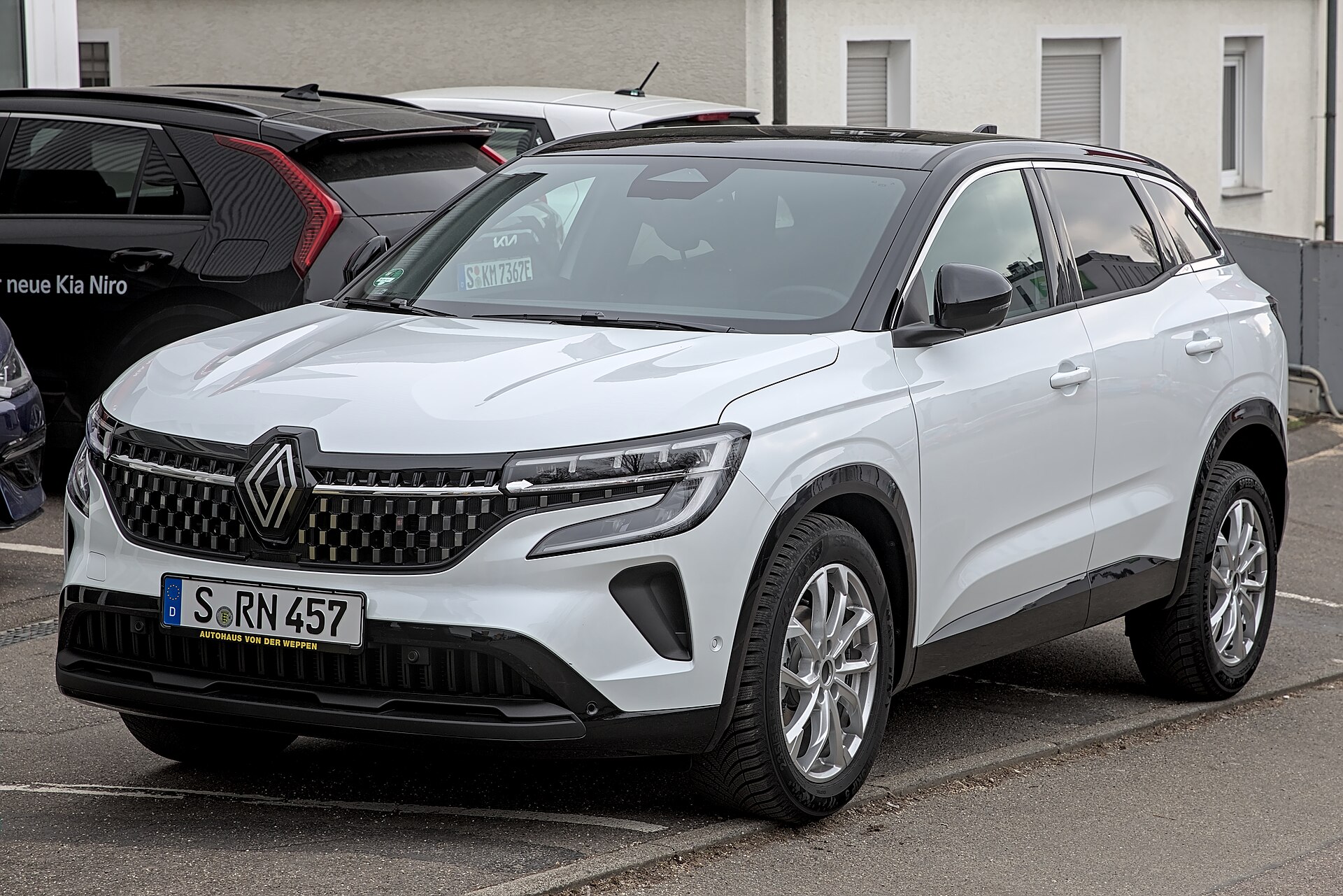
The Renault Kadjar is a compact crossover with front- or all-wheel drive, aimed at European and Asian markets. It is not an entirely original Renault design — it was built on the platform of the Nissan Qashqai — but its styling and interior differ considerably from its sibling. The Kadjar was first shown in 2015, and a facelifted version was unveiled at the Paris motor show on 2 October 2018. About 450,000 pre-facelift cars were sold. Production ended in 2022, when the Renault Austral took its place in the range.
In short
- Launched in 2015, facelifted in October 2018; built on the CMF platform shared with the Nissan Qashqai.
- After the facelift: 1.3 TCe petrol with 103 or 118 kW (140 or 160 PS) and Blue dCi diesels with 85 and 110 kW (115 and 150 PS).
- Six-speed manual or seven-speed dual-clutch gearbox; ALL MODE all-wheel drive on the top diesel.
- 200 mm of ground clearance and a 527-litre boot.
Renault Kadjar at a glance
Within Renault, the Kadjar is positioned as a more prestigious, well-equipped and therefore more expensive model. It is a monocoque crossover with a transverse engine. More Renault models are listed in our Renault catalogue.
The 2018 facelift
Competition was intensifying, and even its Nissan sibling was in strong demand in several European countries, so Renault gave the Kadjar an update with improved styling, a refined interior, a completely new range of engines and better equipment.
Exterior
Compared with the original, the facelifted Kadjar looks more expressive and upmarket. A larger grille with a big Renault diamond in the centre, modern headlights with prominent LED daytime running lights and a new front bumper with less protective plastic and redesigned fog lamps define the front.
The side changed little: steeply raked windscreen pillars, muscular wheel arches, pronounced creases and a window line that rises towards the rear, a gently sloping roof, silver trim and chrome sill protectors. New alloy wheels were designed specifically for the Kadjar, in 17- or 18-inch sizes. Ground clearance is an impressive 200 mm on paper — enough for town and rough tracks, though real-world clearance is somewhat lower. A Black Edition has unique interior trim, bumper inserts, larger wheels and black mirrors.
At the rear, a completely new bumper has revised fog lamps and a new diffuser with two integrated exhaust outlets. Expensive versions have a shark-fin antenna instead of the old roof aerial. Silver badges and horizontal wave-like creases decorate the tailgate. Renault hopes the more elegant, youthful look will widen its customer base, and the colour palette was extended.
Interior
The dashboard architecture was kept, as it was already stylish and clean, but materials and build quality improved. Upholstery is fabric or leather depending on version. The instruments are dominated by the speedometer, behind a comfortable, attractive multifunction steering wheel with a flat bottom that adds a sporty touch.
Updated front seats offer better ergonomics, stronger side support, an adjustable cushion length and a wider range of adjustment. A fairly high centre tunnel carries the gear lever, a rotary controller, the electric parking brake button, a storage well, cupholders and organisers, and a wide armrest that now slides forward and has a cooled compartment. Air vents with two buttons between them sit at the top of the console, above a 7-inch R-Link 2 touchscreen that is brighter, more responsive and works better with Android and iOS devices. The climate controls were completely redesigned, with three multifunction knobs and small displays in their centres. The front door areas are lit at night to make getting in easier.
Three adults sit comfortably on the rear bench, which has two USB sockets and a more convenient folding mechanism. The boot holds 527 litres, rising quickly to 1,478 litres with the rear backrests folded, and the improved layout makes loading easier. A repair kit and full-size spare sit under the floor. Most of the modern equipment is available even on entry-level versions.
Engines and transmissions
Before the facelift, the Kadjar had a 1.2 petrol with 96 kW (130 PS), a 1.6 petrol with 120 kW (163 PS), and 1.5 and 1.6 diesels with 81 and 96 kW (110 and 130 PS). The facelift brought a new range:
| Engine | Fuel | Power (kW / PS) | Torque |
|---|---|---|---|
| 1.3 TCe Energy turbo, direct injection | Petrol | 103 kW / 140 PS | 240 Nm |
| 1.3 TCe Energy turbo, direct injection | Petrol | 118 kW / 160 PS | 270 Nm |
| 1.5 Blue dCi turbodiesel | Diesel | 85 kW / 115 PS | 260 Nm |
| Blue dCi turbodiesel (larger) | Diesel | 110 kW / 150 PS | 340 Nm |
The 1.3 TCe was developed together with Daimler and is also used in the Mercedes-Benz A-Class and the latest Renault Scénic, Captur and Mégane. It features direct injection, specially coated cylinder bores, an improved turbocharger and a gasoline particulate filter. The Blue dCi diesels have selective catalytic reduction (SCR), higher injection pressure and a new heat exchanger, and meet the Euro 6d-Temp standard.
Gearboxes are a six-speed manual or a seven-speed dual-clutch automatic, with front-wheel drive as standard. The top diesel can have ALL MODE all-wheel drive with three selectable modes, available only with the manual gearbox.
Chassis
The chassis was not changed. The Kadjar uses the CMF platform shared with the Nissan Qashqai. Front-wheel-drive versions have MacPherson struts at the front and a semi-independent torsion beam at the rear; all-wheel-drive versions have a multi-link rear suspension. Steering has electric assistance, and the brakes are discs all round (ventilated at the front) with electronic aids.
Safety and equipment
The facelifted Kadjar offers front and side airbags, curtain airbags, ABS and EBD, emergency brake assist and traction control, hill-start assist, tyre-pressure monitoring, cruise control, front and rear parking sensors, traffic-sign recognition, driver fatigue monitoring, Chassis Control, lane-change monitoring, LED lights, fog lamps, blind-spot monitoring, head restraints and belts for all seats and ISOFIX anchorages. The body makes extensive use of high-strength steel. The base version has ABS, an electronic parking brake, ISOFIX, front and side airbags, brake assist, air conditioning, a basic audio system, an immobiliser, heated power mirrors, LED running lights, disc brakes, central locking, a height-adjustable driver's seat, fabric upholstery and 16-inch wheels. The top-spec version adds all-round parking sensors, high-beam assist, lane-change monitoring, traffic-sign recognition, driver monitoring, curtain airbags, LED headlights, dual-zone climate control, tinted rear windows, rain and light sensors, a leather multifunction steering wheel, an advanced infotainment system and Bose audio.
Key specifications
| Parameter | Value |
|---|---|
| Launch | 2015; facelift October 2018 |
| Platform | CMF (shared with Nissan Qashqai) |
| Power after facelift (kW / PS) | 85–118 kW / 115–160 PS |
| Gearboxes | 6-speed manual, 7-speed dual-clutch |
| Drive | Front or ALL MODE 4x4 |
| Ground clearance | 200 mm |
| Boot | 527 / 1,478 l |
| Wheels | 16–18 in |
Strengths and weaknesses
Owners like the Kadjar's looks, decent ground clearance, gearbox, reasonable fuel consumption, equipment, roomy cabin, large boot, good sound insulation, value for money and affordable servicing, along with its many assistance systems and high level of safety; the all-wheel-drive version adds capability. Shortcomings reported for the pre-facelift car include mediocre build quality, noise with the diesel engines and modest performance. Rivals included the Nissan Qashqai, Peugeot 3008, Volkswagen Tiguan, Kia Sportage, Hyundai Tucson, Ford Kuga, Skoda Karoq and SEAT Ateca.
Renault Kadjar in our rankings
In production longer than 40% of ranked nameplates in the 1CARS catalog (No. 522 of 912).
FAQ
Is the Renault Kadjar based on the Nissan Qashqai?
Yes. It uses the same CMF platform, but its styling and interior are different.
When was the Renault Kadjar facelifted?
The facelift was unveiled at the Paris motor show on 2 October 2018.
What engines does the facelifted Renault Kadjar have?
A 1.3 TCe petrol with 103 or 118 kW (140 or 160 PS) and Blue dCi diesels with 85 and 110 kW (115 and 150 PS).
Does the Renault Kadjar have all-wheel drive?
The top diesel can have ALL MODE all-wheel drive with three modes, paired with a manual gearbox.
How big is the Renault Kadjar boot?
527 litres, or 1,478 litres with the rear seats folded.
Data sources
Data checked by an editor against the sources below.