 SEAT Toledo
All generations, specs and history
Published Sources (1) Report an error
By Felix Hartmann, Automotive Technology & EV Contributor
- Built
- 1991–2019
- Generations
- 4 · 1L to KG
Timeline
Toledo generations
Click a generation for its own page


1L and 1M overlapped in 1998–1999, so 1M sits on a second lane
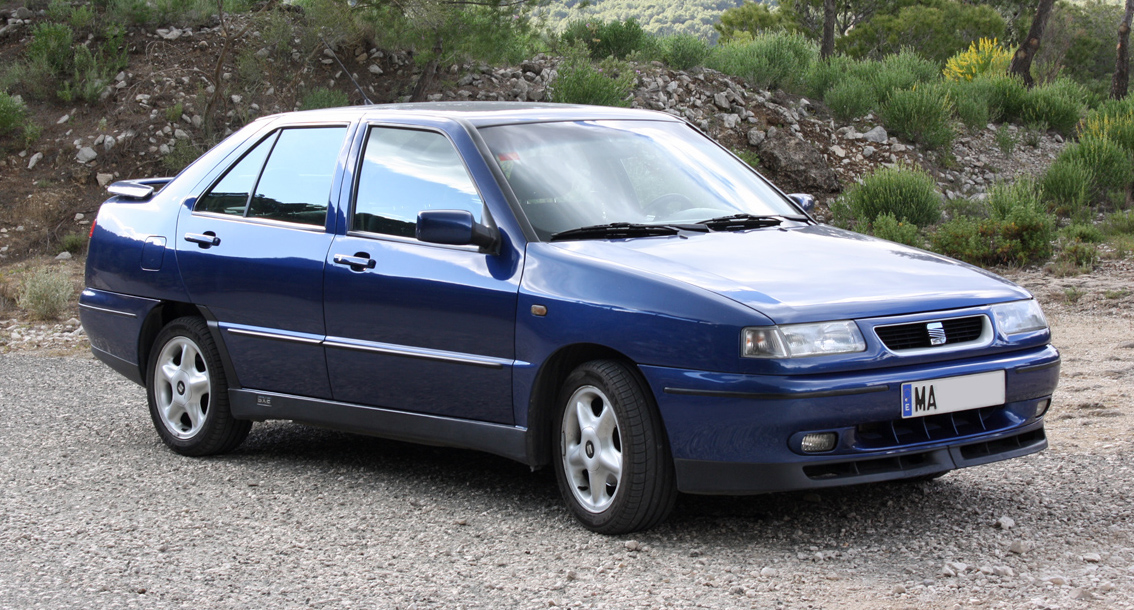
- Toledo 1L 1991–1999 · Liftback
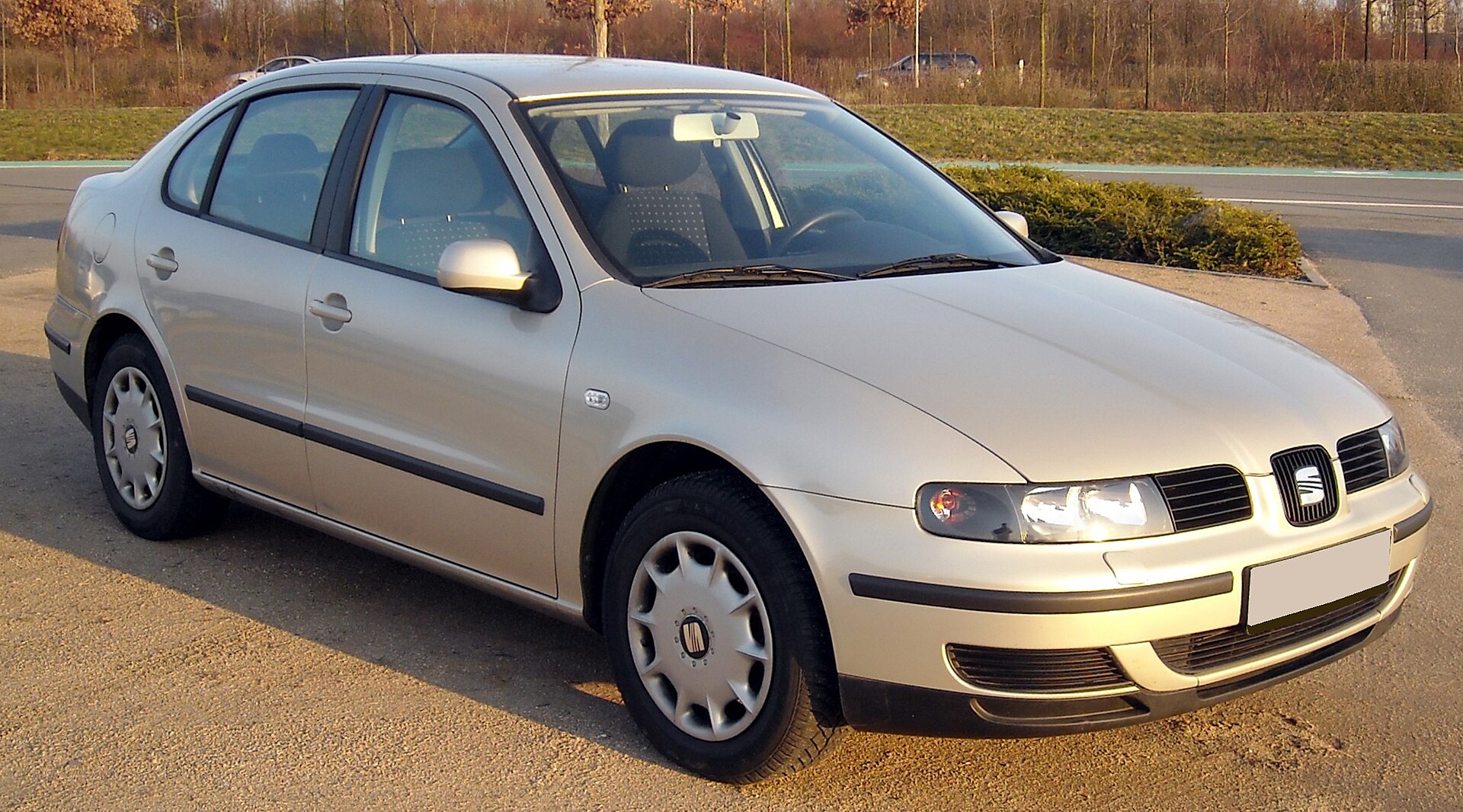
- Toledo 1M 1998–2004 · Sedan
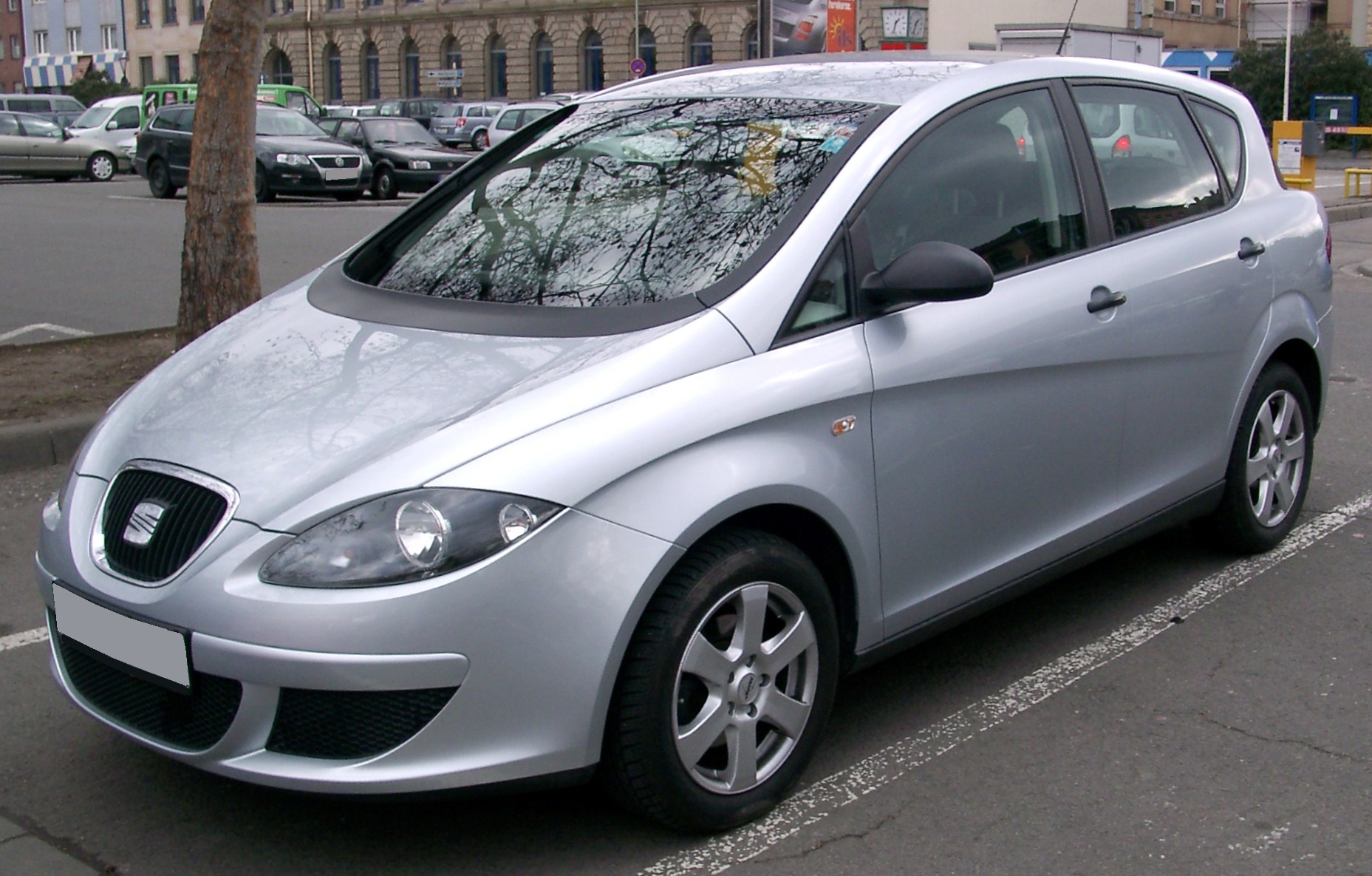
- Toledo 5P 2004–2009 · Hatchback
- Toledo KG 2012–2019 · Liftback
Newest first · 4 generations since 1991
-
2012
-
2004
-
1998
-
1991
All generations by year: Toledo KG (2012–2019) · Toledo 5P (2004–2009) · Toledo 1M (1998–2004) · Toledo 1L (1991–1999)
Which one is mine?
Pick the year of first registration to see which generation it is.
Check by VINThe SEAT Toledo is a family car built by the Spanish company SEAT since 1991, originally conceived as the replacement for the SEAT Málaga. It was the first SEAT developed in cooperation with Volkswagen, and four generations have been built. The latest made its debut at the Paris motor show in 2012. The Toledo has always been a five-seater known for comfort and good equipment.
In short
- Four generations: 1L (1991–1998), second generation (1998–2004), third generation (2004–2009) and fourth generation (2012–2019).
- Always based on Volkswagen Group platforms, from the Golf II to the PQ35 and the Polo-based platform of the twin Skoda Rapid.
- Engines from 1.2 to 2.3 litres, petrol and diesel, with 50–147 kW (68–200 PS).
- The fourth generation has a 550-litre boot, rising to 1,490 litres.
SEAT Toledo at a glance
All Toledos are front-engined, front-wheel-drive cars with transverse engines from the Volkswagen Group parts bin, which keeps servicing straightforward. More SEAT models are listed in our SEAT catalogue, and articles about the model are collected in our SEAT Toledo section.
SEAT Toledo generations
First generation: 1L (1991–1998)
After Volkswagen took control of SEAT, the brand presented the first Toledo (1L) in 1991 as a lower-medium car based on the Volkswagen Golf II platform. It looked somewhat angular, but attractive for its time. The boot was large at 550 litres and could be extended by folding the rear seats. The interior is simple but ergonomic, trimmed with good-quality fabric and soft plastic.
Petrol engines included a 1.6 with 53–74 kW (72–101 PS), a 1.8 with 66–94 kW (90–128 PS) and a 2.0 with 85–110 kW (116–150 PS). Diesels were a naturally aspirated 1.9 with 50 kW (68 PS) and 1.9 turbodiesels with 55–81 kW (75–110 PS). In total 559,000 first-generation Toledos were built.
Second generation (1998–2004)
The second Toledo was introduced in 1998 and entered series production in 1999. It was a sedan only; the hatchback became a separate model, the SEAT Leon. Giorgetto Giugiaro designed the exterior, which was a big step forward, and the body is galvanised against rust. The car rode on 15-inch wheels.
The interior also improved markedly — some compared it with the Audi A3 of the period. Expensive versions had leather and an electrically adjustable driver's seat, rare in the class, and even affordable versions had air conditioning, hydraulic power steering and a steering wheel adjustable for reach and rake. Rectangular air vents sit at the top of the console, above the switches, audio unit and climate controls.
The base engine was a 1.4 with 55 kW (75 PS), followed by a 1.6 with 77 kW (105 PS) and a 1.8 with 92 kW (125 PS). From 2003 a 1.8 Turbo with 132 kW (180 PS) was offered, and higher trims had a 2.3-litre five-cylinder VR5. The 1.9 TDI diesel produced 66–110 kW (90–150 PS). The Volkswagen Group wanted the Spanish car to be sportier than its German siblings, so it received firmer suspension that helped both in corners and on fast straights. The factory built 304,000 second-generation cars.
Third generation (2004–2009)
The third Toledo adopted a one-box body somewhere between a hatchback and a people carrier, designed by the renowned Walter de Silva. It was more modern and streamlined, with large headlights around a compact grille, a styling line running from the headlights to the rear wheel arches and an unusual tailgate with tail lights at its sides. Inside, a three-spoke multifunction steering wheel faces instruments in three cowls, and the console again has air vents at the top above the climate and audio controls. The boot holds 500 litres.
The car was built on the Volkswagen PQ35 platform, shared with the Volkswagen Golf and Skoda Octavia II, and used Volkswagen engines: naturally aspirated 1.4, 1.6 and 2.0 FSI (direct injection) petrol engines with 63, 75 and 110 kW (86, 102 and 150 PS), turbocharged 1.8 TSI with 118 kW (160 PS) and 2.0 TFSI with 147 kW (200 PS), and 1.9 and 2.0 diesels with 77–125 kW (105–170 PS). In total 54,000 third-generation cars were built.
Fourth generation (2012–2019)
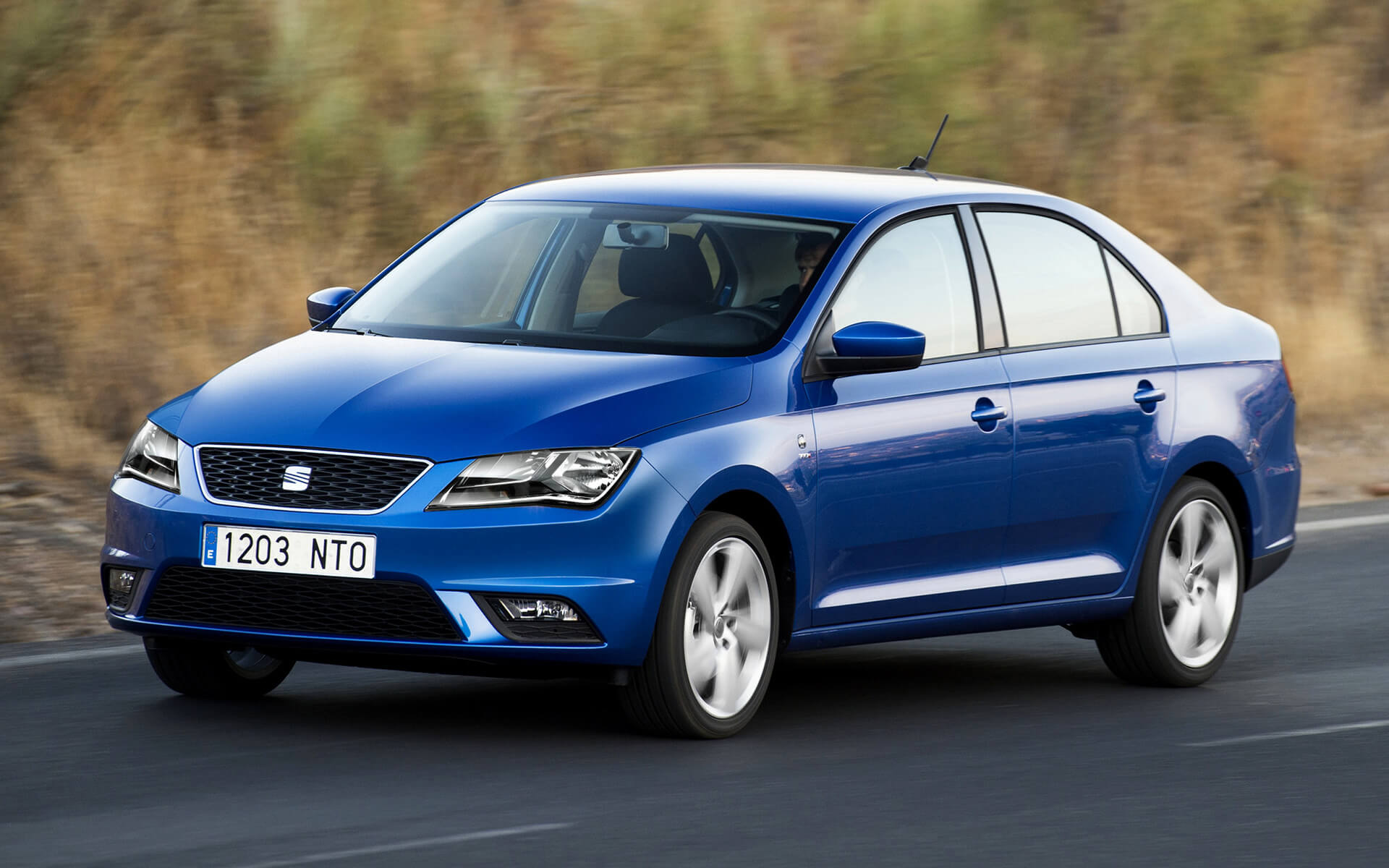
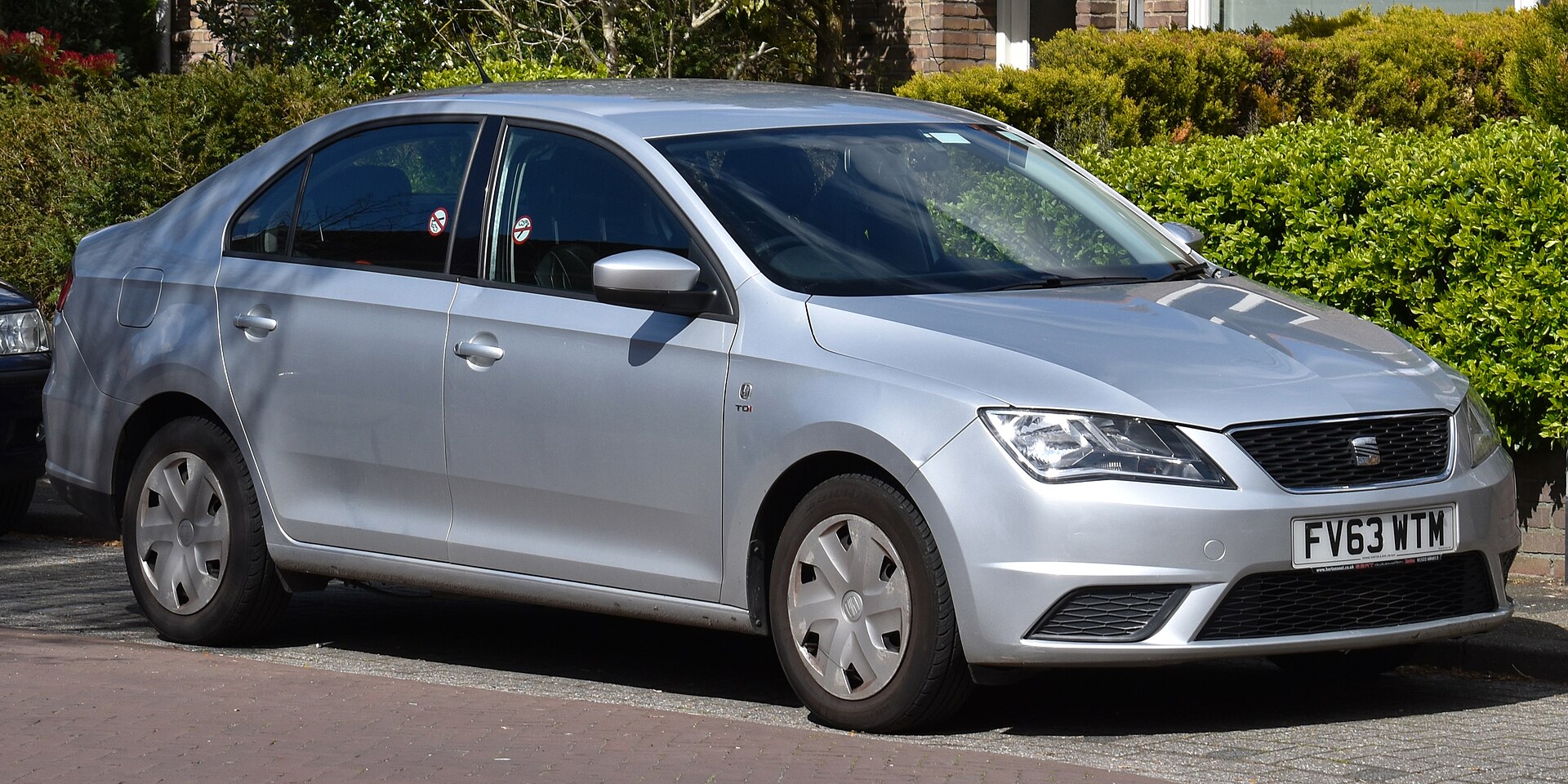
The fourth Toledo was unveiled at the 2012 Paris motor show as a twin of the Skoda Rapid liftback — no surprise, as both brands belong to the Volkswagen Group. SEAT's design chief Alejandro Mesonero and his team aimed to align it with the rest of the SEAT range. A slightly sculpted bonnet with three subtle ribs, narrow headlights, a small chrome-trimmed grille, sports-car-style fine mesh in the intakes and rectangular fog lamps in a fairly bulky bumper give it a slightly aggressive look. A deep crease runs along the lower body, the wheel arches are only lightly flared, and the car sits on 15-inch steel wheels or optional 16-inch alloys. Ground clearance is 150 mm. At the rear, horizontal halogen tail lights with sharp edges, a sculpted boot lid with a small integrated spoiler and a simple bumper with a plastic insert complete the design.
The cabin is spacious, which is its key strength, though the materials leave something to be desired given the low price. The design is almost identical to the Skoda Octavia's, with the same infotainment unit, very similar climate controls, a familiar three-spoke multifunction wheel and instruments with a trip computer between the speedometer and rev counter. Higher versions have a 5-inch touchscreen. The front has plenty of room for the class and comfortable seats with modest side support; three can sit in the rear, two comfortably. The boot holds 550 litres, rising to 1,490 litres with the rear seats folded, with a wide opening, neat trim, a full-size spare and plenty of storage under the floor.
Engines and transmissions (fourth generation)
Eleven engine versions were offered. The main ones are:
| Engine | Power (kW / PS) | 0–100 km/h | Top speed | Consumption (town / out of town) |
|---|---|---|---|---|
| 1.2 TSI petrol, 8 valves | 63 kW / 86 PS (also 55–81 kW / 75–110 PS) | 11.8 s | 183 km/h | 6.5 / 4.0 l/100 km |
| 1.4 TSI petrol | 90 kW / 122 PS (also 66 and 92 kW / 90 and 125 PS) | 9.5 s | 206 km/h | 8.0 / 5.0 l/100 km |
| 1.6 petrol, naturally aspirated | 77 kW / 105 PS | — | — | — |
| 1.6 TDI diesel | 66 kW / 90 PS (also 77 and 85 kW / 105 and 115 PS) | 11.8 s | 178 km/h | 5.5 / 4.0 l/100 km |
The engines are paired with a five-speed manual gearbox, and some can have a seven-speed DSG dual-clutch automatic. The fourth Toledo uses the Volkswagen Polo platform, with MacPherson struts at the front and a torsion-beam rear axle with its own tuning, and electro-hydraulic power steering. SEAT says the chassis was set up for sportier, more engaging handling.
Safety and equipment
The fourth generation offers High Beam Assist, which dips the headlights automatically to avoid dazzling other drivers, driver fatigue detection that recommends breaks, and Front Assist, which uses radar to monitor the distance to other vehicles, warns the driver and helps avoid collisions. It earned top marks for front-seat and child-occupant protection, and two child seats can be secured with a third anchorage point for extra stability. Front and side airbags and a brake assistant that raises brake pressure in emergencies are fitted. Even the base version has six airbags, front electric windows, ABS, stability control and 15-inch steel wheels. Options include a 5-inch touchscreen with navigation and CD, MP3, Bluetooth, USB and SD support, cruise control, 15- or 16-inch alloys, parking sensors and hill-start assist.
Key specifications by generation
| Parameter | 1st (1L) | 2nd | 3rd | 4th |
|---|---|---|---|---|
| Years | 1991–1998 | 1998–2004 | 2004–2009 | 2012–2019 |
| Platform | VW Golf II | — | VW PQ35 | VW Polo |
| Power (kW / PS) | 50–110 kW / 68–150 PS | 55–132 kW / 75–180 PS | 63–147 kW / 86–200 PS | 55–92 kW / 75–125 PS |
| Boot | 550 l | — | 500 l | 550 / 1,490 l |
| Production | 559,000 | 304,000 | 54,000 | — |
Strengths and weaknesses
Owners of earlier generations praise the Toledo's reliability, good equipment and affordable servicing; suspension and engine parts are easy to find because so much is shared with Volkswagen models. It is comfortable, with a decent boot, suspension and safety. On the other hand, many versions have thirsty engines, resale can be difficult, interior materials are not the best and sound insulation is weak. The fourth generation's rivals include the Renault Sandero, Skoda Rapid, Ford Fiesta and Chevrolet Aveo.
SEAT Toledo evolution in numbers
Did you know?
- The SEAT Toledo ran for 28 years, from 1991 to 2019, over 4 generations in our catalog.
- The longest-running generation is the Toledo 1L (1991–1999): 8 years.
Image credits · Photos from Wikimedia Commons under free licences
- SEAT Toledo 1L · Photo: Bokeron87 / Wikimedia Commons, CC BY-SA 4.0
- SEAT Toledo 1M · Photo: Rudolf Stricker / Wikimedia Commons, Attribution
- SEAT Toledo 5P · Photo: Rudolf Stricker / Wikimedia Commons, CC BY-SA 3.0
- SEAT Toledo KG · Photo: Dennis Elzinga / Wikimedia Commons, CC BY 2.0
SEAT Toledo in our rankings
- No. 79 of 912 · Longest-running car nameplates (28 years · top 9%)
- No. 104 of 345 · Cars with the most generations (4 generations · top 41%)
In production longer than 91% of ranked nameplates in the 1CARS catalog (No. 79 of 912).
FAQ
How many generations of the SEAT Toledo are there?
Four: 1991, 1998, 2004 and 2012.
Which car is the fourth-generation SEAT Toledo related to?
It is a twin of the Skoda Rapid liftback.
Who designed the SEAT Toledo?
The second generation was designed by Giorgetto Giugiaro and the third by Walter de Silva; the fourth was developed under Alejandro Mesonero.
How big is the SEAT Toledo boot?
The fourth generation offers 550 litres, or 1,490 litres with the rear seats folded.
Data sources
Data checked by an editor against the sources below.