
 Honda Integra
All generations, specs and history
Published Sources (3) Report an error
By Felix Hartmann, Automotive Technology & EV Contributor
- Built
- 1985–present
- Generations
- 5
- Top power
- 162 kW (220 PS)
Timeline
Integra generations
Click a generation for its own page
- Integra DA1 1985–1989 · Sedan, Liftback · 63–99 kW (86–135 PS)
- Integra DA5/DB1 1989–1993 · Sedan, Coupe · 97–125 kW (132–170 PS)
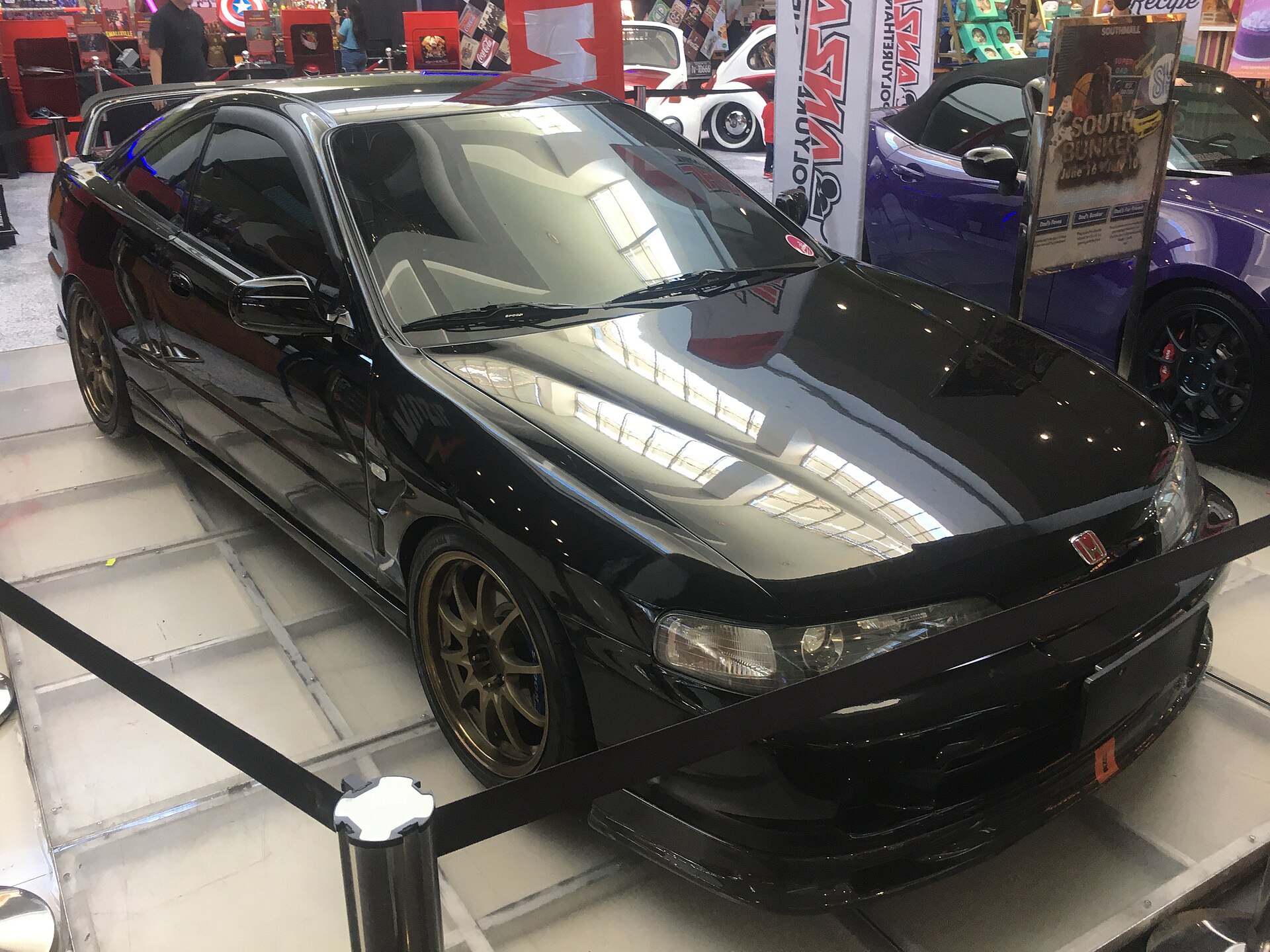
- Integra DC2/DB8 1993–2001 · Sedan, Coupe · 78–147 kW (106–200 PS)
- Integra DC5 2001–2006 · Coupe · 119–162 kW (162–220 PS)
- Integra China Current 2021–now · Sedan, Liftback · 136 kW (185 PS)
Newest first · 5 generations since 1985
- 2021 China In production 2021–now · Sedan, Liftback · 136 kW (185 PS)
- 2001 DC5 2001–2006 · Coupe · 119–162 kW (162–220 PS)
- 1993 DC2 1993–2001 · Sedan, Coupe · 78–147 kW (106–200 PS)
- 1989 DA5 1989–1993 · Sedan, Coupe · 97–125 kW (132–170 PS)
- 1985 DA1 1985–1989 · Sedan, Liftback · 63–99 kW (86–135 PS)
All generations by year: Integra China (2021–now) · Integra DC5 (2001–2006) · Integra DC2/DB8 (1993–2001) · Integra DA5/DB1 (1989–1993) · Integra DA1 (1985–1989)
Which one is mine?
Pick the year of first registration to see which generation it is.
- Integra China 2021–present
- DC5 2001–2006
- DC2 1993–2001
- DA5 1989–1993
- DA1 1985–1989
The Honda Integra is a compact front-wheel-drive coupé, saloon and liftback that Honda built at Suzuka from 1985 to 2006, sold in North America as the Acura Integra and RSX. Its Type R versions of 1995 and 2001 made the name famous. Since 2021 the GAC Honda joint venture builds a Civic-based Integra for China, and in 2026 the US-built Integra Type S comes to Japan.
In short
- Four Japanese generations: AV/DA (1985), DA5-DB2 (1989), DB6-DC4 including the DC2 (1993) and DC5 (2001-2006).
- The second generation brought the B16A, Honda's first VTEC engine; the 1995 Japanese Type R had a 147 kW (200 PS) B18C.
- The DC5 Type R of 2001 used the 2.0-litre K20A with 162 kW (220 PS) and a six-speed manual.
- China since September 2021: GAC Honda saloon with a 1.5 turbo L15C9, liftback added in February 2023.
Size at a glance
| Dimensions | Honda Integra China |
|---|---|
| Length | 4,689 mm184.6 in |
| Width | 1,802 mm70.9 in |
| Height | 1,415 mm55.7 in |
| Wheelbase | 2,745 mm108.1 in |
Specs by version
Engines
| Version | Engine | Power | Gearbox | Drive | Production years |
|---|---|---|---|---|---|
| DA1 · 1985–1989 | |||||
| DA1 · 1.6 D16A1 88 kW | 4 cyl · Petrol D16A1 | 88 kW 120 PS118 hp | - | Front-wheel drive | 1985–1989 |
| DA1 · 1.6 EX 16 92 kW | 1.6 l · Petrol 1,590 cc | 92 kW 125 PS123 hp | Manual | Front-wheel drive | 1986–1989 |
| DA5 · 1989–1993 | |||||
| DA5 · 1.7 B17A1 VTEC 118 kW | 4 cyl · Petrol B17A1 | 118 kW 160 PS158 hp | 5-sp Manual | Front-wheel drive | 1992–1993 |
| DC2 · 1993–2001 | |||||
| DC2 · 1.8 B18C1 VTEC 127 kW | 4 cyl · Petrol B18C1 | 127 kW 173 PS170 hp | - | Front-wheel drive | 1993–2001 |
| DC2 · Type R 1.8 B18C 147 kW | 4 cyl · Petrol B18C | 147 kW 200 PS197 hp | 5-sp Manual | Front-wheel drive | 1995–2001 |
| DC5 · 2001–2006 | |||||
| DC5 · Type R 2.0 K20A 162 kW | 4 cyl · Petrol K20A | 162 kW 220 PS217 hp | 6-sp Manual | Front-wheel drive | 2001–2006 |
| Integra China · 1.5 Turbo L15C9 136 kW | 4 cyl · Petrol L15C9 | 136 kW 185 PS182 hp | - | Front-wheel drive | 2021 |
Performance
Show all 1 versions
| Version | Top speed |
|---|---|
| Integra China · 1.5 Turbo L15C9 136 kW | 208 km/h129 mph |
Dimensions and weight
Show all 2 versions
| Version | Length | Width | Height | Wheelbase | Kerb weight |
|---|---|---|---|---|---|
| DA1 · 1985–1989 | |||||
| DA1 · 1.6 EX 16 92 kW | 4,343 mm171.0 in | 1,651 mm65.0 in | - | - | - |
| Integra China · 1.5 Turbo L15C9 136 kW | 4,689 mm184.6 in | 1,802 mm70.9 in | 1,415 mm55.7 in | 2,745 mm108.1 in | 1,312 kg2,892 lb |
Verified Manufacturer and type-approval data from our catalog · Sources and methodology
Honda Integra at a glance
| Specification | Honda Integra |
|---|---|
| Years | 1985-2006; China since 2021 |
| Other names | Quint Integra (Japan, 1985-1989), Acura Integra, Acura RSX (2002-2006), Rover 416i (Australia) |
| Plants | Suzuka, Japan (1985-2006); China (GAC Honda, 2021-) |
| Bodies | three-door liftback coupé, four-door saloon, five-door liftback |
| Layout | front engine, front-wheel drive; four-wheel drive in some Japanese versions |
| Engines | 1.5-2.0 L four-cylinders (EW5, ZC, D16A1, B16A, B18C, K20A); 1.5 turbo L15C9 in China |
| Power | 63 kW (85 PS, Europe 1.5) to 162 kW (220 PS, DC5 Type R) |
| Gearboxes | four- and five-speed manual and automatic; six-speed manual on the DC5 Type R |
| Chinese saloon size | 4,689 mm long, 2,745 mm wheelbase, 1,312 kg |
| Price new | GBP 11,030 for the UK 1.6 EX 16 (sold 1986-1989) |
Integra names and markets
The Integra replaced the Honda Quint and arrived in Japan in 1985 as the Quint Integra, sold through Honda Verno dealers. A year later it became one of the two launch models of Acura in the United States, next to the Legend; the US story, including the 2022 revival, is told in the Acura Integra hub. Australia took the first-generation five-door as the Rover 416i, and Thailand had the Integra SJ saloon as the Isuzu Vertex. In the range it sat below the Honda Prelude as the smaller sporty coupé. Every Integra up to 2006 was built at Suzuka in Mie prefecture.
First and second generation, 1985-1993
The first Integra (codes AV and DA1-DA4) shared its platform with the third-generation Civic but aimed higher, with pop-up headlamps and a twin-cam 16-valve engine. It started as a three-door liftback, a five-door followed in October 1985 and a four-door saloon in autumn 1986 for Japan. Engines varied by market: a 1.5-litre EW5 in some Japanese saloons, the 1.6 ZC with 85 kW (115 PS) carburetted or 99 kW (135 PS) with PGM-FI fuel injection, the US 1.6 D16A1 with 88 kW (118 hp), and a 1.5 with 63 kW (85 PS) in Europe. Honda Australia quoted 90 kW for its 1.6 twin-cam, with a five-speed manual or four-speed automatic. In Britain the 1.6 EX 16 five-door with 93 kW (125 bhp) was on sale from November 1986 to November 1989 at GBP 11,030. Nearly 228,000 were sold during the four-year run.
The second generation of April 1989 (DA5-DA9, DB1-DB2) dropped the five-door and kept a three-door coupé and a four-door saloon. Its B16A was the first Honda engine with VTEC variable valve timing; after the October 1991 facelift the Japanese VTEC version gave 125 kW (170 PS). North America had a 1.8 with 97 kW (130 hp) as standard and, from May 1992, the GS-R with the 1.7-litre B17A1 VTEC and 118 kW (160 PS). Only about 4,825 GS-Rs were built for the US and Canada. Gearboxes were a five-speed manual or four-speed automatic.
Third generation and the DC2 Type R
The 1993 Integra (DB6-DB9, DC1, DC2, DC4) came as a three-door liftback and a four-door hardtop-style saloon. The Japanese Si used the B18C VTEC with 133 kW (180 PS); the US GS-R had the B18C1 with 127 kW (170 hp) and 174 Nm (128 lb-ft), the cheaper US models the B18B1 with 104 kW (140 hp) and 183 Nm (135 lb-ft). In Japan the ZXi4WD and Xi4WD combined a 1.6 SOHC ZC with Real Time four-wheel drive. From 1996 to 2001 Japan also had the Integra SJ, a rebadged Civic Ferio saloon with a 1,493 cc D15B.
The Integra Type R went on sale in Japan in 1995. Honda gave it a strengthened chassis, lighter parts, a close-ratio five-speed manual and a helical limited-slip differential. The B18C revved to 8,600 rpm in Japanese form and produced 147 kW (200 PS). US buyers got the Acura Integra Type R in 1997-1998 and 2000-2001, liftback only and with air conditioning deleted. Japan received the 98 Spec R, the 00 Spec R and, in mid-2000, the Type Rx. Evo magazine called the Type R the greatest front-wheel-drive performance car ever, and a 2002 HLDI study listed the Integra among the most stolen cars in the US.

Integra Type R outputs by market
| Version | Engine | Power | Rev limit |
|---|---|---|---|
| Type R, Japan (1995-2001) | 1.8 B18C VTEC | 147 kW (200 PS) | 8,600 rpm |
| Type R, UK | 1.8 B18C VTEC | 139 kW (190 PS) | 8,700 rpm |
| Acura Integra Type R, US | 1.8 B18C5 VTEC | 145 kW (195 hp) | 8,500 rpm |
| Type R DC5, Japan (2001-2006) | 2.0 K20A i-VTEC | 162 kW (220 PS) | - |
| Acura RSX Type-S (2005-2006) | 2.0 K20Z1 i-VTEC | 157 kW (210 hp) | - |
Fourth generation DC5 and the end in 2006
The DC5 was revealed in Japan on 13 April 2001 and built from July 2001 to August 2006, only as a three-door liftback. It introduced Honda's K-series engines. In North America it was called the Acura RSX: the base car had the K20A3 with 119 kW (160 hp), the RSX Type-S the K20A2 with 149 kW (200 hp) until 2004 and then the K20Z1 rated at 157 kW (210 hp). The Japanese Integra Type R took the 2.0-litre K20A to 162 kW (220 PS) and added a close-ratio six-speed manual, Recaro seats, four-piston Brembo front brakes, a limited-slip differential and an exhaust with variable back pressure.
Honda ended production in June 2006 with a final run of 300 cars and, after strong demand, built 150 more in July. The reason was the shrinking coupe market, and the RSX no longer fitted Acura's plan, which made the TSX its entry model. The 2006 Civic Si took over its role in North America.
The Integra name today: China and the Type S in Japan
The name returned in September 2021 in China. GAC Honda builds the Integra as a restyled version of the eleventh-generation Civic saloon, which the other joint venture, Dongfeng Honda, sells as the Civic. The car is 4,689 mm long, 1,802 mm wide and 1,415 mm high on a 2,745 mm wheelbase and weighs 1,312 kg; its 1.5-litre turbo L15C9 makes 136 kW (182 hp), good for a claimed 208 km/h. A liftback, the Integra Hatchback, joined the saloon in February 2023, and the saloon has since been facelifted.
Japan gets the Integra back about 20 years after the DC5. On 5 March 2026 Honda announced that it would sell the Acura Integra Type S, built at the Marysville Auto Plant in the United States, in Japan from the second half of 2026, using a simplified approval scheme for US-built cars. Its 2.0-litre K20C turbo gives 239 kW (320 hp) at 6,500 rpm and 420 Nm (310 lb-ft) through a six-speed manual. It weighs 1,460 kg and is 4,725 mm long. In the US the 2027 Type S costs USD 54,600 plus USD 1,395 destination; Japanese prices had not been published by mid-November 2026, while dealers expected orders to open in late November.
Integra in racing and sales
Racing made the Type R reputation. The Integra won the IMSA International Sedan manufacturers' title in 1987 and 1988, Realtime Racing took six SCCA World Challenge touring titles in a row from 1997 to 2002 with the Integra Type R and RSX Type-S, and privateer Integra Type Rs won 27 BTCC races and the 2005 and 2006 titles in the BTC-T class. Car and Driver put the Integra on its 10Best list in 1987, 1988 and 1994-1997, and the RSX in 2002 and 2003.
US sales peaked at 83,559 in 1990, stayed above 55,000 a year from 1988 to 1995 and fell to 13,376 in 2001, the last full year before the RSX name took over. The revived Acura model sold 32,090 in 2023 and 20,178 in 2025. More Honda coupés and saloons are listed in the Honda catalogue.
Honda Integra evolution in numbers
Did you know?
- The Honda Integra has been around for 41 years: 5 generations in our catalog since 1985.
- The longest-running generation is the Integra DC2/DB8 (1993–2001): 8 years.
- The biggest jump in power came with the Integra DA5/DB1: up to 125 kW (170 PS), 26 kW more than the Integra DA1.
- The most powerful Honda Integra is not the newest: the Integra DC5 (2001–2006) offered up to 162 kW (220 PS), the Integra China up to 136 kW (185 PS).
Most powerful version, kW
Figures from the 1cars catalog: power is the strongest version of each generation; generations without the figure are left out.
Honda Integra: first vs latest generation
| Spec | Integra DA1 | Integra China | Change |
|---|---|---|---|
| Years | 1985–1989 | 2021–present | 36 years apart |
| Most powerful version | 99 kW (135 PS) | 136 kW (185 PS) | +37 kW (+37%) |
| Length | 4,343 mm | 4,689 mm | +346 mm |
| Width | 1,651 mm | 1,802 mm | +151 mm |
Oldest and newest generation in the 1cars catalog. Power is the strongest version of each; other rows are shown only when both generations have the figure.
Honda Integra in our rankings
- No. 105 of 530 · Cars with the most generations (5 generations · top 20%)
- No. 20 of 78 · Fastest Japanese cars (208 km/h · top 26%)
- No. 177 of 568 · Lightest cars (1,312 kg · top 32%)
- No. 239 of 731 · Smallest cars (4,343 mm · top 33%)
- No. 44 of 126 · Longest hatchbacks (4,343 mm · top 35%)
- No. 42 of 113 · Fastest sedans (208 km/h · top 38%)
More generations than 80% of ranked nameplates in the 1CARS catalog (No. 105 of 530).
FAQ
Is the Honda Integra the same as the Acura Integra?
Mostly, yes. Up to 2001 the Acura Integra was the North American version of the Japanese Integra, built at Suzuka. The DC5 was sold there as the Acura RSX. Since 2022 the Acura Integra is a separate, US-built model.
Is the Honda Integra coming back to Japan?
Yes. Honda announced in March 2026 that the US-built Acura Integra Type S goes on sale in Japan from the second half of 2026, with a 239 kW (320 hp) 2.0-litre turbo engine.
When was the Honda Integra discontinued?
The Japanese Integra ended in 2006. The last DC5s were built in June and July 2006, after Honda added 150 cars to a planned final run of 300. The name returned in China in 2021.
What engine is in the Integra Type R?
The 1995-2001 Integra Type R used the 1.8-litre B18C VTEC with 147 kW (200 PS) in Japan and 145 kW (195 hp) in the US. The DC5 Type R of 2001-2006 had the 2.0-litre K20A with 162 kW (220 PS).
Data sources
Data checked by an editor against the sources below.
- Wikipedia - Honda Integra
- Carnewschina - The Honda Integra Is Back But Only In China
- Co - Specs


