
Worn Clutch Symptoms: How to Test It and What a Replacement Costs
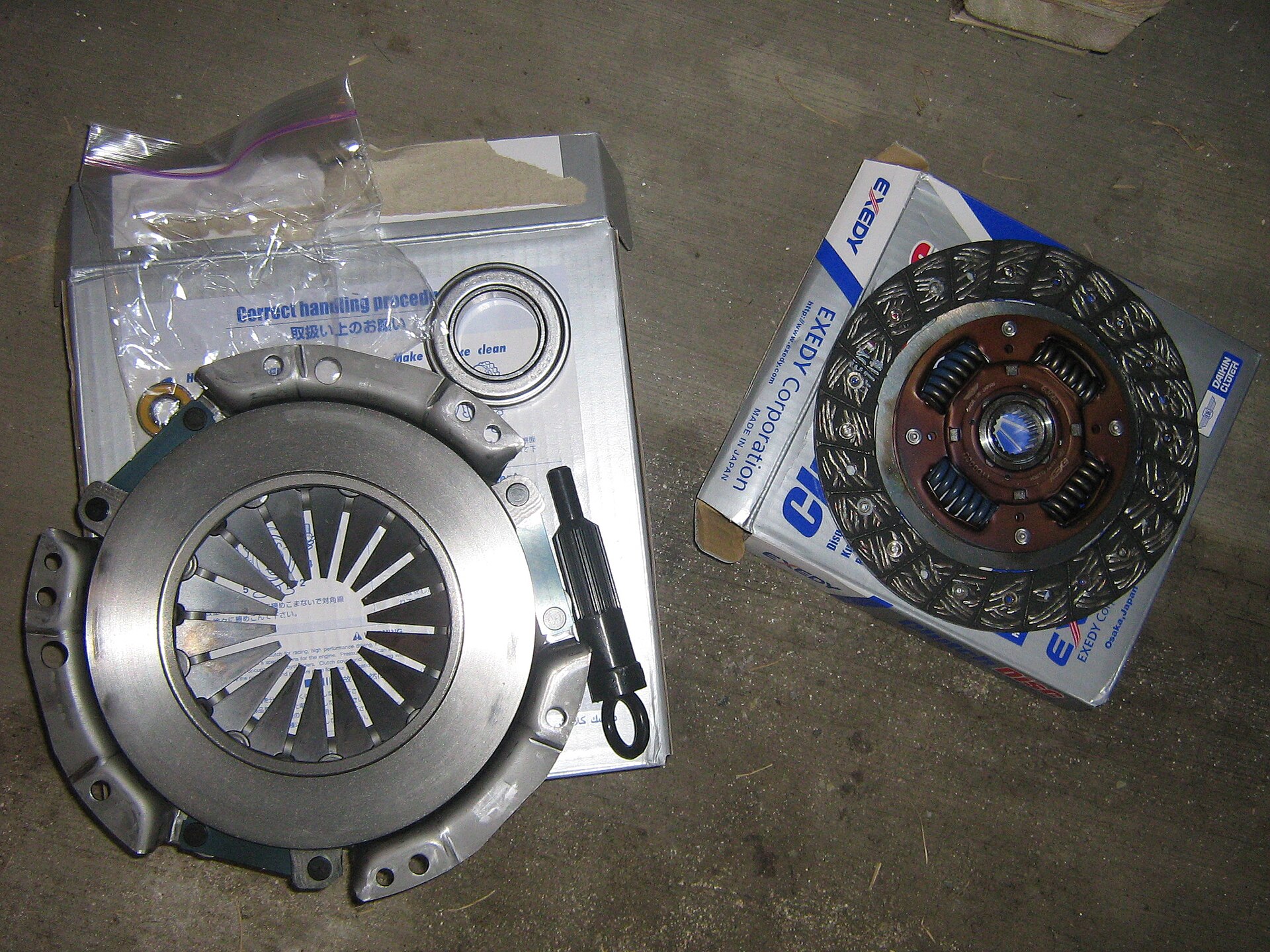
A clutch that is wearing out usually tells you weeks or months before it fails: the engine revs rise without the car speeding up, the pedal bites near the very top of its travel, the car judders as you pull away or you smell hot friction material after a hill start. Most clutches last somewhere between 50,000 and 200,000 km, and a replacement at an independent garage typically costs EUR 600-1,500 in 2025-2026, more when the dual-mass flywheel has to be renewed too.
Key takeaways
- Slipping under load in a high gear is the clearest sign that the friction plate is worn out.
- A rattle at idle that changes when you press the pedal often points to the dual-mass flywheel, not the clutch itself.
- Clutch life depends mostly on how and where the car is driven: about 40,000 km in hard city use, well over 100,000 km on the motorway (Auto Zeitung, 2025).
- ADAC lists a Golf VI clutch replacement at EUR 1,180-1,660 including fitting in its 2026 used-car report; a dual-mass flywheel adds EUR 500-800 in parts (Meister-Job, 2026).
- If the pedal stays on the floor or you can no longer select a gear, stop and call for recovery.
The six warning signs of a worn clutch
The table lists the usual symptoms roughly in the order they tend to appear, with the part most often responsible.
| Symptom | What you notice | Most likely cause | How urgent |
|---|---|---|---|
| Slipping | Revs rise in 3rd, 4th or 5th gear under full throttle but speed lags behind | Worn friction lining, or oil on the lining from a leaking crankshaft seal | Book a garage within days; it gets worse quickly |
| High biting point | The car only moves when the pedal is almost fully released | Thin friction lining | Plan a replacement |
| Judder | The car shakes as you pull away, worst in reverse or uphill | Glazed or oil-soaked plate, worn dual-mass flywheel, tired engine mounts | Have it diagnosed |
| Noises | Squeal or chirp when you press the pedal; rattle at idle | Release bearing (pedal pressed); dual-mass flywheel (idle rattle) | Diagnose soon; a failing bearing can seize |
| Heavy, soft or sticky pedal | Pedal needs much more force, feels spongy or does not return | Cable, release fork, pressure plate spring or a hydraulic leak | Check before driving far |
| Burning smell | Sharp smell like hot rubber, sometimes smoke | Slipping clutch, often after a steep hill start or towing | Let it cool; repeated smell means slip |
Auto Zeitung's 2025 guide and Carwow's May 2026 guide describe the same core set: slipping, a late bite, a vibrating pedal, squeal or rattle, and an acrid burning smell. The ADAC uses two simple rules in its 2024 advice on older used cars: a clutch is at the end of its life when it grabs or judders as you pull away, or when it engages very late.
Many cars share brake fluid between the brake and clutch hydraulics. A clutch pedal that slowly sinks or feels spongy can therefore come with a falling level in the brake fluid reservoir, which needs checking before the next drive.
Three simple tests you can do yourself
None of these tests needs tools. Do them with the engine warm and on a quiet, straight road where you can drive legally and safely.
- Slip test. In 4th gear at around 50 km/h, press the accelerator fully for a few seconds. Engine revs and road speed should climb together. If the rev counter jumps ahead and the car follows slowly, the clutch is slipping. Lift off at once; repeated slip tests heat the lining and wear it further.
- Biting point check. Parked on level ground with the handbrake on, engine idling, press the pedal and select 1st. Release the pedal very slowly and note where the engine note drops. On a healthy clutch this happens roughly in the middle of the travel. If the car only starts to pull in the last few centimetres, the friction lining is thin.
- Noise check. In neutral at idle, listen near the front of the car with the bonnet open (keep hands, hair and clothing well away from belts and the fan). Then press the clutch pedal. A noise that appears only with the pedal down usually comes from the release bearing. A rattle that is present with the pedal up and changes or disappears when you press it often points to the dual-mass flywheel or a gearbox input bearing.
Avoid the old trick of trying to pull away in a high gear with the handbrake on. It loads the clutch, driveshafts and engine mounts and proves little that the slip test does not.

Clutch or dual-mass flywheel: how to tell
Most diesel cars and many modern petrol cars have a dual-mass flywheel (DMF) between the engine and the clutch. It has two masses joined by springs and absorbs engine vibration before it reaches the gearbox. When the springs wear, the result can feel like a clutch problem.
A German master workshop listed the typical DMF symptoms in an article updated in October 2026: rattling or clattering at idle that changes when the clutch is pressed, a metallic clatter when the engine is switched off, vibration at low revs felt in the footwell or gear lever, and jerking when pulling away. Its life varies widely: the same source reports some DMFs lasting about 80,000 km and others more than 300,000 km. The workshop measures the free play of the secondary mass against the primary; it gives a tolerance window of 6 to 9 degrees, with more play meaning worn springs.
Schaeffler, which makes LuK clutches and flywheels, warns in a 2016 service bulletin that many DMFs returned as faulty for noise were in fact serviceable. Worn engine mounts, a failing crankshaft pulley damper, auxiliary belt vibration, gearbox bearings or engine misfires can all produce similar sounds. The same bulletin names the main causes of early DMF wear: labouring the engine at very low revs, towing or overloading, long periods of idling with the air conditioning or heater running, and engine power upgrades.
The practical point for a repair: the gearbox has to come out to replace either part. If the DMF is worn or close to its limit, replacing it with the clutch saves a second round of labour later.
How long a clutch lasts
There is no fixed replacement interval for a clutch; it is replaced when it shows the symptoms above. Sources give a broad range, and the spread comes almost entirely from use:
- Carwow (May 2026) puts the average at 100,000-200,000 km, sometimes more with gentle driving, and as low as 50,000 km with heavy city traffic, towing or a driver who rides the pedal.
- Auto Zeitung (February 2025) says a clutch in a city car can be worn after about 40,000 km, while a car used mainly for long motorway trips can go well over 100,000 km.
The safer reading for a used-car buyer: a car with 120,000 km of mostly urban or towing history may well be due a clutch, even if it still feels fine on a short test drive.
What a new clutch costs in 2026
Labour is the biggest part of the bill, because the gearbox usually has to be removed. Carwow (May 2026) gives 3-6 workshop hours for a typical car and up to about 10 hours on complex cars or with a DMF.
| Job | Typical cost | Source |
|---|---|---|
| Clutch kit, parts only | EUR 100-500 | Auto Zeitung, February 2025 |
| Clutch replacement, compact or mid-size car | EUR 600-1,500 | Auto Zeitung 2025; Carwow 2026 |
| VW Golf VI clutch, incl. fitting | EUR 1,180-1,660 by engine | ADAC used-car report, 2026 edition |
| VW Passat B8 1.4 TSI clutch, incl. fitting | EUR 1,190-1,530 | ADAC used-car report, 2025 edition |
| Dual-mass flywheel, parts only | EUR 500-800 extra | Meister-Job, September 2026 |
| Golf VI 1.6 TDI clutch plus DMF (worked example) | about EUR 1,309 incl. VAT | Meister-Job, September 2026 |
Meister-Job's September 2026 overview also quotes average workshop rates of EUR 120-130 net per hour. Sports cars, four-wheel drive and transverse engines with tight engine bays can cost considerably more. The ADAC's rule of thumb from its May 2024 advice on older cars helps decide whether a repair is worth it: as long as the repair costs less than half of the car's market value in working order, it usually pays off.
Ask the garage to quote the clutch kit, release bearing (or concentric slave cylinder on hydraulic systems) and DMF as separate lines, and to tell you after removal whether the flywheel is within tolerance. If you are comparing a manual with an automatic version of the same car, the guide to automatic gearbox types explains what the alternative brings in wear parts.
When to stop driving
Most worn clutches give you time to book a repair. Stop and arrange recovery instead of driving on when:
- the pedal stays on the floor or does not return, so you cannot disengage the clutch;
- you can no longer select a gear with the engine running;
- the clutch slips so badly that the car will not climb a gentle slope or keep up with traffic;
- you hear loud metallic grinding or knocking from between the engine and gearbox;
- smoke comes from under the car after slipping.
A car that cannot pull away or keep speed on a busy road is a hazard to you and others. Put on the hazard lights, get everyone out to a safe place behind the barrier and call for help.
How to make a clutch last longer
- Keep your foot off the pedal while driving; even light pressure can partly release the clutch.
- Hold the car on slopes with the handbrake or the hill-hold system, not by slipping the clutch.
- Select neutral and release the pedal at long traffic lights and in queues.
- Pull away with modest revs and let the clutch in promptly instead of slipping it for seconds.
- Avoid labouring the engine at very low revs in a high gear; that is hard on the DMF as well.
- When towing, use first gear for starts and avoid repeated hill starts with a full load.
- Fix oil leaks at the engine's rear crankshaft seal or gearbox quickly; oil on the lining causes slip.
On a used car, ask when the clutch was last replaced and check the invoices. The used car inspection checklist and the advice on how to test drive a used car show where clutch checks fit into a full viewing. Clutch and flywheel are wear parts that are not part of a normal service, so they do not appear in the standard car service schedule.
Photo gallery

FAQ
How do I know if my clutch is slipping?
Drive in 4th gear at about 50 km/h and accelerate hard for a few seconds on a safe, quiet road. If the revs rise faster than the speed, the clutch is slipping. A burning smell after hill starts and a high biting point usually appear at the same stage of wear.
Can I keep driving with a worn clutch?
For a short time, if it only bites high and does not slip. Once it slips under load, wear speeds up, and a clutch that will not disengage or select gears is unsafe. Book the repair early, because a slipping clutch also heats the flywheel and can raise the final bill.
Should the dual-mass flywheel always be replaced with the clutch?
No. A DMF that is measured within tolerance and shows no cracks, heat marks or grease leaks can stay. If it is worn or borderline on a high-mileage car, replacing it at the same time saves paying for gearbox removal twice.
How much does a clutch replacement cost?
Typically EUR 600-1,500 at an independent garage, according to Auto Zeitung (2025) and Carwow (2026). The ADAC's 2026 report lists EUR 1,180-1,660 for a Golf VI by engine. A dual-mass flywheel adds roughly EUR 500-800 in parts.
What is a normal clutch biting point?
On most cars the clutch starts to engage around the middle of the pedal travel. A bite in the last few centimetres before the pedal is fully up suggests a thin friction lining. A bite very close to the floor can point to air or a leak in the hydraulics.
Sources
- Auto Zeitung: Kupplung wechseln - Ursachen, Symptome und Kosten (17.02.2025) (accessed 5 Nov 2026)
- Carwow.de: Wie oft sollte man die Kupplung austauschen? (25.05.2026) (accessed 5 Nov 2026)
- ADAC Gebrauchtwageninfo VW Golf VI (2008-2012) Benziner, workshop cost table (Pannenstatistik 2026 edition) (accessed 5 Nov 2026)
- ADAC Gebrauchtwageninfo VW Passat (2014-2023) Benziner, workshop cost table (2025 edition) (accessed 5 Nov 2026)
- ADAC: Guenstige Gebrauchtwagen mit hoher Laufleistung (31.05.2024) (accessed 5 Nov 2026)
- Meister-Job: Was kostet Kupplung wechseln? (version of 02.09.2026) (accessed 5 Nov 2026)
- Kfz-Meisterbetrieb Dietrich: ZMS mittauschen, Entscheidungsbaum (updated 29.10.2026) (accessed 5 Nov 2026)
- Schaeffler Automotive Aftermarket / LuK Service Info 0560: Common dual mass flywheel issues (07.2016) (accessed 5 Nov 2026)
Found a mistake? Report an error


