Private Car Leasing: Mileage Limits and End-of-Lease Charges
Private car leasing, called personal contract hire in the UK, means paying a fixed monthly rental to use a new car for a set term, usually two to four years, and then handing it back. You never own the car. The monthly price depends on the agreed annual mileage, the deposit and the car's expected value at the end. The surprises come at return: charges for extra kilometres and for damage beyond fair wear and tear. Choose a mileage-based contract, set the kilometres honestly and document the car's condition on the day you collect it and the day you return it.

Key takeaways
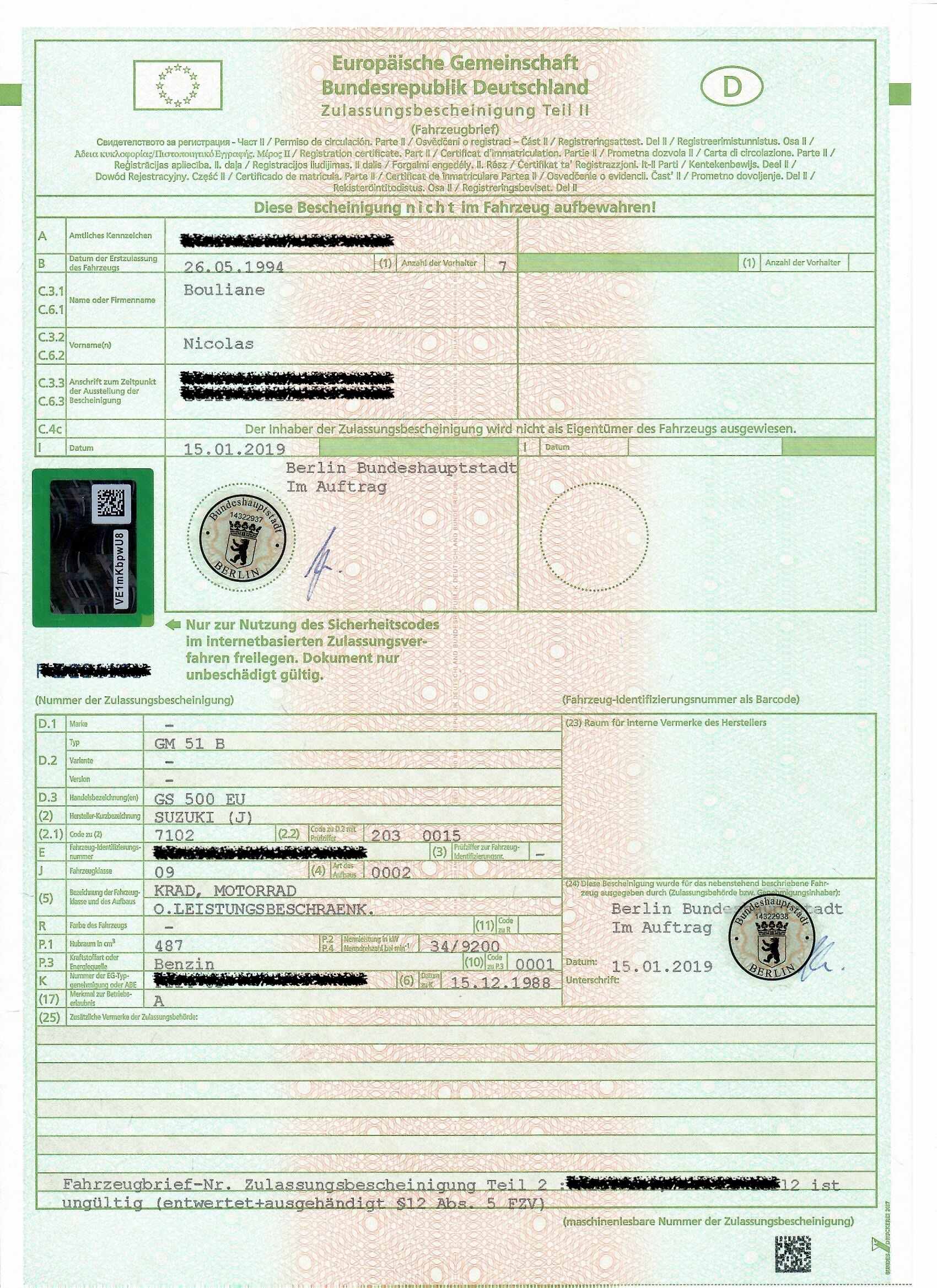
- A leasing company buys and owns the car; ADAC notes that you are registered as the holder in Part I of the registration certificate, while the lessor keeps Part II.
- Mileage leases suit private drivers best, ADAC says; with a residual-value lease you pay the difference if the car is worth less than forecast at the end.
- In our 2026 example, a €299-a-month lease with an upfront payment and fees really costs about €380 a month.
- At return, UK industry guidance accepts scratches up to 25 mm that do not show primer; dents over 10 mm with broken paint on a door are charged.
How private leasing works
The leasing company buys the car from the dealer and rents it to you for a fixed term. ADAC describes the typical term as about two to four years, and an optional upfront payment of up to 10% of the price as common; a higher upfront payment lowers the monthly rate. During the lease:
- you insure the car, pay its taxes and arrange servicing and repairs, unless you pay extra for a full-service contract;
- you service it at the contract or designated workshop, because missed inspections can void warranty claims and lead to back-payments at return;
- you return it in good condition for its age and mileage at the end, with no right to buy it unless a purchase option was agreed in writing at the start.
ADAC also notes that leasing suits private buyers only rarely: business customers can deduct the rates as operating expenses, private customers cannot.
Mileage lease or residual-value lease?
| Specification | Mileage lease (Kilometerleasing) | Residual-value lease (Restwertleasing) |
|---|---|---|
| What sets the rate | Agreed annual mileage | Forecast value of the car at the end |
| Extra kilometres | Charged at a rate fixed in the contract | Reflected in the car's lower value |
| Fewer kilometres | Refunded only if the contract says so | Reflected in a higher value |
| Value risk at the end | Lessor | You: you pay any shortfall |
| If the car is worth more | Nothing for you | In Germany you typically get 75% of the surplus |
| Statutory withdrawal right in Germany | None; a 14-day right is common but must be in the contract | 14 days |
| ADAC's advice for private customers | Recommended | Check that the forecast value is realistic |
Some lessors set a high residual value to advertise a low monthly rate, ADAC warns; the difference is then due at the end. In the UK, personal contract hire works like a mileage lease.
Work out the real monthly cost
Advertised rates leave out the upfront payment and fees. Put everything on the same basis:
Real monthly cost = (upfront payment + fees + monthly rate × months + expected excess-mileage charge) ÷ months
| Item | 2026 example |
|---|---|
| Advertised monthly rate | €299 |
| Upfront payment | €2,000 |
| Delivery and admin fees | €900 |
| Term | 36 months |
| Total paid, 2026 example | €2,000 + €900 + €299 × 36 = €13,664 |
| Real monthly cost, 2026 example | €13,664 ÷ 36 ≈ €380 |
The figures in this 2026 example are illustrative. With real quotes, compare leases only on the real monthly cost, for the same term and mileage. To set a lease against a loan or PCP on the same car, enter all three in our car loan calculator, which compares what you pay over the term. Remember that the totals buy different things: a lease buys use only.
Mileage limits and what overruns cost
The excess charge is simple arithmetic:
Excess charge = (kilometres driven − kilometres allowed) × rate per km
In a 2026 illustration, a three-year lease with 10,000 km a year allows 30,000 km. If you return the car at 36,000 km and the contract charges €0.10 per extra kilometre (an example rate for 2026, not a market figure), you pay €600. The same arithmetic in reverse shows the value of unused kilometres, which ADAC says are usually refunded only if the contract contains a refund clause. Its advice: the rates for extra and unused kilometres should be the same.
To set the limit, look at your past three years of inspection or service records rather than guessing, and add a margin for a new job, a house move or holidays. Paying for kilometres in the monthly rate is usually more predictable than a large bill at the end.
End-of-lease charges: fair wear and tear
There is no single European standard. In Germany, ADAC notes that there are no objective criteria for excessive wear and that, under case law, normal signs of use are not excess wear. In the UK, the BVRLA, the leasing industry body, publishes fair wear and tear guidelines that many contracts refer to. As summarised by Leasing Options:
| Item | Usually acceptable | Usually charged |
|---|---|---|
| Scratches | Up to 25 mm, with no primer or bare metal showing | Longer than 25 mm, or through to primer |
| Dents | Small dents without broken paint | Door dents over 10 mm with broken paint, more than two on one panel, any on the roof or a swage line |
| Bumpers | Minor scuffs and small scratches | Cracks, major scuffs |
| Stone chips | Normal chips for the car's age | Large chips on the bonnet or windscreen |
| Wheels | Not specified in the summary | Kerb damage |
| Glass | Light scratches outside the driver's view; professionally repaired chips | Damage in the line of sight |
| Interior | Normal use | Rips, tears and burns |
| Keys and equipment | Both keys, locking wheel nut key, spare wheel or kit, tools, manuals, parcel shelf, mats | Anything missing |
ADAC adds two points that matter in a dispute in Germany: you generally owe only the actual loss in value, not the estimated repair cost, and the lessor is not entitled to VAT on that loss. In ADAC's example (checked in 2026), a dent costing €1,000 to repair may reduce the car's value by much less.
Lease return checklist
- Re-read the contract. Check whether it is a mileage or residual-value lease, and whether you may bring your own appraiser.
- Service on time and keep the stamped book and invoices.
- Inspect the car a few weeks before return in daylight, using the guidelines above. Compare a repair quote with the likely charge.
- Clean it inside and out, and collect both keys, the locking wheel nut key, the manuals and the spare wheel or repair kit.
- Take a witness and photograph the car from every side and inside, with close-ups of anything disputed.
- Read the return report before you sign it. ADAC warns that signing can mean accepting the listed defects and charges. Get verbal agreements in writing.
- If the next car is late, get written confirmation that you may keep the old one at no extra cost.
Ending early and other traps
- Early termination is generally not possible without the lessor's consent, ADAC says. Consent usually comes as a termination agreement, which often requires a large payment.
- Lease transfer to a new lessee, who takes over the payments, may be allowed with the lessor's consent.
- Buying the car at the end needs a written purchase option, and ADAC notes that it can become void if the dealer closes or goes insolvent.
- Moving abroad is difficult. Your Europe explains that the leasing company owns the car and may refuse to register it in another country; in its example, a driver had to end the lease early and pay extra fees.
- Weaker credit protection. EU consumer credit rules do not cover leases with no obligation to buy the car, so the return conditions in the contract matter all the more.
Who private leasing suits
- Suits: drivers who want a new car every two to four years, cover a predictable distance, prefer a fixed monthly budget and do not want resale risk. It can also suit drivers unsure about future resale values, for example of electric cars.
- Does not suit: high or unpredictable mileage, cars that lead hard lives with children, dogs or tight city parking, drivers who want to keep a car for many years, and anyone who may need to end the contract early.
If you are leaning towards owning instead, compare the full yearly cost in our cost of ownership calculator, or start with the best small city cars, where buying and running costs stay low.
Try our calculator
Car loan calculatorCost of ownership calculatorFAQ
What happens at the end of a private car lease?
You return the car, it is inspected, and you pay for any kilometres over the limit and damage beyond fair wear and tear. You can buy the car only if a purchase option was agreed in writing; otherwise you simply hand back the keys or start a new lease.
Can I end a car lease early?
Usually only with the leasing company's consent, and often for a large payment. A lease transfer to another driver who takes over the payments may be cheaper, if the lessor allows it.
What counts as fair wear and tear on a leased car?
Marks that fit the car's age and mileage. UK industry guidelines accept scratches up to 25 mm without primer showing, small dents without broken paint and normal stone chips, but charge for kerbed wheels, torn upholstery, missing keys and larger dents. In Germany there are no fixed criteria, and normal signs of use are not chargeable.
Is private leasing cheaper than buying?
Per month it often looks cheaper, but over the long run usually not, because at the end you own nothing. Compare the real monthly cost of the lease with the cost of buying, including depreciation and interest, over the same period.
Can I cancel a private lease within 14 days?
It depends on the contract and the country. In Germany, ADAC says a residual-value lease carries a statutory 14-day withdrawal right, while a mileage lease does not unless the contract grants one. Ask for the cancellation terms in writing before you sign.
Sources
- ADAC: Leasing, so funktioniert die Auto-Miete auf Zeit (accessed 22 Oct 2026)
- ADAC: Leasing-Rückgabe, so vermeiden Sie typische Kostenfallen (accessed 22 Oct 2026)
- Leasing Options: BVRLA fair wear and tear guide (accessed 22 Oct 2026)
- Your Europe (European Union): Buying and leasing a car in another EU country (accessed 22 Oct 2026)
- EUR-Lex: Directive 2008/48/EC on credit agreements for consumers (accessed 22 Oct 2026)
Found a mistake? Report an error